






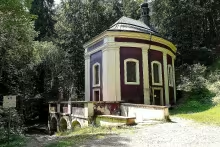
The Chapel of Saint Staphanus, also known as Saint Procopius in some maps, is a Baroque monument located amid serene forests along the Elbe River's right bank in Klokočka. It lies within the Bakov nad Jizerou municipality and was constructed between 1724 and 1730. The chapel stands on a stone terrace supported by three-pillared arcades. Countess Marie Markéta Valdštejn commissioned it to honor her late husband's wish for healing waters from a local spring, reflecting early 18th-century Bohemia's religious devotion and architectural trends under the Habsburg Monarchy.
The chapel's origin is deeply rooted in personal history and regional tradition. It replaced an older wooden shrine demolished in 1811. Countess Marie Markéta Valdštejn initiated its construction to fulfill her late husband František Josef z Valdštejna’s desire to utilize the healing properties of a local spring. This Baroque structure became a pilgrimage site, initially dedicated to Saint Staphanus but also associated with Saint Procopius due to local traditions.
Architecturally, the chapel exemplifies Baroque style, featuring an elliptical central building with semicircular windows and pilasters. The interior boasts pillars supporting a vaulted ceiling adorned with lunettes, creating a harmonious and grandiose space. Notable artistic elements include sculptures of Saint Judy Tadeáše and Saint John Nepomucký, the latter relocated inside in 2011. The main altar, crafted in Baroque style around 1742, is complemented by two Rococo side altars from 1794, featuring framed images of Saints Tekla and Kamil.
Throughout its history, the chapel has seen various changes that have shaped its legacy. In 1730, it was consecrated to Saint Staphanus by parish priest Kaspar Záruba, marking a significant moment in its religious significance. Around 1930, a bell dedicated to Saint Procopius was housed in a small tower, further linking the chapel to local pilgrimage traditions.
Today, the Chapel of Saint Staphanus stands as a cultural monument protected by the Czech Republic. It offers visitors insight into Baroque architectural style and historical context. Surrounded by forests and the narrow valley of the Rokytky stream, with nearby orchards adding to its serene landscape, it remains accessible for those interested in history and architecture. Its rich heritage and tranquil setting make it a worthwhile destination for anyone exploring the region.
The chapel's enduring legacy as both a historical monument and a place of pilgrimage underscores its cultural significance. Visitors are invited to explore this Baroque gem, where history and artistry converge amidst Klokočka’s natural beauty.
Historical milestones
- 1730
- The chapel was consecrated by parish priest Kaspar Záruba.
Architectural development
Constructed in a baroque style, the chapel features an elliptical central building with semicircular windows and pilasters. The interior is decorated with pillars supporting a vaulted ceiling with lunettes. Notable changes include the relocation of Saint John Nepomucene's statue to inside the chapel in 2011.
Historical events
- 1730
- The chapel was consecrated to Saint Staphanus by the parish priest Kaspar Záruba.
- 1811
- An older wooden shrine near the site was demolished.
Points of interest
- The chapel was originally dedicated to Saint Staphanus but is also linked with Saint Procopius due to local traditions, reflecting the fluidity of religious associations in historical sites.
- Despite its Baroque style, the Chapel of Saint Staphanus features Rococo side altars from 1794, showcasing a blend of artistic styles that were popular during different periods in Bohemia's history.
- The chapel replaced an older wooden shrine demolished in 1811, indicating a shift towards more durable and elaborate structures to serve as pilgrimage sites in the early 18th century.
Guide
Show guide text
Welcome to the enchanting Chapel of Saint Staphanus, nestled in Klokočka within the Bakov nad Jizerou municipality. As you stand here, imagine yourself surrounded by lush forests along the right bank of the Elbe River, with the chapel perched gracefully on a stone terrace supported by three-pillared arcades. This baroque monument, crafted between 1724 and 1730, invites you to explore its historical charm.
The chapel's creation was inspired by Countess Marie Markéta Valdštejn as a tribute to her late husband, František Josef z Valdštejna. Commissioned in the early 18th century, it stands not only as a testament to their legacy but also as a reflection of the era's architectural elegance.
As you take in its surroundings, notice how the chapel harmoniously blends with nature. The three-pillared arcades that support the stone terrace create a sense of openness and connection to the surrounding forest. Though the architects remain unknown, their vision has left behind an enduring monument that captures the essence of baroque design.
In 1730, the chapel was consecrated by parish priest Kaspar Záruba, marking its significance in the local community. The dedication to Saint Staphanus, and at times linked with Saint Procopius due to local traditions, highlights the fluidity of religious associations that have shaped this site over time.
An intriguing detail to observe is the chapel's Rococo side altars from 1794, which add a layer of artistic richness to its baroque foundation. These altars serve as a reminder of the evolving tastes and influences that continued to shape the chapel long after its initial construction.
As you conclude your visit, consider the stories and personalities intertwined with this place—Countess Marie Markéta Valdštejn's vision, František Josef z Valdštejna's memory, and the local traditions that continue to breathe life into it. The Chapel of Saint Staphanus is a testament to history, artistry, and devotion.
We invite you to delve deeper into its mysteries and enjoy the serene beauty surrounding this historical gem. Thank you for joining us on this journey through time and architecture.
Businesses nearby
Do you run a restaurant, accommodation, shop, museum, rental, wellness or other visitor service near this monument? Show yourself directly to the people heading to it — this is how they will see you in the app and on the web:
Nearby
The chapel is surrounded by forests and a narrow valley of the Rokytky stream. Nearby features include an orchard named Klokočka, adding to the serene natural landscape.
Accommodation nearby
Themed route
Tematická výletní trasa do obce Klokočka
1. Kaple svatého Stapina (kaple) Tato malá, ale poutavá kaple je centrem vaší trasy. Její klidná atmosféra a historická architektura ji činí ideálním místem pro odpočinek a reflexi. Kaple svatého Stapina se nachází v malebném prostředí, obklopeném lesy a úzkou kotlinou potoka Rokytky.
2. Klenotnictví přírody: Lesní procházkové stezky Po návštěvě kaple se vydávejte na krátkou procházku po lesních stezkách, které obklopují památku. Tyto stezky nabízejí příležitost k relaxaci a zaslechnutí si tichého šelestění listů nebo pískotu potoka Rokytky. Je to ideální místo pro milovníky přírody, kteří chtějí užít si klid a krásu okolních lesů.
3. Orchád Klokočka Nyní se vydávejte do Orchádu Klokočka, který je nedaleko kaple svatého Stapina. Tento orchád představuje živou památku místní zemědělské tradice a nabízí pohled na rozmanitost plodin v regionu. Je to také místo, kde si můžete užít čerstvého vzduchu a možná i nějakých ovoceček přímo z stromu.
4. Úzká kotlinka potoka Rokytky Konečným bodem vaší trasy je úzká kotlinka potoka Rokytky, která se nachází nedaleko kaple a orchádu. Toto místo nabízí klidné a idylické prostředí pro relaxaci nebo malou siestu na trávníku. Pohled na tekoucí vodu potoka je dokonalým způsobem, jak uzavřít svůj výlet ve Středočeském kraji.
Tato trasa nabízí kombinaci historie, přírody a klidu, což ji činí ideálním volbou pro každého, kdo hledá odpojení od městského života.
Seasonal recommendations
Spring: The Chapel of Saint Stephen in Klokočka, nestled within the Středočeský region, offers a unique spring experience as nature awakens around it. During this season, visitors can enjoy the vibrant colors of blooming wildflowers and fresh greenery that frame the chapel's historic architecture. The soft morning light enhances the serene atmosphere, making early visits particularly enchanting. Spring often sees fewer tourists compared to summer, allowing for a more intimate experience with the site. Visitors are advised to wear comfortable walking shoes suitable for exploring the surrounding paths and to bring layers as temperatures can vary throughout the day.
Summer: Summer at the Chapel of Saint Stephen is characterized by lush landscapes and longer daylight hours, perfect for leisurely exploration. The area becomes lively during this season, attracting more visitors who come to enjoy the picturesque setting under clear blue skies. To avoid crowds, it's recommended to visit early in the morning or later in the afternoon when the sun begins to set, casting a warm glow over the chapel and surrounding meadows. Comfortable clothing is essential, along with sunscreen and hats to protect against the summer heat, ensuring an enjoyable experience.
Autumn: The autumn season transforms the Chapel of Saint Stephen into a picturesque scene of rich colors as leaves turn shades of gold, orange, and red. This period offers a magical atmosphere that enhances the chapel's historic charm, making it ideal for photography enthusiasts and those seeking tranquility amidst nature’s beauty. As temperatures begin to cool, visitors should dress in layers to stay comfortable during their exploration. The reduced number of tourists compared to summer allows for a quieter visit, perfect for appreciating the serene ambiance.
Winter: Winter brings a unique charm to the Chapel of Saint Stephen with its snow-covered surroundings and crisp air. The chapel can appear almost mystical against the backdrop of frosty landscapes, creating an enchanting atmosphere that is particularly striking during sunrise or sunset. Visitors should be prepared for colder temperatures by dressing warmly in layers and wearing sturdy boots for walking on potentially icy paths. It's advisable to check opening hours as they may vary seasonally, with shorter days leading to earlier closures. The tranquility of winter offers a peaceful escape from the bustle of other seasons.
Visualizations and artistic views


Vizualizace jsou generovány umělou inteligencí a slouží jako inspirace.


Tips from visitors
No tips yet. Be the first!
Log in and add your tip.

Reviews and comments