



kaple svatého Václava se sochami andělů Set of small monuments
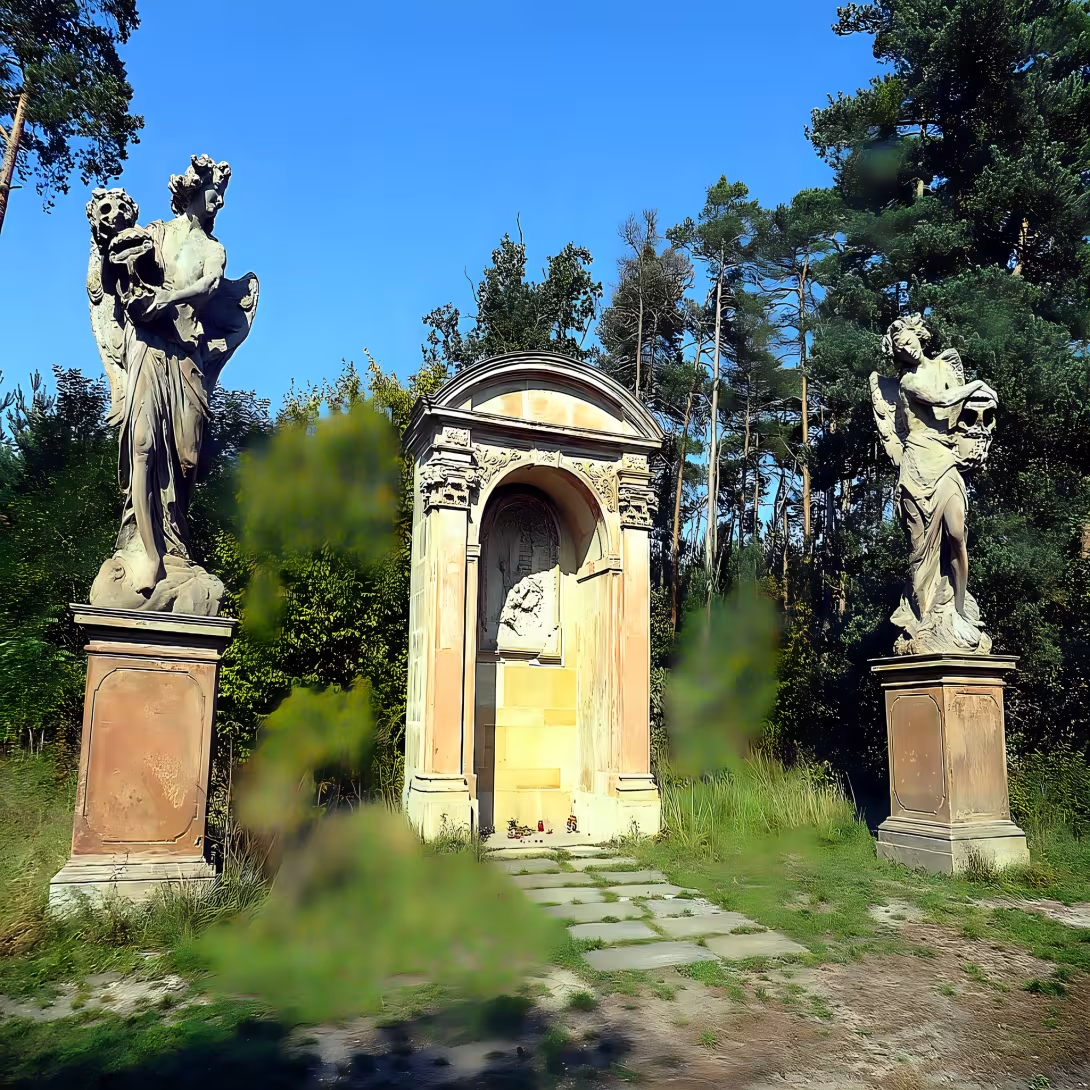
The chapel of St. Wenceslas, also known as the Eemite, is a Baroque niche building. It is located on the edge of the cadastral territory Lysá nad Labem in the district of Nymburk, at the border with the municipality of Karané in the district of Praha- east. The building was created in 1696 as part of a large hermit complex. It represents an important proof of Baroque landscape composition and religious activity of the nobility at the end of the 17th century.
The construction was initiated by the owner of the Lyssa estate, Count František Antonín Špork. The construction was designed as part of a hermit and so-called wonder garden, which included fourteen plastics, a fountain and a windmill. The hermit stood on the edge of the estate and served as an entry point from Prague, which clearly defined the boundaries of Šporkov property.
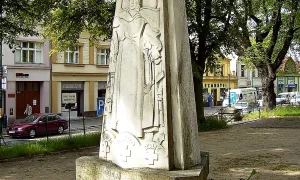
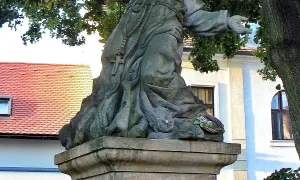
Architecturally, the monument belongs to the Baroque niche chapel. Its present form, when the niche is supplemented by a pair of statues of angels-whitelighter representing Joy's and Pathetic Death, was created only after the abolition of the hermit in the 1930s. The author of these works is attributed by some sources to baroque sculptor Matyas Bernard Braun, but given his age at the time of the formation of the complex, this issue remains the subject of expert discussion. The other statues, which were originally part of the hermitage, were moved to the wall of St. John the Baptist church in Lysá nad Labem after its abolition.
The history of the site is closely linked to landscape changes and technical development. In 1873, the railway line of the Austrian Northwest Railway was set up in the immediate vicinity of the chapel, which still forms a frequency section connecting Prague and Lysou nad Labem. Near the monument there was a castle, cancelled in 1996, and until 2007 the water source of Karaná was closed.
Today, the chapel of St. Wenceslas resembles a desolate baroque garden and secular piety. For visitors it is an interesting destination in the landscape between Lysa nad Labem and Karaný, where one can see the blending of sacral architecture with industrial history of railway transport. Visiting this place offers an opportunity to look into the way baroque nobility shaped its manor and linked religious symbols to the surrounding space.
Then and now
Drag the slider to compare how the landmark may have looked when it was built with the view today.
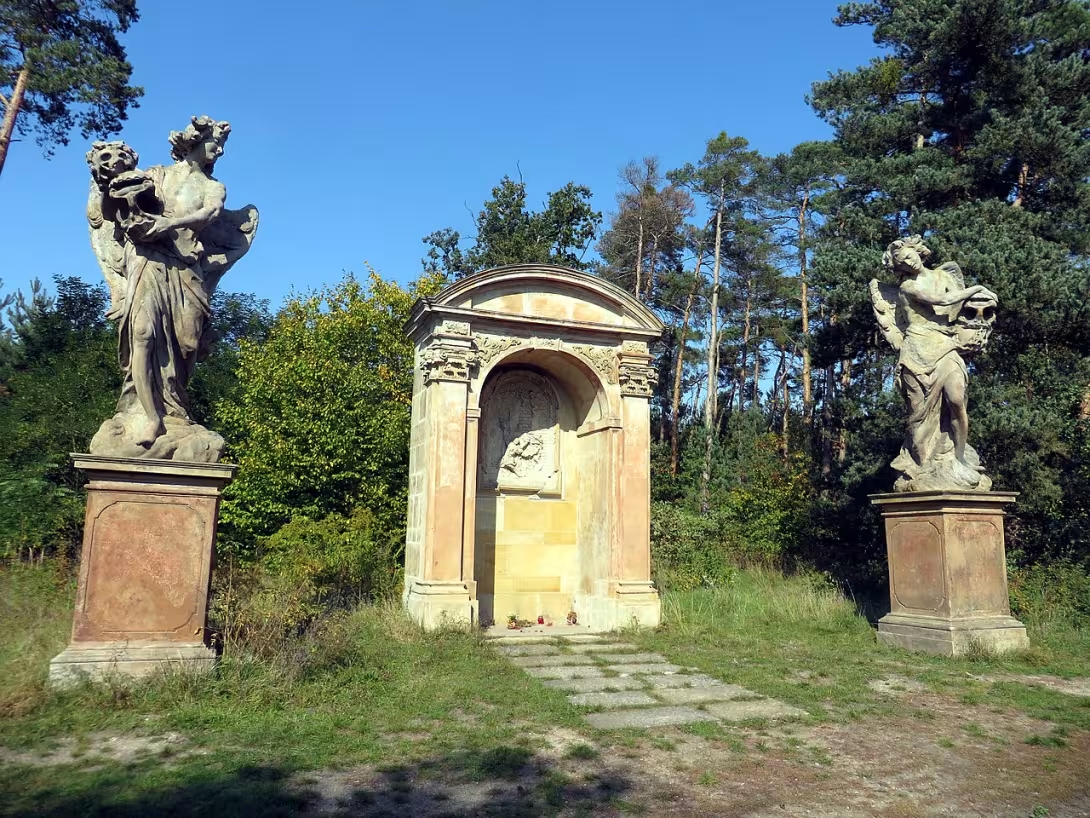

The historical appearance on the left is an AI-generated visualisation and serves as inspiration only.
Historical milestones
- 1696
- Construction of the niche chapel as part of the hermit grounds.
- 1873
- The railway line of the Austrian Northwest Railway was opened near the chapel.
- 1996
- Cancellation of the castle at the chapel and end of operation of the water supply train Karaná.
Architectural development
Originally it was part of a wider hermitage area with rich sculpture decoration. After the abrogation of the hermit, the chapel was adapted to its present form with a pair of angels. Architecturally it belongs to baroque niche buildings.
Historical events
1696: Construction of the chapel as part of the hermitage. The 1930's of the 18th century: The abolition of the hermitage and the installation of the statues of angels. 1873: Construction of the railway line in the immediate vicinity of the chapel.
Owners
The House of Lysá nad Labem, House of the Hits.
Points of interest
- The chapel was established in 1696 as part of an extensive hermitage complex and was also known as an eremite. - The construction was part of the so-called wonder garden, which included fourteen plastics, a fountain and a windmill. - A pair of angel-whitelighter statues representing Joy and Pathetic Death were added to the chapel after the abolition of the hermit in the 1930s. - Other statues from the original hermitage were moved to the wall of St. John the Baptist church in Lysé nad Labem after its abolition. - In 1873, a railway line was opened in the immediate vicinity of the chapel, which still forms a frequency section between Prague and Lysa nad Labem.
Guide
Show guide text
This text was created by artificial intelligence and has not been editorially reviewed. It may contain inaccuracies.
Welcome to Lysé nad Labem. You're standing in front of one of the most interesting and quiet places around. In front of your eyes is the chapel of St. Wenceslas. Although today it may seem like a separate and lonely object, its existence is actually just a small piece of a much larger and fascinating narrative puzzle. Feel the atmosphere, the sense of peace that exists here. It's a place where time seems to have stopped, and yet you're touching history here every moment, which is older than your earliest memories. Just let yourself stop for a while and see the surroundings surrounding you.
Let us now return together to a time when this region looked completely different. Imagine 1696. The world around you is full of baroque excitement, magnificent structures and efforts to perfection in every detail. This niche chapel was not just created as a simple religious symbol. It was part of something much more extensive, called a hermitage at the time, or also an erosion. It was a space to rest the soul, to seek silence and to pray deeply in the arms of nature. The main mover of this whole project was Count František Antonín Špork. He was a man with great ambitions and great possessions who was not afraid to realize his vision. For him, however, this building also had a very practical and political significance. This object clearly and permanently defined the boundary of its large estate, which was drawn from Prague. The chapel thus served as a monumental and fearless symbol of its power and ownership in this area.
Now pay attention to the architecture itself, which is right in front of you. Look at her shape and how she fits into the neighborhood. It's a niche chapel, which means that its space is carved or built into a certain depth, as if it were part of a larger, invisible whole today. Note the details that are preserved here. Especially focus on the statues of the angels standing here. These characters are not just ordinary decorations that should only be visible. They're whitelighters telling us a deep and human story. This pair of statues represents the joyful and pitiful death. It's a fascinating view of how art can capture the deepest human emotions and states of being. One character radiates light and joy while the other carries the weight of sadness and mourning. This pair reminds us that human life is a constant movement between these two opposing states.
When you look at these creatures, you can't think about the people behind them. Although the exact name of the man who designed this chapel has remained unknown in history, in this period and in this particular style we must ask for the greatest masters of our time. The name Matyáš Bernard Braun became synonymous with the perfection of baroque sculpture in these times in Czech countries. Although we don't know if he worked right here, his spirit and the style of that time are here to smell every stone. And of course there is Count Spork, a visionary who could turn the landscape into a work of art full of symbols and meanings.
And now I'm going to introduce you to something that might really surprise you and help you better imagine what was once here. What you see today is just a small shadow of what was here before. This chapel was the heart of the so-called wonder garden. Imagine how it would be if you were walking around the original rich area right now. It wasn't just a chapel. It was a whole world full of surprises and beauty. At that time there were fourteen beautiful statues, there was a fountain from which the water gushed, and also a windmill that slowly and rhythmically rotated in the arms of the wind. This whole space was a place that gave people complete amazement in the eighteenth century. But with time, everything began to change. After the abolition of the hermitage in the 1930s, the complex gradually began to crumble and change its shape. Only this chapel remained as a silent and lonely witness to the ancient, rich and miraculous garden.
Even later, the surroundings changed under the influence of a modern and rapidly changing world. In 1873 there was noise and movement when the railway line of the Austrian Northwest was cleared. The world began to move much faster and this quiet oasis became part of a more modern landscape. And to the complete end of the old roads, the road led until 1996, when the castle at the chapel was abolished and the operation of the water source from Karani ended. Each of these moments added another layer of history to the place and changed the way we look at it.
Now you can slowly move on and continue your journey. Let these images, these statues, and these stories run out. Take a look around again, feel the silence and try to think of those ancient gardens, fountains and windmills that were once here. Thank you for visiting this place and giving us your time. We wish you a nice walk and many other interesting experiences on your journey.
Tips for visitors
To visit the chapel of St. Wenceslas in Lysé nad Labem, choose the ideal sunny day during spring or autumn, when the surrounding green is picturesque and light soft, which will highlight the details of the statues of angels and the architecture of the niche building. For photography we recommend the morning hours when the sun lights up the facade of the chapel, which allows to capture fine features of statues without sharp shadows. You can easily walk from the city centre of Lysá nad Labem and bring comfortable shoes for walking around and a camera for documentation of Count Šporka's historical legacy. In the vicinity you can visit the city Lysá nad Labem itself with its rich history, go to the Elbe River for a walk along the shore or explore natural attractions at the water source in the village of Karaná.
Frequently asked questions
Can the monument be visited?
We have not verified whether this monument is accessible. Please ask the owner or operator, or the local municipal office.
Where is the monument?
Location: Lysá nad Labem. The map on this page shows the exact spot.
Why is the monument protected?
It is listed in the Central List of Cultural Monuments of the Czech Republic as a cultural monument (register no. 1000127390).
Businesses nearby
Do you run a restaurant, accommodation, shop, museum, rental, wellness or other visitor service near this monument? Show yourself directly to the people heading to it — this is how they will see you in the app and on the web:
Nearby
Obec Káraný, řeka Labe, město Lysá nad Labem, vodní zdroj Káraný.
Accommodation nearby
Trips and activities nearby
Guided tours, tickets and activities nearby from GetYourGuide
Affiliate link: if you buy from the partner, we may receive a commission. The price for you does not change.
Search tours and activities →Themed route
Thematic cruise route around St. Wenceslas Chapel in Lysé nad Labem
1. St. Wenceslas Chapel with statues of angels (Chapel) Type: Historical monument This small but significant chapel is famous for its artistic statues of angels that attract visitors from all over the region. It's the perfect place for those interested in history and art.
2. River Elbe Type: Natural monument After visiting the chapel, follow the Elbe River, which is not only the water border between the Czech Republic and Germany, but also the beautiful natural body. The beautiful views of the river are especially charming here.
3. Municipality of Karan Type: Local interest The following step of the route leads to the neighbouring village of Karané, known for its historical name and picturesque landscape. Here you can explore slightly remote parts of the Lysé nad Labem area.
4. City of Lysá nad Labem Type: City Centre Return to the city itself Lysá nad Labem offers the opportunity to explore its historical centre, with its picturesque streets and architecturally interesting buildings. The place is ideal for rest after a trip.
5. Water Source Karan Type: Natural attractions At the end of the route visit the water source Karaná, where you can enjoy a quiet moment in the company of nature. This place is ideal for relaxing and the last photos to remember about this beautiful trip.
This route offers a combination of historical, cultural and natural experiences near the chapel of St. Wenceslas and the surrounding area.
Seasonal recommendations
Spring: In the spring season of the chapel of St. Wenceslas, beautiful greenery are growing, when flowering shrubs and trees revive the surrounding countryside. The sun illuminates the statues of angels in the most beautiful light, which brings a feeling of a new beginning. Visitors should have light clothes with the possibility to add a layer, because temperatures change rapidly. The best time to visit is in the morning or in the evening, when the atmosphere is quieter and at the same time you can use mild sunlight.
Summer: During the summer season the chapel gains life thanks to long days and warm evenings, allowing for extended tours. The high sun creates dramatic shadows of angel statues on the chapel wall, highlighting their details. Visitors should be prepared for the warm and sunny nature of this season with durable clothing and sun protection such as a hat or a parasol. The best time to visit is morning or evening to avoid the hottest hours.
Autumn: In autumn the chapel gains melancholic beauty due to the colour of the leaves and mild climate. The sun illuminates the statues of angels in warm, soft light, adding an atmosphere of peace. Visitors should get clothes suitable for the colder nature of this season, such as warm jackets and hats. The best time to visit is in the prehistoric hours, when the atmosphere is calm and the sunlight lights the chapel.
Winter: The winter season offers unique views of the chapel of St. Wenceslas under the cover of snow, creating a calm and quiet atmosphere. Sun rays illuminate angel statues in a strange way, where their contours may appear on a pale background. Visitors should get warm clothes with wind and snow protection such as blankets or jackets. The best time to visit is during the day when the sun lights the chapel in a mild heat, allowing you to enjoy the winter peace without extreme cold.
Visualizations and artistic views


The visualisations are generated by artificial intelligence and serve as inspiration.
Photos from the area
Real photos taken near the monument


Zdroj a licence jsou uvedeny u každého snímku.
Tips from visitors
No tips yet. Be the first!
Log in and add your tip.
Sources and literature
Photos: Michal Louč / CC BY-SA 4.0, rozlišení zvýšeno umělou inteligencí — Wikimedia Commons. The author and licence also appear when you hover over the image.
Faktickým podkladem tohoto textu byl článek na Wikipedii, jehož autory jsou přispěvatelé Wikipedie. Článek je dostupný pod licencí CC BY-SA 4.0.
Location on the map


Příběhy a pověsti
Legendy, pověsti a příběhy spjaté s touto památkou
Fotografie návštěvníků
Zatím žádné fotografie. Buďte první, kdo přidá fotografii z návštěvy!
Log in a přidejte svou fotografii nebo hodnoťte.
Za ověřenou návštěvu v aplikaci získáte víc bodů — poznáme podle GPS, že jste na místě.
Reviews and comments