






Kino Avia Cinema
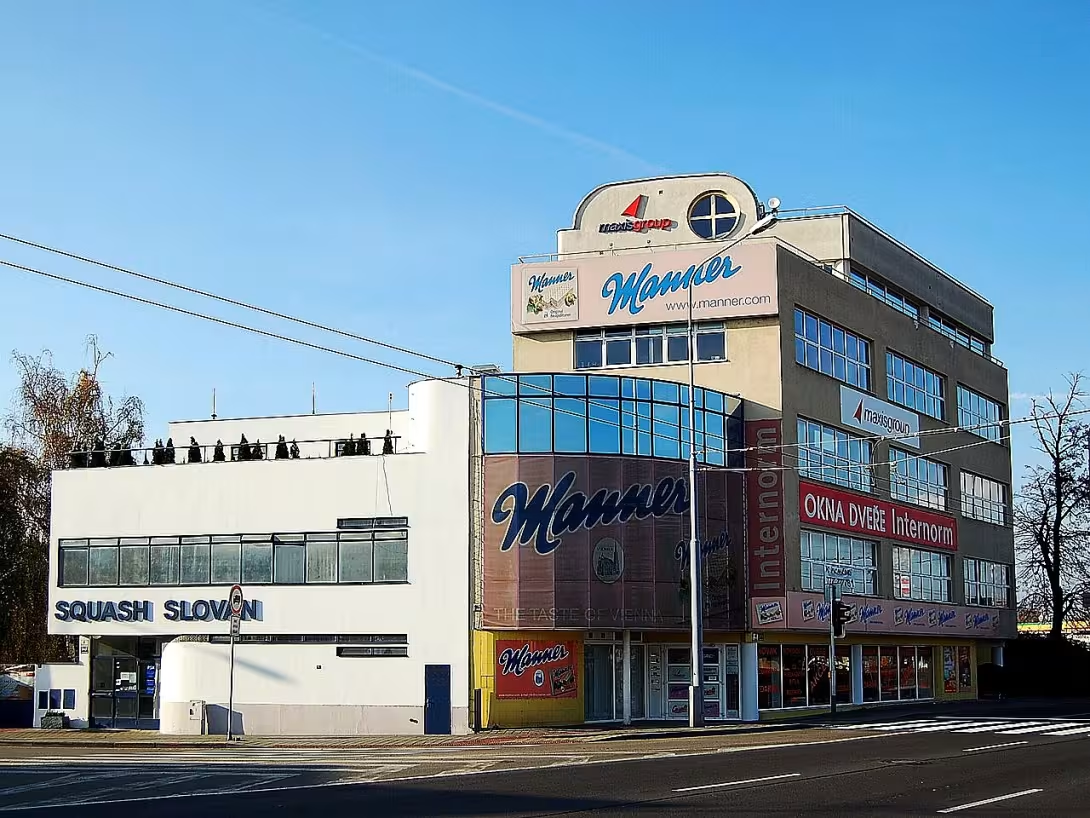
Kino Avia is a former cinematographer in Brno-Černovice on Stolcova Street, built in 1929. This functionalist building with elements of purism is today protected as a cultural monument and serves as a sports centre.
The construction was created to order the Brno Sokola IV according to the design of architect Josef Kranz from 1925 to 1927. The original plan provided for a large area with buildings of cultural center and gym. In the end, due to the lack of funding, only outdoor sports grounds and cinema were built. Its operation was intended to provide resources for further construction.
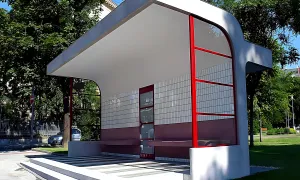
A one-storey purist building is characterized by low street facade and simple facade. A significant element is the large belt window on the first floor and curvature of the ground floor wall towards the receding glass entrance. Above it was previously placed the dominant inscription KINO AVIA. The roof consists of a system of terraces intended as a relaxation zone for visitors.
The internal layout included an entrance hall with dressing rooms and a cinema hall with a capacity of up to 400 spectators. The staircase led to the first floor with a gallery, office, dressing room and apartment of the building manager.
The cinema was named after a nearby airport. The operation was festively launched on December 7, 1929 with a performance of the film "Caucasus on Fire." After February 1948 there was nationalization and subsequent renaming to the cinema Slovan. After the Velvet Revolution, lengthy negotiations were held with the city administration of cinemas, but the building did not return to its original purpose and its interior gradually faded.
The building currently houses a sports facility with adapted interior. The building has undergone a partial reconstruction and has been connected from the right side to it by a new superstructure. Urbanistic surroundings of the monument significantly influenced the construction of Olomoucká exit street, passing in close proximity to the building.
The Avia cinema is an important example of Brno interwar architecture. Her visit allows to observe specific purist elements in the work of Josef Kranz.
Then and now
Drag the slider to compare how the landmark may have looked when it was built with the view today.
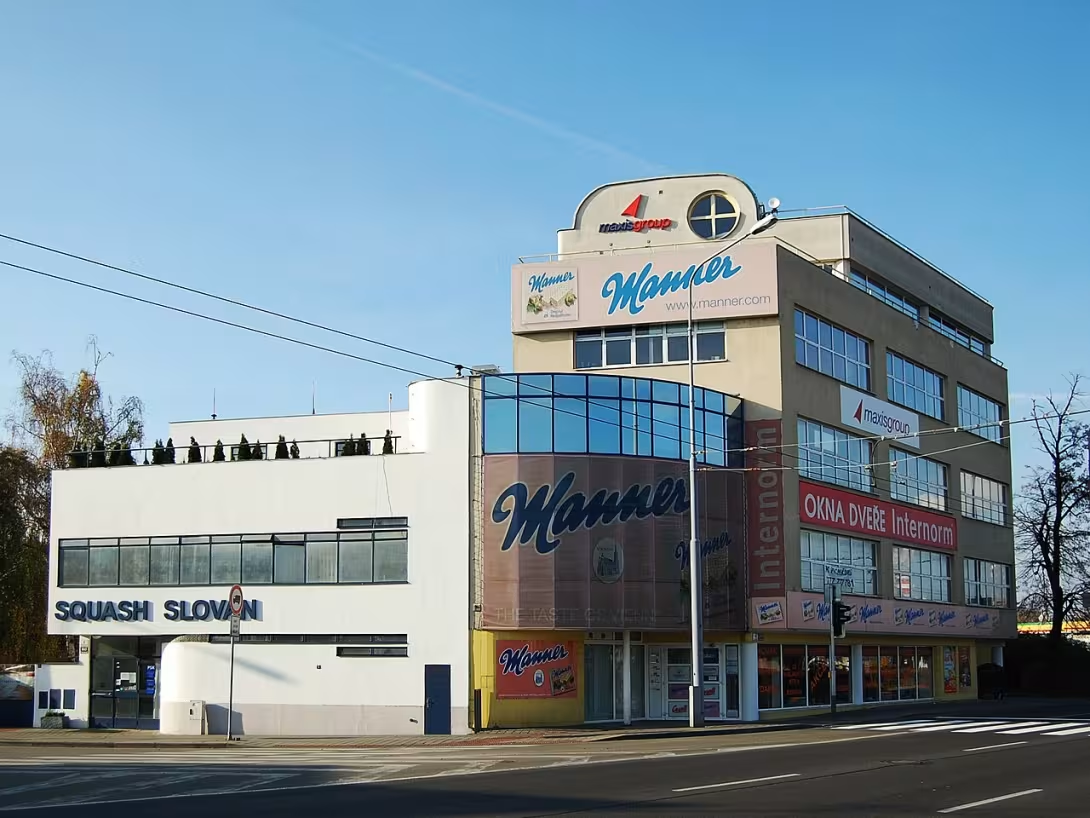
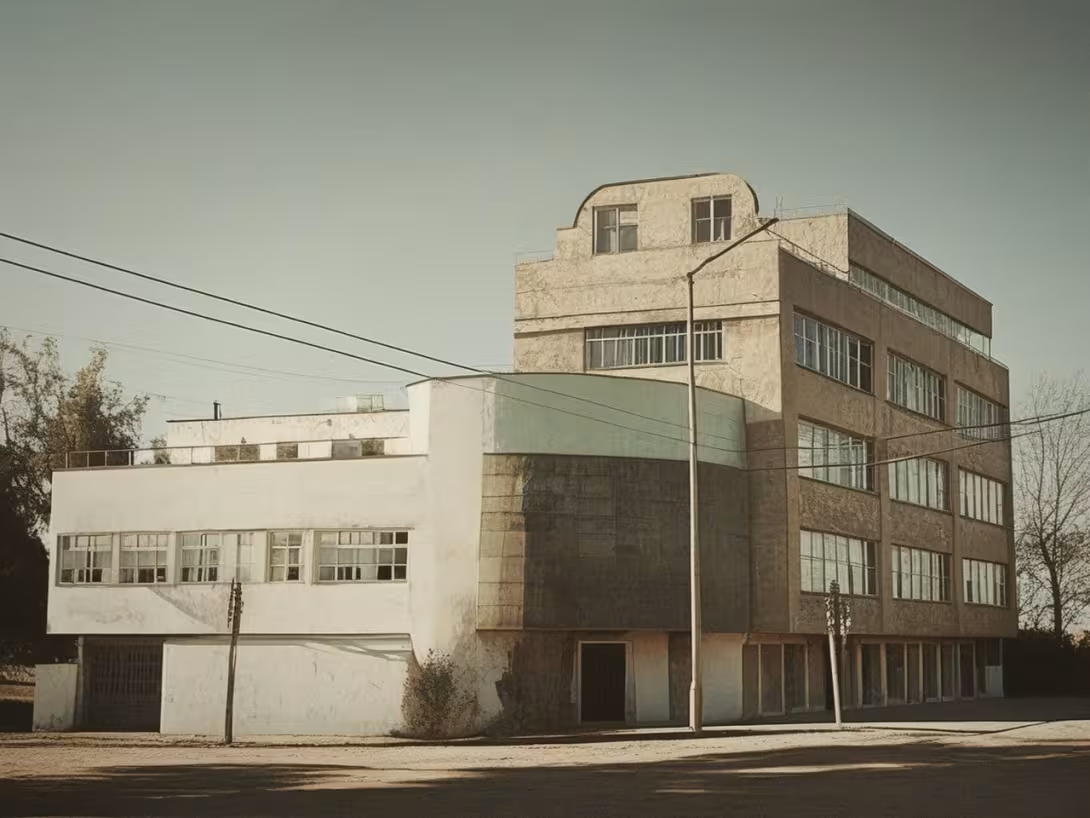
The historical appearance on the left is an AI-generated visualisation and serves as inspiration only.
Historical milestones
- 1925
- Opening of the project of architect Josef Kranz
- 1929
- Opening of Avia cinema December 7, 1929
- 1948
- Nationalization and renaming to the Slovan cinema
- 1989
- Velvet Revolution, opening of negotiations on the building
Architectural development
The building was built in 1925-1927 as planned by Josef Kranz. The original features like cinema have changed and today the site is adapted for sports activities. The interior of the cinema was dilapidated after 1989, which led to a partial reconstruction.
Historical events
- 1929
- The opening ceremony of the cinematograph.
- 1948
- Nationalization and renaming to Cinema Slovan.
Owners
After its creation, the cinema was operated by Sokol IV, after 1948 it was nationalized and renamed Cinema Slovan. After the Velvet Revolution, negotiations on the future of the cinema took longer.
Points of interest
- The building was built in 1929 and today it serves as a sports center. - Due to the lack of funding, only this construction and outdoor sports grounds were created instead of the originally planned large area. - The roof consists of a system of terraces intended as a relaxation zone for visitors. The cinema hall had a capacity of up to 400 spectators. The cinema was named after a nearby airport in Chernovice.
Guide
Show guide text
This text was created by artificial intelligence and has not been editorially reviewed. It may contain inaccuracies.
Welcome to Chernovice. You're standing right in front of a building that carries a deep story, and which, despite decades gone by, still stands firmly on Stolcova Street. In front of your eyes is the building of the former Avia cinema. Although its use has changed over the years, its presence here still reminds of the era when architecture sought purity, order and clear meaning. Consider this building a witness to the many changes that our country has undergone. It is a place where culture, sport, and the everyday life of the locals met.
Now let's move forward in time together and look at how this whole story began to be born. Imagine 1925. At that time, a great dream began to be drawn about a vast area that was to turn this part of town into a living center for people. The main brain of this plan was the architect Josef Kranz. His vision was ambitious and involved much more than just this one building you're currently observing. There was supposed to be a gym and other structures that would form one big whole. This project was intended primarily to serve the local society Sokol, which was at that time absolutely crucial for the physical and spiritual development of people. Unfortunately, as is often the case, great ambition has come across the harsh reality of a lack of funding. Instead of this magnificent complex, it was possible to build only this one building and outdoor sports areas. Nevertheless, the project was successfully completed and on December 7, 1929 the Avia cinema officially opened to its first visitors. It was a period of optimism and effort for a modern lifestyle.
Now pay attention to the very appearance of the building that is surrounding you. Look at its shapes and how it works in space. As an architect of Josef Kranz he designed construction in a spirit of style known as Purism. If you look around now, you can see the specific purity in it. Purism is not about unnecessary ornaments or complex decorations that just distract attention. On the contrary, it is a search for beauty in simplicity, in clear lines and in how well the building performs its function. Feel the regularity and functionality that the architect has put into every detail. The building is supposed to be useful, it's supposed to be clear and it's supposed to be clean. Although its inner space is now used for other purposes, this architectural spirit still lives in it and gives it its unmistakable character.
But the history of this place wasn't always about joy and fun. We must also look at the period when everything was changing under the influence of political coups. In 1948, when a major change occurred throughout the state, the building was renumbered. This meant that it ceased to be owned by the original organisations and became State property. With this step came a new name. Kino Avia became a movie theater Slovan. This name became a symbol of a new era, but it was much more controlled from above than from below. Another big break came only much later, in 1989, during the Velvet Revolution. That's when new negotiations began about the building, which was to decide what its future would be in the new Czech world. These moments recall that even such solid structures are part of a constantly changing society.
I have one interesting thing for you, which you may not pay attention to at first glance, but which reveals the incredible idea of the original design. Look at the top of the building, the roof. It wasn't just designed as an ordinary cover for indoor spaces. Architect Josef Kranz inserted a very interesting element in it. The roof consists of a set of terraces which were intended to serve as relaxation zones for visitors. Think of it as a place where people can relax after watching a movie or after sports performance, enjoy the air and watch the neighborhood. It's a beautiful proof of how deeply the architect thought about the comfort of the people who will use this building.
Today, the movies are no longer viewed as they were at the time of Avia's greatest fame, but the building still serves people. She took on a new role, and now she's a sports center. It's fascinating how the function of a place can change, but its essence and its ability to serve the community remains the same. The cinema became a place of movement and health, which is in some sense a return to the original roots, when the building was to be associated with sport and physical education.
I hope that this brief view of the history and architecture of the Avia cinema helped you better understand this place and perceive it differently than you did before. You're standing in front of a building that has survived for many years, many names and many changes. But now we invite you to explore the area. Continue to walk around Chernovice and feel the atmosphere of this place. Thank you for your attention and we will read you a beautiful and inspiring day.
Tips for visitors
The best time to visit is a bright day when clean lines and elements of purism stand out best on the facade of the building.
You can reach the place by car and public transport; Check the current connection and parking possibilities around Stolcova Street in the current search engine.
We recommend taking a photographic machine and comfortable shoes to walk around the building.
For the best pictures, focus your lens on the architectural details of Josef Kranz's design, ideally in the morning or late afternoon light.
There is a former airport in the vicinity and the surrounding area affected by the construction of Olomoucká Street. For families with children it is convenient to walk around this historic building.
Businesses nearby
Do you run a restaurant, accommodation, shop, museum, rental, wellness or other visitor service near this monument? Show yourself directly to the people heading to it — this is how they will see you in the app and on the web:
Events nearby


Zdroj akcí: otevřená data měst a obcí ČR (Národní katalog otevřených dat) a kalendář akcí Národního památkového ústavu.
Nearby
Budova je umístěna v blízkosti bývalého černovického letiště a její okolí bylo ovlivněno výstavbou ulice Olomoucká.
Accommodation nearby
Trips and activities nearby
Guided tours, tickets and activities nearby from GetYourGuide
Affiliate link: if you buy from the partner, we may receive a commission. The price for you does not change.
Search tours and activities →Themed route
1. Olomoucká Street (road) - A place where one can see how the construction of this road affected the surrounding space. 2. Kino Avia (cinema) - Main destination of the trip and interesting building in the village Černovice. 3. Former airport (airport) - Space near the cinema, which reminds of the air history of this area.
Seasonal recommendations
Spring brings to Černovice gradual awakening of nature, which also affects the exterior appearance of the cinema building. The sun rises higher and its rays hit the facade at an angle that reveals the texture of plaster and details of architectural elements better than in other months. The surrounding trees are still without leaves, allowing an unlimited view of the monument without visual barriers. This period is ideal for visitors in terms of calm, as the main tourist season has not yet started. We recommend visiting a place in the afternoon when the light is the hottest and most uniform. Clothes should be layered as spring weather is usually variable and mornings and evenings can be cold. Avoid weekends if you want to have the neighborhood to yourself, and add Friday or Tuesday to your calendar when traffic is usually the lowest.
Summer brings to Chernovic the maximum intensity of sunlight, which can be blinding in the noon hours. The facade of the cinema appears brighter in full rays, but the shadows are sharp and short, which may make it difficult to photograph details. The surrounding vegetation is in full bloom and the leaves of the trees form a natural shadow, which can be a welcome refuge in hot days from the direct sun. During summer holidays, the probability of meeting with larger groups of tourists is higher, especially on Saturdays and Sundays. We recommend arriving early in the morning, ideally before nine o'clock, when the air is fresh and the crowds are minimal. Remember light clothes, hat and plenty of drinking mode because temperatures can be high. If you are planning a longer walk around the city, choose the shady paths and adjust the pace to the hot weather.
Autumn brings soft, scattered light to Chernovic, which is often the most advantageous for photographers. The sun rises below the horizon, extending the shadows and creating dramatic contrasts on the facade of the building. Nature changes colors around the cinema and falling leaves give the scene a romantic and nostalgic touch that matches the historical character of the monument. Since the summer season ends, the number of visitors is again lower and the atmosphere calmer. We recommend visiting the place in the afternoon, when the light is the most golden and softest. Clothes should be warm and waterproof because autumn rains are frequent and temperatures fall. Avoid days with strong wind, which can make it difficult to move around and cause unpleasant cold.
Winter brings short days and low sun to Chernovic, which illuminates the facade of the cinema at a very oblique angle. This specific position of the sun creates long shadows and highlights the vertical elements of the building. Snow, if it falls, covers the surroundings with white carpet and contrasts with darker colours of stone and plaster, creating a unique visual experience. The atmosphere is calm and quiet, which corresponds to the winter sleep of the city. We recommend visiting a monument in a narrow circle around noon, when the day is warmer and brightest. Clothes must be very warm, including winter jacket, gloves, scarf and cap, because outdoor temperatures can be below zero. Observe opening times that can be shortened in the winter months and adjust your plan to use the maximum daylight.
Visualizations and artistic views


The visualisations are generated by artificial intelligence and serve as inspiration.
Photos from the area
Real photos taken near the monument


Zdroj a licence jsou uvedeny u každého snímku.
Tips from visitors
No tips yet. Be the first!
Log in and add your tip.
Sources and literature
Photos: Ph-435 / CC BY-SA 3.0 — Wikimedia Commons. The author and licence also appear when you hover over the image.
Faktickým podkladem tohoto textu byl článek na Wikipedii, jehož autory jsou přispěvatelé Wikipedie. Článek je dostupný pod licencí CC BY-SA 4.0.
Location on the map

Příběhy a pověsti
Legendy, pověsti a příběhy spjaté s touto památkou
Fotografie návštěvníků
Zatím žádné fotografie. Buďte první, kdo přidá fotografii z návštěvy!
Log in a přidejte svou fotografii nebo hodnoťte.
Za ověřenou návštěvu v aplikaci získáte víc bodů — poznáme podle GPS, že jste na místě.
Reviews and comments