

Klamova huť Hammer mill
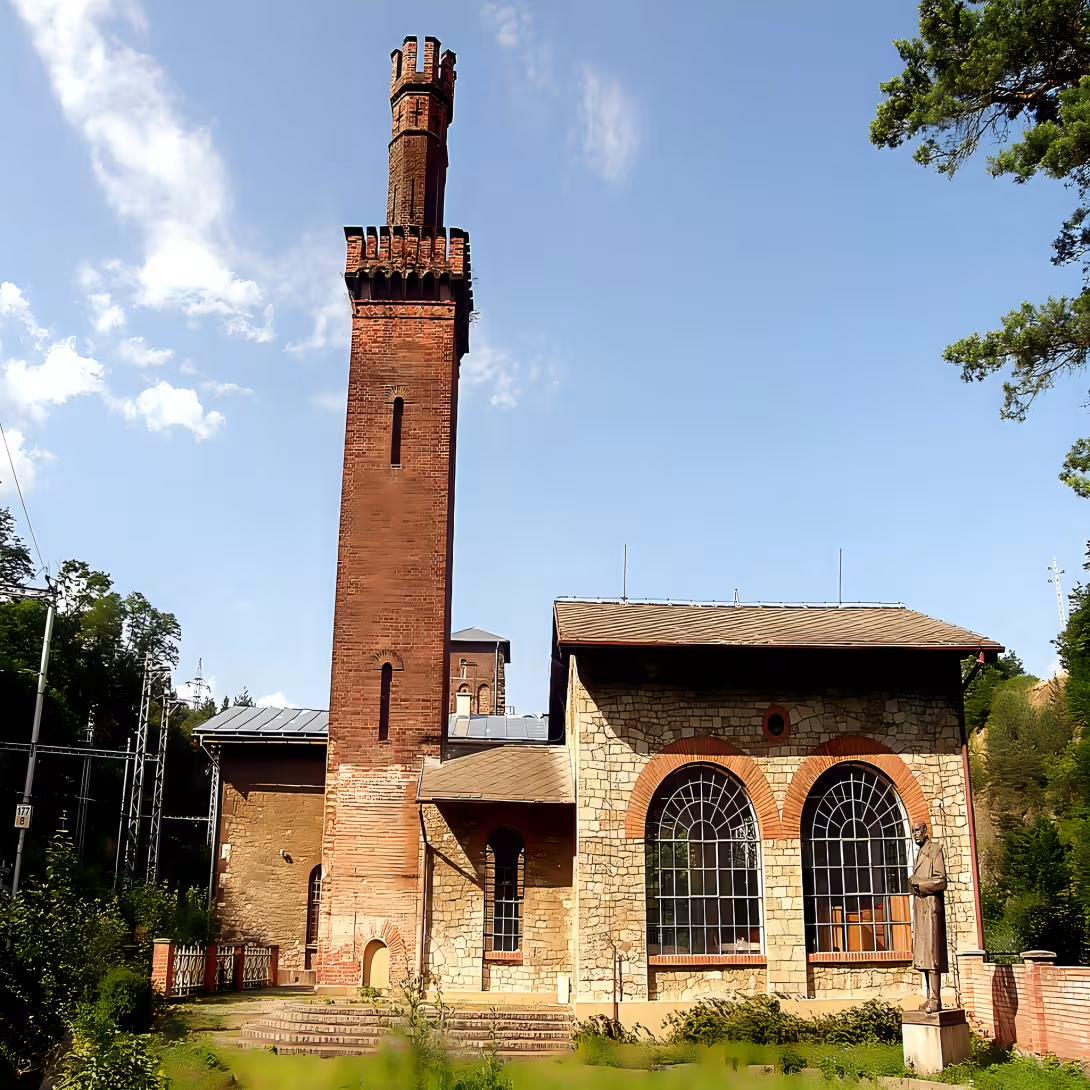
Klamova huť, a popular name called Klamovka, is an important historical iron smelter on the southern edge of Blansko to the left of the road leading to Brno. The area dating from the middle of the 19th century is built in neogotic style and is listed on the list of real cultural monuments of the Czech Republic. This monument documents the development of the metallurgical industry in Blanensk and represents the first ever high furnace in Czech countries that used mineral fuels to operate.
In the middle of the nineteenth century, the Czech countries had intense industrialization and development of industrial production. In Europe, new technological practices in metallurgy and engineering were spread using mineral fuels. In this context, the smelter was built by Count Hugo František Salm from 1853 to 1857. The name was obtained by Augusta Salm, who was married to Count Jindřich Jaroslav Clam-Martinic. The adjacent river Svitava was also used to operate.
The area was built in the middle of the nineteenth century in a neo-gothic style, according to the design of the prince builder Heinrich Girk. The buildings are built of non-braided bricks and decorated with elements such as battlements and shooting galleries. Later, the site was redesigned. For example, in 1906 a locksmith complex was built. Until today, the original complex has preserved a ground floor object without a blast furnace, a hookup tower and a section of the engine room with a chimney.
The owner of the building was first Count Hugo František Salm, at a later time the premises moved into the possession of a private company. At first it was used for heavy operation, but in 1893 it was converted into a foundry. The operation was eventually stopped in 1923 for economic reasons.
Key events include the construction launch in 1853 and the completion of the neo-Gothic site in 1857. In 1893 there was a transformation into a foundry and in 1906 a locksmith complex grew up. After the operation was stopped in 1923, the smelter was used as a test room for water turbines, while Viktor Kaplan performed his experiments. In 1994 there was a exhibition exhibition on the premises and in 2009 there were several scenes of TV film Born without childbirth. The area is located between the river Svitavou and the railway line.
Nowadays, the smelter is used by a private company producing fireplaces and fireplace stove. This technical monument faithfully documents the history of industry and is worth visiting for every interested person in the industrial history of Blanenska.
Then and now
Drag the slider to compare how the landmark may have looked when it was built with the view today.
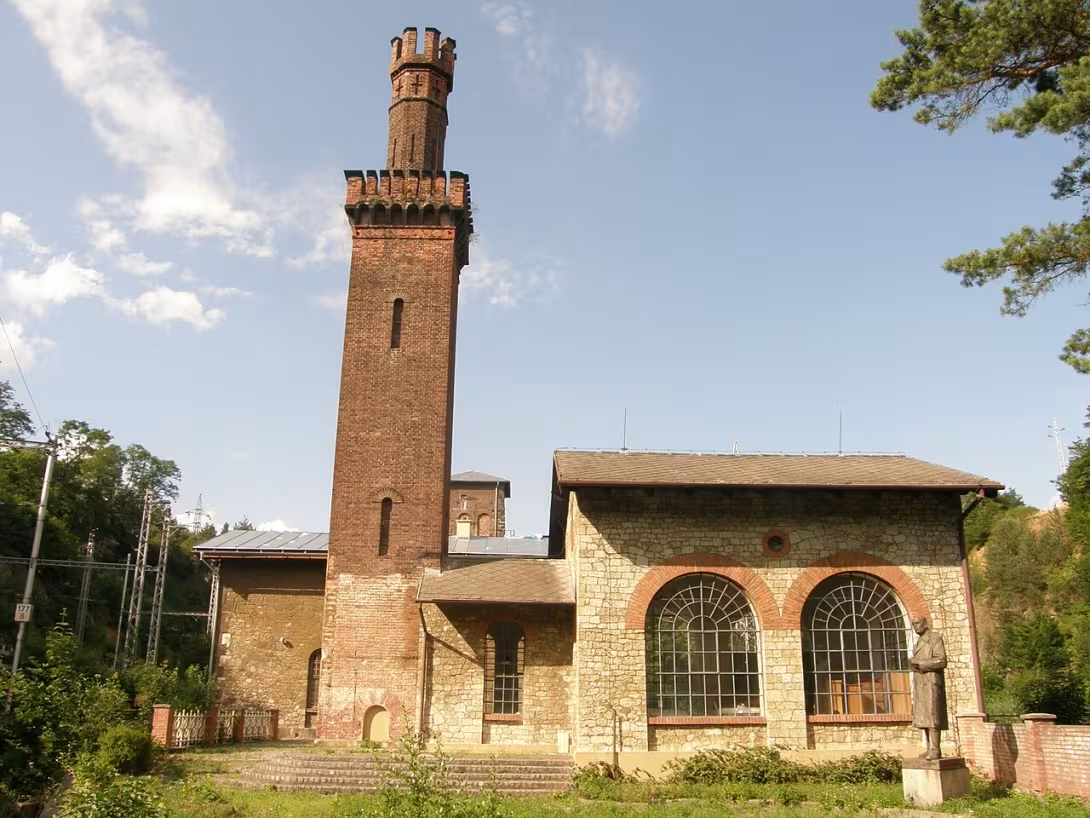
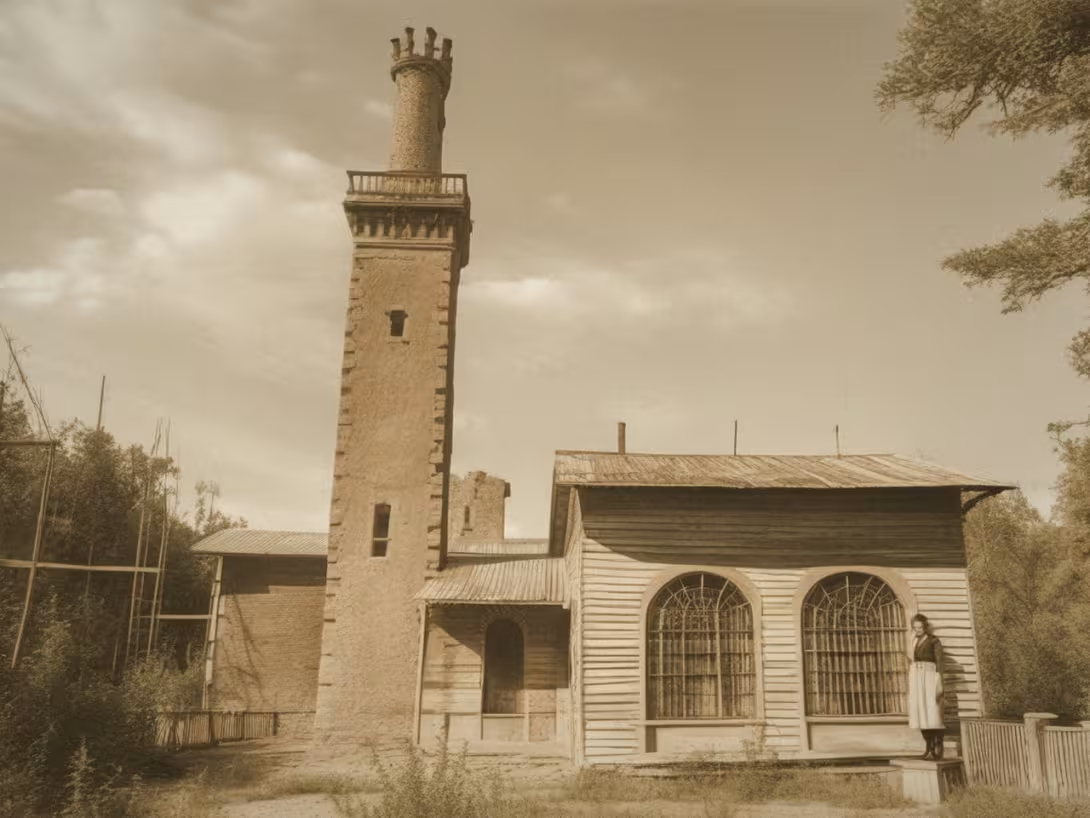
The historical appearance on the left is an AI-generated visualisation and serves as inspiration only.
Historical milestones
- 1853
- The launch of the building by Count Hugo František Salm.
- 1857
- Completion of neogotic site construction.
- 1893
- Turning the Flame into a foundry.
- 1923
- Stopping operations for economic reasons.
- 1994
- Location of exhibition exhibition on the premises.
- 2009
- Filming several scenes of a television film Born without giving birth in the cast.
Architectural development
The area was established in the middle of the nineteenth century in a neo-gothic style using unwashed bricks. Later he went through construction modifications, for example in 1906 the castle complex was built near the premises. Until now, part of the original buildings, including the tow tower and machinery room, have been preserved.
Historical events
In 1853 to 1857 there was a construction of the metal. In 1893, it was converted into a foundry. In 1923 the operation was stopped for economic reasons.
Owners
count Hugo František Salm, later a private company
Points of interest
- Klamova huť is popular called Klamovka and represents the first ever high furnace in Czech countries, which used mineral fuels to operate. - In 1853 to 1857, the owner of the Brno hardware factory had Count Hugo František Salm built and acquired her name according to Augusta Salm. - After the operation was stopped in 1923, the smelter was used as a water turbine test room where Viktor Kaplan performed his experiments. - In 1994 there was a exhibition exhibition and in 2009 several scenes of television film were filmed. - Nowadays the site is used by a private company producing fireplaces and fireplace stove.
Guide
This guide is narrated by a synthetic voice generated by artificial intelligence.
Show guide text
This text was created by artificial intelligence and has not been editorially reviewed. It may contain inaccuracies.
Welcome to Blansko. You are standing in front of one of the most significant technical monuments of this city, which is Klamova huť. If you look around you now, you will see an area that may surprise you with its form. You're probably used to factories and smelters looking like pure iron or grey concrete cubes, but here it is different. There are buildings in front of you made of brick, which have something in them from a castle or medieval fortress. Feel this special atmosphere of a place where a tough industry meets with aesthetic care for appearance.
Let us now stop at how this place was created and why it is standing here in the first place. We are in the middle of the nineteenth century, exactly in the years of a thousand eight hundred fifty-three to a thousand eight hundred fifty-seven. It was during this period that the owner of the Blanen ironworks, Count Hugo František Salm, had the premises built. It was a time of great change and technological expansion. The Count wanted to create a place that wasn't just functional but representative. At that time, things began to happen in the Czech countries that changed the face of the landscape, and it was this smelter that was one of the key stones of this development.
Now pay attention to the architecture of the buildings that surround the space in which you are located. Look closely at the facade details. Note that the buildings are not plastered, which gives them a raw but also a very elegant look. The whole complex was designed by a prince builder named Heinrich Girku in neo-Gothic style. This means that the architect wanted to create an impression of old Gothic buildings, even though he built them hundreds of years later. Look up and look for the elements that are typical of this style. Notice the decorative battlements and the shooting. It is a fascinating notion that these elements, which we commonly know from the knights' castles, are decorated here by buildings designed to melt iron. This contrast between military aesthetics and industrial exploitation is one of the largest uniqueness of this place.
When we think about people who were connected to this area, we have to get back to the Salm family. In addition to the founder of Hugo František, Augusta Salmová played its role here. According to her, she has acquired her popular name Klamovka, which is much more popular among the locals than the official name. The names of prominent personalities such as Jindřich Jaroslav Clam-Martinic or Viktor Kaplan meet in the history of this place. Each of them has brought a different story to the history of this complex, from asset management to technical jokes and innovation.
Now invite you to one of the really interesting things that makes this smelter unique not only in Blansko, but in all Czech countries. Imagine Klamova huť was the first high furnace in our territory that used mineral fuels to operate. That was a huge technological leap at the time. While other places were still relying on charcoal, more modern energy started to be used here, which enabled much more efficiency and performance. It was a journey to the future that was materialized in these brick walls.
But the history of this place was not just about constant growth. Let's remember how the site evolved in the next decades. In the year one thousand eight hundred ninety-three, there was a significant change when Klamovka turned into a foundry. The work continued here for another long time, until a thousand nine hundred twenty-three. But then came the hard times. The economic reasons that affected the industry at the time led to a shutdown. The fire went silent and her kilns stopped radiating heat. Buildings remained as silent witnesses to their own glory, waiting for their new role.
This role came much later. In the year one thousand nine hundred and ninety-four the premises were revived and there was an exhibition exhibition. This allows us to stand here today and admire these neogotic details. The interesting thing is that the atmosphere of this place has attracted also creators from the film area. In the year two thousand nine, the complex was selected as a set for shooting several scenes of a television picture called Born without childbirth. So imagine that not only did iron melt in these areas, but also made film images.
Now, if you look around you again and feel the silence of this place, remember how many layers of history these walls carry. From Count Salma's ambition to a technological breakthrough with mineral fuels to a silent decline and subsequent rebirth as a cultural space. It's where the art of architecture meets the hard craft of metallurgy.
I invite you now to further explore the premises. Go through the surrounding buildings slowly, take another look at the bricks, and try to imagine the noise and heat that once ruled here. Note every detail, every cimburia and shooting ground that tells you the story of a time when industrial construction was to become a jewel of the landscape.
Thank you for spending some time with us at the Klam Mound. We hope you are interested in this short trip to the history of Blansko and that you are leaving with a new look at this extraordinary area. We wish you a pleasant continuation in your discovery of the surroundings. Goodbye.
Tips for visitors
The best time to visit the Klam Mound is early in the morning or in the morning when the sunlight ideally radiates neo-gothic architectural details from the middle of the nineteenth century and underlines the historic atmosphere of this place. For transport you can use the proximity of the city of Blanska, while the resort is located between the river Svitavou and the railway line on the southern edge of the city, so the way along the water offers a pleasant walk. Take with you fixed shoes suitable for moving in the natural terrain around the river and the track, a small snack and a drink, because there are no shops on site. For photography, choose the exteriors of the building built by Prince Heinrich Girkou, the best light for the capture of neo-gothic style and brick masonry is in the morning when the sun falls on the main facade. In the vicinity within 30 minutes of the journey you can explore the adjacent natural zone along the river Svitavy and take a walk towards the southern edge of Blanska, where you can find a quiet environment for relaxation in nature.
Frequently asked questions
Can the monument be visited?
We have not verified whether this monument is accessible. Please ask the owner or operator, or the local municipal office.
Where is the monument?
Location: Blansko. The map on this page shows the exact spot.
Why is the monument protected?
It is listed in the Central List of Cultural Monuments of the Czech Republic as a cultural monument (register no. 1000125287).
Businesses nearby
Do you run a restaurant, accommodation, shop, museum, rental, wellness or other visitor service near this monument? Show yourself directly to the people heading to it — this is how they will see you in the app and on the web:
Events nearby





Zdroj akcí: otevřená data měst a obcí ČR (Národní katalog otevřených dat) a kalendář akcí Národního památkového ústavu.
Nearby
🏰 Historic sites (195)
- památník Johna Lennona 0.7 km
- Čertův hrádek 0.8 km
- Ed. Steckl 0.9 km
- Památník 1914-1918 0.9 km
- Ing. Jiří Truhlář, CSc. 1.6 km
- Josef Hybeš 1.7 km
- Hrdinům od Zborova 1.8 km
- J. Hybeš 2.0 km
- Starý hrad 2.2 km
- Pomník obětem světové války 2.2 km
- Jiří Wachtl 2.8 km
- Robert Czada 2.9 km web
- Lichtenštejnský památník 3.3 km
- Hradská cesta 3.3 km
- Památník Jana Evangelisty Chadta-Ševětínského 3.3 km
- Josef Žalman 3.4 km
- Karel Knapp 3.4 km
- Máchův památník 3.4 km
- Leopold Grabner 3.7 km
- Památník obětem 3.8 km
🍽️ Restaurants and dining (557)
- Statek Samsara 0.8 km
- Bistro U Ohně 0.9 km Edvarda Beneše 2497/1 +420 704 569 606
- Restaurace Na Pražci 0.9 km Nádražní 248/6 +420 516 418 639 web
- Hospoda na kopci 0.9 km
- Štrůdlkafe 1.1 km Svitavská 31a +420728940005
- Pivnice Písečná 1.2 km web
- U Golema 1.2 km Svitavská 1111/28 +420 516 412 524 web
- Kavárna a cukrárna V Pohádce 1.2 km Masarykova 555/35
- Kavárna Archa 1.3 km Hybešova 53a 606 267 975 web
- Fotbalová Hospůdka 1.4 km
- pizza siesta 1.6 km +420 608 757 574
- Kavárna Na Kině 1.6 km Hybešova 6 723 422 433
- U Šesti 1.7 km
- Stop Cafe 1.7 km
- Pivní a rumový bar Sklípek 1.8 km Sadová 149 739 460 684 web
- U Rechů 1.8 km web
- Pizzerie Piccolo 1.8 km Smetanova 299/4 703 343 878 web
- Bahňák 1.8 km
- Olberg 1.9 km web
- U Vláčku 1.9 km web
🏨 Accommodation (88)
- Statek Samsara 0.8 km +420 727 945 560 web
- Macocha 1.0 km Nádražní 1010/13
- Lucie 1.2 km +420 776 678 001 web
- Olberg 1.9 km
- Zámecká sýpka 2.3 km Dvorská 78/6a web
- U Strakatého koně 2.7 km +420 604 282 743; +420 604 288 993; +420 516 417 427 web
- Macocha 3.6 km web
- Panorama 4.2 km +420 516 418 111 web
- Vyhlídka 4.3 km +420 516 415 080 web
- Vranov 4.4 km
- Penzion Gallus 4.6 km web
- Penzion U Ježků 4.6 km +420 731 495 555 web
- Pod Horkou 4.7 km Pod Horkou 5
- Na Gruntě 4.8 km web
- Švýcárna 4.8 km
- Obůrka 4.9 km +420 606 224 972 web
- Luxhotel ONYX 5.3 km
- Ubytovna FK Rájec-Jestřebí 6.9 km
- Ubytování Jedovnice 7.2 km +420 737 180 190 web
- Ubytovani u Macochy 7.3 km +420 775 623 118 web
🚲 Rentals and sport (106)
- Kola Novák 1.8 km +420 516 419 530 web
- Lázně 2.3 km
- Bowling Blansko 2.3 km Dvorská 2388/4
- Strawberry Field 2.7 km
- Sportisimo 2.8 km
- Lezecká škola Lažánky 4.1 km
- Motokrosový areál Vranovský žleb 4.4 km
- Stadion Jindřicha Svobody 4.9 km
- Sokolovna 5.0 km
- ASK Lipůvka 6.7 km Lipůvka 360
- Cykloplus 7.4 km +420 602712713 web
- Enjoy Riding 7.6 km Zahumení 32/26 web
- Půjčovna lodí a šlapadel 8.2 km
- Wake Master Jedovnice 8.5 km
- Černohorské koupaliště 8.7 km
- Střelnice Březinka 8.9 km
- BB cyklosport 9.0 km web
- Badminton Jehnice 9.1 km
- Sportovní hala 9.1 km
- Sokolovna 9.4 km
🥾 Hiking and nature (403)
- Žabák vodoměrný 0.9 km
- Výří skála 1.1 km
- U Sasanky 1.4 km
- bývalý Ježkův most 1.7 km
- Ježkův most 1.7 km
- U Tetřeva 1.7 km
- Lavička pod 100 letou jabloní 2.2 km
- Výrovka 2.3 km
- Kachličková studánka 2.5 km web
- Čtyři douglasky 2.7 km
- Studánka svatého Huberta 2.9 km web
- U Kukačky 2.9 km web
- Pod Hradem 3.4 km web
- Lovecká studánka 3.5 km
- Studánka nad Pražskou 3.5 km
- Vyškůvka 3.6 km
- Pramen Pod Doubravkou 3.7 km
- Prameniště Pod Pískovnou 3.9 km
- Baba 3.9 km
- Kuchtička 3.9 km
Accommodation nearby
Trips and activities nearby
Guided tours, tickets and activities nearby from GetYourGuide
Affiliate link: if you buy from the partner, we may receive a commission. The price for you does not change.
Search tours and activities →Themed route
Klamova huť Type: Industrial landmark, former iron smelter. Why it is worth a visit: It is a unique document of historical metallurgical production in the region where you can admire preserved technological units and architectural elements of industrial epoch.
Svitava River Type: Water flow, natural environment. Why is it worth a visit: Water forms the natural boundary of the area and offers a quiet atmosphere for a short walk along the shore, which allows you to combine industrial history with the natural nature of the landscape.
Railway line Type: Transport infrastructure, historical line. Why is worth a visit: Walk along the line south of the city allows you to see how the industrial heritage connects with modern transport, and provides an interesting view of the technical background of the location.
Municipality of Blansko Type: City, cultural and civic center. Why is worth a visit: As the starting point and the end point of the route, it offers the opportunity to supplement the trip for refreshments or to become familiar with local history in a broader context that has influenced the formation of metallurgical production in the surrounding area.
The immediate area of the Klama Huti Type: Space, technical constructions. Why is worth a visit: Detailed examination of individual buildings and space inside the complex reveals the specifics of the operation of the metal and allows you to look into the interior where previously melted iron.
Seasonal recommendations
Spring awakens the forests around Blansko into its bright green colours and the waking nature around the old plant offers a view of the growing ferns and blooming spring herbs. The sun rays penetrate the still incomplete treetops and create interesting shadow games on the stone walls, with the air pleasantly cold and moist. For the spring trip, take firm waterproof shoes, because forest roads are drenched in melting snow and also a light windbreaker. The best time to visit is in the morning, when morning fog slowly retreats and forest birds wake up.
Summer brings deep shade and cool to the valley under thick leafy vegetation, which provides a welcome shelter from hot days, while the surrounding forest grows rich green tones. The sun shines high in the sky, but to the historical walls is only a dim light shining through thick trees. Choose breathable clothes for summer strolls and do not forget the effective insect repellent, which often occurs in the warm and moist forest at the watercourses. The best time to quietly explore the site are late afternoon hours when the sun's rays fall below and create soft lighting ideal for the perception of the ancient atmosphere.
Autumn turns the whole area into a colorful palette of shades from yellow to red to brown, which gives the old industrial image an extremely photogenic and melancholic character. The weak sun, low above the sky, draws long shadows, and early in the afternoon, it is beginning to get dark, underlining the mysterious nature of the whole place. Dress with a warm fleece sweatshirt and waterproof jacket because autumn weather is usually variable and falling leaves can hide slippery stones on the way. We recommend you leave around noon to use maximum daylight and enjoy the warm colors of the autumn forest.
Winter covers the whole area in silence and often into a snow blanket that turns the surrounding landscape into a quiet white kingdom without the thrill of civilization. The lighting is very muted in the short days and the grey sky makes the rough beauty of old stone and metal structures stand out. High-quality and warm winter clothes including hat, gloves and tight shoes with anti-slip soles are essential for the winter climb, as the roads can be icy. The best time to visit is early afternoon, as long as there's at least a little natural light out there before winter darkness comes down quickly.
Visualizations and artistic views


The visualisations are generated by artificial intelligence and serve as inspiration.
Photos from the area
Real photos taken near the monument


Zdroj a licence jsou uvedeny u každého snímku.
Tips from visitors
No tips yet. Be the first!
Log in and add your tip.
Sources and literature
Photos: Lukáš Malý / Public domain, rozlišení zvýšeno umělou inteligencí — Wikimedia Commons. The author and licence also appear when you hover over the image.
Faktickým podkladem tohoto textu byl článek na Wikipedii, jehož autory jsou přispěvatelé Wikipedie. Článek je dostupný pod licencí CC BY-SA 4.0.
Location on the map
More monuments – Blansko
Show all in the municipality


Příběhy a pověsti
Legendy, pověsti a příběhy spjaté s touto památkou

Fotografie návštěvníků
Přidat fotografiiZatím žádné fotografie. Buďte první, kdo přidá fotografii z návštěvy!
Máte k místu vzpomínku nebo zajímavý příběh?
Log in a přidejte svou fotografii nebo hodnoťte.
Za ověřenou návštěvu v aplikaci získáte víc bodů — poznáme podle GPS, že jste na místě.
Reviews and comments