






klášter voršilek v Kutné Hoře Monastery
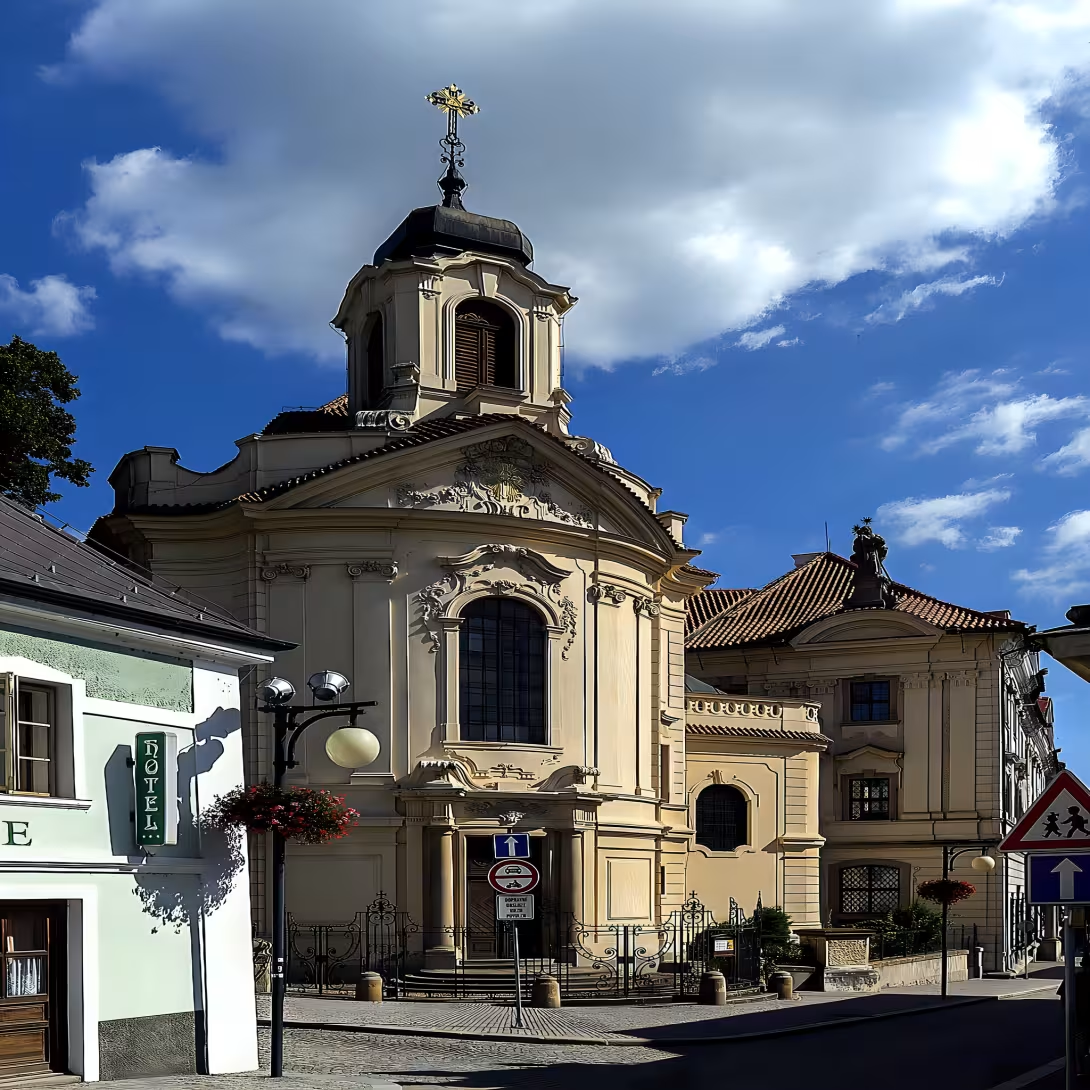
The Convent of St. Voršila in Kutná Hora is a notable cultural monument, celebrated for its baroque architecture and historical significance. Situated in the city's Vnitřní Město district, it was established in 1712 by Countesses Trauttmansdorff-Weisberg. The convent became an important educational center within the Habsburg monarchy due to its architectural prominence and role in Czech education.
The origin of the Convent dates back to early 18th-century Europe, during the influence of the Habsburg Monarchy. Countesses Eleonora and Maxmiliána Trauttmansdorff-Weisberg initiated its founding after exploring potential sites between 1708–1709. The first nuns arrived on May 24, 1712, led by Mother Superior Anna Aloisa Klusáková z Kostelce. They began teaching shortly thereafter, starting a long tradition of education at the convent.
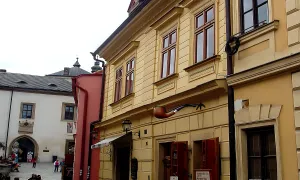
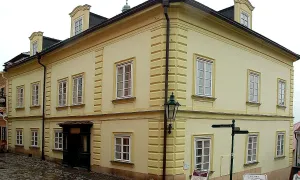
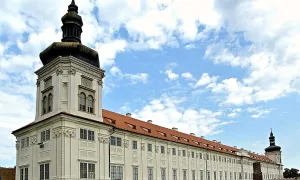
Architecturally, the convent was constructed under Kutná Hora's architect following plans by Kilián Ignác Dientzenhofer from 1735 to 1743. Although intended as a five-winged structure with a central church, only three wings were completed. The building features baroque elements and sculptures created by Jan Brázda between 1738 and 1739, including angelic figures and the Trauttmansdorff family crest above the main entrance.
Ownership of the convent has changed several times throughout its history. Initially founded by the Countesses Trauttmansdorff-Weisberg in 1712, it remained under their influence until 1949 when state intervention ended its activities and relocated the nuns to Broumov. The Ministry of the Interior took over in 1964, using the site for archival purposes until 1991, when ownership was restored to the Sisters of St. Voršila.
Key events at the convent include its use as a hospital during the Battle of Chotusice in 1742 and its role in Czech education, notably being among the first institutions to transition from German to Czech instruction in 1807. The convent library, established by Josef Herzan, further highlights its educational contributions. In 1897–1901, Friedrich Ohmann added a neo-baroque church inspired by Dientzenhofer's work, enhancing the site's architectural significance.
Today, the Convent of St. Voršila serves as an eight-year Církevní gymnázium operated by the Královéhradecký Bishopric. The convent remains a vibrant educational institution while preserving its historical legacy. Visitors can explore its rich history and appreciate its baroque architecture, making it a worthwhile destination for those interested in cultural heritage.
The Convent of St. Voršila stands as a testament to the enduring influence of education and architectural beauty. Its storied past and continued relevance invite visitors to delve into its history and experience the legacy left by generations of nuns dedicated to learning and faith.
Then and now
Drag the slider to compare how the landmark may have looked when it was built with the view today.
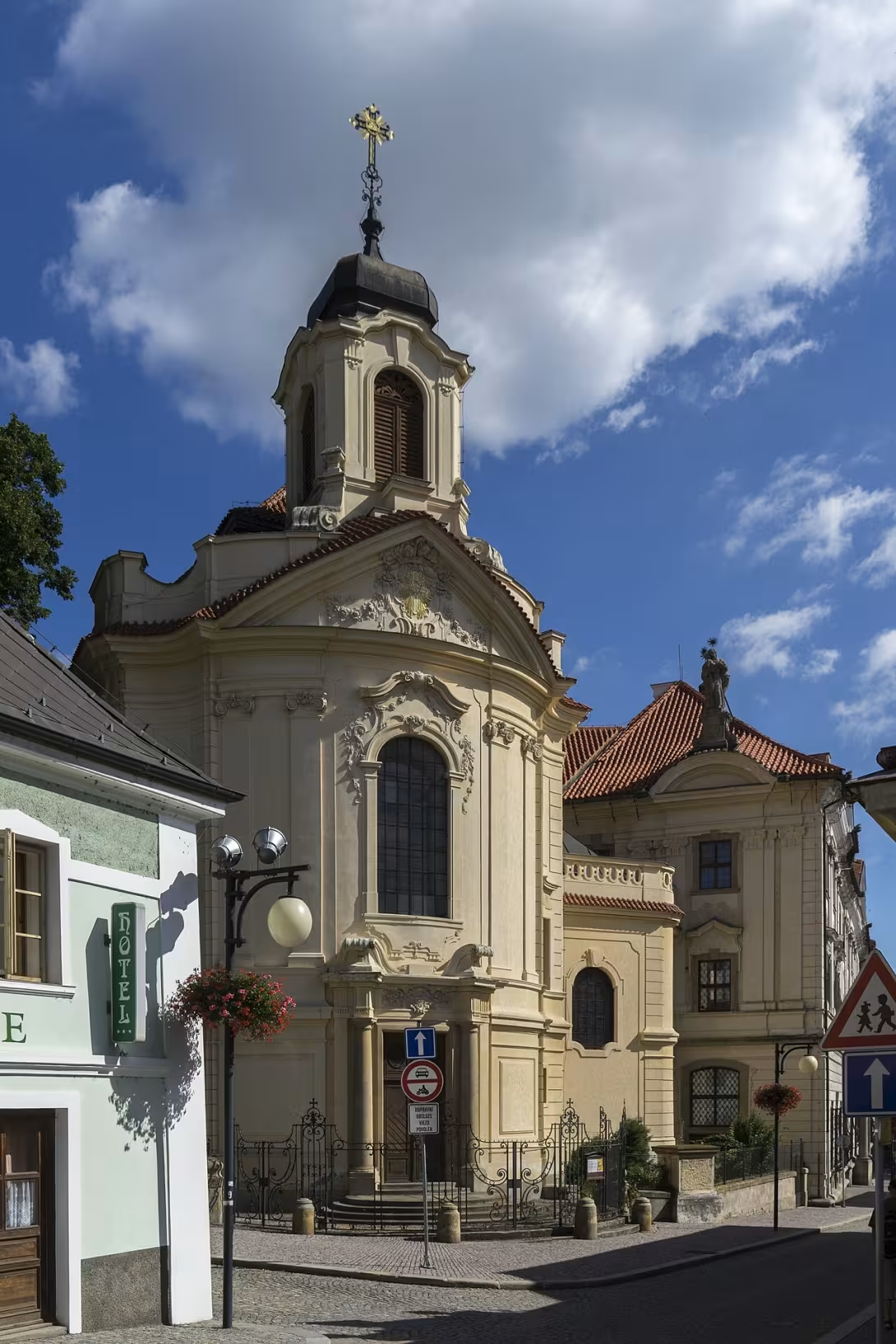
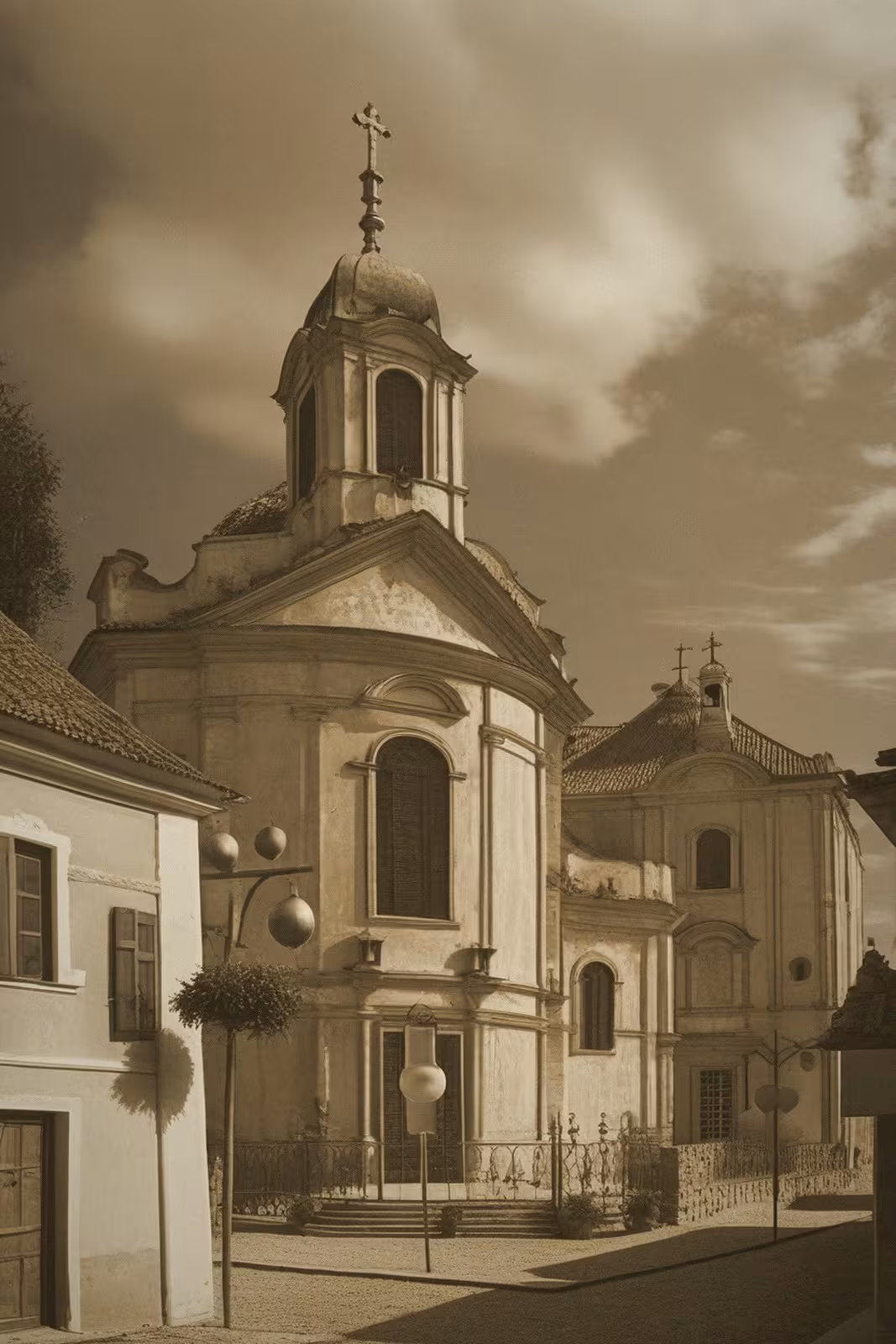
The historical appearance on the left is an AI-generated visualisation and serves as inspiration only.
Historical milestones
- 1712
- The convent was founded in Kutná Hora.
- 1743
- Construction of the three wings completed.
- 1897
- Neo-baroque church addition began.
- 1901
- Completion of the neo-baroque church addition.
Architectural development
The convent's construction began under the guidance of Kilián Ignác Dientzenhofer in 1735, with completion of three wings by 1743. The original plan for a five-winged structure was not fully realized. In 1897-1901, Friedrich Ohmann designed and added a neo-baroque church inspired by Dientzenhofer's work.
Historical events
- 1712
- The convent was founded by the Countesses Trauttmansdorff-Weisberg.
- 1742
- The building served as a hospital for wounded Prussian soldiers after the Battle of Chotusice.
- 1949
- The convent's activities were forcibly ended, and the nuns were interned in Broumov.
- 1994
- The Sisters of St. Voršila returned to the restored convent.
Points of interest
- The Convent of St. Voršila was originally intended to be a five-winged structure with a central church; however, only three wings were completed due to unknown reasons, leaving its architectural plan partially unrealized.
- During the Battle of Chotusice in 1742, the convent served as an emergency hospital for wounded soldiers, showcasing its role beyond education and religious activities during times of conflict.
- The transition from German to Czech instruction at the convent in 1807 marked it as one of the pioneering institutions in embracing national language education, reflecting broader socio-political changes within the Habsburg Monarchy.
- Sculptures by Jan Brázda, including angelic figures and the Trauttmansdorff family crest above the main entrance, highlight the artistic collaboration that enriched the convent's baroque architecture during its construction period from 1735 to 1743.
- After World War II, in 1949, state intervention led to the relocation of nuns to Broumov and a shift in the convent’s function to archival purposes under the Ministry of the Interior until 1991 when it was returned to the Sisters of St. Voršila, illustrating the impact of political changes on religious institutions.
Guide
This guide is narrated by a synthetic voice generated by artificial intelligence.
Show guide text
This text was created by artificial intelligence and has not been editorially reviewed. It may contain inaccuracies.
Welcome to the historic Convent of St. Voršila in Kutná Hora, a remarkable cultural monument that stands as a testament to both architectural beauty and historical significance. As you stand here at this site, take a moment to soak in the grandeur before you. The complex exudes an aura of timelessness, with its baroque architecture hinting at stories from centuries past.
The foundation of this convent dates back to 1712 when it was established by the Countesses Trauttmansdorff-Weisberg. Their vision was not only to create a religious sanctuary but also to contribute to education and culture within the Habsburg monarchy, making it one of their era's most significant convents.
As you walk around this impressive structure, notice the architectural finesse that defines its presence. The complex features three completed wings, originally intended as part of a grand five-winged design with a central church—a vision only partially realized. Architect Kilián Ignác Dientzenhofer played a crucial role in shaping what we see today, alongside Friedrich Ohmann who later contributed to the neo-baroque church addition that was completed in 1901.
While exploring, remember the key figures associated with this place: Eleonora and Maxmiliána, Countesses of Trauttmansdorff-Weisberg, whose foresight led to its founding. Anna Aloisa Klusáková z Kostelce also played a significant role in its history.
Now, let your curiosity guide you as we delve into one of the convent's intriguing mysteries: during the Battle of Chotusice in 1742, this very site served an unexpected purpose as an emergency refuge. It’s fascinating to think about how these walls have witnessed such pivotal moments in history.
As you continue to explore the Convent of St. Voršila, let your imagination wander through its corridors and gardens. Each step here is a journey back in time, offering insights into the lives that once filled this space with purpose and devotion.
Thank you for joining me on this exploration. I invite you to delve deeper into the stories that these walls hold, discovering more about their historical significance as you continue your visit through Kutná Hora's rich heritage. Safe travels on your journey of discovery!
Tips for visitors
The best time to visit the Convent of St. Voršila is during late spring or early autumn, when the weather is mild and pleasant for exploring outdoor areas and enjoying the serene atmosphere of Kutná Hora's historic sites. These seasons offer a comfortable climate that enhances your experience without the crowds typical of peak tourist months like summer.
When visiting the Convent of St. Voršila, consider bringing comfortable walking shoes as you may want to explore other nearby attractions on foot. Additionally, carrying a light jacket or sweater is recommended due to variable weather conditions in Central Bohemia. Don't forget your camera to capture the architectural beauty and tranquil surroundings.
For photography enthusiasts, the best spots around the convent are those that offer views of its historic architecture against the backdrop of Kutná Hora's picturesque landscapes. Early morning light provides a soft glow ideal for capturing the intricate details of the building, while late afternoon offers warm, golden lighting that enhances the overall ambiance.
Nearby attractions within 30 minutes include the UNESCO World Heritage site of St. Barbara's Church and the Sedlec Ossuary, both renowned for their historical significance and unique features. These sites offer a deeper insight into Kutná Hora’s rich heritage and are ideal extensions to your visit at the convent.
For families with children, the Convent of St. Voršila can be an educational outing that introduces them to local history and architecture. Consider planning a day trip that includes other family-friendly sites like Sedlec Ossuary, which offers intriguing exhibits suitable for all ages. Engaging your children in stories about the convent's past can make the visit more memorable.
Frequently asked questions
Can the monument be visited?
Religious buildings are usually open mainly during services; at other times a visit is normally arranged with the parish or the operator. We have not verified specific times.
Where is the monument?
Location: Jiřího z Poděbrad 288/13, Kutná Hora-Vnitřní Město, Kutná Hora, Středočeský kraj. The map on this page shows the exact spot.
Why is the monument protected?
It is listed in the Central List of Cultural Monuments of the Czech Republic as a cultural monument (register no. 24045/2-1043).
Businesses nearby
Do you run a restaurant, accommodation, shop, museum, rental, wellness or other visitor service near this monument? Show yourself directly to the people heading to it — this is how they will see you in the app and on the web:
Nearby
Kutná Hora is renowned for its historical sites, including the UNESCO World Heritage site of the St. Barbara's Church and the Sedlec Ossuary. The city is surrounded by picturesque landscapes typical of the Central Bohemian Region.
Accommodation nearby
Trips and activities nearby
Guided tours, tickets and activities nearby from GetYourGuide
Affiliate link: if you buy from the partner, we may receive a commission. The price for you does not change.
Search tours and activities →Themed route
Tematická výletní trasa: Klášter Voršilek a historické památky Kutné Hory
1. Klášter voršilek
- Typ: Historický klášterní komplex
- Proč stojí za návštěvu: Klášter Voršilek je jedním z nejstarších a nejlépe zachovaných klášterních komplexů v České republice. Jeho historie sahá do 13. století, kdy byl založen řádem cisterciáků. Navštěvující mohou prozkoumat jeho krásný gotický kostel Panny Marie a klidné klášterní nádvoří, které nabízí pohled do života mnichů z minulých staletí.
2. Kostel svaté Barbory
- Typ: Historický kostel
- Proč stojí za návštěvu: Tento gotický kostel je nejen architektonickou perli, ale také patří mezi UNESCO Světové dědictví. Kostel svaté Barbory je známý svou vysokou věží a bohatou historií spojenou s mincovnictvím Kutné Hory. Jeho interiér obsahuje fascinující umělecká díla, která přitahují návštěvníky z celého světa.
3. Sedlec Ossuary
- Typ: Historický a architektonický komplex
- Proč stojí za návštěvu: Sedlec Ossuary je jedinečnou památkou, která kombinuje historii s uměním. Tato kaple je známá svými skeletálními dekoracemi a obsahuje tisíce lidských kostí, což vytváří působivé a nádherné umělecké dílo. Je to místo plné historického významu a zároveň poskytuje jedinečnou perspektivu na minulost.
4. Staroměstské náměstí
- Typ: Historické městské náměstí
- Proč stojí za návštěvu: Staroměstské náměstí je srdcem Kutné Hory a nabízí pohled na historii města. Zde se nachází řada historických budov, včetně radnice a kostela svatého Jakuba Staršího. Náměstí je ideálním místem pro relaxaci a prohlídku po návštěvě dalších památek, s možností si užít čajovny nebo kavárny v okolí.
Tato trasa nabízí pohled na bohatou historii Kutné Hory a její klíčové památky, které představují důležité kapitoly české historie.
Seasonal recommendations
Spring: The arrival of spring at the Břevnov Monastery in Kutná Hora brings a refreshing atmosphere as nature begins to awaken from its winter slumber. The surrounding landscape is adorned with blooming flowers and lush greenery, providing a picturesque backdrop for visitors exploring the historic site. This season offers a balance between natural beauty and manageable visitor numbers, allowing for a more intimate experience. It's advisable to dress in layers, as temperatures can vary throughout the day. Early morning visits are recommended to enjoy cooler temperatures and softer light that accentuates the monastery’s architectural details.
Summer: Summer at Břevnov Monastery is characterized by vibrant energy and longer daylight hours, making it a popular time for tourists. The lush greenery around Kutná Hora enhances the beauty of the site, while the warm weather invites visitors to explore both indoors and outdoors. This season can attract larger crowds, especially during peak tourist months, so planning ahead is crucial. Arriving early in the day helps avoid the midday heat and ensures a more enjoyable visit. Comfortable walking shoes and light clothing are recommended, along with staying hydrated throughout your exploration.
Autumn: Autumn transforms Břevnov Monastery into a stunning spectacle of warm colors as the leaves turn shades of red, orange, and yellow. The cooler temperatures create a serene atmosphere, perfect for contemplative walks through the historic grounds. This season offers fewer visitors compared to summer, allowing for a more peaceful experience. It's advisable to wear layers to accommodate fluctuating temperatures throughout the day. Carrying an umbrella or raincoat is wise, as autumn weather can be unpredictable with occasional showers that add to the area’s natural charm.
Winter: Winter at Břevnov Monastery presents a unique and enchanting atmosphere, with snow-covered grounds adding a magical touch to the historic site. The shorter days mean visiting hours are reduced, so planning your visit is essential. Winter temperatures can be quite cold, necessitating warm clothing such as coats, hats, gloves, and thermal layers. While the monastery itself offers shelter from the elements, exploring the surrounding areas might require some preparation for icy paths. Despite fewer tourists during this season, it’s a perfect time to appreciate the tranquility of Kutná Hora in its winter garb.
Visualizations and artistic views


The visualisations are generated by artificial intelligence and serve as inspiration.
Photos from the area
Real photos taken near the monument


Zdroj a licence jsou uvedeny u každého snímku.
Tips from visitors
No tips yet. Be the first!
Log in and add your tip.
Sources and literature
Photos: Thomas Ledl / CC BY-SA 4.0, rozlišení zvýšeno umělou inteligencí — Wikimedia Commons. The author and licence also appear when you hover over the image.
Faktickým podkladem tohoto textu byl článek na Wikipedii, jehož autory jsou přispěvatelé Wikipedie. Článek je dostupný pod licencí CC BY-SA 4.0.
Location on the map
More monuments – Kutná Hora-Vnitřní Město
Show all in the municipality

Příběhy a pověsti
Legendy, pověsti a příběhy spjaté s touto památkou

Fotografie návštěvníků
Zatím žádné fotografie. Buďte první, kdo přidá fotografii z návštěvy!
Log in a přidejte svou fotografii nebo hodnoťte.
Za ověřenou návštěvu v aplikaci získáte víc bodů — poznáme podle GPS, že jste na místě.
Reviews and comments