



Koksovna Vítkovických železáren Coking house
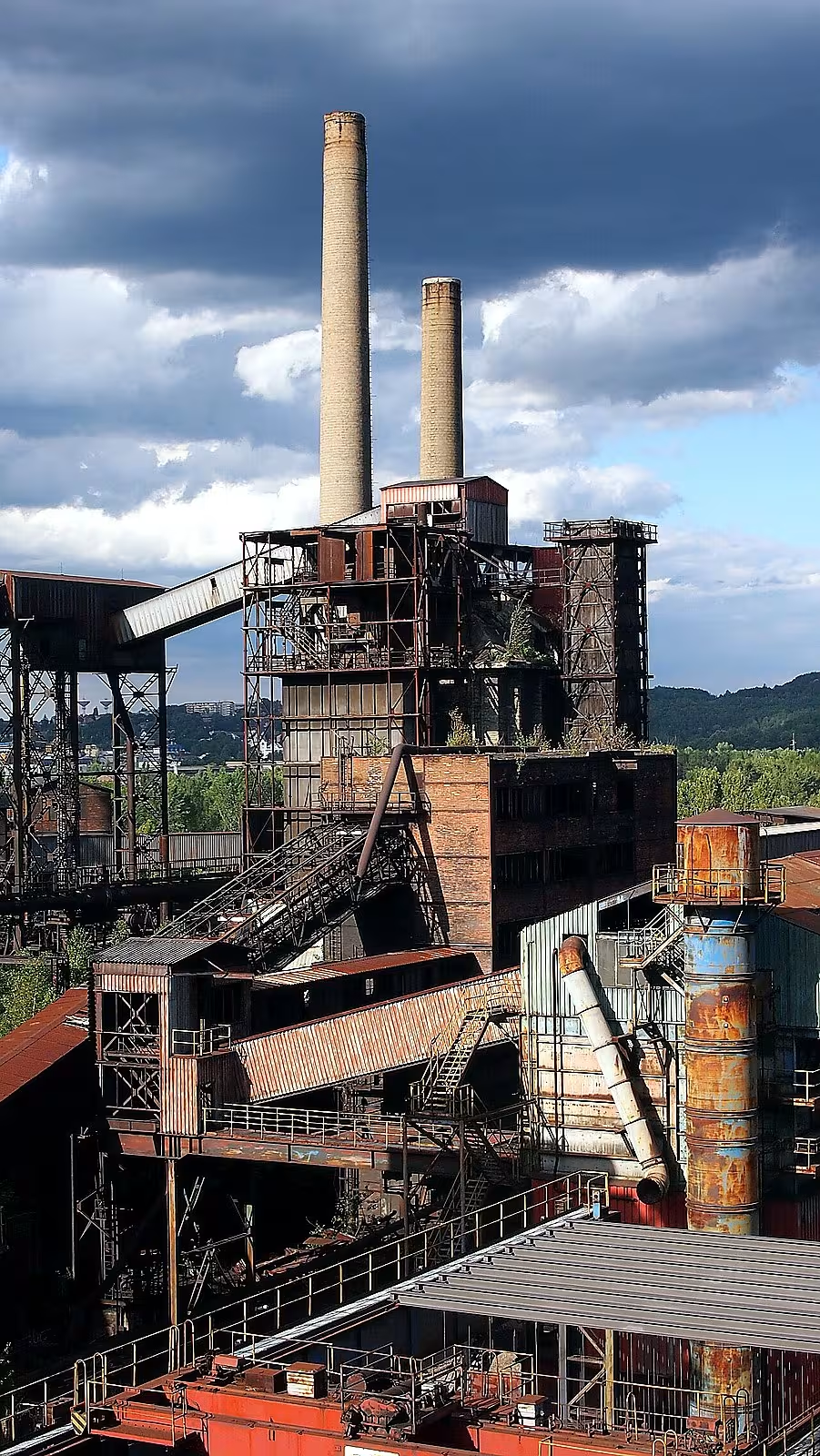
Objekt se nedochoval — na místě dnes nestojí. Následující text popisuje jeho historii, ne současnou návštěvu.
The coke plant was located in a key position between Dol Hlubina and the blast furnaces of Vítkovické železány, where coke was produced from Ostrava's black stone coal necessary for the iron operation. She was one of the most important objects of her time long before being included in the list of protected sites.
The beginnings date back to 1830, when the first paddling furnace was put into operation for the production of welding iron using Ostrava's black stone coal. The first mention of coke in these plants dates back to 1831 and 1836, when the first high furnace filled with coke was also launched. The initial production was carried out by direct coking in militias, but this soon proved ineffective. Instead, Schaumburg-type fences were built - there were already ten of them between 1848 and 1850. In 1835 there were two batteries of hive furnaces at the water jet, in 1843 the area was purchased by S. M. Rothschild.
Since 1873, the coking houses have moved under Vítkovicka's upper and metallurgical society. In the following decades, the load of the turbine modernization: between 1859 and 1880 there were ten Dulait kilns, in 1881 forty-four Gobiet kilns. The year 1885 brought the introduction of the progressive battery Otto-Hoffmann. The coke chambers were now heated with their own coke oven gas and coke was mechanically pushed out by a steam engine - an important step forward in efficiency.
A more substantial turn came in 1889, when a battery with 90 kilns was started equipped with regenerative heating of combustion air. This system made it possible to capture by-products - tar, benzole, phenol and ammonia - which led to the development of other industrial plants on the premises. In 1900, a new shop of coal and battery Otto-Hoffmann no. V and VI were built after 40 coke chambers; But they only worked until 1919.
Период 1909 to 1911 brought construction of three batteries with a total of hundred and eighty-nine furnaces whose operation ended between 1928 and 1929. The Koppers system was followed - the first in 1913 with 40 furnaces (until 1930), another in 1929 with 30 Koppers (until 1961) and in 1930 with 40 furnaces (also up to 1961). At the same time, Otto's battery was built with thirty-five kilns of loose operation which they operated until 1958.
There was a modernization in the '50s and' 60s. In 1961, the Koppers kilns were rebuilt for battery No IV (forty-four kilns), in 1964 for battery No V (forty-four kilns). In part, the species tanks and the new mill were built. In 1976, the last two batteries with the ability to process 16,6 tons of coke per kiln per day were active.
The operation of the entire coking plant ended in 1997. In April 2000, the area with Dol Hlubina and high furnaces was declared a cultural monument and in 2002 it acquired the status of a national cultural monument. Battery No IV was demolished in the same year. Today the remaining equipment serves as a reminder of the golden age of Czech metallurgy.
Then and now
Drag the slider to compare how the landmark may have looked when it was built with the view today.
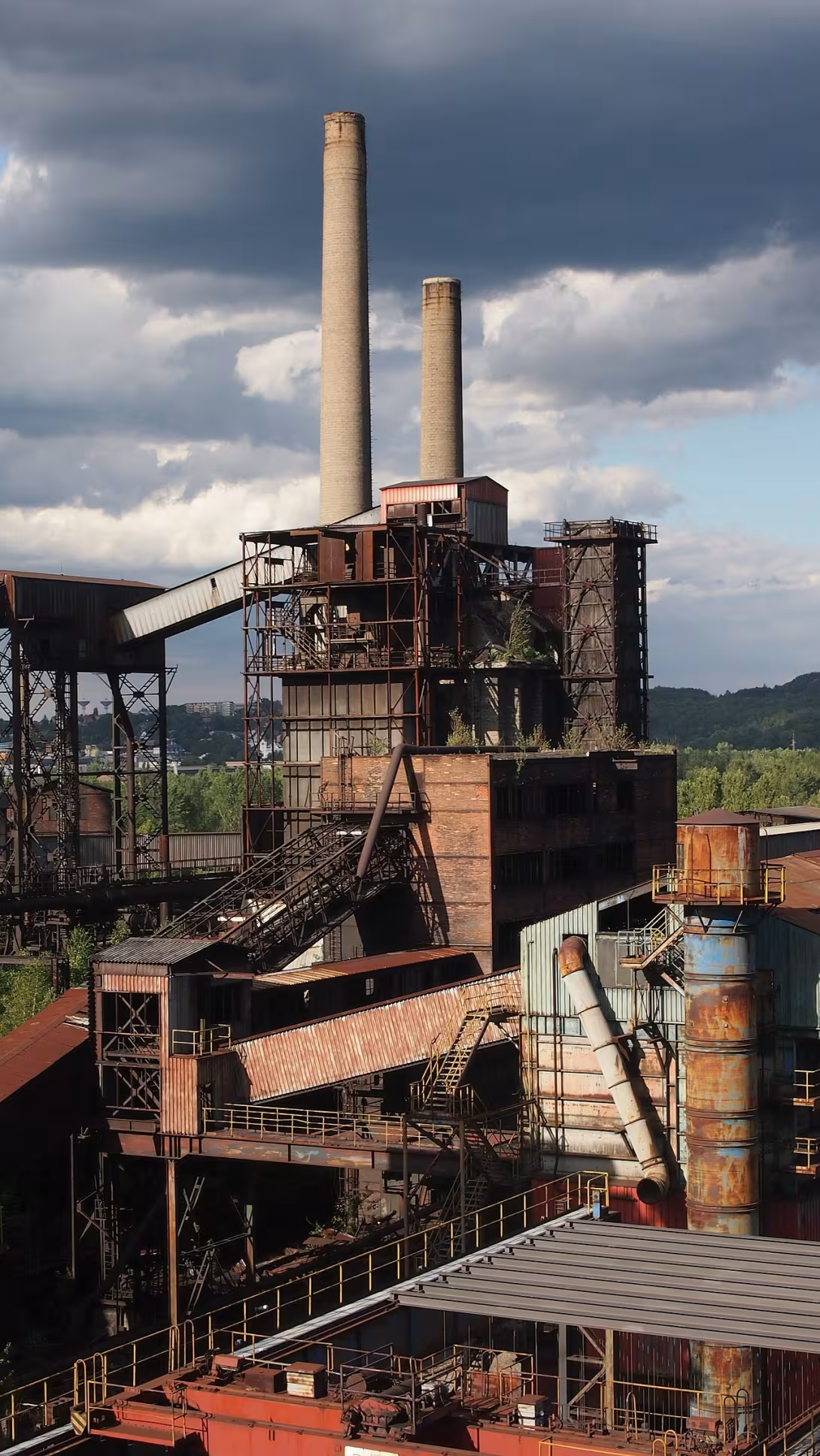
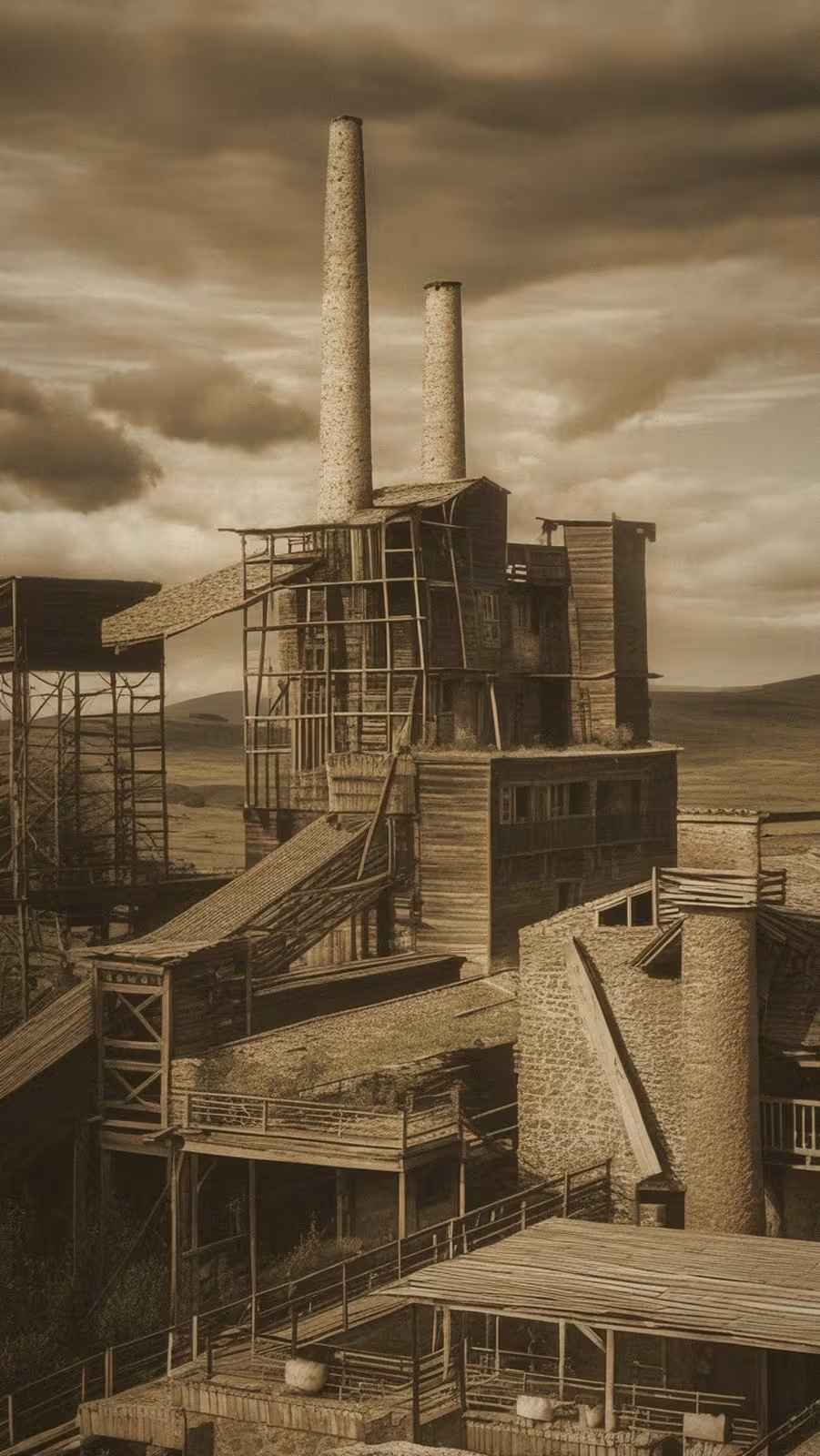
The historical appearance on the left is an AI-generated visualisation and serves as inspiration only.
Historical milestones
- 1831
- First mention of coke production in the Vítkovic region, originally by direct coke in milestones.
- 1848
- Introduction of 10 blast furnaces for coke production.
- 1881
- The introduction of 64 Gobiet-type coke ovens.
- 1900
- Built a new coal plant and put into service battery by the Otto-Hoffmann kiln.
- 1909
- Battery installation with 129 coke ovens.
- 1961
- Modernization of Koppers coke oven and the introduction of improved technologies.
- 1997
- End of operation of the coke plant.
Architectural development
The coke house developed in several stages: the first fences were built in the early 19th century, followed by batteries of Gobiet and Otto-Hoffmann kilns. In the 20th century, modern batteries with regenerative heating and loose operation, such as Koppers or Otto batteries, dominated. The area was built mainly from bricks and reinforced concrete, with emphasis on industrial functionality and technological advancement.
Historical events
- 1831
- First mention of coke production in the Vítkovic region, originally by direct coke in milestones.
- 1881
- The introduction of modern coking furnaces of the Gobiet type, which increased productivity and production efficiency.
- 2000
- Declaration of the complex (including coking plant) cultural monument of the Czech Republic.
- 2002
- Declaration of the site by the national cultural monument for its exceptional technical and historical value.
Owners
The site was originally owned by Vítkovický Mining Association, which operated coal mining and the iron industry. After World War II, the State became the owner, namely the national company Vítkovice. In 2000 the site was declared a cultural monument and later a national cultural monument, which ensured its protection and preservation for future generations.
Points of interest
- The coke mill was a key part of the production of coke iron between Dol Hlubina and the blast furnaces of the Vítkovické ironworks, making it an important hub of metallurgical operation.
- The first poodle furnace for the production of welding iron started to work here already in 1830, the first mention of coke in the premises dates back to 1831 and 1836.
- Between 1848 and 1850 there were built ten wall furnaces of the Schaumburg type, which replaced the inefficient method of direct coke in militias.
- In 1889, a battery with 90 furnaces with regenerative heating was launched, which enabled the capture of by-products such as tar, benzole, phenol and ammonia.
- The area was declared a cultural monument in 2000 and acquired the status of national cultural monument in 2002.
Guide
Show guide text
This text was created by artificial intelligence and has not been editorially reviewed. It may contain inaccuracies.
Welcome to this mighty shadow of the past. You are standing in front of the remains of the Vítkovice iron mill, the former heart of the Ostrava metallurgical industry, which for more than 150 years supplied coke to high furnaces and thus powered the entire metallurgical production. In front of you is the site that once connected the mine of the Deep with the blast furnaces - the place where coal became coke, the foundation of every metallurgical process. There's still a trail of fire that's been burning here for centuries.
Let's make history. The first mention of coke production in this area dates back to 1831, when it began with primitive methods of direct coke in milestones - simple stone chambers. But that was just the beginning. In 1848 there were already ten fenced furnaces, which gradually resulted in more modern systems. In 1881, the first 64 Gobiet furnaces appeared, which significantly made production more efficient. But the real boom came in 1900 when a new coal shop was built and put into operation a battery of Otto-Hoffmann ovens. This was a turning point - the coke mill became a technological centre that managed to cope with the growing demands of the metallurgical industry.
Now pay attention to what you're seeing. In front of you is the site that once formed massive coke batteries - a series of furnaces that stretched all over the territory. Notice how some of the original structures are preserved here, which reflect the gradual modernization. The furnaces took turns from early fences to advanced Koppers systems from 1961. These modern batteries were equipped with improved technologies that made it more productive and efficient. Although some elements are now just a shadow of what once was, you can imagine how massive blocks of coke were created here, which were then transported to high furnaces.
The coke house was a key hub of metallurgical operation. You're standing right where coal became coke - the foundation of every metallurgical process. Without coke, the blast furnaces could not work, and therefore this coking plant was one of the most important places in the whole Czech metallurgical production. In 1830, the first poodle furnace started working for the production of welding iron, which shows how important this site has played since the very beginning.
Now look around you and try to perceive the atmosphere of this place. The coke house was not only a technological centre but also a symbol of industrial progress. Note how some of the original building elements are preserved here, which reflect the gradual modernization. Although some of the furnaces are no longer in operation, their tracks are still visible and remind us of the important role played by this site in Ostrava's history.
One of the most interesting things about this place is its connection to high furnaces. The coke house and the blast furnace were like two inseparable parts of one whole. Coke from this coking plant was transported directly to the blast furnaces where it was made of iron. This was possible thanks to the strategic location of the complex between Dol Deep and the blast furnaces. This site was so important that new technologies developed over the years to increase productivity and efficiency of the entire metallurgical process.
Let's now look at some of the key stories that are connected to this coke house. One of them is the development of the metallurgical industry in Ostrava. In the 19th century, the first smelters and cocoons began to be built here, which became the basis for further development of the city. Koksovna Vítkovických železáren was one of the most important projects that contributed to making Ostrava one of the most important industrial centres in Czech countries.
Another interesting fact is that this coking plant has gone through several generations of technology. Each has brought innovation and efficiency. From the early fence furnaces to modern batteries with regenerative system. These innovations have enabled the coke mill to compete with the most modern European technologies. Although some of these technologies are now just historical relics, their existence reminds us of the important role played by this site in the history of industry.
Now, look at what lies before you. In front of you is the remnant of a place that once was the heart of the Ostrava metallurgical industry. Note how some of the original building elements are preserved here, which reflect the gradual modernization. Although some of the furnaces are no longer in operation, their tracks are still visible and remind us of the important role played by this coking plant in history.
One of the most interesting things about this place is its connection to high furnaces. The coke from this coking plant was transported directly to the blast furnaces where it was made of iron. This was possible thanks to the strategic location of the complex between Dol Deep and the blast furnaces. This site was so important that new technologies developed over the years to increase productivity and efficiency of the entire metallurgical process.
Let's now look at some of the historical personalities that are connected to this coke house. Although their names are not very well known, their work contributed to making this coking plant one of the most important places in Czech industrial history. Each brought their knowledge and experience that allowed the coking plant to function and develop.
Now look around you and try to perceive the atmosphere of this place. The coke house was not only a technological centre but also a symbol of industrial progress. Although some of the furnaces are no longer in operation, their tracks are still visible and remind us of the important role played by this site in Ostrava's history.
One of the most interesting things about this place is its connection to high furnaces. The coke from this coking plant was transported directly to the blast furnaces where it was made of iron. This was possible thanks to the strategic location of the complex between Dol Deep and the blast furnaces. This site was so important that new technologies developed over the years to increase productivity and efficiency of the entire metallurgical process.
Let's now look at some of the historical mysteries and mysteries that are associated with this coke house. One of them is the question of how to build such an important industrial complex in this location. How we managed to combine different technologies here and how we managed to create such an efficient coke production system here. These questions remind us of how difficult and difficult it was to build this complex.
Now, look at what lies before you. In front of you is the remnant of a place that once was the heart of the Ostrava metallurgical industry. Note how some of the original building elements are preserved here, which reflect the gradual modernization. Although some of the furnaces are no longer in operation, their tracks are still visible and remind us of the important role played by this coking plant in history.
Let's take a look at what's next. If you want to get to know the history of this place in more detail, I recommend you to visit other parts of the Vítkovice Ironworks complex. Here you can learn more about the history of the metallurgical industry and how it evolved over the centuries. Remember, every piece of this complex has its own history and story.
Before we say goodbye, I want to thank you for taking the time and attention to this place. You are facing the remains of a place that played a key role in the history of Ostrava's industry. Remember that each of these stones and building elements has its own history and story. Whether you walk here or just observe, you will always bear a feeling of amazement and respect for what was once there.
So if you look around you, try to perceive the atmosphere of this place. Feel the silence that exists here, and try to imagine how the noise and noise of industrial production once sounded. Remember that each of these stones and building elements has its own history and story.
Thank you for your attention. If you have further questions or want to know more, feel free to contact your staff. Enjoy your stay in Ostrava and in this historic place.
Businesses nearby
Do you run a restaurant, accommodation, shop, museum, rental, wellness or other visitor service near this monument? Show yourself directly to the people heading to it — this is how they will see you in the app and on the web:
Nearby
- Technologically connected complex with high furnaces and Dol Deep.
- An important part of the metallurgical complex for which the coke plant produced the necessary coke.
- Green area with historical buildings and monuments near the former area.
Visualizations and artistic views


The visualisations are generated by artificial intelligence and serve as inspiration.
Atmosphere of the place
This atmospheric visualisation of the place and period was generated by artificial intelligence. It is not real footage of the location.
Tips from visitors
No tips yet. Be the first!
Log in and add your tip.
Sources and literature
Photos: Honza chodec / CC BY-SA 3.0 — Wikimedia Commons. The author and licence also appear when you hover over the image.
Faktickým podkladem tohoto textu byl článek na Wikipedii, jehož autory jsou přispěvatelé Wikipedie. Článek je dostupný pod licencí CC BY-SA 4.0.
Příběhy a pověsti
Legendy, pověsti a příběhy spjaté s touto památkou

Fotografie návštěvníků
Zatím žádné fotografie. Buďte první, kdo přidá fotografii z návštěvy!
Log in a přidejte svou fotografii nebo hodnoťte.
Za ověřenou návštěvu v aplikaci získáte víc bodů — poznáme podle GPS, že jste na místě.
Reviews and comments