






Kostel Nanebevzetí Panny Marie (Chrudim I) Church
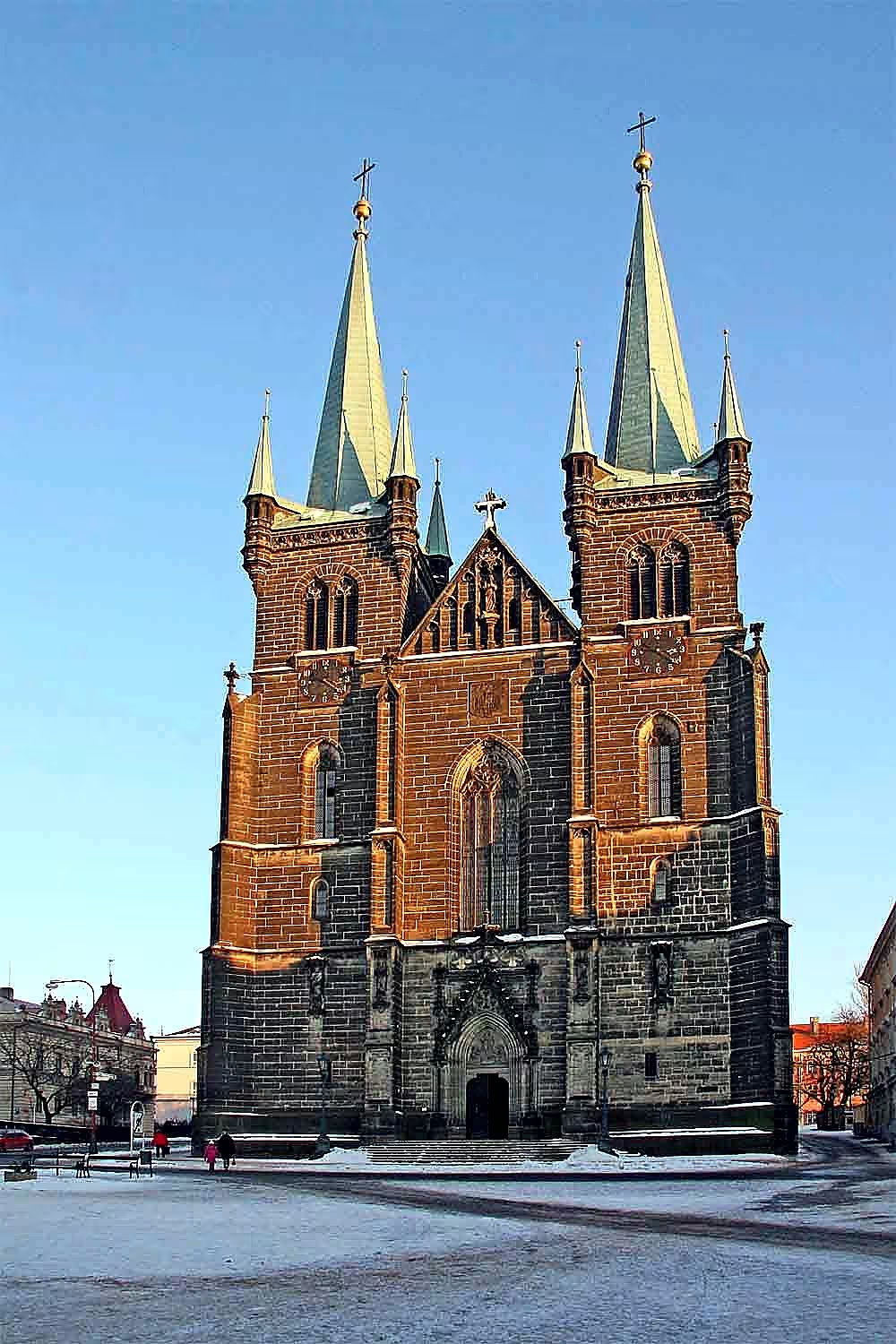
Arciděkanský kostel Nanebevzetí Panny Marie in Chrudim is a significant historical and architectural monument. It embodies the region's rich cultural heritage. Located on Ressel Square, this three-nave basilica with Romanesque foundations was constructed during the late 14th century. It showcases Gothic architecture that has been modified over time to include Neo-Gothic elements. Its prominence stems from its architectural beauty and its role as a cultural landmark reflecting Chrudim's historical significance.
The origins of this church are somewhat mysterious, with little information about its earliest predecessor. However, during the Přemyslids' reign, when Chrudim was an administrative and political hub, a church likely stood at this site. A fire in the early 14th century possibly destroyed the original structure, prompting the construction of a new one. Dendrochronological research conducted in 2001 revealed that part of the roof dates back to 1340, indicating the start of its construction during this period. By 1359, patronage rights were confirmed with Břevnov Monastery, marking an important administrative milestone.
Architecturally, the church began as a Gothic structure with the building of the presbytery and main nave, followed by side naves and twin towers on the western façade. The construction process integrated some Romanesque elements into its design. Over time, significant changes occurred: during the 16th to 18th centuries, it became an utrakvist church with additions such as a literátský kůr before 1552 and oratoře on the southern side. The twin towers underwent several transformations; notably, in 1702, lightning damaged one of them, leading to repairs that included new roofing for both towers by 1704. By the mid-19th century, František Schmoranz senior led Neo-Gothic renovations that reshaped its appearance, including rebuilding the twin towers to have identical heights and onion-shaped roofs.
Throughout its history, the church has witnessed several key events. In 1681, a painting known as 'Chrudimský Salvátor' was dedicated in gratitude for averting a plague outbreak. This event marked an important cultural moment, with annual processions continuing until they were banned by Emperor Joseph II in 1782. The church's resilience is further highlighted by its survival through various adversities, including fires and structural damages over the centuries.
Today, Arciděkanský kostel Nanebevzetí Panny Marie stands as a testament to Chrudim's historical narrative, with no major renovations or alterations occurring in recent times. Instead, ongoing post-reconstruction efforts focus on preserving its architectural integrity through gradual restorations and archaeological studies. Visitors are drawn not only by its stunning architecture but also by the opportunity to connect with the region's past.
This monument is a must-visit for those interested in exploring the intersection of history, culture, and architecture. Its enduring presence as a cultural landmark offers a window into the historical evolution of Chrudim, inviting visitors to appreciate its architectural splendor and rich heritage.
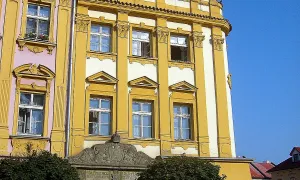
Then and now
Drag the slider to compare how the landmark may have looked when it was built with the view today.
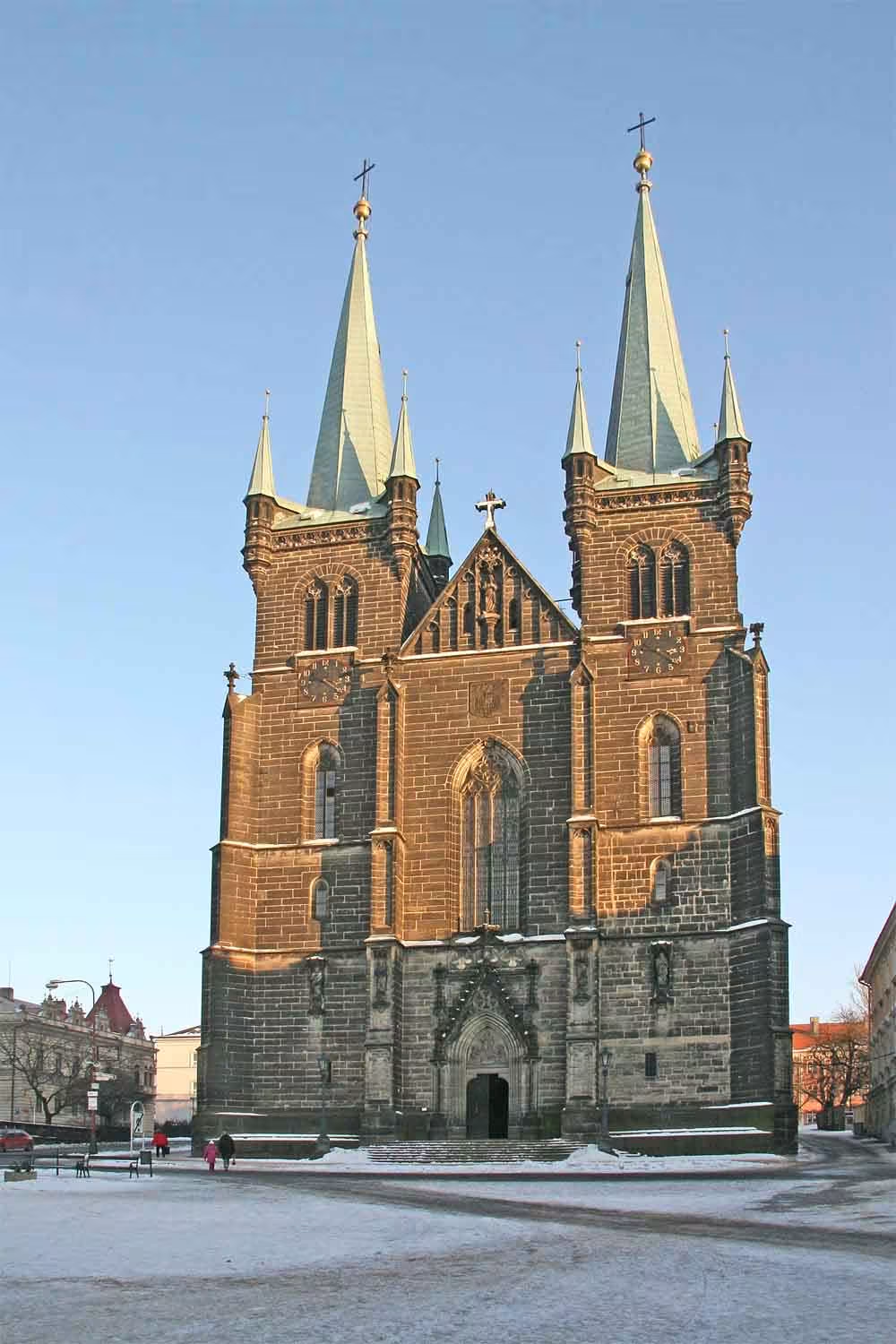
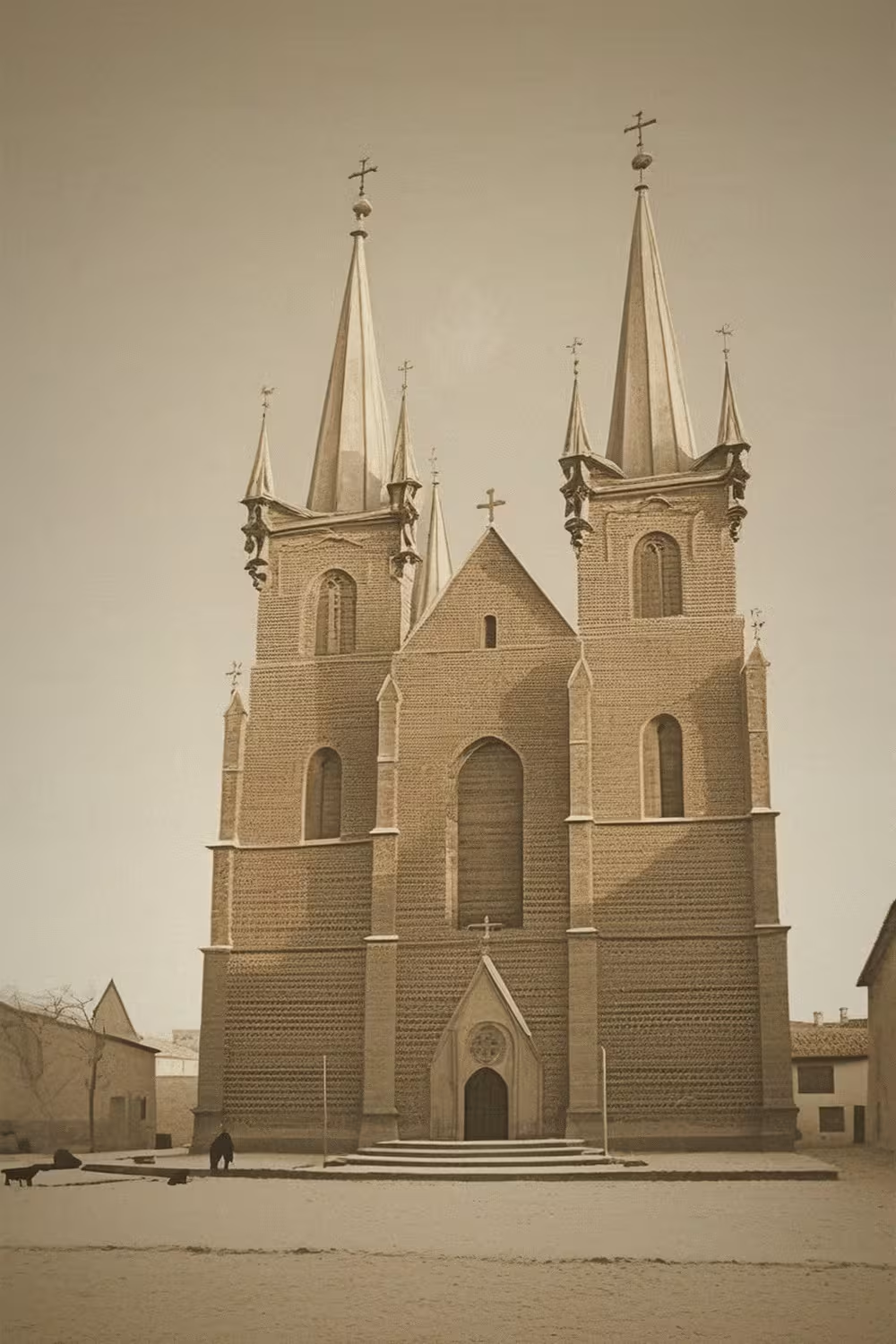
The historical appearance on the left is an AI-generated visualisation and serves as inspiration only.
Historical milestones
- 1340
- Part of the roof dated back to this year through dendrochronological research.
- 1359
- Patronage rights confirmed with Břevnov Monastery.
- 1681
- Dedication of 'Chrudimský Salvátor' painting after plague was averted.
Architectural development
The church's construction began in the Gothic period with the building of the presbytery and main nave, followed by side naves and twin towers. Over centuries, it underwent significant changes including a fire in the early 14th century that led to reconstruction. The 19th-century renovations introduced Neo-Gothic elements, reshaping its appearance.
Historical events
1359: Confirmation of patronage rights to Břevnov Monastery.
1681: Dedication of the 'Chrudimský Salvátor' painting as a thanksgiving for averting plague.
1850-80: Neo-Gothic renovations led by František Schmoranz senior.
Points of interest
- The origins of the church are shrouded in mystery, with little known about its earliest predecessor, suggesting that a structure existed on this site during the Přemyslid era when Chrudim was an important administrative center.
- A fire in the early 14th century likely destroyed the original church building, leading to the construction of the current structure, which began around 1340 according to dendrochronological research.
- The 'Chrudimský Salvátor' painting inside the church is dedicated to commemorate a plague outbreak that was miraculously avoided in 1681, and it became an important cultural symbol with annual processions until they were banned by Emperor Joseph II in 1782.
- In 1702, one of the twin towers suffered damage from lightning, leading to repairs that included new roofing for both towers completed by 1704, showcasing the church's resilience through structural adversities over time.
- František Schmoranz senior led significant Neo-Gothic renovations in the mid-19th century, transforming the appearance of the church and rebuilding the twin towers to have identical heights with onion-shaped roofs.
Guide
This guide is narrated by a synthetic voice generated by artificial intelligence.
Show guide text
This text was created by artificial intelligence and has not been editorially reviewed. It may contain inaccuracies.
Welcome to the historic site of Chrudim I, where you stand before the remarkable Kostel Nanebevzetí Panny Marie, a testament to architectural grandeur and cultural heritage. As you gaze upon this majestic structure, take a moment to absorb its presence—a three-nave basilica that has stood the test of time since the late 14th century.
The origins of this church are steeped in mystery, with whispers of an earlier predecessor dating back to the Přemyslid era when Chrudim was a bustling administrative center. Imagine the stories these walls could tell if they had voices—tales from an era long past but never forgotten. The earliest roof timbers have been dated through dendrochronological research to 1340, hinting at the church's enduring legacy.
In 1359, the patronage rights of this sacred site were confirmed with Břevnov Monastery, marking a significant moment in its history. Fast forward several centuries, and you'll find that the church underwent Neo-Gothic renovations in the mid-19th century by František Schmoranz senior, adding layers to its architectural narrative.
As you stand here, take note of the Gothic architecture with Romanesque foundations—a harmonious blend that speaks volumes about the craftsmanship of an era long gone. The church's exterior invites you to explore its intricate details, while inside, the atmosphere is one of reverence and historical depth. In 1681, after a devastating plague was averted, the 'Chrudimský Salvátor' painting was dedicated here, adding another layer to its rich tapestry.
The history of this church includes tales of resilience, such as surviving a fire in the early 14th century that likely destroyed an original structure. This resilience is mirrored in the spirit of the community it has served for centuries.
As you continue your exploration, let the church's silent stories captivate you. Each stone and archway holds echoes of the past, inviting you to delve deeper into its history. We encourage you to wander around this architectural masterpiece, discovering more about its legacy and significance.
Thank you for joining us on this journey through time at Kostel Nanebevzetí Panny Marie in Chrudim I. May your exploration be filled with wonder and inspiration as you uncover the layers of history that surround you. Safe travels as you continue to discover the treasures of our world.
Tips for visitors
The best time to visit the Arciděkanský kostel Nanebevzetí Panny Marie in Chrudim is during late spring or early autumn. During these seasons, you can enjoy pleasant weather that enhances your experience of the Gothic architecture and serene atmosphere without the crowds typical of peak tourist seasons. Additionally, visiting on weekdays tends to be quieter than weekends, allowing for a more intimate exploration of this historical site.
It’s advisable to check current transportation options online or at local tourist information centers before your visit for the most accurate and up-to-date travel plans.
When planning your visit, consider bringing comfortable walking shoes as you may want to explore more than just the church grounds. A camera is recommended to capture the intricate Gothic details of the basilica's architecture. Additionally, carrying a light jacket or umbrella can be useful given the variable weather conditions in this region throughout the year.
For photography enthusiasts, the best spots for capturing the church are from its front façade and the surrounding gardens where natural lighting accentuates the structure’s architectural beauty, especially during golden hours at sunrise or sunset. Inside, the stained glass windows provide a stunning play of light that is particularly photogenic in the morning when sunlight streams through.
Families with children will find the church's historical significance engaging for all ages. Nearby attractions within 30 minutes include the Chrudim Castle and the Museum of Folk Architecture and Life, both offering educational experiences about regional history and culture. These sites provide a broader context to your visit and can be enjoyable stops after exploring the church.
Frequently asked questions
Can the monument be visited?
Religious buildings are usually open mainly during services; at other times a visit is normally arranged with the parish or the operator. We have not verified specific times.
Where is the monument?
Location: Resselovo náměstí, Chrudim I, Chrudim, Pardubický kraj. The map on this page shows the exact spot.
Why is the monument protected?
It is listed in the Central List of Cultural Monuments of the Czech Republic as a cultural monument (register no. 36413/6-789).
Businesses nearby
Do you run a restaurant, accommodation, shop, museum, rental, wellness or other visitor service near this monument? Show yourself directly to the people heading to it — this is how they will see you in the app and on the web:
Events nearby
Zdroj akcí: otevřená data měst a obcí ČR (Národní katalog otevřených dat) a kalendář akcí Národního památkového ústavu.
Accommodation nearby
Themed route
Tematická výletní trasa: Chrudim I a Kostel Nanebevzetí Panny Marie
1. Kostel Nanebevzetí Panny Marie (Chrudim I) - Kostel Start your tour at this baroque church, which is not only an architectural gem of Chrudim I but also the spiritual center of the community. Its rich history and artistic elements such as sculptures and interiors make a visit essential for anyone interested in cultural heritage.
2. Náměstí u kostela - Veřejný prostor After visiting the church, take a look at the surrounding square, which serves as the central public space of the community. This location is ideal for relaxation and listening to local stories about the history of Chrudim I.
3. Staré radnice (Pokud existuje v okolí) - Historický objekt Continue on your way to the old town hall, if it's near the church. This historical building offers insight into the past of local governance and architecture. Its façade and interior are an excellent example of the community’s earlier life.
4. Místní muzeum (Pokud existuje) - Muzeum Visit the local museum exhibition, where you can learn more about the history and cultural heritage of Chrudim I. The exhibits here bring a vivid perspective on the area's past and its significant figures.
5. Kostelní nádvoří - Veřejný prostor Conclude your tour with a stroll through the church courtyard, where you can relax and appreciate the peaceful surroundings. This location is ideal for reflecting on your journey’s experiences and enjoying the natural environment of the community.
This route offers a comprehensive view of Chrudim I's cultural richness, focusing on its historical and spiritual center.
Seasonal recommendations
Spring: Spring at the Church of the Assumption of the Virgin Mary is a time when nature begins to awaken around this historic site, offering visitors lush greenery and vibrant wildflowers that frame the church's architecture beautifully. The soft light of spring enhances the intricate details of the building, creating an ethereal atmosphere perfect for photography or quiet reflection. Visitors should be aware that while the crowds are typically smaller compared to summer, some local festivities might increase foot traffic. Wearing comfortable walking shoes is advisable as you explore the surrounding gardens and pathways. Early morning visits can provide a serene experience before larger groups arrive.
Summer: The summer months bring long days of sunshine, ideal for exploring the Church of the Assumption of the Virgin Mary in Chrudim I. This period sees the highest number of visitors due to favorable weather conditions, making it essential to plan your visit early in the day to avoid crowds. The warm light accentuates the church's architectural beauty and allows for extended exploration of its interior and exterior spaces. Lightweight clothing is recommended to stay comfortable during outdoor activities, and carrying a hat or sunscreen can be beneficial when walking around the site.
Autumn: Autumn transforms the Church of the Assumption of the Virgin Mary with a palette of warm colors as the leaves change, creating a picturesque setting that enhances the historical charm of the church. The cooler temperatures make it an ideal time for leisurely strolls and photography sessions without the summer heat. Visitors should be prepared for shorter days by planning their visit accordingly, perhaps bringing along a light jacket or sweater as evenings can become chilly. This season often sees fewer tourists, offering a more tranquil experience while enjoying the natural beauty surrounding the church.
Winter: Winter at the Church of the Assumption of the Virgin Mary offers a serene and almost magical atmosphere with snow-covered landscapes that highlight its architectural elegance in stark relief against the white backdrop. The shorter daylight hours mean visits should be planned for earlier in the day, especially if you wish to explore both inside and out. It's advisable to dress warmly, as temperatures can drop significantly, and bring along a coat or thermal layers. While some areas around the church might be less accessible due to snow, the quiet of winter provides an intimate setting for appreciating its historical significance without large crowds.
Visualizations and artistic views


The visualisations are generated by artificial intelligence and serve as inspiration.
Photos from the area
Real photos taken near the monument


Zdroj a licence jsou uvedeny u každého snímku.
Tips from visitors
No tips yet. Be the first!
Log in and add your tip.
Sources and literature
Photos: cs:User:Zp (autor:Zp) / CC BY-SA 3.0 — Wikimedia Commons. The author and licence also appear when you hover over the image.
Location on the map
Příběhy a pověsti
Legendy, pověsti a příběhy spjaté s touto památkou
Fotografie návštěvníků
Zatím žádné fotografie. Buďte první, kdo přidá fotografii z návštěvy!
Log in a přidejte svou fotografii nebo hodnoťte.
Za ověřenou návštěvu v aplikaci získáte víc bodů — poznáme podle GPS, že jste na místě.
Reviews and comments