



Kostel Narození svatého Jana Křtitele (Stará Ves) Church
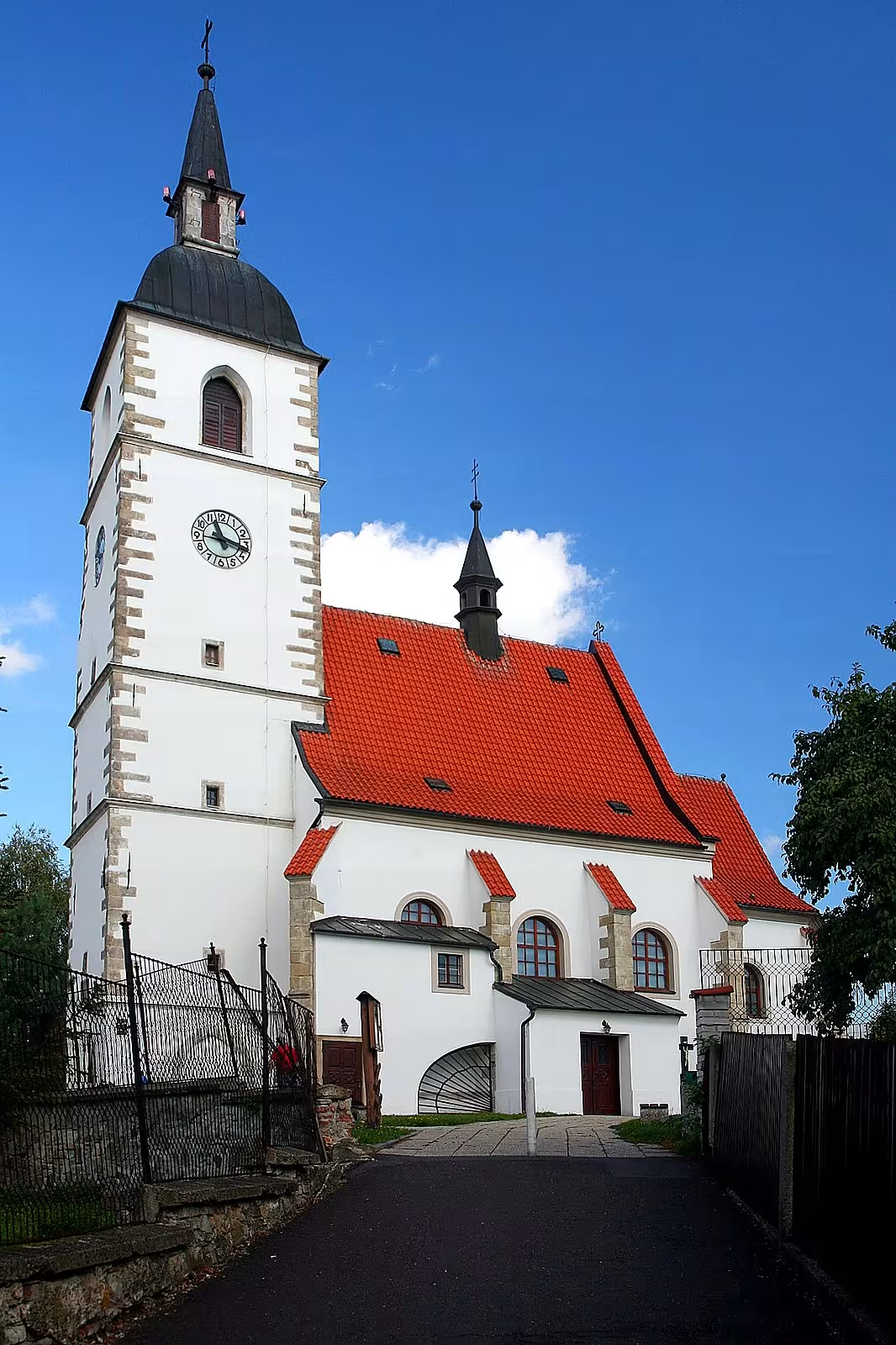
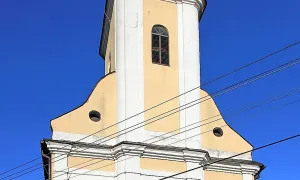
The church of the birth of St. John the Baptist is one of the most valuable historical monuments of the village Stará Ves nad Ondřínice, along with the Renaissance chateau. It is situated in the northern part of the centre of the village on a mild hill, easy to find along road No. 58, which leads between Příbor and Ostrava.
The construction was targeted between 1587 and 1589 by Ctibor Syrakovský z Pěrkova, the former владěl of the local estate. He replaced the original wooden structure here and carried it in the spirit of his time in the Gothic-Renaissance style. The consecration was held on April 28, 1591, when the Bishop of Olomouc Stanislavský consecrated it. This important moment is evidenced by a commemorative record above the main entrance, which names Acubor as "the highest scribe of the Margrave of Moravia." There is no doubt that it is here, even with its wife, Alezia of Víckov. The second tombstone belongs to his brother Jaros and his wife.
The building is a one-boat rectangular building with a five-sided finish, which is closely attached to the Baroque parish house built between 1809 and 1810. It is protected from the outside by 12 restraints, which shows the quality of the construction design. The windows in the ship are semi-circular, while the towers' portals and shutters remain loyal to the Gothic fracture.
The interior surprises the complex architecture of the ceiling. The main ship covers a coiled vault with a complex mesh rib pattern, whose clamps are alternately displayed by Syracuse and Starfish. The presbytery is then encased with a radiant vault with a clamp with the builders' coats of arms. In the 16th century there was also an interesting ornament - a retabile of the main altar from the painter George Freml, depicting the patron saint of the church, St. John the Baptist.
Over the centuries the church experienced several repairs. In 1837 he received defence elements - a new foyer that protected the Renaissance sandstone portal. Four years later, a new organ rang. In the 19th century, especially in 1865, there was extensive maintenance - the church was white, restored from the outside and the garden around it was repaired. More substantial reconstruction followed in 1897.
The most interesting discovery came only recently. The 2000 repairs revealed that under later layers there is a Renaissance figure fresco from the time of the church. It depicts a scene from Calvary with Christ, accompanied by biblical figures Aaron and Moses. The restoration work under the guidance of the academic painter Romana Balcarová from 2001 to 2002 saved this fresco and returned it to the world. Today's organ, which came from the Rieger workshop and was completed in 1934, was festively consecrated on 24 June 1934 just on the feast of the patron saint of the church.
The church is thus treated as a layered architectural book - from original wood to Renaissance stone precision to Baroque and modern care. It is a place where goth and renaissance met in harmony and where reading in stonework details resembles the actions and beliefs of the owners at the time.
Then and now
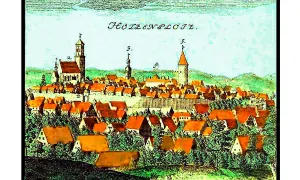
Drag the slider to compare how the landmark may have looked when it was built with the view today.
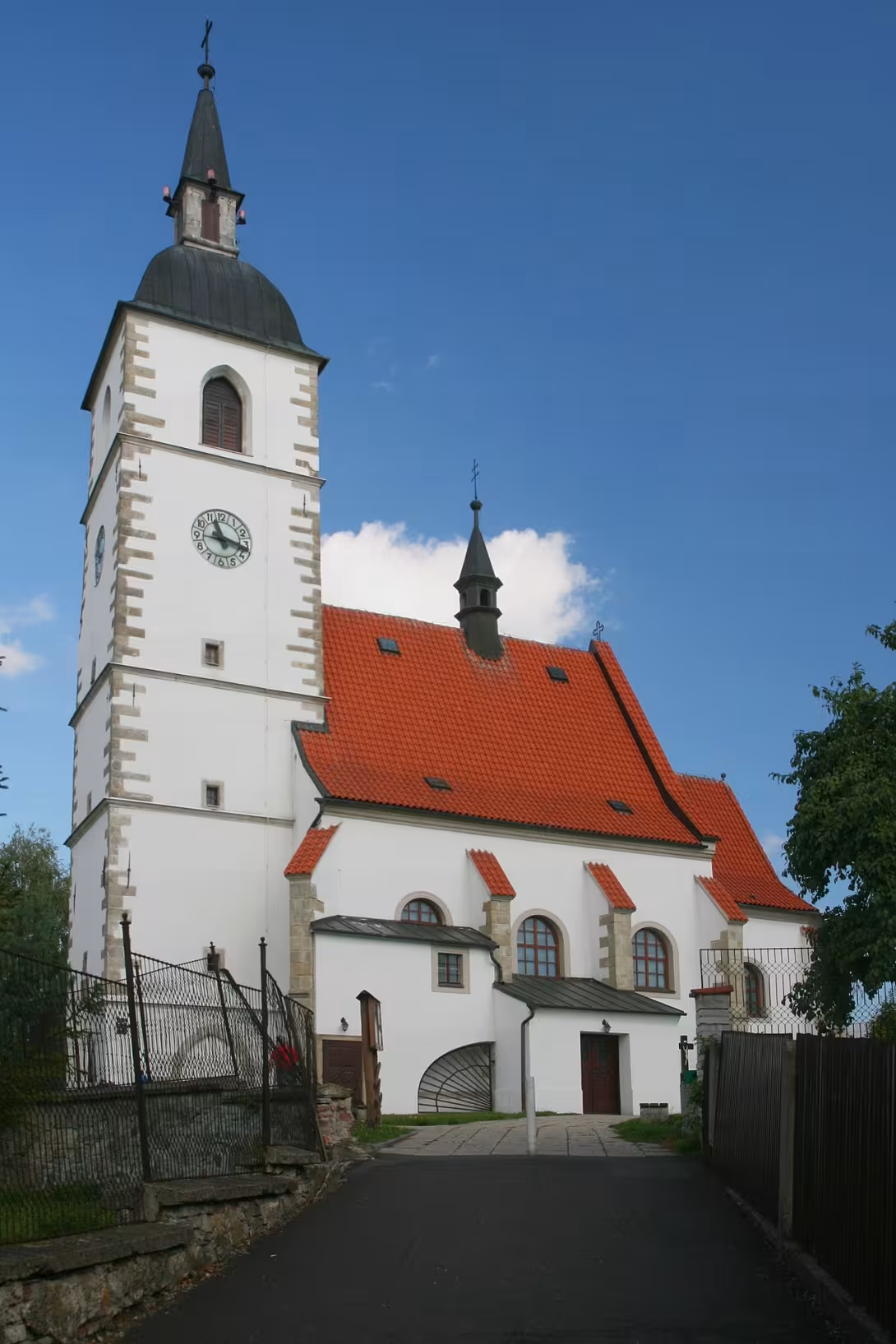

The historical appearance on the left is an AI-generated visualisation and serves as inspiration only.
Historical milestones
- 1587-1589
- Construction of the church by the cargo of Actibor Syrakovsky from Přírkov.
- 1591
- The consecration of the church by the Bishop of Olomouc Stanislav Pavlovsky.
- 1837
- The extension of the hall called the beggar.
- 2001-2002
- Restoration of the newly discovered Renaissance fresco by the academic painter Romana Balcar.
Architectural development
The church was built in a transitional Gothic-Renaissance style. In 1837, a hall called a beggar was built to protect the original sandstone portal. The interior is covered with a coiled vault with a mesh rib pattern and a radiated vault in the presbytery.
Historical events
1591: Ceremonial consecration of the church by the Bishop of Olomouc Stanislav Pavlovský. 2000: Discover Renaissance figural fresco showing Calvary theme.
Owners
House of Syrakovské of Fever
Points of interest
- The church was built between 1587 and 1589 by the owner of the farm Ctibor Syrakovský z Pěrkova, who is buried here and his wife. - The construction from the outside is protected by 12 armrest which shows the quality of the construction design. - The main ship of the church covers a rolling vaults with a complex mesh rib pattern, whose clamps are alternately displayed by Syracuse and Starfish. - During repairs in 2000, a Renaissance figural fresco depicting the scene from Calvary with Christ, Aaron and Moses was discovered under the clouds. - The contemporary organ from the Rieger workshop was completed in 1934 and festively consecrated on the feast of the patron saint of the church, St. John the Baptist.
Guide
This guide is narrated by a synthetic voice generated by artificial intelligence.
Show guide text
This text was created by artificial intelligence and has not been editorially reviewed. It may contain inaccuracies.
The Church of the Birth of Saint John the Baptist, together with a Renaissance castle, belongs among the most valuable monuments of the municipality of Stará Ves nad Ondřejnicí. It stands on a gentle hilltop in the northern part of the center of the municipality, roughly halfway between Příbor and Ostrava. Right next to it is a Baroque rectory from 1809 to 1810.
The church was built between 1587 and 1589 by Ctibor Syrakovský z Pěrkova, the then owner of the estate. It replaced the original wooden church. Ctibor is also buried here, together with his wife Alezia z Víckova. A memorial plaque above the main entrance recalls that the church was consecrated on April 28, 1591 by Stanislav Pavlovský, the bishop of Olomouc. The inscription names Ctibor in Latin as Tiburcius and describes him as the lord of Stará Ves and Paskova and the supreme notary of the Margraviate of Moravia.
Over the following centuries, the church was gradually altered. In 1837, a new vestibule was added to it, called the žebračka. It was meant to protect the Renaissance sandstone portal. In 1841, the church received new organ pipes. In 1865, it was renovated on the outside together with the rectory for more than 700 gold coins, which the parishioners donated voluntarily. In 1897, it was painted white, its roof was repaired, and its small tower received new sheet metal cladding. Repairs in 2000 brought a valuable discovery, a Renaissance figurative fresco from the time of the church's foundation. Restorer Romana Balcarová uncovered it in 2001 and 2002. It depicts Calvary with Christ and the figures of Aaron and Moses on either side.
The church is a single-nave rectangular building with a pentagonal choir, which is reinforced on the outside by twelve buttresses. Inside, Gothic and Renaissance elements are balanced and complement each other. The nave is covered by a barrel vault with net ribbing in the style of late Gothic. On the keystones, the coat of arms of the Syrakovskys alternates with a small star. The presbytery has a fan vault, which is again decorated with the coat of arms of the Syrakovskys. On its right side are Renaissance sandstone tombstones with images of the knights Jaroš and Ctibor Syrakovský and their wives. On the left side, near the entrance to the sacristy, is the aforementioned fresco. The high altar is decorated with a painting of Saint John the Baptist by Jiří Fremla.
Opposite the presbytery is the gallery. It is supported by a Renaissance vault with two Ionic columns, and the balustrade is decorated with a gilded motif of Gothic windows. On the gallery are organ pipes by the Rieger company from 1934, consecrated on June 24 of that year, on the feast day of the patron saint of the church. The windows in the nave are semicircular, and the portals and windows of the tower are Gothic, pointed.
Tips for visitors
The best time to visit is in the morning during the working week or weekend afternoon, when you can relax and see the architecture without a lot of people. The church is in good condition, so it excels especially in bright weather, which makes the details of Gothic-Renaissance elements stand out.
You can easily reach the village by car and public transport. For a public transport journey, use the national search engine for connections that will show you the current traffic possibilities to Staré Vsi nad Ondřednice.
For photography we recommend using the morning or late afternoon light, which beautifully depicts the facade of the church. The best shots can be taken from the area before the entrance, from where the overall layout of the building stands out. Don't forget to wear comfortable shoes to walk around.
In the immediate vicinity of the church you can visit the Renaissance chateau in Staré Vsi nad Ondříšnice, which forms a historical whole with the church. We also recommend a tour of the Baroque farm building from 1809- 1810, which complements the historical nature of the place.
The location is suitable for families with children thanks to a quiet environment and close proximity to the chateau. Walking around the church and adjacent chateau area is easy and suitable for smaller children who can discover historical details of buildings in a safe outdoor area.
Frequently asked questions
Can the monument be visited?
Religious buildings are usually open mainly during services; at other times a visit is normally arranged with the parish or the operator. We have not verified specific times.
Where is the monument?
Location: Stará Ves, Moravskoslezský kraj. The map on this page shows the exact spot.
Why is the monument protected?
It is listed in the Central List of Cultural Monuments of the Czech Republic as a cultural monument (register no. 18373/8-716).
For kids
Imagine going back 446 years to when the Church of the Birth of St. John the Baptist was in a small village Stará Ves above Ondřejstí. It was like a game where everyone had their share and roles. The village was surrounded by forests and a river that made it a refuge from danger.
There were people here who lived for a living in agriculture and livestock farming. They were housekeepers who had small farms and love. The village was firmly connected to the surrounding villages and the city, which was further away.
Businesses nearby
Do you run a restaurant, accommodation, shop, museum, rental, wellness or other visitor service near this monument? Show yourself directly to the people heading to it — this is how they will see you in the app and on the web:
Events nearby
Zdroj akcí: otevřená data měst a obcí ČR (Národní katalog otevřených dat) a kalendář akcí Národního památkového ústavu.
Nearby
Renaissance chateau in Staré Vsi nad Ondřeznice, Baroque farm building from 1809-1810.
Accommodation nearby
Themed route
Church of the Birth of St. John the Baptist Type: Church This historic sacral object is the heart of the village and represents the main objective of your visit. Its architecture and spiritual atmosphere attract thought and admiration over local heritage.
Baroque parish building from 1809- 1810 Type: Historical building Located in the immediate vicinity of the church and perfectly complements the sacral character of the complex. Its Baroque elements bear witness to the rich history of the local clergy and provide a view of architectural trends in the early 19th century.
Renaissance chateau in Staré Vsi nad Ondřínice Type: Castle This monument is located in a neighbouring location and offers contrast to sacral structures. Its Renaissance roots and later modifications make it an important cultural dominant part of the region, which is worth walking around.
The route is designed to begin at the main destination, while the Baroque parish serves as a natural stop in the close neighbourhood of the church. Then you can head towards the Renaissance chateau, which will close the tour of historical monuments in this part of the Ostrava-město district. The whole trip is suitable for walking tourists who want to know the architectural wealth of the village Stará Ves and its surroundings without the need for long trips.
Seasonal recommendations
Seasonal recommendation for visiting the Church of the Birth of St. John the Baptist in Old Vi:
Spring: Specific is the lighting that breaks the smile on the faces of visitors. The woods around the church are full of life and flowers, which creates a pleasant atmosphere. Practical advice: the best time to visit the church is in the morning or late afternoon to avoid crowds of tourists. Do not put on warm clothes because it may still be cold in April.
Summer: In the summer, it breaks a wonderful nature, full of flowers and green. The atmosphere is relaxed and calm. Practical advice: If you want to avoid crowds of tourists, come earlier or later in the day. Do not build up summer suitable clothes because even in June can still be quite warm.
Autumn: In autumn it breaks the amazing color of forests around the church, which are full of yellow and orange colors. The atmosphere is slightly relaxed, but it remains pleasant. Practical advice: the best time to visit the church is in the morning or late afternoon to avoid crowds of tourists. Do not put on warm clothes because it may still be cold in October.
Winter: In winter it breaks a wonderful snow blanket around the church, which creates a pleasant atmosphere. The atmosphere is slightly relaxed, but remains calm. Practical advice: the best time to visit the church is in the morning or late afternoon to avoid crowds of tourists. Do not put on warm clothes because it may still be cold in January.
Visualizations and artistic views


The visualisations are generated by artificial intelligence and serve as inspiration.
Photos from the area
Real photos taken near the monument


Zdroj a licence jsou uvedeny u každého snímku.
Atmosphere of the place
This atmospheric visualisation of the place and period was generated by artificial intelligence. It is not real footage of the location.
Tips from visitors
No tips yet. Be the first!
Log in and add your tip.
Sources and literature
Photos: Kankovaa / CC BY-SA 3.0 — Wikimedia Commons. The author and licence also appear when you hover over the image.
Faktickým podkladem tohoto textu byl článek na Wikipedii, jehož autory jsou přispěvatelé Wikipedie. Článek je dostupný pod licencí CC BY-SA 4.0.
Location on the map
Příběhy a pověsti
Legendy, pověsti a příběhy spjaté s touto památkou
Fotografie návštěvníků
Zatím žádné fotografie. Buďte první, kdo přidá fotografii z návštěvy!
Log in a přidejte svou fotografii nebo hodnoťte.
Za ověřenou návštěvu v aplikaci získáte víc bodů — poznáme podle GPS, že jste na místě.
Reviews and comments