






Kostel Nejsvětější Trojice (vojenský újezd Libavá) Church
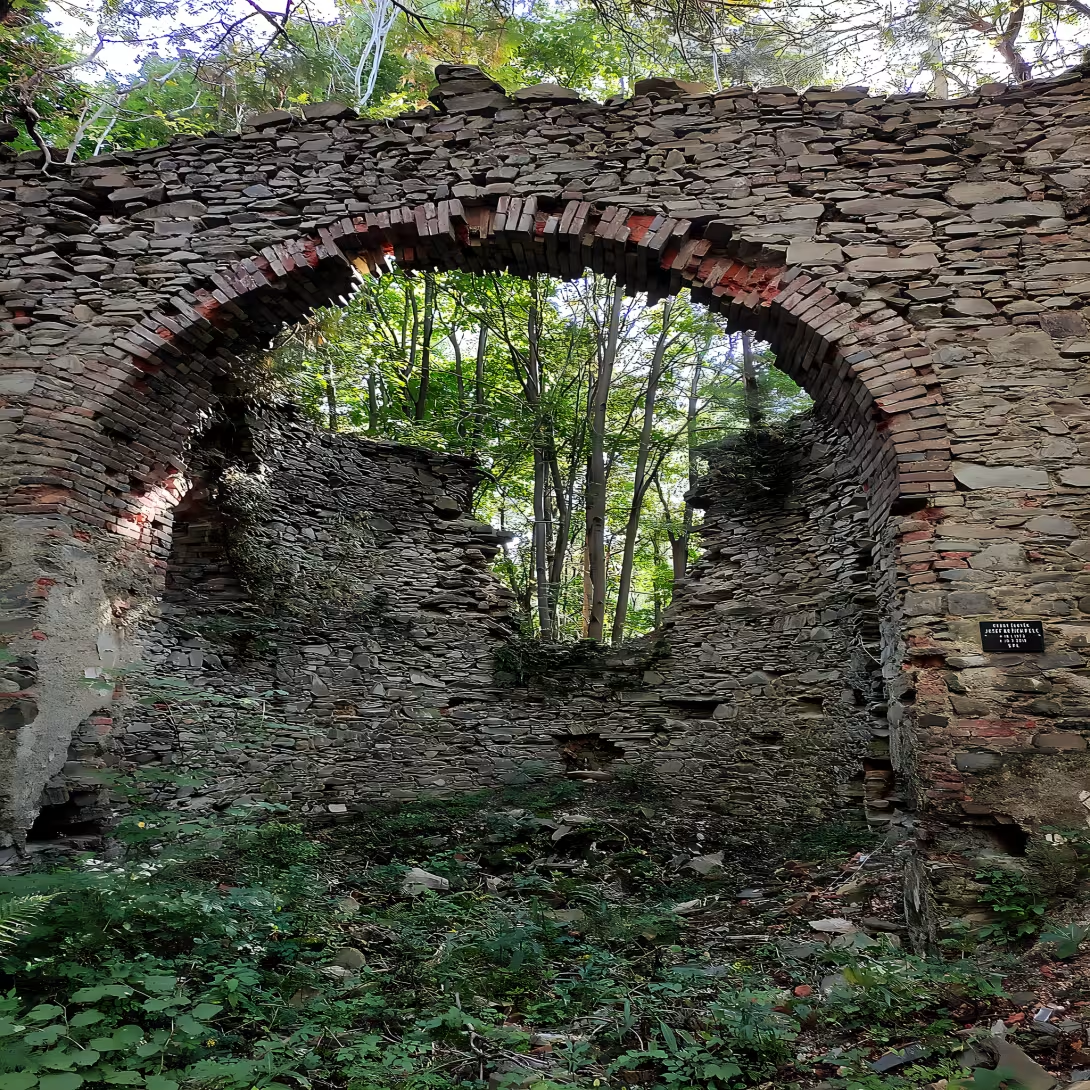
The Church of the Holy Trinity in Libavá Military Area is a baroque ruin with a rich history located in the Olomouc Region. Constructed in 1584 or 1589 after resettlement following destruction by Hussites, it served as a parish church dedicated to the Holy Trinity. Its significance lies not only in its architectural heritage but also in its tumultuous past marked by religious shifts and eventual abandonment post-World War II when German inhabitants were expelled.
The origins of this monument are deeply rooted in the late 16th century, during a period of significant religious upheaval in Bohemia following the Protestant Reformation and Catholic Counter-Reformation. Built to serve as a parish church for the local community after resettlement post-Hussite destruction, it initially belonged to the Olomouc chapter. Over time, it experienced various religious affiliations, including serving Protestant congregations before being reoccupied by Catholic priests in 1633.
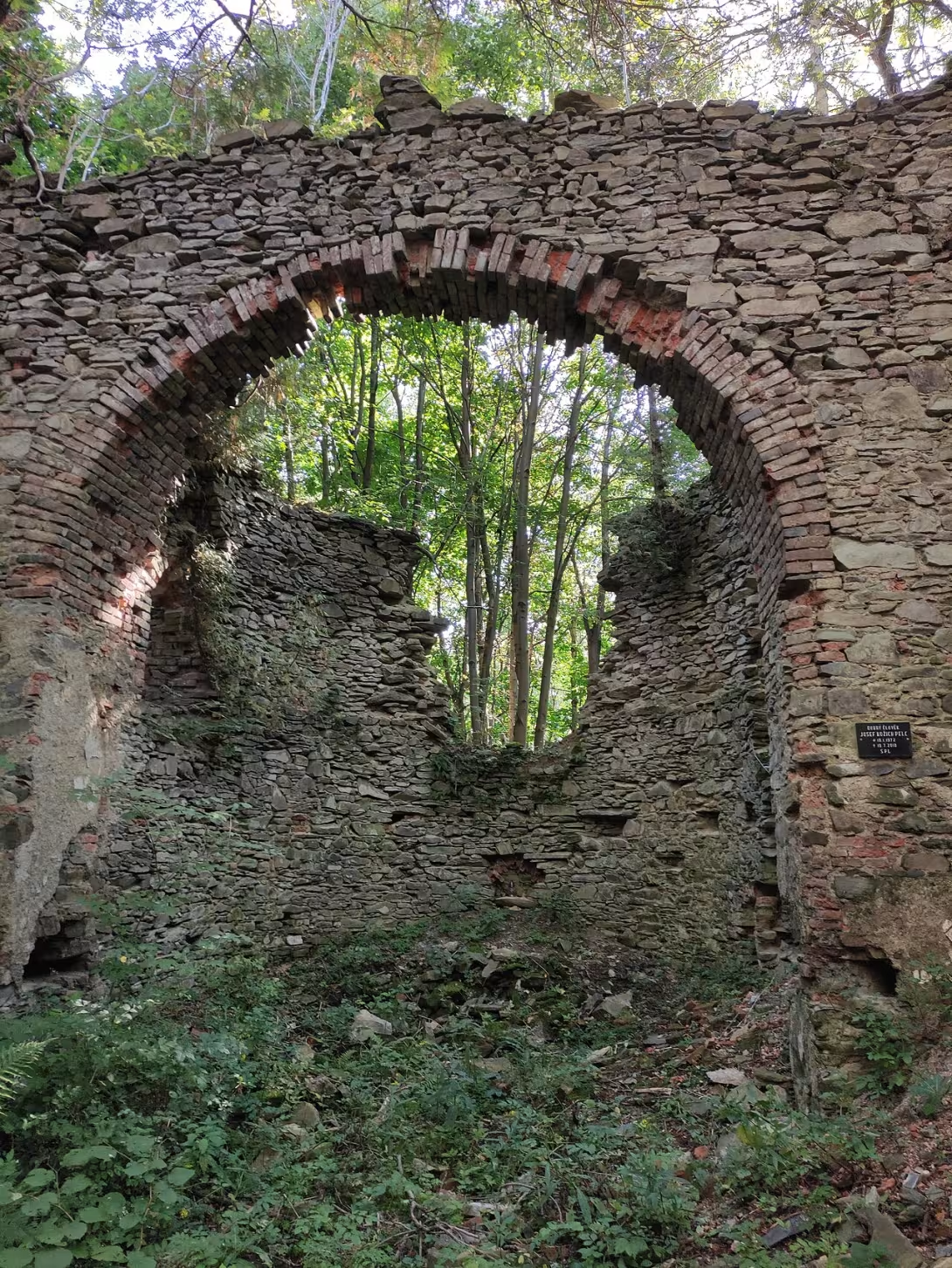
Architecturally, the Church of the Holy Trinity was constructed in the late 16th century and underwent repairs in 1806. By 1834, it featured three altars, indicative of its role as a significant religious site for the community. However, over time, the structure has deteriorated significantly, losing its roof, ceilings, and walls, leaving it as a dilapidated ruin today.
Ownership and administration of the church have seen dramatic changes throughout history. Initially part of the Olomouc chapter after being reoccupied by Catholic priests in 1633, the church was associated with various deaneries over time. Post-World War II, it became part of the Libavá Military Area and was secularized in 1950.
Key events at this site include a notable incident in 1757 when local parishioners desecrated the body of their pastor Johann Felbier due to fears of vampirism, leading to a trial in Olomouc. This event highlights the superstitions and tensions within the community during that period. Additionally, after World War II, the expulsion of German inhabitants led to the church's abandonment.
Today, the Church of the Holy Trinity stands as a dilapidated structure within a military zone, largely inaccessible to the public due to its location in the Libavá Military Area. The surrounding circular cemetery is also in disrepair, with remnants such as Russian inscriptions on a fallen tombstone from the Soviet army's presence. Despite these challenges, the site holds historical value and offers insights into the region's past.
Visitors interested in exploring this monument can occasionally access the area during events like the annual Bílý kámen cycle-tourism event. The Church of the Holy Trinity serves as a poignant reminder of the region's complex history and religious transformations, making it a worthwhile destination for those intrigued by historical ruins and military heritage.
Then and now
Drag the slider to compare how the landmark may have looked when it was built with the view today.
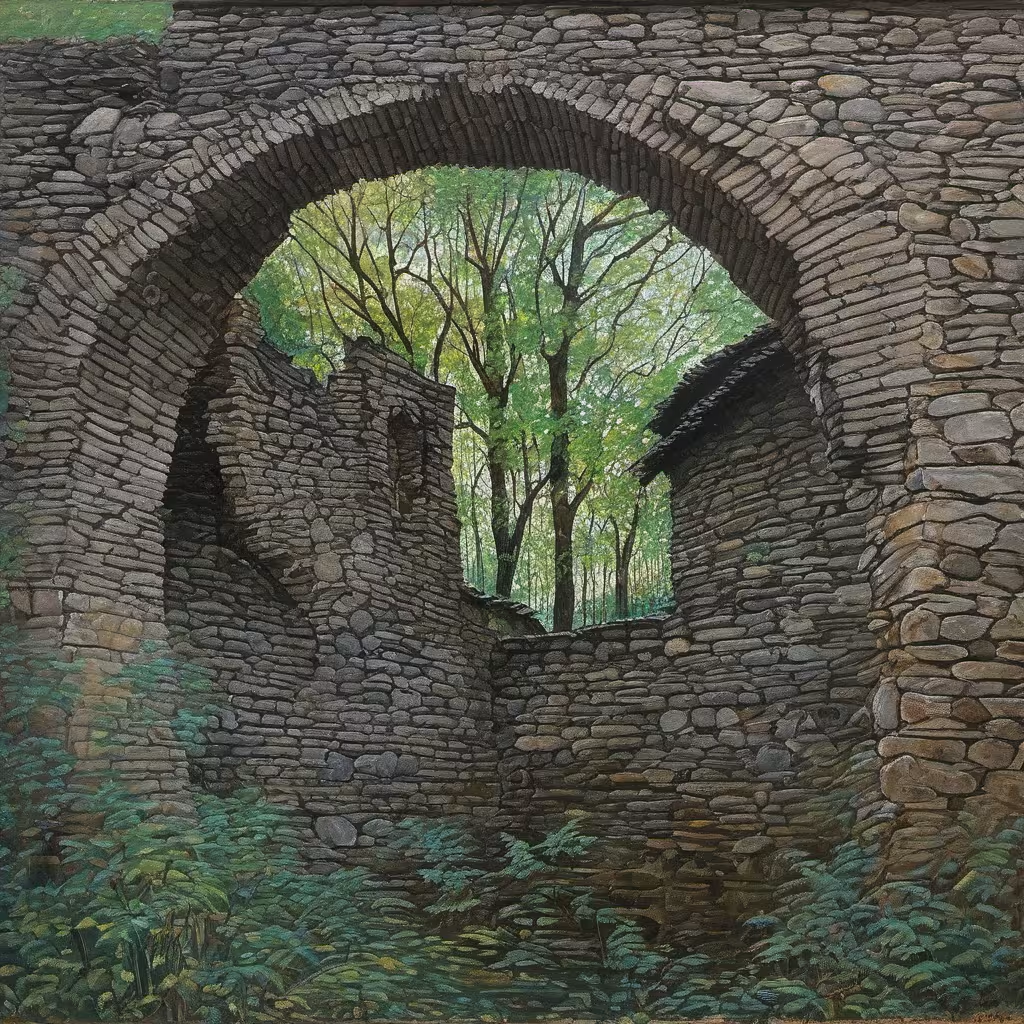
The historical appearance on the left is an AI-generated visualisation and serves as inspiration only.
Historical milestones
- 1757
- The parishioners of Jestřabí and Varhošť desecrated the body of their pastor Johann Felbier due to fears of vampirism.
Architectural development
The church was constructed in the late 16th century and underwent repairs in 1806. By 1834, it featured three altars. The structure has since deteriorated significantly, losing its roof, ceilings, and walls.
Historical events
In 1633, the church was reoccupied by a Catholic priest after serving Protestant congregations.
In 1757, local parishioners desecrated the body of their pastor Johann Felbier due to fears of vampirism, leading to a trial in Olomouc.
Owners
Initially part of the Olomouc chapter after being reoccupied by Catholic priests in 1633, the church was associated with various deaneries over time. Post-World War II, it became part of the Libava Military Area and was secularized in 1950.
Points of interest
- The Church of the Holy Trinity was initially constructed to serve as a parish church after resettlement following its destruction by Hussites in 1584 or 1589. This highlights the resilience and continuity of religious life despite significant upheaval.
- In 1757, an unusual event occurred when local parishioners desecrated their pastor Johann Felbier's body due to fears of vampirism. The subsequent trial in Olomouc underscores the superstitions that persisted within the community during that era.
- After World War II, the expulsion of German inhabitants led to the church's abandonment and eventual secularization in 1950. This marked a significant shift from its religious roots to becoming part of the Libavá Military Area.
- The surrounding cemetery contains remnants like Russian inscriptions on a fallen tombstone, evidencing the presence of the Soviet army. These inscriptions serve as historical markers of post-war military occupation and influence in the region.
- Despite its dilapidated state, the Church of the Holy Trinity occasionally opens to the public during events such as the Bílý kámen cycle-tourism event. This offers a rare glimpse into the site's historical significance and architectural heritage amidst its current military context.
Guide
This guide is narrated by a synthetic voice generated by artificial intelligence.
Show guide text
This text was created by artificial intelligence and has not been editorially reviewed. It may contain inaccuracies.
Welcome to the site of the Church of the Holy Trinity in Libava Military Area. As you stand here amidst the serene landscape of Olomoucký kraj, take a moment to soak in the atmosphere surrounding this baroque ruin. The remnants of what was once a vibrant parish church now whisper stories of resilience and history.
The origins of this sacred site date back to either 1584 or 1589, following its destruction by Hussites. It was during this period of resettlement that the community came together to rebuild their place of worship dedicated to the Holy Trinity. This church served as a beacon of faith for its parishioners over the centuries.
As you gaze upon what remains, notice how nature has begun to reclaim parts of the structure. The walls, though weathered and worn, still stand testament to the craftsmanship and dedication of those who built it. While specific architectural details are lost to time, the baroque style that once defined its grandeur can be sensed in the remnants.
One particularly intriguing story from this site's history occurred in 1757. During a period of superstition and fear, the parishioners of Jestřabí and Varhošť desecrated the body of their pastor Johann Felbier due to fears of vampirism. This event highlights the complex interplay between faith and folklore that has always surrounded this place.
As you continue your exploration, imagine the lives intertwined with this church over the centuries—parishioners coming together in worship, moments of joy and sorrow shared within its walls, and now, visitors like yourself drawn to uncover its stories.
Before you move on, take a moment to reflect on the resilience of human spirit that this site embodies. The Church of the Holy Trinity stands as a silent witness to history's ebb and flow, inviting us all to ponder our place in it.
Thank you for joining me on this journey through time. As you leave, I encourage you to continue exploring the rich tapestry of stories that Olomoucký kraj has to offer. Safe travels!
Frequently asked questions
Can the monument be visited?
Religious buildings are usually open mainly during services; at other times a visit is normally arranged with the parish or the operator. We have not verified specific times.
Where is the monument?
Location: vojenský újezd Libavá, Olomoucký kraj. The map on this page shows the exact spot.
Businesses nearby
Do you run a restaurant, accommodation, shop, museum, rental, wellness or other visitor service near this monument? Show yourself directly to the people heading to it — this is how they will see you in the app and on the web:
Nearby
Located near the village of Hlubočky and surrounded by the Oderské vrchy hills, the site includes a dilapidated circular cemetery. The area is largely inaccessible to the public due to its military status.
Accommodation nearby
Themed route
Tematická výletní trasa: Kostel Nejsvětější Trojice a okolí
1. Kostel Nejsvětější Trojice (vojenský újezd Libavá)
Typ: Náboženská památka
Proč stojí za návštěvu: Kostel Nejsvětější Trojice je klíčovou architektonickou a historickou památkou, která přitahuje svým jedinečným designem a duchovním významem. Je to centrum náboženského života pro vojenské osobnosti umístěné na území.
2. Dilapidovaný kruhový hřbitov
Typ: Historická lokalita
Proč stojí za návštěvu: Tento zanedbaný hřbitov je fascinujícím svědkem minulosti a nabízí jedinečný pohled na historii oblasti. Jeho kruhové uspořádání a starobylé nápisy přitahují zvědavce, kteří se zajímají o historickou architekturu a místní tradice.
3. Oderské vrchy
Typ: Přírodní prostředí
Proč stojí za návštěvu: I když přístup je omezený, Oderské vrchy nabízejí pohledy na rozlehlou krajinu a poskytují klidné místo pro relaxaci. Jsou ideálním místem pro ty, kteří chtějí užít si přírodní krásy v blízkosti kostela.
4. Vesnice Hlubočky
Typ: Místní komunita
Proč stojí za návštěvu: Procházka kolem vesnice Hlubočky nabízí pohled na tradiční českou krajinnou architekturu a život v malé obci. Je to příležitost prozkoumat místní kulturu a historii, která ovlivnila region.
5. Nádvoří kostela
Typ: Architektonický prostor
Proč stojí za návštěvu: Nádvoří kostela poskytuje klidné místo pro odpočinek a refleksi. Jeho architektura a umístění vytvářejí atmosféru, která je ideální pro relaxaci a užívání se zároveň přírodních i kulturních krás okolí.
Tato trasa nabízí kombinaci náboženského dědictví, historických lokalit a přírodních pohledů v jedinečné oblasti vojenského újezdu Libavá.
Seasonal recommendations
Spring: The ruins of the Church of the Holy Trinity in Libavá Military Area are particularly enchanting during spring when nature begins to awaken around them. As cherry blossoms and wildflowers start to bloom, they create a picturesque backdrop that enhances the historical ambiance of the site. The soft light filtering through budding trees offers a unique atmosphere for photography enthusiasts. Visitors should consider wearing comfortable walking shoes as paths may be damp or muddy from recent rains. Early mornings are ideal for exploring when the dew is fresh and before larger crowds gather.
Summer: Summer brings vibrant life to the Church of the Holy Trinity ruins, with lush greenery enveloping the site in a verdant embrace. The long daylight hours allow for extended exploration, making it perfect for those who enjoy leisurely strolls through historic landscapes. However, summer also attracts more visitors, so arriving early can help avoid crowds and secure better spots for photos. Lightweight, breathable clothing is recommended to stay comfortable during warmer days, and carrying water is advisable as shaded areas may be limited.
Autumn: The autumn season transforms the ruins into a stunning display of warm colors with leaves turning shades of red, orange, and gold. This period offers a serene atmosphere, ideal for those seeking tranquility amidst nature's beauty. Layered clothing is recommended to accommodate the cooler temperatures, and bringing a jacket or sweater can ensure comfort as the day progresses.
Winter: Winter cloaks the Church of the Holy Trinity in a quiet, almost mystical atmosphere, with snow adding an ethereal quality to its ruins. The landscape becomes starkly beautiful under a blanket of white, offering a unique perspective on this historic site. However, winter conditions mean that some paths may be icy or closed for safety reasons, so visitors should dress warmly and wear sturdy boots. Visiting in the morning can provide the best light before temperatures drop further.
Visualizations and artistic views


The visualisations are generated by artificial intelligence and serve as inspiration.
Photos from the area
Real photos taken near the monument


Zdroj a licence jsou uvedeny u každého snímku.
View from the area
This animation was generated by artificial intelligence from a real photograph of the surroundings. The motion and details are not real footage of the location.
Tips from visitors
No tips yet. Be the first!
Log in and add your tip.
Sources and literature
Photos: Fry72 , Karel FRYDRÝŠEK / CC BY-SA 4.0, rozlišení zvýšeno umělou inteligencí — Wikimedia Commons. The author and licence also appear when you hover over the image.
Faktickým podkladem tohoto textu byl článek na Wikipedii, jehož autory jsou přispěvatelé Wikipedie. Článek je dostupný pod licencí CC BY-SA 4.0.
More monuments – vojenský újezd Libavá
Show all in the municipality
Příběhy a pověsti
Legendy, pověsti a příběhy spjaté s touto památkou

Příběh: Kostel Nejsvětější Trojice (vojenský újezd Libavá)
Bylo to v pondělí ráno, kdy Bartoloměj zjistil, že jeho cesta do kostela Nejsvětější Trojice byla nevyhnutelná jako deštivý mrak nad Libavou. Slunce ještě sk…
Číst příběh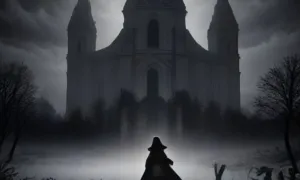
Pověst: Kostel Nejsvětější Trojice (vojenský újezd Libavá)
Traduje se, že nad zaniklou vsí Jestřabí v Oderských vrších visí od dávných časů zvláštní tíha. Staří pamětníci, kteří ještě jako děti chodívali na pouť ke K…
Číst příběhFotografie návštěvníků
Zatím žádné fotografie. Buďte první, kdo přidá fotografii z návštěvy!
Log in a přidejte svou fotografii nebo hodnoťte.
Za ověřenou návštěvu v aplikaci získáte víc bodů — poznáme podle GPS, že jste na místě.
Reviews and comments