






Kostel Panny Marie pod Skalou Kostel
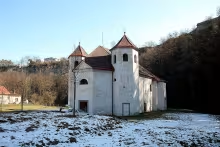
The Church of Our Lady under the Rock is a Baroque pilgrimage church located in Skála, within the Chrast district of Pardubický kraj. Constructed in 1696 on the left bank of the Žejbro stream beneath a steep rock formation, this architectural gem features a distinctive two-tower facade. Recognized for its cultural significance, it has been protected as a Czech Republic cultural monument since 1958.
The origins of the Church trace back to an era when there was likely a chapel dedicated to Saint John the Baptist during the time of the Podlažice monastery. In 1696, this modest structure underwent significant transformation and expansion into its current Baroque form under Bishop František Kristián z Talmberka's guidance. This period in Bohemia, part of the Habsburg Monarchy, was marked by religious and cultural developments that embraced the dramatic expressions and grandeur characteristic of European Baroque architecture.
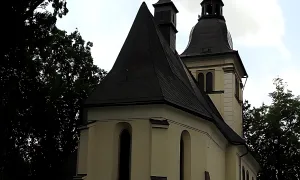
Architecturally, the church is a single-nave structure with a semi-circular presbytery at its eastern end, complemented by polygonal sacristy and chapel extensions on either side. Its facade features two six-sided towers, each adorned with five simple windows in their uppermost level, framing an entrance portal topped by a half-circle window above the loft. The church's walls are clad in smooth lime plaster, while its nave and spire-like towers boast eternit shingles for roofing. Inside, the nave is flat-roofed with a wooden loft, and the presbytery features a barrel vault supported by toskan pilasters on piers.
Since its Baroque reconstruction in 1696, various religious figures have overseen the Church of Our Lady under the Rock. Bishop František Kristián z Talmberka played a pivotal role during this period, overseeing its transformation and expansion. The church's interior is adorned with 18th-century furnishings, including side altars featuring paintings of Saint Wenceslas and Saint Florian by Antonín Machek, a native of Podlažice, dating back to 1798.
Today, the Church remains an accessible site for visitors, nestled in the romantic valley of the Žejbro stream about one kilometer north of Vrbatův Kostelec. Its picturesque setting and historical significance make it a worthwhile destination for those interested in Baroque architecture and religious history. Visitors are invited to explore this cultural monument, appreciating its architectural beauty and the serene natural surroundings that enhance its allure.
Historical milestones
- 1696
- The chapel was baroquely reconstructed and expanded by Bishop František Kristián z Talmberka.
Architectural development
Originally, there was likely a chapel dedicated to Saint John the Baptist from the time of the Podlažice monastery. In 1696, it underwent significant baroque transformation and expansion under Bishop František Kristián z Talmberka's direction. The church features smooth lime plaster walls, eternit shingles on its roofs, and a flat ceiling with a wooden loft in the nave.
Historical events
In 1696, Bishop František Kristián z Talmberka oversaw the baroque reconstruction and expansion of a chapel originally dating back to the era of the Podlažice monastery.
The church has been protected as a cultural monument since 1958.
Points of interest
- The Church of Our Lady under the Rock was originally a modest chapel dedicated to Saint John the Baptist during the era of the Podlažice monastery before its transformation into a Baroque church in 1696. - Bishop František Kristián z Talmberka, who oversaw the church's expansion and Baroque reconstruction, played a significant role in embracing the dramatic expressions characteristic of European Baroque architecture during his time.
Guide
Show guide text
This text was created by artificial intelligence and has not been editorially reviewed. It may contain inaccuracies.
Welcome to the Church of Our Lady under the Rock in Skála, a remarkable testament to Baroque architecture nestled beneath a steep rock formation on the left bank of the Žejbro stream. As you stand here, take a moment to absorb the grandeur of its two-tower facade—a distinctive feature that captures your gaze and invites curiosity about its storied past.
The origins of this church date back to 1696 when it was transformed from a modest chapel dedicated to Saint John the Baptist into the Baroque masterpiece you see today. This transformation came under the guidance of Bishop František Kristián z Talmberka, who oversaw its expansion and stylistic evolution during a time when religious structures were not just places of worship but also symbols of faith and community.
As we delve deeper into its architecture, notice the single-nave structure that leads to a semi-circular presbytery. The church's design is further enriched by polygonal sacristy and chapel extensions, each element contributing to the harmonious blend of form and function typical of Baroque architecture. Although the architect remains unknown, their vision has left an indelible mark on this landscape.
Bishop František Kristián z Talmberka's influence is a pivotal chapter in the church's history. His commitment to enhancing its spiritual and architectural significance during his tenure highlights the intertwining of faith and artistry that defines much of Baroque religious architecture.
An intriguing aspect of this site lies in its evolution from a simple chapel within the Podlažice monastery era to a grand pilgrimage destination. This transformation not only reflects changes in architectural styles but also shifts in the spiritual landscape, where pilgrims have sought solace and inspiration under its protective embrace for centuries.
As we conclude our visit here at the Church of Our Lady under the Rock, I invite you to linger a moment longer, absorbing the tranquil atmosphere that surrounds this historic site. Whether it's the intricate details of its architecture or the serene setting beneath the rock formation, there is much to explore and appreciate. Thank you for joining me on this journey through time and faith—a story etched in stone and spirit.
---
This audio guide has been crafted to enhance your visit with insights into the history, architecture, and spiritual significance of the Church of Our Lady under the Rock. As you continue exploring Skála and its surroundings, may each step reveal new wonders and deepen your connection to this remarkable place. Safe travels on your journey through the rich tapestry of Pardubický kraj's heritage.
Tips for visitors
The best time to visit the Church of Our Lady under the Rock is during late spring or early autumn when the weather is mild, and the surrounding valley of the Žejbro stream offers lush greenery and vibrant colors. These seasons provide ideal conditions for walking around the area without the discomfort of summer heat or winter cold. Additionally, visiting outside peak tourist seasons ensures a more tranquil experience, allowing you to fully appreciate the church's baroque architecture and serene natural setting.
Parking is available near Vrbatův Kostelec, approximately 1 km south of the church. For those preferring public transportation, there are options that can take you close to Skála; however, it's advisable to check current routes online as they may vary. Once at the site, a short walk through the picturesque valley will lead you to the church. This combination of accessibility and natural beauty makes reaching the Church of Our Lady under the Rock convenient for visitors.
When visiting, consider bringing comfortable walking shoes, especially if you plan to explore the surrounding area along the Žejbro stream. A camera or smartphone is recommended to capture the stunning views and architectural details of the church. Additionally, carrying a light jacket can be useful due to variable weather conditions in the valley. For those interested in learning more about the site's history, bringing a guidebook or downloading information from an official website beforehand could enhance your visit.
For photography enthusiasts, the best spots are around the two-tower facade of the church and along the paths that offer views of the Žejbro stream. Early morning light provides soft illumination for capturing the church’s details, while late afternoon can cast dramatic shadows across the valley. Always be mindful of other visitors when taking photos in this popular spot.
Nearby attractions within a 30-minute drive include Vrbatův Kostelec, which offers additional historical sites and charming local architecture to explore. The natural beauty of the area also makes it ideal for short hikes or leisurely walks along the stream. These nearby locations provide excellent opportunities to extend your visit and enjoy more of what Pardubický kraj has to offer.
Businesses nearby
Do you run a restaurant, accommodation, shop, museum, rental, wellness or other visitor service near this monument? Show yourself directly to the people heading to it — this is how they will see you in the app and on the web:
Nearby
Situated in a romantic valley of the Žejbro stream, approximately 1 km north of Vrbatův Kostelec, the church is surrounded by natural beauty and offers picturesque views.
Accommodation nearby
Themed route
Tematický Výletní Trasa: Kostel Panny Marie pod Skalou
1. Kostel Panny Marie pod Skalou (Church) *Proč stojí za návštěvu:* Tento historický kostel, nacházející se v romantickém údolí Žejbro streamu, je známý svou architektonickou krásou a klidným prostředím. Kostel nabízí návštěvníkům příležitost prozkoumat bohatou historii a zároveň si užít pohledy na okolní přírodní krásu.
2. Údolí Žejbro streamu (Valley of the Žejbro Stream) *Proč stojí za návštěvu:* Toto údolí poskytuje místo pro relaxaci a prohlídku, kde si můžete užít klidné chvilky v přírodním prostředí. Jeho pitoreskní krajinou je ideální pro krátké procházky nebo pikniky.
3. Vrbatův Kostelec (Approximately 1 km south) *Proč stojí za návštěvu:* Tato malá obec ležící asi 1 km jižně od kostela nabízí příležitosti pro prohlédnutí místního života a kultury. Navštívte si mírné cestou zpět, abyste si užili klidný atmosféru malé vesnice.
4. Nádvoří kostela (Church Courtyard) *Proč stojí za návštěvu:* Nádvoří kostela je ideálním místem pro odpočinek a užívání si klidného okamžiku. Zde můžete také získat další informace o historii a architektuře samotného kostela.
5. Věž kostela (Church Tower) *Proč stojí za návštěvu:* Vystoupením na věž můžete užít panoramatické pohledy na okolní krajinu, které jsou zde jedinečné a nezapomenutelné. Tato perspektiva nabízí nový pohled na přírodní krásy oblasti.
Tato trasa vám umožní prozkoumat Kostel Panny Marie pod Skalou a jeho okolí, což je ideální zážitek pro milovníky historie i přírody.
Seasonal recommendations
Spring: Visiting the Church of Our Lady under the Rock during spring offers a unique experience as nature awakens around this historic site. The blooming flora creates a picturesque setting, with vibrant colors and fresh scents enhancing the spiritual ambiance. Gentle sunlight filters through budding leaves, casting dappled light that adds to the serene atmosphere. While the church itself remains an architectural marvel, the surrounding landscape is particularly inviting during this time. Visitors should dress in layers as temperatures can vary, and it's advisable to arrive early to enjoy a quieter exploration before larger crowds gather later in the day.
Summer: The summer months bring long days of sunshine that illuminate the Church of Our Lady under the Rock, showcasing its intricate details in bright light. This is an ideal time for photography enthusiasts who wish to capture the church and its natural surroundings at their most vivid. However, with increased daylight hours comes a rise in visitor numbers, so it's wise to plan your visit early in the morning or later in the afternoon to avoid crowds. Comfortable walking shoes and breathable clothing are recommended due to warmer temperatures, ensuring you can comfortably explore both the church and its scenic locale.
Autumn: Autumn transforms the Church of Our Lady under the Rock with a stunning display of fall foliage, creating an enchanting backdrop that enhances the historic site's charm. The cooler weather allows for a more leisurely visit as the crowds thin out compared to summer months. The warm hues of reds, oranges, and yellows in the surrounding landscape provide a breathtaking contrast against the church’s architectural features. Visitors should dress warmly in layers to accommodate fluctuating temperatures throughout the day, and carrying an umbrella or raincoat is advisable due to potential autumn showers.
Winter: Winter offers a unique perspective on the Church of Our Lady under the Rock as snow blankets the area, creating a serene and almost mystical atmosphere around this historic site. The church's features stand out starkly against the white landscape, offering a different kind of beauty compared to other seasons. Visitors should prepare for colder temperatures by dressing warmly in layers, including hats, scarves, and gloves, and plan their visit during daylight hours as opening times may be shorter due to reduced natural light. Despite potentially fewer visitors, it's still wise to check the church’s schedule ahead of time, as winter conditions can affect accessibility.
Visualizations and artistic views


Vizualizace jsou generovány umělou inteligencí a slouží jako inspirace.


Tips from visitors
No tips yet. Be the first!
Log in and add your tip.
Sources and literature
Fotografie: Petr1888 / CC BY-SA 3.0 — Wikimedia Commons. Autor a licence se zobrazí i po najetí na snímek.
Faktickým podkladem tohoto textu byl článek na Wikipedii, jehož autory jsou přispěvatelé Wikipedie. Článek je dostupný pod licencí CC BY-SA 4.0.
Location on the map

Příběhy a pověsti
Legendy, pověsti a příběhy spjaté s touto památkou
Za ověřenou návštěvu v aplikaci získáte víc bodů — poznáme podle GPS, že jste na místě.
Reviews and comments