



kostel Povýšení svatého Kříže (Hazlov) Church
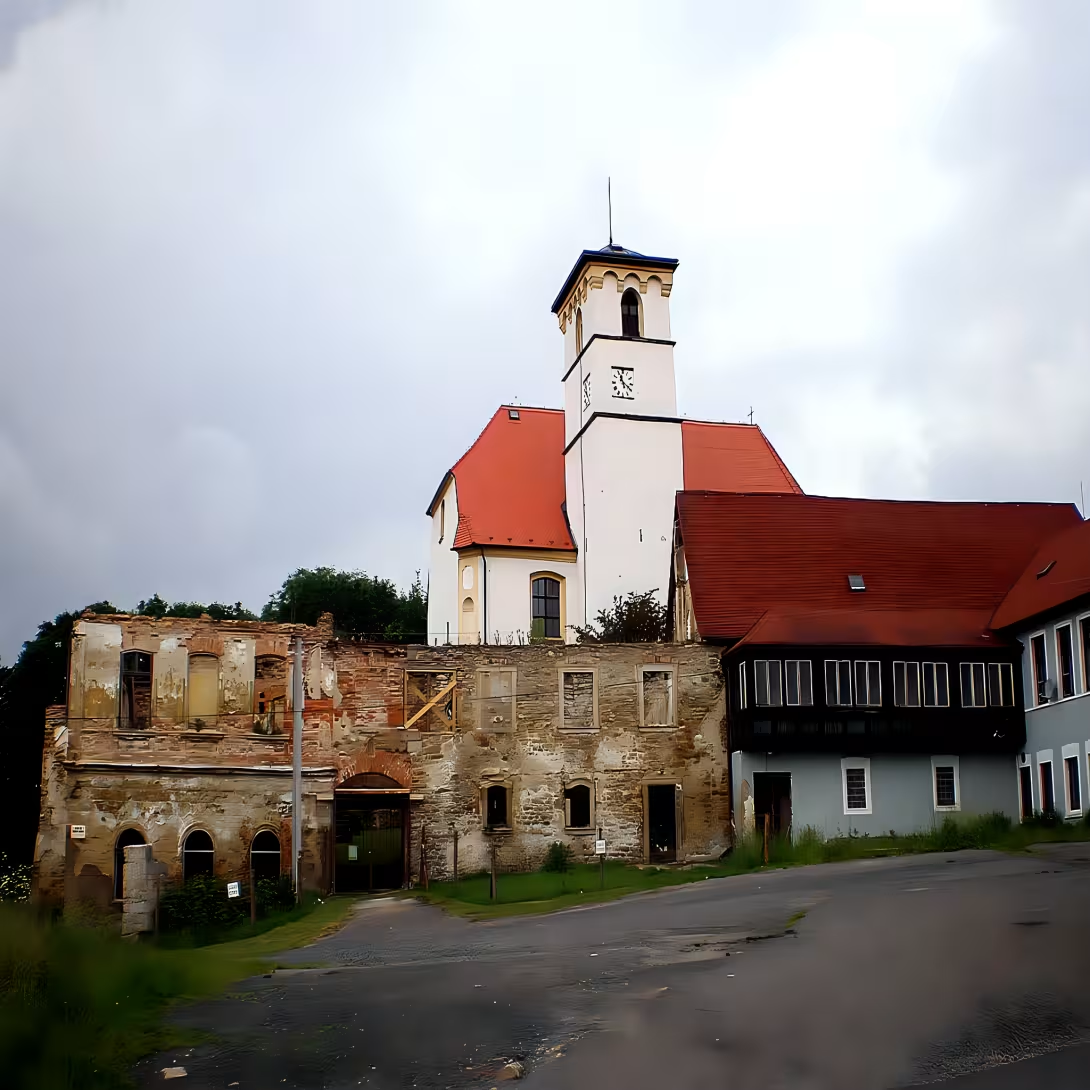
The Church of the Exaltation of the Holy Cross in Hazlov is a Roman Catholic filial church located in the town of Hazlov within the Cheb District of the Karlovy Vary Region. Built alongside Hazlov Castle, this historical monument features a significant tower that forms part of its architectural heritage. The church has been protected as a cultural monument since 1963 and underwent baroque reconstruction between 1687 and 1688. Its significance lies in its long-standing presence within the region's ecclesiastical history and its role as part of the medieval structure of Hazlov Castle.
The origins of the Church are closely tied to Hazlov Castle, with the first written mention of the castle dating back to 1224. This indicates that the church was an integral part of this medieval fortification from its early days. In 1307, a parish was established at the church, marking its importance in the region's ecclesiastical history and reflecting broader European trends towards fortified structures during the Holy Roman Empire's influence over Bohemia.
Architecturally, the church originally featured a Romanesque core within its tower, which later incorporated Gothic elements. The baroque reconstruction between 1687 and 1688 introduced new architectural features, including additional bells that were added to enhance its structure. Despite periods of neglect, particularly after World War II when the expulsion of German inhabitants led to changes in ownership and subsequent deterioration, the site has been preserved as part of cultural heritage efforts.
Throughout its history, the church experienced various changes in administration and fortune. After World War II, it fell into disrepair until conservation efforts began. The building was once owned by Hans Wilhelm Hemfeld before being confiscated and later managed by an ašský státní statek until 1966. Despite these challenges, the church has been maintained as part of the cultural heritage of the region.
Key events in the history include its baroque reconstruction and the establishment of the first parish on the Cheb region at the church in 1307. The church once housed a valuable late Gothic wooden polychrome relief depicting the Death of the Virgin Mary, which is now part of the Cheb museum collection. Additionally, a baroque statue of Saint John Nepomuk stands before the church, originally located in front of the castle.
Today, the Church remains an important cultural and historical site. It has been preserved as part of broader conservation efforts for Hazlov Castle's area, with ongoing restoration work ensuring its continued accessibility to visitors. The church is notable not only for its architectural evolution but also for its role in the region's history.
Visitors can appreciate its historical significance and architectural beauty. Its preservation as a cultural monument ensures that future generations will continue to explore and learn from this remarkable site, making it a worthwhile destination for those interested in history and architecture.
Then and now
Drag the slider to compare how the landmark may have looked when it was built with the view today.
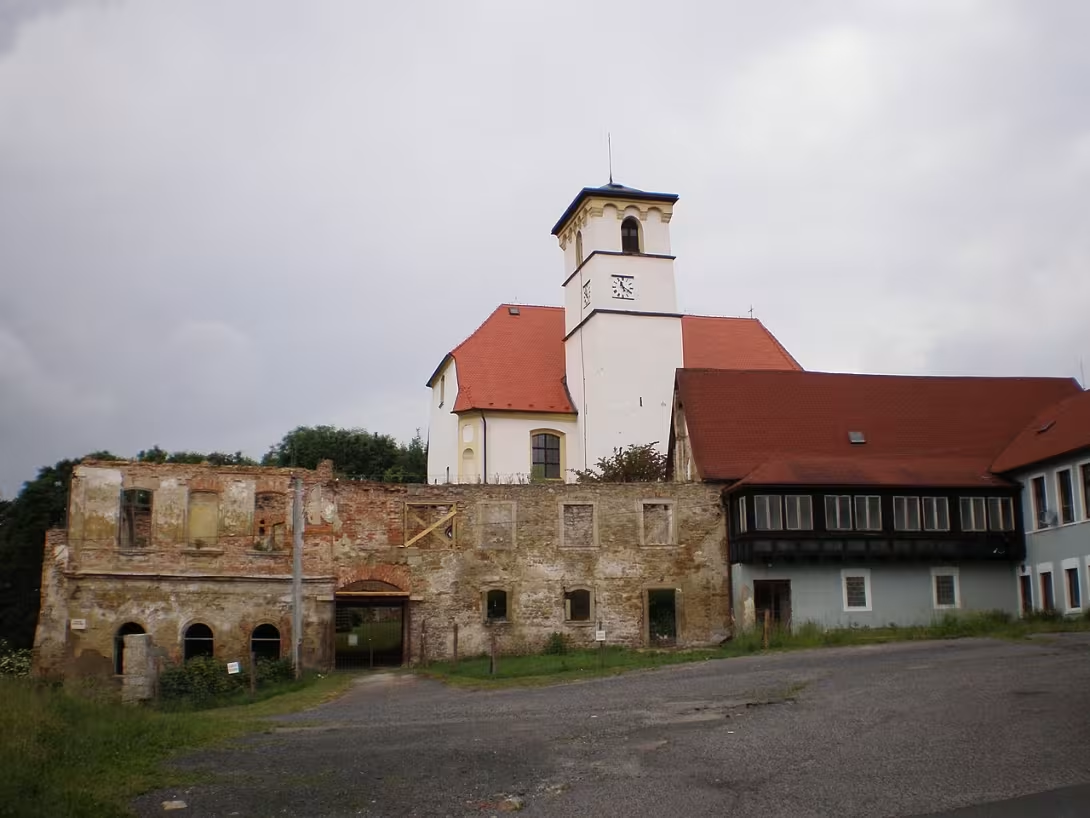

The historical appearance on the left is an AI-generated visualisation and serves as inspiration only.
Historical milestones
- 1224
- First written mention of Hazlov Castle.
- 1307
- Establishment of the first parish on Cheb region at the church.
Architectural development
The church originally featured a Romanesque core within its tower, which was later expanded with Gothic elements. The baroque reconstruction between 1687 and 1688 introduced new architectural features, including additional bells. Despite periods of neglect, the site has been preserved as part of cultural heritage efforts.
Historical events
The first written mention of Hazlov Castle dates back to 1224, indicating the church's historical significance as part of this medieval structure.
In 1307, a parish was established at the church, marking its importance in the region's ecclesiastical history.
After World War II, the expulsion of German inhabitants led to changes in ownership and subsequent neglect until conservation efforts began.
Points of interest
- The Church of the Exaltation of the Holy Cross in Hazlov originally featured a Romanesque core within its tower, which later incorporated Gothic elements before undergoing baroque reconstruction. This architectural evolution reflects the historical layers and stylistic transitions that have occurred over centuries.
- A valuable late Gothic wooden polychrome relief depicting the Death of the Virgin Mary was once housed at the church but is now part of the Cheb museum collection. This artwork highlights the rich artistic heritage associated with the church, despite its absence from the site today.
- The baroque statue of Saint John Nepomuk stands before the Church of the Exaltation of the Holy Cross in Hazlov, originally located in front of Hazlov Castle. This relocation signifies both historical and religious shifts within the region, as well as the enduring veneration for Saint John Nepomuk.
- After World War II, the church fell into disrepair due to changes in ownership following the expulsion of German inhabitants, leading to its deterioration until conservation efforts began. This period reflects broader socio-political upheavals that impacted many historical sites across Europe during and after the war.
- Despite periods of neglect and administrative changes, including being managed by an ašský státní statek from 1945 until 1966, the church has been preserved as part of cultural heritage efforts. This underscores ongoing dedication to maintaining and restoring significant historical monuments in the region.
Guide
This guide is narrated by a synthetic voice generated by artificial intelligence.
Show guide text
This text was created by artificial intelligence and has not been editorially reviewed. It may contain inaccuracies.
The Church of the Elevation of the Holy Cross in Hazlov in the Cheb region is connected to a castle, which was first mentioned in written records in 1224. The church came into being together with it. The oldest, Romanesque core of the castle has been preserved in the ground floor masonry of the church tower. The interior of the tower is often considered to be the original presbytery of a chapel, though its existence has not yet been documented. In its place, a Baroque church was later built.
The tower also served a defensive purpose. It guarded the castle and was probably where the entrance to the castle was located. It can be assumed that a moat lay in front of the gate, which disappeared when the castle was converted into a manor house. The tower is almost 25 metres high, has a slightly rectangular floor plan, and appears quite slender. Its lower part is built from stone blocks in two phases. The two younger storeys are separated by a horizontal offset in the masonry and probably date from the High Gothic period.
In 1307, the first parish in the Cheb region was established here. In the same year, the first and oldest bell was hung on the tower. During the Baroque renovation in 1687 and 1688, three more bells were added. However, they were removed during the First World War. In 1920, they were replaced by new cast-iron bells from the Škoda works in Plzeň.
Today's church is a single-nave building and its presbytery is closed off in a straight line. It is unusual that the building is not oriented with the altar facing east. The interior furnishings date from the end of the 17th century and depict scenes from the life of Jesus Christ. The most valuable work was a wooden painted relief of the Death of the Virgin Mary from around 1500. Today it belongs to the Cheb museum. In front of the church stands a Baroque statue of Saint John of Nepomuk, which previously stood in the square in front of the manor house.
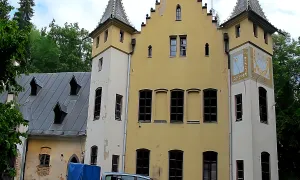
After the Second World War, the German population was displaced from the village and the manor complex, which was held by Hans Wilhelm Hemfeld until its confiscation, began to deteriorate along with the church. Until 1966 it housed the Aš state farm. Demolition was eventually avoided. The church has been a cultural monument since 1963 and the entire complex was entered in the list of monuments in 1963 and 1996. The church is today surrounded by the remains of manor buildings. Since 2009 they have been gradually given new roofs. In the renovated sections, the municipal office and library are now housed. In 2017, one of the castle's staircase towers was completed and a year later it was given a roof. After that, the second tower, which leads to the Renaissance Baroque roof truss, was renovated.
Tips for visitors
The best time to visit the Church of the Exaltation of the Holy Cross in Hazlov is during late spring or early autumn. During these seasons, the weather is typically mild and pleasant, making it ideal for exploring both the church and its surroundings without the discomfort of summer heat or winter cold. Additionally, visiting outside peak tourist season can provide a more serene experience, allowing you to appreciate the architectural details and historical ambiance in peace.
This ensures you can plan your journey efficiently.
When visiting the Church of the Exaltation of the Holy Cross, it's advisable to bring comfortable walking shoes as there might be some walking involved, especially if exploring the castle grounds and nearby areas. A camera is recommended for capturing the stunning architecture and serene landscapes, while a light jacket or sweater can be useful due to varying weather conditions throughout the year.
For photography enthusiasts, the best spots around the church include its exterior where you can capture the intricate details of its architecture in natural light, especially during golden hour—shortly after sunrise or before sunset. The surrounding castle grounds also offer picturesque views that complement photos of the church itself. Be mindful of lighting conditions to enhance your photographs.
Nearby attractions within a 30-minute drive include other historical sites and scenic spots around Hazlov Castle. Exploring these areas can enrich your visit by providing context about the region's history and culture. For families with children, consider visiting nearby parks or nature trails where kids can enjoy outdoor activities while you appreciate the local heritage.
Frequently asked questions
Can the monument be visited?
Religious buildings are usually open mainly during services; at other times a visit is normally arranged with the parish or the operator. We have not verified specific times.
Where is the monument?
Location: Hazlov, Karlovarský kraj. The map on this page shows the exact spot.
Why is the monument protected?
It is listed in the Central List of Cultural Monuments of the Czech Republic as a cultural monument (register no. 24518/4-16).
Businesses nearby
Do you run a restaurant, accommodation, shop, museum, rental, wellness or other visitor service near this monument? Show yourself directly to the people heading to it — this is how they will see you in the app and on the web:
Accommodation nearby
Themed route
Thematic Walking Tour: Hazlov and the Church of the Exaltation of the Holy Cross
1. Church of the Exaltation of the Holy Cross (Hazlov)
Type: Historical Landmark
Why Visit: This stunning Baroque church is a centerpiece in Hazlov, known for its intricate architecture and historical significance. Explore the beautifully preserved interior, featuring ornate altars and frescoes that reflect the rich cultural heritage of the region.
2. Hazlov Village Square
Type: Cultural Site
Why Visit: Located just a short walk from the church, the village square is surrounded by traditional buildings that showcase local architectural styles. It's an ideal spot to experience the charm of rural Czech life and perhaps enjoy a coffee at one of the nearby cafes.
3. Hazlov Historical Museum
Type: Cultural Site
Why Visit: Situated within walking distance from the village square, this museum offers insights into Hazlov’s past with exhibits on local history, customs, and crafts. It's perfect for those interested in understanding the area's development over centuries.
4. Hazlov Community Park
Type: Recreational Area
Why Visit: A leisurely stroll through this park provides a peaceful retreat after exploring historical sites. The greenery and walking paths offer a serene environment to relax, reflect on your visit, or simply enjoy the natural beauty of Hazlov.
This tour offers a comprehensive look at Hazlov's cultural and historical offerings while allowing visitors to appreciate its scenic charm.
Seasonal recommendations
Spring: Visiting the Church of the Exaltation of the Holy Cross in Hazlov during spring offers a unique experience as nature awakens around this historic site. The surrounding landscape is adorned with blooming flowers and fresh greenery, creating a vibrant atmosphere that enhances the church's serene beauty. During this season, mornings can be quite cool, so wearing layers is advisable. As spring progresses into its peak months of April and May, visitors might encounter larger crowds drawn by the pleasant weather, making early visits preferable to fully enjoy the tranquility.
Summer: Summer at the Church of the Exaltation of the Holy Cross in Hazlov is characterized by long daylight hours and warm temperatures, perfect for exploring both the church's interior and its picturesque surroundings. The lush greenery and vibrant flora create a stunning backdrop that enriches the experience. However, this season also brings larger tourist numbers, particularly during weekends and holidays. To avoid crowds, consider visiting early in the morning or later in the afternoon. Comfortable walking shoes and light clothing are recommended to navigate the outdoor paths comfortably.
Autumn: Autumn offers a magical setting for visiting the Church of the Exaltation of the Holy Cross in Hazlov, as the foliage transforms into warm hues of red, orange, and yellow. This seasonal change provides an enchanting atmosphere that complements the historic architecture beautifully. The air is crisp and cooler, making it ideal for leisurely walks around the church grounds. While autumn generally sees fewer tourists than summer, weekends can still be busy, so planning a weekday visit might offer a more peaceful experience. Layered clothing will help accommodate fluctuating temperatures throughout the day.
Winter: Winter transforms the Church of the Exaltation of the Holy Cross in Hazlov into a serene and picturesque site, often blanketed with snow that adds to its historic charm. The shorter daylight hours create a mystical ambiance, particularly during early morning or late afternoon visits when the light casts beautiful shadows on the church's façade. While winter is generally quieter in terms of visitor numbers, it’s important to dress warmly, as temperatures can be quite low.
Visualizations and artistic views


The visualisations are generated by artificial intelligence and serve as inspiration.
Photos from the area
Real photos taken near the monument


Zdroj a licence jsou uvedeny u každého snímku.
Tips from visitors
No tips yet. Be the first!
Log in and add your tip.
Sources and literature
Photos: Zipacna1 / CC BY 3.0, rozlišení zvýšeno umělou inteligencí — Wikimedia Commons. The author and licence also appear when you hover over the image.
Faktickým podkladem tohoto textu byl článek na Wikipedii, jehož autory jsou přispěvatelé Wikipedie. Článek je dostupný pod licencí CC BY-SA 4.0.
Location on the map

Příběhy a pověsti
Legendy, pověsti a příběhy spjaté s touto památkou
Fotografie návštěvníků
Zatím žádné fotografie. Buďte první, kdo přidá fotografii z návštěvy!
Log in a přidejte svou fotografii nebo hodnoťte.
Za ověřenou návštěvu v aplikaci získáte víc bodů — poznáme podle GPS, že jste na místě.
Reviews and comments