






Dům Petr Building
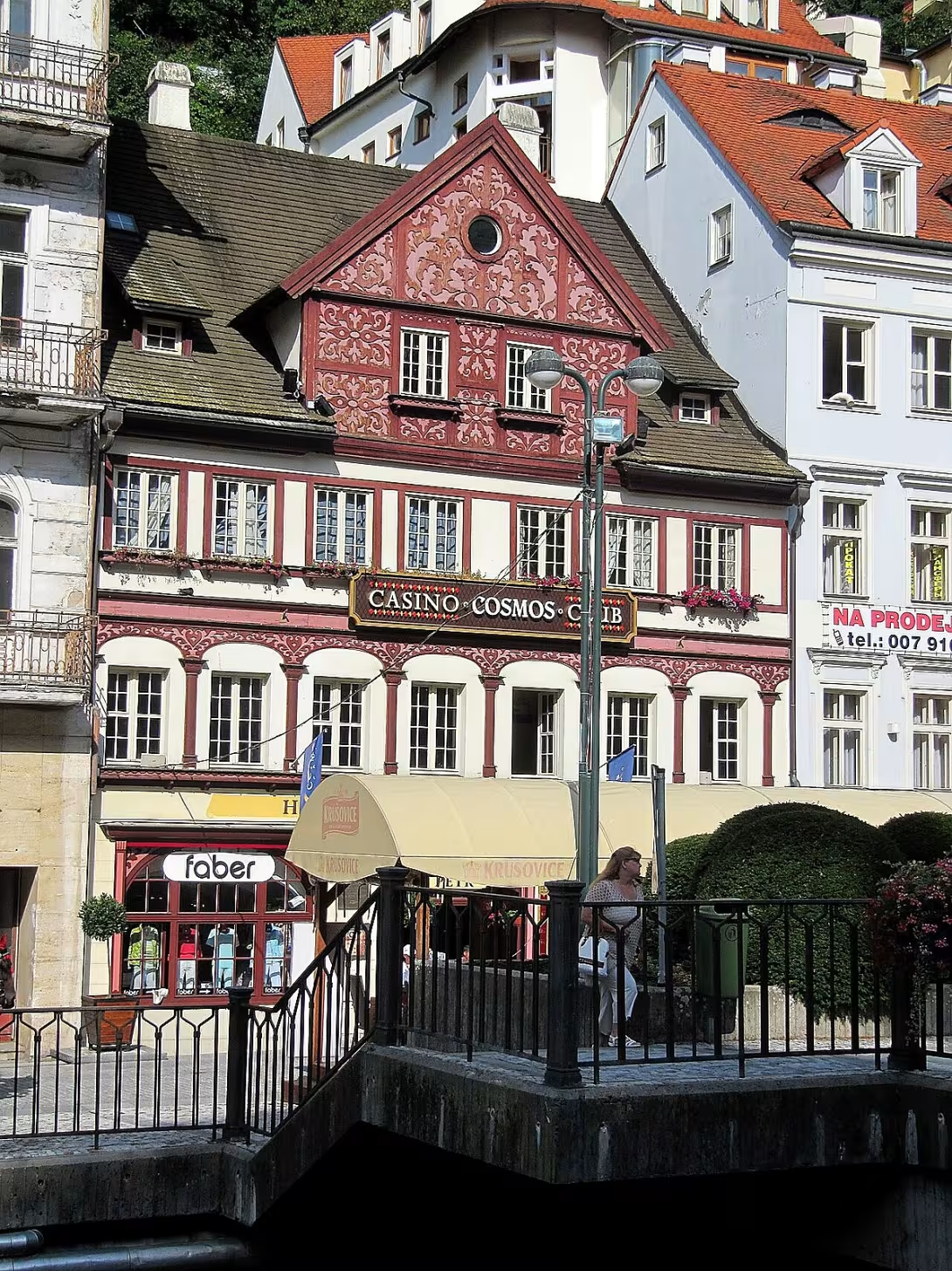
Dům Petr is one of the oldest buildings in Karlovy Vary. It is situated in the heart of the spa district on Vřídelní Street, directly opposite the Mlýnská kolonáda. This Baroque timber-framed town house dates back to the early 18th century. It is a protected cultural monument that has served various roles, ranging from a tavern and restaurant to a modern multifunctional complex.
The building was constructed between 1706 and 1709 as a row house located just behind the city gate. Its development followed the recovery period after the great fire of 1604. The structure reflects the architectural trends of the Krušné hory region, characterized by a masonry ground floor and an overhanging timber-framed upper section. Dendrochronological dating of the wooden structures, ceilings, and roof trusses confirms the building's early 18th-century origin.
Architecturally, the house is a two-story timber-framed structure covered by a high gabled shingle roof with dormers. The current facade features a replica of the decorative illusionary timber framing installed in 1923. The entrance front includes a central gable dormer with decorative carving, while the floors are separated by a profiled cornice. Each floor contains seven windows. The first floor features wooden half-columns with decorated capitals between the windows, while the second floor displays simpler wooden frames with carved, profiled sills.
Throughout its history, the building has been known by several names and served various functions. In 1750, it operated as a tavern named U zlatého vola, owned by Kašpar Penkert. By the 19th century, it housed the restaurant U města Athén. In 1896, owners Amelie and Ernest Charwat commissioned builder Johann Matusch to expand the house toward the courtyard. A major transformation occurred between 1922 and 1923 under the direction of builder Heinrich Johann Vieth for the Neubauer family, which established the building's current appearance. During the German occupation after 1938, the restaurant was known as Grinzing. Following the Second World War, it was renamed Petr, a Czech adaptation of the name of a former tenant, Johann Petter.
The name Petr also serves as a symbolic connection to the Russian Tsar Peter the Great, who visited Karlovy Vary twice. Historical accounts note that the Tsar once assisted masons during the construction of a nearby building, the U Páva house, which no longer exists. A bronze plaque near the entrance of Dům Petr commemorates this event. A Baroque sign from the building's time as the U zlatého vola tavern is currently held in the collections of the Karlovy Vary Museum.
In the latter half of the 20th century, the building fell into disrepair, suffering from dry rot and wood-boring insects, and was repeatedly slated for demolition. It was officially declared a cultural monument on May 27, 1991. Between October 1999 and September 2000, the owner, Exo Prague s. r. o., carried out a comprehensive restoration project led by architect Břetislav Kubíček at a cost of 53 million crowns. This project included structural stabilization, the replacement of damaged wooden elements, and the integration of the building with the neighboring Vřídelní 15 and a new structure on plot 1492.
Today, Dům Petr functions as part of a multifunctional complex that connects Vřídelní and Ondřejská streets, with internal access provided by a lift and staircase. It remains a significant example of preserved historical architecture in Karlovy Vary. Visitors are invited to observe this resilient monument, which stands as a testament to the city's long-standing spa traditions and the successful preservation of its oldest structural heritage.
Historical milestones
- 1706
- Construction of the Baroque timber-framed town house began.
- 1923
- Completion of the major reconstruction for the Neubauer family, giving the house its current appearance.
- 1991
- The building was officially declared a cultural monument of the Czech Republic.
- 2000
- Completion of a comprehensive structural and aesthetic restoration.
Architectural development
The original structure was a Baroque timber-framed house built behind the city gate. In 1896, it was expanded toward the courtyard, and in 1922–1923, it was rebuilt with a decorative illusionary timber-framed facade. The 1999–2000 reconstruction replaced damaged wooden elements while preserving the historical facade and integrating the building with neighboring properties.
Historical events
The building was constructed as a Baroque house shortly after the 1604 fire. It was extensively rebuilt in 1922–1923 to its current form and later underwent a major structural restoration between 1999 and 2000.
Owners
Kašpar Penkert (18th century), Amelie and Ernest Charwat (late 19th century), Johann Petter (early 20th century), Neubauer family (1920s), Exo Prague s. r. o. (present).
Points of interest
The name 'Petr' was adopted after WWII to Czechify the original name 'Petter' and to create a symbolic link to the Russian Tsar Peter the Great, who visited Karlovy Vary twice. A Baroque sign from the building's time as the 'Golden Ox' tavern is preserved in the Karlovy Vary Museum. During the 20th century, the building was nearly demolished due to severe infestation by dry rot and wood-boring insects.
Guide
Show guide text
This text was created by artificial intelligence and has not been editorially reviewed. It may contain inaccuracies.
Welcome to Karlovy Vary, and welcome to the heart of the spa district right here on Vřídelní Street. You are standing before Dům Petr, one of the oldest standing buildings in this famous spa town, a place deeply woven into the rich historical fabric of the region. Take a moment to look at the building before you, absorbing the presence of a structure that has witnessed centuries of spa guests, historical transformations, and the everyday flow of life along the Teplá River valley.
Let us step back in time to the early eighteenth century to understand how this remarkable building came to be. Between 1706 and 1709, the original Baroque timber-framed town house was constructed. It was built during an era when Karlovy Vary was steadily evolving into a premier European destination for nobility, intellectuals, and the ailing seeking healing in the thermal springs. Over the decades, this house did not remain a static residential structure. Instead, it adapted dynamically to the needs of the growing town, serving in various functions as a bustling tavern, a welcoming restaurant, and a popular café where spa guests would gather to converse, drink coffee, and discuss the events of the day.
Now, let us examine the architecture before you and the way the building presents itself to the street today. While it began its life as a Baroque timber-framed structure, Dům Petr underwent significant modifications during the nineteenth and early twentieth centuries. If you look closely at the evolution of the facade, you can trace the hands of the architects who shaped its destiny across different eras, including the work of Johann Matusch, Heinrich Johann Vieth, and Břetislav Kubíček. The major reconstruction completed in 1923 for the Neubauer family truly gave the house the appearance you see today, blending its historic core with the architectural sensibilities of the early twentieth century. Later, the structure received the care it deserved through a comprehensive structural and aesthetic restoration completed in the year 2000, ensuring that its historical integrity and exterior appeal would be preserved for future generations. In recognition of its profound architectural and historical value, the building was officially declared a cultural monument of the Czech Republic in 1991.
As you stand here gazing at the historic facade, consider the fascinating array of historical personalities and ordinary figures whose lives crossed paths with this location. Over the centuries, names like Kašpar Penkert, Amelie Charwat, Ernest Charwat, and Johann Petter became associated with the site. But perhaps the most intriguing historical figure linked to the broader lore of the building is the Russian Tsar Peter the Great, who famously visited Karlovy Vary twice during his travels.
This brings us to a wonderful piece of local history and a bit of naming trivia that adds a unique layer of identity to Dům Petr. The name Petr was actually adopted after the Second World War. It served a dual purpose: it served to Czechify the original German-sounding name Petter, while simultaneously creating a deliberate and symbolic link to the Russian Tsar Peter the Great. It is fascinating how a simple name change can anchor a building so firmly into the broader imperial mythology of the spa town. Furthermore, the history of the house holds even more tangible surprises. If you were to visit the Karlovy Vary Museum today, you could see a preserved Baroque sign from the building's earlier incarnation when it operated as the Golden Ox tavern. Imagine the lively scenes beneath that sign centuries ago, as travelers from across Europe toasted their health with local spring water and local brews.
Before we conclude our stop here, take one final look at the facade and let the atmosphere of Vřídelní Street wash over you. Dům Petr stands as a quiet yet resilient sentinel of Karlovy Vary's past, bridging the gap between the early Baroque era of the eighteenth century, the architectural revivals of the twentieth, and the modern spa culture of today.
Thank you for joining me on this brief journey into the history of Dům Petr. I encourage you to continue exploring the enchanting streets, colonnades, and historic corners of Karlovy Vary, where every building has a story waiting to be discovered. Enjoy the rest of your walk through this remarkable spa town.
Businesses nearby
Do you run a restaurant, accommodation, shop, museum, rental, wellness or other visitor service near this monument? Show yourself directly to the people heading to it — this is how they will see you in the app and on the web:
Nearby
The building is located directly opposite the Mlýnská kolonáda and is situated in the immediate vicinity of the Vřídlo thermal spring and the historic spa center of Karlovy Vary.
Accommodation nearby
Trips and activities nearby
Guided tours, tickets and activities nearby from GetYourGuide
Affiliate link: if you buy from the partner, we may receive a commission. The price for you does not change.
Search tours and activities →Themed route
1. Dům Petr Type: Architectural landmark / Spa building Why visit: This is the main destination of the trip, located directly opposite the Mlýnská kolonáda in the heart of the spa zone, offering a prime example of the local spa architecture.
2. Mlýnská kolonáda Type: Colonnade / Spa architecture Why visit: Situated directly opposite Dům Petr, this iconic historic colonnade is a central feature of the spa center where visitors can admire classical architecture and taste local mineral springs.
3. Vřídlo Type: Thermal spring / Geyser Why visit: Located in the immediate vicinity of Dům Petr, this famous hot spring shoots thermal water high into the air and represents the powerful natural heart of Karlovy Vary's spa tradition.
4. Historic spa center of Karlovy Vary Type: Spa district / Urban area Why visit: Surrounding Dům Petr, the historic spa center provides a picturesque setting for a relaxing walk right outside the building amidst classic spa architecture and natural thermal springs.
Seasonal recommendations
Spring at Dům Petr in Karlovy Vary brings a refreshing atmosphere as the surrounding spa nature awakens from winter. The historic architecture is complemented by blooming greenery and soft, crisp daylight that highlights the intricate details of the facade, which remains in excellent condition. This is an ideal time for photography, as the morning mist often lifts to reveal clear views without the harsh glare of summer. Practical advice includes dressing in layers, as spring weather in the valley can be unpredictable, transitioning quickly from warm sunshine to brisk breezes. Crowds are generally moderate, making mid-morning the best time to visit for a peaceful experience. Comfortable walking shoes are essential for exploring the cobblestone approaches comfortably.
Summer transforms the area around Dům Petr into a vibrant hub filled with lively energy. The long daylight hours provide extended opportunities for sightseeing, and the bright afternoon sun casts a warm, golden glow over the immaculate structure. During the peak summer season, tourist numbers rise significantly, so the best time to arrive is early in the morning right when it opens to avoid the midday rush and warmer temperatures. It is advisable to wear light, breathable clothing, sunglasses, and a hat, and to carry a bottle of water. The bustling atmosphere captures the classic spa town spirit, offering a lively backdrop to your visit.
Autumn at Dům Petr offers a dramatic and romantic setting as the foliage surrounding Karlovy Vary turns vibrant shades of amber, orange, and red. The lower angle of the autumn sun creates soft, diffused lighting that is exceptionally flattering for architectural appreciation and quiet contemplation. Crowds begin to thin out significantly after the summer rush, providing a much more serene environment for visitors. Practical preparation requires warm coats, scarves, and sturdy footwear, as damp leaves can make paths slippery. Late morning or early afternoon is the ideal visiting window to catch the warmest part of the day before the autumn chill sets in.
Winter envelops Dům Petr in a tranquil, fairytale-like ambiance, especially when snow blankets the historic streets of Karlovy Vary. The early winter sunsets cast a magical twilight over the property, and the illumination of the building against the dark evenings creates a cozy, intimate atmosphere. Because of the colder months, operating hours may be shorter, so checking the schedule beforehand is essential. Visitors must dress warmly in heavy winter coats, gloves, hats, and insulated boots to stay comfortable while exploring outdoors. Crowds are at their lowest, offering a wonderfully quiet experience, with midday being the most comfortable time for a visit when temperatures are at their relative peak.
Visualizations and artistic views


The visualisations are generated by artificial intelligence and serve as inspiration.
Photos from the area
Real photos taken near the monument


Zdroj a licence jsou uvedeny u každého snímku.
Tips from visitors
No tips yet. Be the first!
Log in and add your tip.
Sources and literature
Fotografie: Palickap / CC BY-SA 3.0 — Wikimedia Commons. The author and licence also appear when you hover over the image.
Faktickým podkladem tohoto textu byl článek na Wikipedii, jehož autory jsou přispěvatelé Wikipedie. Článek je dostupný pod licencí CC BY-SA 4.0.
Location on the map
More monuments – Karlovy Vary
Show all in the municipality
Příběhy a pověsti
Legendy, pověsti a příběhy spjaté s touto památkou
Fotografie návštěvníků
Zatím žádné fotografie. Buďte první, kdo přidá fotografii z návštěvy!
Přihlaste se a přidejte svou fotografii nebo hodnoťte.
Za ověřenou návštěvu v aplikaci získáte víc bodů — poznáme podle GPS, že jste na místě.
Reviews and comments