






Kostel svaté Hedviky Slezské (Doubrava) Church
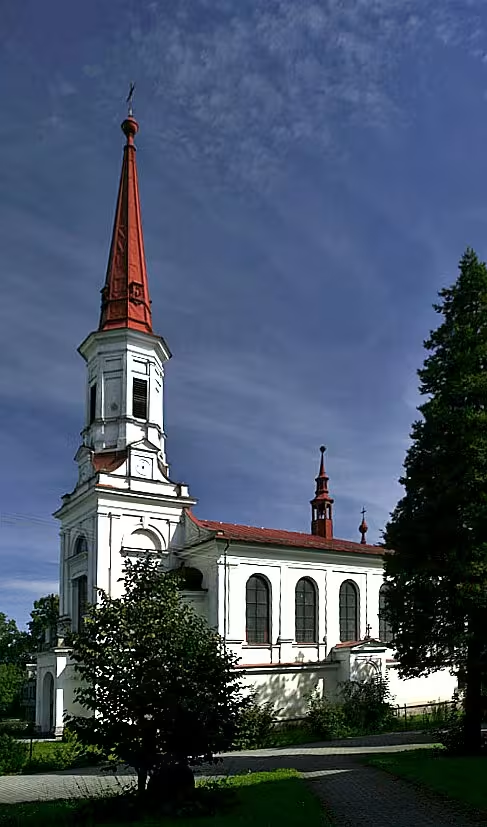
Kostel svaté Hedviky v Doubravě is a Romanesque-style church located in the village of Doubrava, within the Moravian-Silesian Region. Constructed between 1894 and 1898, it served the growing Catholic community due to increased coal mining activities. The church features two cylindrical towers over the sacristies and a high spire on its western tower. Over time, it has undergone several renovations and restorations.
The need for Kostel svaté Hedviky arose from Doubrava's development during the late 19th century, driven by coal mining expansion. The village was part of the Orlová parish, requiring residents to travel long distances for worship services. Recognizing this challenge, the Bishop of Wrocław approved the construction of a new church on June 7, 1892. Architect Bedřich Fulda designed the structure, and its cornerstone was laid in September 1894. The growing number of believers necessitated a local place of worship, leading to Doubrava's establishment as an independent parish upon the church’s consecration on October 15, 1898.
Architecturally, Kostel svaté Hedviky is characterized by its Romanesque style with modern elements. Designed by Bedřich Fulda, it features a single-nave layout oriented eastward, ending in a presbytery flanked by two cylindrical towers over the sacristies. The church's roof is gabled, and small oratories are situated above the sacristies on either side of the main altar. Its western tower transitions from a square base to an octagonal spire with high, narrow roofs topped by a bulbous dome and cross. Originally adorned with high parapets, these were removed during later renovations. The church's exterior includes five window axes framed by pilasters, with arches above them and side entrances.
Throughout its history, Kostel svaté Hedviky has seen various ownerships and administrative changes. Initially part of the Orlová parish, it became a parish church in 1898. In 1921-1923, it was under the Czechoslovak Church's jurisdiction. Over the years, numerous renovations have been undertaken to maintain its structure, including roof repairs by Karel Durčák in 1929 and significant restorations involving local craftsmen like Jan Kaluží and firms such as Muroň z Ostravy.
Key events include its consecration on October 15, 1898, which marked Doubrava's status as an independent parish. The church has undergone several renovations to address structural needs, including the removal of decorative elements like parapets and window shutters during later updates. In recent years, a small wooden bell tower was added near the church.
Today, Kostel svaté Hedviky stands as a testament to Doubrava's historical development and architectural heritage. While it has lost some original features over time, its Romanesque style remains prominent. Visitors can appreciate its unique design elements and historical significance within the context of the region’s industrial past. The church is accessible to those interested in exploring local history and architecture, offering a glimpse into the community's evolution during the late 19th century.
Kostel svaté Hedviky v Doubravě invites visitors to explore its rich history and architectural beauty, providing insight into the cultural and religious life of the region. Its enduring presence serves as a reminder of the area’s industrial heritage and the role of faith in community development.
Then and now
Drag the slider to compare how the landmark may have looked when it was built with the view today.
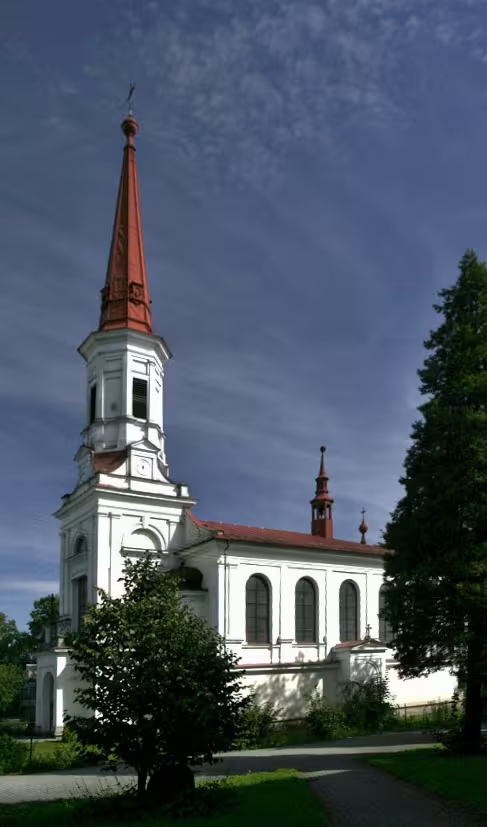
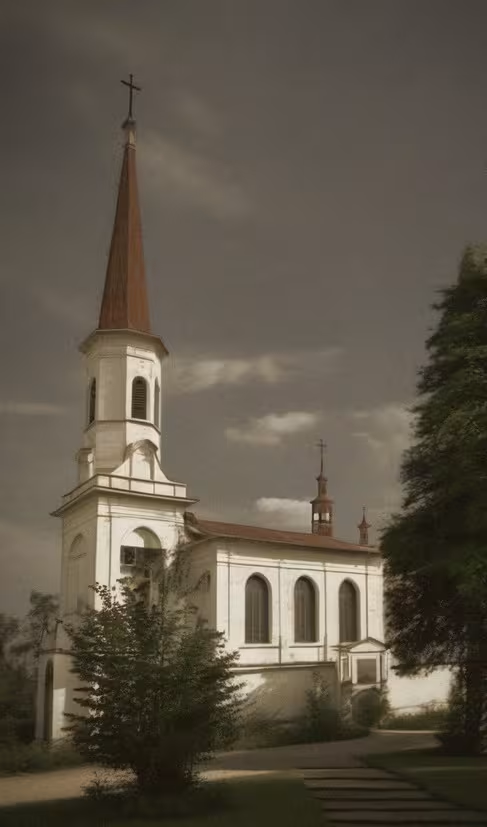
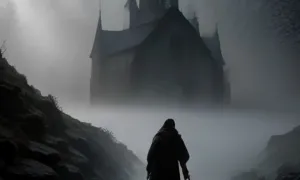
The historical appearance on the left is an AI-generated visualisation and serves as inspiration only.
Historical milestones
- 1892
- The Bishop of Wrocław approved the construction of a new church for Doubrava.
- 1894
- Construction began with the laying of the cornerstone.
- 1898
- The church was consecrated and became an independent parish.
Architectural development
Designed by architect Bedřich Fulda, the church's construction began with the laying of its cornerstone in September 1894. The structure utilized iron columns for support and was completed around 1896, with finishing touches like interior plastering done by 1898. Over the years, it has seen several renovations, including roof repairs and structural updates.
Historical events
The construction of the church was approved by the Bishop of Wrocław on June 7, 1892.
The church was consecrated on October 15, 1898, becoming a parish church and establishing Doubrava as an independent parish.
Points of interest
- Despite its Romanesque style, Kostel svaté Hedviky incorporates modern architectural elements for its time, reflecting a blend of traditional and contemporary design sensibilities during the late 19th century.
- The church's western tower features an unusual transition from a square base to an octagonal spire, topped with a bulbous dome and cross, which is not commonly seen in Romanesque architecture.
- In 1921-1923, Kostel svaté Hedviky was briefly under the jurisdiction of the Czechoslovak Church, highlighting its role within broader religious movements during that period.
- The church's original high parapets were removed during renovations, indicating changes in architectural preferences and possibly practical considerations over time.
- A small wooden bell tower was added near Kostel svaté Hedviky in recent years, enhancing the structure's presence in Doubrava while preserving its historical essence.
Guide
This guide is narrated by a synthetic voice generated by artificial intelligence.
Show guide text
This text was created by artificial intelligence and has not been editorially reviewed. It may contain inaccuracies.
Welcome to the historic site of Kostel svaté Hedviky Slezské in Doubrava, a remarkable testament to architectural ingenuity and community spirit. As you stand before this Romanesque-style church, take a moment to appreciate its elegant form nestled within the village landscape. The facade invites curiosity with its two cylindrical towers that rise gracefully over the sacristies, while an imposing high spire crowns the western tower, reaching towards the sky.
The story of Kostel svaté Hedviky begins in 1892 when the Bishop of Wrocław recognized the need for a new church to serve Doubrava's burgeoning Catholic community. This decision was fueled by the area’s expanding coal mining industry, which brought an influx of people and necessitated spiritual guidance. Construction commenced in 1894 with the laying of the cornerstone, marking the start of a journey that would see this sacred space come to life. By 1898, the church was consecrated and proudly stood as an independent parish.
Designed by the esteemed architect Bedřich Fulda, the church is a fascinating blend of traditional Romanesque elements and modern architectural innovations reflective of the late 19th century. As you explore its exterior, notice how the western tower’s unusual transition from a square base to an octagonal shape adds a dynamic quality to the structure. This clever design choice exemplifies the harmonious fusion of old and new that characterizes this church.
While specific historical figures associated with Kostel svaté Hedviky remain unnamed, the stories embedded within its walls speak volumes about the community's resilience and faith. The church not only served as a place of worship but also became a central hub for social gatherings, reflecting its integral role in Doubrava’s history.
One intriguing aspect of this church is how it seamlessly integrates modern architectural elements into its Romanesque style. This blend of traditional and contemporary design sensibilities offers a glimpse into the evolving architectural trends of the time. It's these subtle details that make Kostel svaté Hedviky a unique historical gem in Moravian-Silesian architecture.
As you conclude your visit, take a moment to reflect on the rich history and cultural significance of this church. We invite you to continue exploring Doubrava and discover more about its heritage. Thank you for joining us today at Kostel svaté Hedviky Slezské, where history and spirituality intertwine in beautiful harmony.
Tips for visitors
The best time to visit Kostel svaté Hedviky Slezské is during late spring or early autumn when the weather is mild, making it ideal for exploring both the church and its surrounding natural landscapes. These seasons offer pleasant temperatures and vibrant scenery, enhancing your experience as you walk through Doubrava's picturesque environment. Additionally, visiting outside of peak summer months can mean fewer crowds, allowing for a more peaceful exploration of this historical site.
Parking is available in the vicinity of Kostel svaté Hedviky Slezské, but it's advisable to check local resources or maps before your visit to find specific locations. For those preferring public transport, there are options that can take you close to Doubrava; however, it's recommended to verify current routes and schedules through a transportation search tool to ensure the most convenient journey.
When planning your visit, consider bringing comfortable walking shoes as exploring the church grounds and nearby historical sites may involve some walking. A camera is also advisable for capturing the stunning architecture of the Romanesque-style church and the natural beauty surrounding it. For photography enthusiasts, early morning or late afternoon visits can provide the best light conditions to capture the church's features in a soft glow.
For families with children, Kostel svaté Hedviky Slezské offers an educational outing with its rich history and beautiful surroundings. The nearby remnants of coal mining infrastructure present an opportunity for learning about the region’s industrial past. Ensure you bring essentials like water, snacks, and perhaps a map or guidebook to make the visit more engaging for younger visitors.
In addition to visiting Kostel svaté Hedviky Slezské, consider exploring other historical sites within a 30-minute drive from Doubrava. The area's industrial heritage is highlighted by remnants of coal mining infrastructure, providing insight into the region’s past and its impact on local communities. These sites offer a fascinating glimpse into history and are perfect for those interested in the cultural and industrial evolution of the Moravian-Silesian Region.
Businesses nearby
Nearby
The church is situated in Doubrava, surrounded by natural landscapes typical of the Moravian-Silesian Region. Nearby are remnants of coal mining infrastructure and other historical sites related to the region's industrial past.
Accommodation nearby
Themed route
Thematic Tour Route: Doubrava's Heritage and Industrial Legacy
1. Kostel svaté Hedviky Slezské (Doubrava) - Type: Church - Why Visit: This stunning church, dedicated to Saint Hedwig of Silesia, is a centerpiece of the village of Doubrava. Its architecture and serene atmosphere provide insight into the region's religious heritage. The church stands as a testament to the area’s historical devotion and cultural identity.
2. Remnants of Coal Mining Infrastructure - Type: Historical Industrial Site - Why Visit: Explore the remnants of coal mining infrastructure that dot the landscape around Doubrava. These sites offer a glimpse into the industrial past of the Moravian-Silesian Region, highlighting its role in shaping local history and economy through coal mining activities.
3. Historical Sites Related to Industrial Past - Type: Historical Landmark - Why Visit: Discover other historical landmarks that reflect Doubrava's rich industrial heritage. These sites provide context on how the region evolved over time, influenced by its industrial endeavors. They serve as a reminder of the community’s resilience and adaptation through different economic phases.
This thematic route offers a journey through both spiritual and industrial history, allowing visitors to appreciate the unique blend of cultural and historical influences in Doubrava.
Seasonal recommendations
Spring: Spring at the Church of Saint Hedwig of Silesia in Doubrava is a time of renewal, with nature awakening around the historic site. The blooming flora and soft pastel colors create a serene atmosphere as sunlight gently illuminates the church's architecture. Visitors can enjoy peaceful walks through nearby trails where wildflowers add to the picturesque landscape. It’s advisable to wear comfortable walking shoes and layers, as temperatures can vary during this transitional season. Early mornings or late afternoons are ideal for visiting to avoid larger crowds that gather to appreciate the blossoming surroundings.
Summer: Summer at the Church of Saint Hedwig offers vibrant daylight hours perfect for exploring its historical details. The lush greenery surrounding the church enhances its beauty, and visitors can enjoy picnics in the open spaces nearby. This is the peak tourist season, so expect larger crowds, especially on weekends. Arriving early in the morning or later in the afternoon can help avoid the busiest times. Dressing in light, breathable clothing and wearing sunscreen are practical tips for a comfortable visit during the warmest months.
Autumn: Autumn brings a stunning display of colors to the Church of Saint Hedwig, with golden hues and falling leaves creating a magical atmosphere. The cooler weather makes it an ideal time for leisurely exploration without the summer crowds. As days become shorter, lighting conditions change throughout the day, offering different perspectives on the church's architecture. Visitors should dress in layers to accommodate fluctuating temperatures and consider bringing a light jacket or sweater as evenings can be quite cool.
Winter: Winter transforms the Church of Saint Hedwig into a serene haven amidst snow-covered landscapes, providing unique photo opportunities with its historic architecture standing out against the white backdrop. The shorter days mean less natural light, so carrying a flashlight might enhance your experience during early morning or late afternoon visits. It's essential to wear warm clothing and sturdy boots for comfort while exploring the site. Be mindful of potential closures due to weather conditions, particularly in severe snowstorms, and plan your visit accordingly.
Visualizations and artistic views


The visualisations are generated by artificial intelligence and serve as inspiration.
Photos from the area
Real photos taken near the monument


Zdroj a licence jsou uvedeny u každého snímku.
Tips from visitors
No tips yet. Be the first!
Log in and add your tip.
Sources and literature
Fotografie: Marian Siedlaczek (my friend) / CC BY-SA 3.0 — Wikimedia Commons. The author and licence also appear when you hover over the image.
Faktickým podkladem tohoto textu byl článek na Wikipedii, jehož autory jsou přispěvatelé Wikipedie. Článek je dostupný pod licencí CC BY-SA 4.0.
Location on the map
Příběhy a pověsti
Legendy, pověsti a příběhy spjaté s touto památkou
Fotografie návštěvníků
Zatím žádné fotografie. Buďte první, kdo přidá fotografii z návštěvy!
Přihlaste se a přidejte svou fotografii nebo hodnoťte.
Za ověřenou návštěvu v aplikaci získáte víc bodů — poznáme podle GPS, že jste na místě.
Reviews and comments