






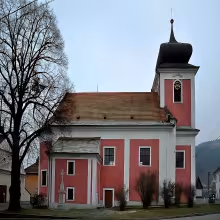
The Church of Saint Kunhuta in Nedvědice is a Roman Catholic cultural monument in the Czech Republic. Situated in Nedvědice, part of the Brno-venkov District, it holds historical and architectural significance due to its evolution over centuries. Originally built around 1420, it underwent major transformations during the Baroque period circa 1720. Today, it serves as both a place of worship and a testament to the region's rich cultural and religious history.
The church's origins are linked to early 15th-century Bohemia, marked by significant religious and political activity. The first record of a parish priest in Nedvědice dates back to 1401, indicating an established religious presence before the church's construction. This era included the Hussite Wars (1419-1434), reflecting calls for church reform and national identity across Bohemia. These events set the stage for architectural developments transitioning from Gothic influences to Renaissance styles, eventually leading to Baroque renovations.
Architecturally, the Church of Saint Kunhuta began as a single-nave structure with core elements and tower constructed around 1420. It underwent significant changes during the Baroque period in 1720, acquiring much of its current appearance. The church features a semi-circular chancel and an attached sacristy on the north wall of the nave. A distinctive element is the octagonal bell tower positioned prominently before the western facade. These modifications reflect stylistic shifts over centuries, showcasing both original Gothic elements and later Baroque influences.
Throughout history, the Church of Saint Kunhuta has remained central to the Nedvědice community as a parish church for the local parish. While specific details about ownership or administrative changes are not extensively documented, it is clear that the church consistently served its religious and communal functions. The Baroque renovations around 1720 were particularly significant, marking a transformation in both style and function.
Key events associated with this monument include its initial construction phase in the early 15th century and the substantial Baroque renovations of 1720. These periods highlight the church's evolution from a Gothic structure to one embodying Baroque aesthetics. The historical context reflects broader trends within Bohemia, where religious and architectural developments were closely linked.
Today, the Church of Saint Kunhuta stands as a protected cultural monument in Nedvědice, accessible to visitors interested in its rich history and architectural beauty. Its status as a heritage site underscores its importance not only locally but also to those interested in historical and religious developments in the region. The church's preservation allows it to continue serving both spiritual and educational purposes.
Visiting the Church of Saint Kunhuta offers an opportunity to connect with the past, appreciating the architectural transformations that have shaped its current form. Its significance as a cultural monument makes it a worthwhile destination for those interested in history, architecture, or religious heritage. The church invites visitors to explore its storied walls and reflect on the centuries of history encapsulated within this enduring structure.
Historical milestones
- 1401
- První záznam o faráři v Nedvědicích.
- 1420
- Původní stavba kostela svaté Kunhuty.
- 1419
- Začátek husitských válek, ovlivňující regionální dějiny.
- 1434
- Konec husitských válek.
- 1720
- Barokní přestavby kostela.
Architectural development
Originally constructed in the early 15th century with a core structure and tower from around 1420, the Church of Saint Kunhuta experienced substantial changes during the Baroque period. The current form, characterized by baroque elements, was established around 1720. This transformation included modifications to its architectural style while maintaining its original single-nave layout.
Historical events
The parish priest in Nedvědice was first mentioned in 1401, indicating an established religious presence prior to the church's construction.
The church underwent significant baroque renovations around 1720, altering its architectural style.
Points of interest
- The Church of Saint Kunhuta is associated with the Hussite Wars, a period marked by calls for church reform and national identity in Bohemia. This connection highlights its historical significance beyond just architectural evolution.
- Despite its prominent Baroque renovations around 1720, the church retains original Gothic elements, such as the semi-circular chancel and octagonal bell tower. This blend of styles offers a unique glimpse into the architectural transitions over centuries.
Guide
Show guide text
Welcome to the Church of Saint Kunhuta in Nedvědice, a remarkable testament to history and faith nestled within this serene town. As you stand before it, take a moment to absorb its presence — a structure that has witnessed centuries unfold. The church’s silhouette against the sky speaks volumes of its enduring legacy.
The origins of this sacred site trace back to around 1420, during an era when the region was deeply influenced by the tumultuous Hussite Wars. These conflicts, sparked in 1419 and concluding in 1434, were driven by calls for church reform and a burgeoning sense of national identity in Bohemia. It's fascinating to consider how this backdrop shaped not only the local history but also the very walls you see before you.
Architecturally, the Church of Saint Kunhuta is an embodiment of resilience and transformation. While its core structure dates back to the early 15th century, significant baroque renovations around 1720 infused it with a new aesthetic vigor. As you gaze upon the church, notice the single-nave design complemented by a semi-circular chancel — elements that capture both its original essence and later enhancements.
The church is not just an architectural marvel; it's also steeped in historical narratives. Though specific architects and personalities remain unnamed, the building itself serves as a silent witness to the region’s dynamic past. It stands as a cultural monument, protected by the Czech Republic for its historical significance beyond mere architecture.
One of the most intriguing aspects of this church is its connection to the Hussite Wars. This period was marked by profound calls for change, and the church's survival through these times adds layers to its story. Imagine the echoes of history that reverberate within its walls — a testament to resilience amidst upheaval.
As you continue your exploration, take a moment to let your imagination wander. What tales could this church tell if it had a voice? Each stone and archway holds whispers of the past, inviting you to delve deeper into its mysteries.
Thank you for joining us on this journey through time. We invite you to further explore Nedvědice and discover more about its rich history and culture. May your visit inspire curiosity and wonder as you uncover the stories etched in stone and spirit. Safe travels, and we hope to guide you again soon.
Businesses nearby
Do you run a restaurant, accommodation, shop, museum, rental, wellness or other visitor service near this monument? Show yourself directly to the people heading to it — this is how they will see you in the app and on the web:
Accommodation nearby
Themed route
Tematická výletní trasa: Kostel svaté Kunhuty (Nedvědice) a okolí
1. Kostel svaté Kunhuty (Nedvědice) *Typ:* Náboženská památka *Proč stojí za návštěvu:* Tento barokní kostel, postavený v 18. století, je nejen architektonickou perli obce Nedvědice, ale také svědectvím bohaté historie a kultury regionu Jihomoravského kraje. Jeho interiér nabízí nádherné fresky a sochy, které přitahují všechny milovníky umění.
2. Kaple svaté Anny (Nedvědice) *Typ:* Kaple *Proč stojí za návštěvu:* Tato malebná kaple je součástí místního duchovního života a poskytuje klidnou útočiště pro poutníky. Její prostor umožňuje užívání si tiché atmosféry a krásy venkovského okolí.
3. Nádvoří kostela svaté Kunhuty *Typ:* Historický areál *Proč stojí za návštěvu:* Nádvoří je ideálním místem pro relaxaci a poznání historie. Zde si můžete užít klidné chvilky, zatímco se díváte na kostel své strany nebo si povídáte s rodinou o jeho historickém významu.
4. Místní tradiční obchod (Nedvědice) *Typ:* Obchod *Proč stojí za návštěvu:* Navštívte místní obchod, kde si můžete zakoupit tradiční produkty a suvenýry z regionu. Je to skvělá příležitost prozkoumat místní gastronomii a podpořit malé podniky.
5. Park u kostela svaté Kunhuty *Typ:* Park *Proč stojí za návštěvu:* Tento park nabízí krásné procházky mezi zelenými alejemi a je ideálním místem pro relaxaci. Je to také skvělý výchozí bod pro další objevování okolního kraje.
Tato trasa nabízí kombinaci náboženských, kulturních a přírodních zážitků, které jsou ideální pro každého cestovatele hledajícího klid a poznání regionu Jihomoravského kraje.
Seasonal recommendations
Spring: Visiting the Church of Saint Kunhuta during spring offers a unique experience as nature awakens around Nedvědice. The blooming flowers and fresh greenery create a picturesque setting, enhancing the church's historical charm with vibrant colors and gentle light. This season is ideal for photography enthusiasts who wish to capture the harmonious blend of architecture and nature. Visitors should plan their trip early in the morning or later in the afternoon to avoid crowds that gather during peak daylight hours. Light layers are recommended as temperatures can vary, making it comfortable but unpredictable.
Summer: Summer at the Church of Saint Kunhuta is characterized by long days filled with warm sunlight that beautifully illuminates the church's intricate details. The lush landscape surrounding the site provides a serene atmosphere perfect for leisurely exploration. However, this is also the peak tourist season, so visitors should consider arriving early in the morning to avoid large groups and ensure a more tranquil experience. Comfortable walking shoes, sunglasses, and hats are advisable due to the sunny weather, along with staying hydrated throughout your visit.
Autumn: Autumn brings a magical transformation to the Church of Saint Kunhuta as the foliage turns into warm hues of orange, red, and gold. The soft autumn light casts a golden glow over the church's architecture, creating an enchanting atmosphere that is ideal for photography or simply enjoying the peaceful surroundings. This season tends to have fewer visitors compared to summer, allowing for a more relaxed visit. Layered clothing is recommended to adapt to the cooler temperatures, and carrying a light jacket can ensure comfort as evenings become chillier.
Winter: The Church of Saint Kunhuta in winter offers a serene and contemplative experience with its snow-covered surroundings providing a stark yet beautiful contrast against the historic architecture. The shorter days mean that visits are best planned for midday when lighting is optimal, though it's important to check opening hours as they may be reduced during this season. Visitors should dress warmly in layers, including thermal clothing and waterproof boots, to enjoy their visit comfortably despite the cold weather. The quiet atmosphere during winter can make for a more intimate exploration of the church’s history and architecture.
Visualizations and artistic views

Vizualizace jsou generovány umělou inteligencí a slouží jako inspirace.


Tips from visitors
No tips yet. Be the first!
Log in and add your tip.

Reviews and comments