






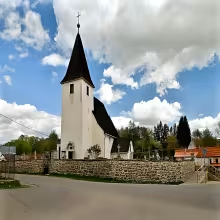
The Church of Saint Mary Magdalene in Růžená stands as a testament to the rich historical tapestry of this quaint village within the Vysočina region of the Czech Republic. As a parish church for the Roman Catholic community, it holds significant religious and cultural importance. Recognized as a cultural monument, its architectural evolution reflects both local history and broader European influences.
The origins of the Church of Saint Mary Magdalene trace back to the early 13th century, during a period when Bohemia was part of the Holy Roman Empire. This era saw significant religious and political changes that influenced regional development. Historical sources suggest that around 1501, likely due to the aftermath of the Hussite Wars, the church underwent expansion and reconstruction. These conflicts profoundly impacted architectural trends across Europe, reflecting broader tensions between Catholicism and emerging Protestant movements.
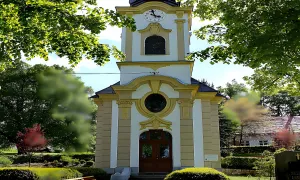
Architecturally, the Church of Saint Mary Magdalene is notable for its Baroque style, incorporating elements from an earlier late Gothic core. This blend of styles is evident in its single-nave design, polygonal chancel, and four-sided tower. The church stands within an enclosed cemetery, accompanied by a mortuary building, highlighting its role as both a spiritual center and historical landmark.
Throughout its history, the church has experienced several phases of repair and renovation. Following the Thirty Years' War in 1648, further repairs were undertaken to restore its structure. In the 19th century, additional reconstruction efforts ensured the preservation of its architectural integrity. More recently, significant roof repairs were completed in 2015 as part of ongoing restoration efforts.
Today, the Church of Saint Mary Magdalene remains a focal point for both locals and visitors. Its status as a cultural monument underscores its historical significance and architectural beauty. Visitors are drawn to its serene setting within the village cemetery, offering a glimpse into the region's past while providing space for reflection and contemplation.
The church is not only a place of worship but also a symbol of resilience and continuity through centuries of change. Its enduring presence invites exploration and appreciation, making it a worthwhile destination for those interested in history, architecture, or spirituality.
Historical milestones
- kolem 1200
- Founding of the Church of Saint Mary Magdalene in Růžená.
- 1501
- Expansion and reconstruction following the Hussite Wars.
- 1648
- Repairs after the Thirty Years' War.
- 19. století
- Further restoration work to preserve architectural integrity.
- 2015
- Significant roof repairs as part of restoration efforts.
Architectural development
The Church of Saint Mary Magdalene began as a structure from the early 13th century. It experienced several phases of development, including expansion and reconstruction around 1501, likely influenced by post-Hussite Wars architectural trends. The church was further repaired after the Thirty Years' War in 1648 and underwent additional renovations in the 19th century. Its current Baroque style incorporates a late Gothic core.
Historical events
The church was likely constructed at the beginning of the 13th century.
It underwent expansion and reconstruction around 1501, possibly after the Hussite Wars.
Further repairs were made following the Thirty Years' War in 1648.
Reconstruction efforts continued into the 19th century, with significant roof repairs completed in 2015.
Points of interest
- The Church of Saint Mary Magdalene's name is linked to a local legend about a miraculous rose bush that bloomed near the original church site, inspiring its nickname "Růžená" or "Rose."
- Historical records suggest that during the Hussite Wars, the church served as a temporary refuge for villagers fleeing conflict, which may have influenced its later architectural expansions.
Guide
Show guide text
Welcome to the Church of Saint Mary Magdalene in Růžená, a cherished landmark nestled within the village that shares its name. As you stand here, take a moment to absorb the serene atmosphere surrounding this historic edifice. The church presents itself with a dignified presence, its Baroque design harmoniously complementing the late Gothic core that lies at its heart. Notice how it stands proudly amidst an enclosed cemetery, flanked by a mortuary building—a testament to centuries of spiritual and communal significance.
The origins of this sacred site trace back to around 1200 when the Church of Saint Mary Magdalene was first established in Růžená. Over the years, it has witnessed pivotal moments in history, serving as both sanctuary and witness to the village's evolving narrative. In 1501, following the tumultuous Hussite Wars, the church underwent significant expansion and reconstruction—a period that marked its resilience and enduring importance to the local community.
As you take in the architecture before you, observe the single-nave structure of the church, a hallmark of Baroque design, which seamlessly integrates with its late Gothic elements. The polygonal chancel and four-sided tower are particularly striking, inviting onlookers to appreciate their intricate details and the stories they embody. These architectural features not only enhance the church's aesthetic appeal but also reflect the rich tapestry of historical influences that have shaped it over centuries.
Throughout history, this site has been intertwined with tales of faith and endurance. During the Hussite Wars, the church served as a temporary refuge for villagers seeking solace amidst chaos—a poignant reminder of its role as a beacon of hope in times of strife. Its resilience was further tested during the Thirty Years' War, necessitating repairs in 1648 to restore its sanctity and structure.
One of the most enchanting aspects of this church is the legend associated with its name. The story goes that a miraculous rose bush once bloomed near the original site of the church, inspiring its affectionate nickname "Růžená," or "Rose." This tale adds a layer of mystique to your visit, inviting you to ponder the intertwining of nature and spirituality.
As we approach the 19th century, further reconstruction efforts were undertaken to preserve the architectural integrity of this historical gem. In more recent times, specifically in 2015, significant repairs to the roof were part of ongoing restoration endeavors, ensuring that future generations can continue to appreciate its beauty and heritage.
As your visit draws to a close, I invite you to linger for a moment longer, allowing yourself to fully experience the tranquility and historical resonance of this place. The Church of Saint Mary Magdalene in Růžená is not just an architectural marvel; it's a living narrative that continues to inspire and captivate those who walk its grounds.
Thank you for joining me on this journey through time and history. May your exploration of Růžená and its treasures leave you with lasting memories and a deeper appreciation for the stories etched into every stone and corner of this remarkable church. Safe travels as you continue to discover more wonders in Kraj Vysočina.
Tips for visitors
The best time to visit the Church of Saint Mary Magdalene, also known as Růžená, is during late spring or early autumn. During these seasons, the weather is typically mild and pleasant, making it ideal for exploring both the church's interior and its surrounding natural beauty. Additionally, visiting outside peak tourist months can provide a more serene experience, allowing you to appreciate the architectural details without large crowds.
Parking and transport options are convenient for visitors to Růžená. The village is accessible by car, with parking available nearby; however, it's advisable to check local signage upon arrival as spaces may be limited during busy times. Public transportation can also be used to reach the area, though specific bus or train routes should be verified in advance through a travel planner or local tourism office for the most current information.
When planning your visit, consider bringing comfortable walking shoes and weather-appropriate clothing, especially if you plan to explore the village and its surroundings. A camera is recommended to capture the stunning architecture of the church and the picturesque landscape. If you're interested in photography, early morning or late afternoon light provides the best conditions for capturing the church's intricate details and the soft glow on its facade.
For families with children, Růžená offers a peaceful environment that is perfect for a day out exploring history and nature. The village itself has open spaces where children can play safely. Additionally, there are several attractions within a 30-minute drive from Růžená, such as the historic town of Telč, known for its well-preserved Renaissance architecture and charming streets. This makes it an excellent option for a family day trip.
Businesses nearby
Do you run a restaurant, accommodation, shop, museum, rental, wellness or other visitor service near this monument? Show yourself directly to the people heading to it — this is how they will see you in the app and on the web:
Accommodation nearby
Trips and activities nearby
Guided tours, tickets and activities nearby from GetYourGuide
Search tours and activities →Themed route
Tematická výletní trasa - Kostel svaté Maří Magdalény (Růžená)
1. Kostel svaté Maří Magdalény (Růžená) - *Typ:* Náboženská památka - *Proč stojí za návštěvu:* Tento barokní kostel je centrem duchovního života v obci Růžená. Jeho historické interiéry a architektura nabízejí pohled do minulosti, zatímco jeho výhledy na okolní krajinu jsou nezapomenutelné.
2. Nádvoří kostela - *Typ:* Historické nádvoří - *Proč stojí za návštěvu:* Nádvoří je klíčovým místem pro pochopení historie a architektury kostela. Poskytuje pohodlné místo k odpočinku a reflexi, zatímco vám umožňuje užít si klidnou atmosféru venkovské obce.
3. Věž kostela - *Typ:* Historická věž - *Proč stojí za návštěvu:* Výhledy z věže nabízejí jedinečnou perspektivu na Růženou a okolní krajinné prvky. Je to ideální místo pro fotografii nebo jen pro chvilku relaxace, přičemž si užijete pohledy, které jsou dostupné pouze z takové výšky.
4. Park kolem kostela - *Typ:* Historický park - *Proč stojí za návštěvu:* Park nabízí klidnou a příjemnou procházku, která doplňuje návštěvu kostela. Jeho zelené plochy jsou ideálním místem k odpočinku po prozkoumání historických staveb.
5. Okolní cesta kolem kostela - *Typ:* Krátká okružní chodba - *Proč stojí za návštěvu:* Tato krátká chůze vám umožňuje užít si klidnou atmosféru obce a zároveň se ponořit do jejího historického prostředí. Je to ideální způsob, jak uzavřít svůj návštěvní program v Růžené.
Tato trasa nabízí komplexní zážitek o kostele svaté Maří Magdalény a jeho bezprostředním okolí, což umožňuje návštěvníkům plně se ponořit do historie a kultury obce Růžená.
Seasonal recommendations
Jaro: Návštěva kostela svaté Maří Magdalény (Růžená) v jarním období nabízí nádherný pohled na oživující se přírodu, kdy kvetoucí zahrady a stromy obklopují památku. Slunečné dny poskytují ideální osvětlení pro fotografii, což usnadňuje zachycení architektonických detailů kostela v příjemném světle. I když se může objevit nějaký dočasný nárůst návštěvnosti díky jarním turistům, obvykle není tak zatíženo jako v letní sezóně. Doporučuje se přijetí s lehkými oblečením a botami vhodnými pro chůzi po trávě, zejména pokud plánujete prozkoumat okolní zelené plochy.
Léto: Létě je hlavní sezóna návštěvnosti kostela svaté Maří Magdalény (Růžená), kdy se místní i turisté shromažďují, aby si užili teplých dnů a příjemného venkovského prostředí. Dlouhé dny poskytují více času pro prozkoumání památky a okolních zahrad. Nicméně, kvůli vysokým teplotám a nárůstu davů je doporučeno navštívit raně odpoledne, aby se vyhnul nejteplejším hodinám dne a potenciálním frontám. Oblečení by mělo být lehké, ochranné proti slunci a vhodné pro chůzi po venkovních cestách.
Podzim: Podzim nabízí jedinečnou atmosféru návštěvy kostela svaté Maří Magdalény (Růžená), kdy se listy stromů mění na zlatavé a rudé barvy, což vytváří romantický pozadí pro fotografování. Slunečné dny jsou obvykle teplejší než v zimě, ale večery se rychle ochlazují, takže je vhodné přinést s sebou oblečení na vrstvení. Navštívte kostel brzy odpoledne, abyste si užili teplejších hodin a vyhnuli se chladnějším večerům. Kvůli nižší návštěvnosti je tento čas ideální pro klidnou prohlídku bez překážek davu.
Zima: Zimní návštěva kostela svaté Maří Magdalény (Růžená) nabízí poklidnou a tichou atmosféru, kdy sníh pokrývající zemi přidává klidný a čistý vzhled. Dny jsou kratší, takže je důležité navštívit raně ráno nebo pozdě odpoledne, aby se užilo světla pro fotografii. Otevírací doba může být omezená kvůli zimním podmínkám, takže je dobré si ověřit aktuální časy před návštěvou. Teplé oblečení a ochranné boty jsou nezbytné pro pohodlí během chladných dnů; navíc se doporučuje zkontrolovat počasí, protože sníh může ovlivnit přístupnost.
Visualizations and artistic views

Vizualizace jsou generovány umělou inteligencí a slouží jako inspirace.
Tips from visitors
No tips yet. Be the first!
Log in and add your tip.


Reviews and comments