



Kostel svatého Bedřicha (Bílá) Church
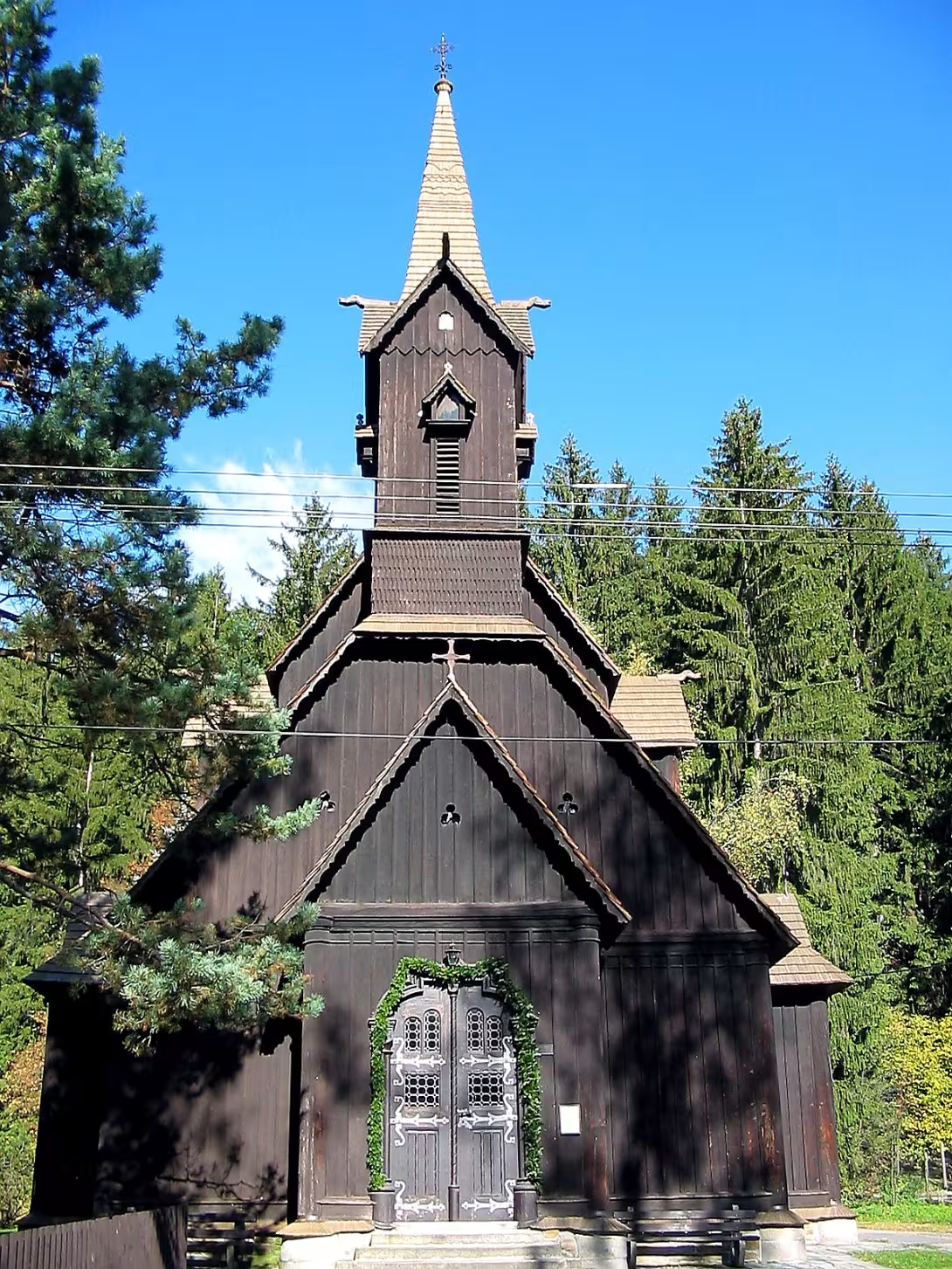
The Baroque-style Kostel svatého Bedřicha in Bílá, Frýdek-Místek, stands as a unique architectural gem since 1875. This monument is notable for its stavkirche construction, inspired by Norwegian architecture from the 11th century, making it the only original representative of this type in Central Europe.
Built between 1873 and 1874 under Cardinal Bedřich Egon Lanthrabě z Fürstenberka's patronage, the church was originally smaller than its current form. Consecrated in 1875, it became a parish church in 1911, undergoing significant changes including the addition of a sacristy, choir, and tower.
The church features unique stavkirche construction characteristic of Norwegian architecture from the 11th century. The original church was smaller and underwent changes in 1911, adding a sacristy, choir, and tower. Today's church boasts a central nave with a trussed ceiling, a main facade featuring a slender-towered spire topped with a cross and finial, and hand-split shingle roofing.
The interior showcases wooden columns crafted from single pieces of wood, supporting the gallery on the first floor and side chapels with blind arches. The chancel features three open arches. A 1924 organ by Vojtěch Káše from Brno is located in the central nave. Unique vitrified window designs also adorn the church.
During this period, Bohemia and Europe experienced significant cultural and architectural developments. Cardinal Bedřich Egon Lanthrabě z Fürstenberka played a crucial role in the church's construction.
Today, the Kostel svatého Bedřicha is open to visitors, offering a glimpse into the region's rich history and architecture. Its unique stavkirche design makes it a must-see for anyone interested in exploring the cultural heritage of the area.
Then and now
Drag the slider to compare how the landmark may have looked when it was built with the view today.
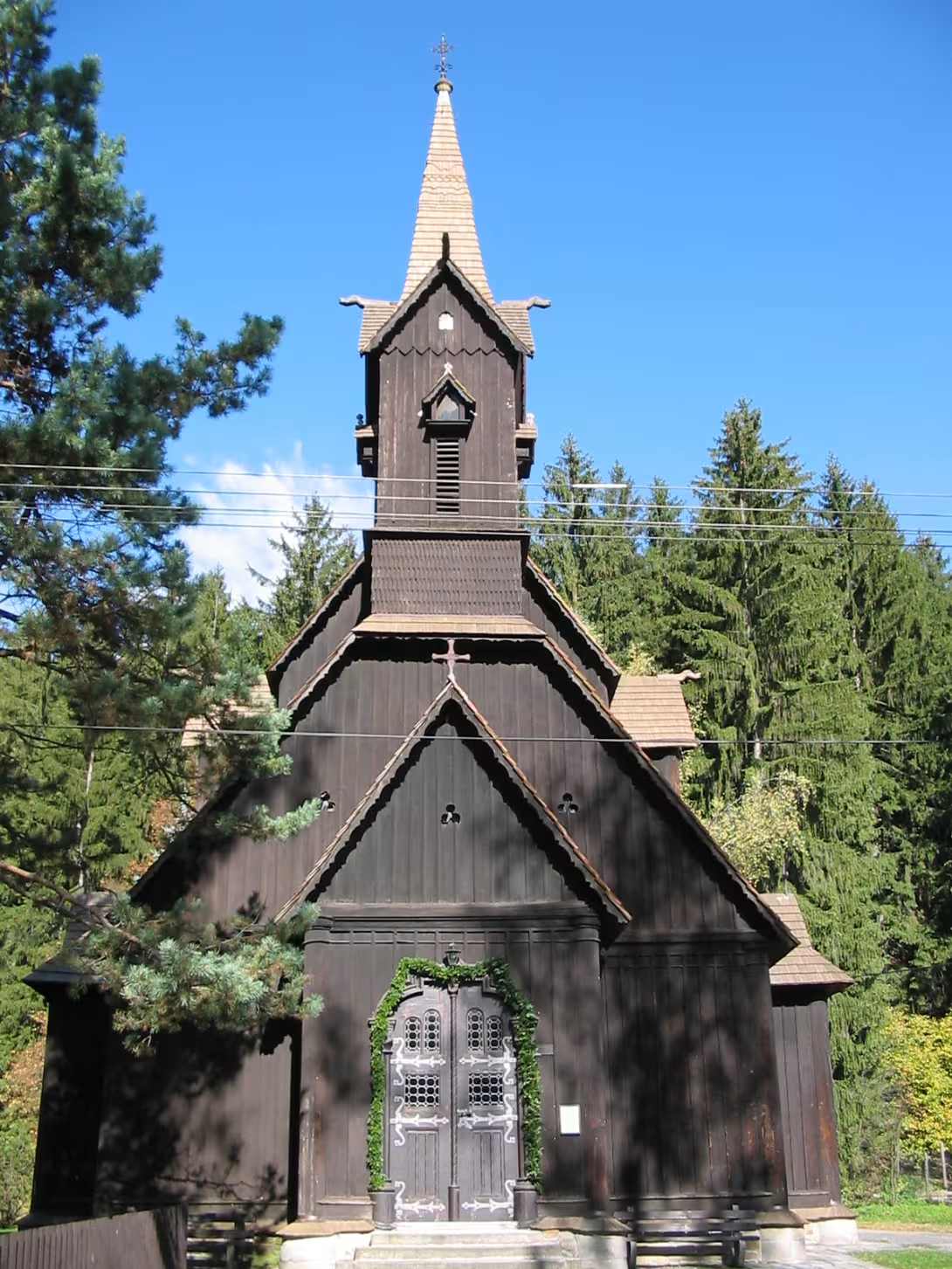
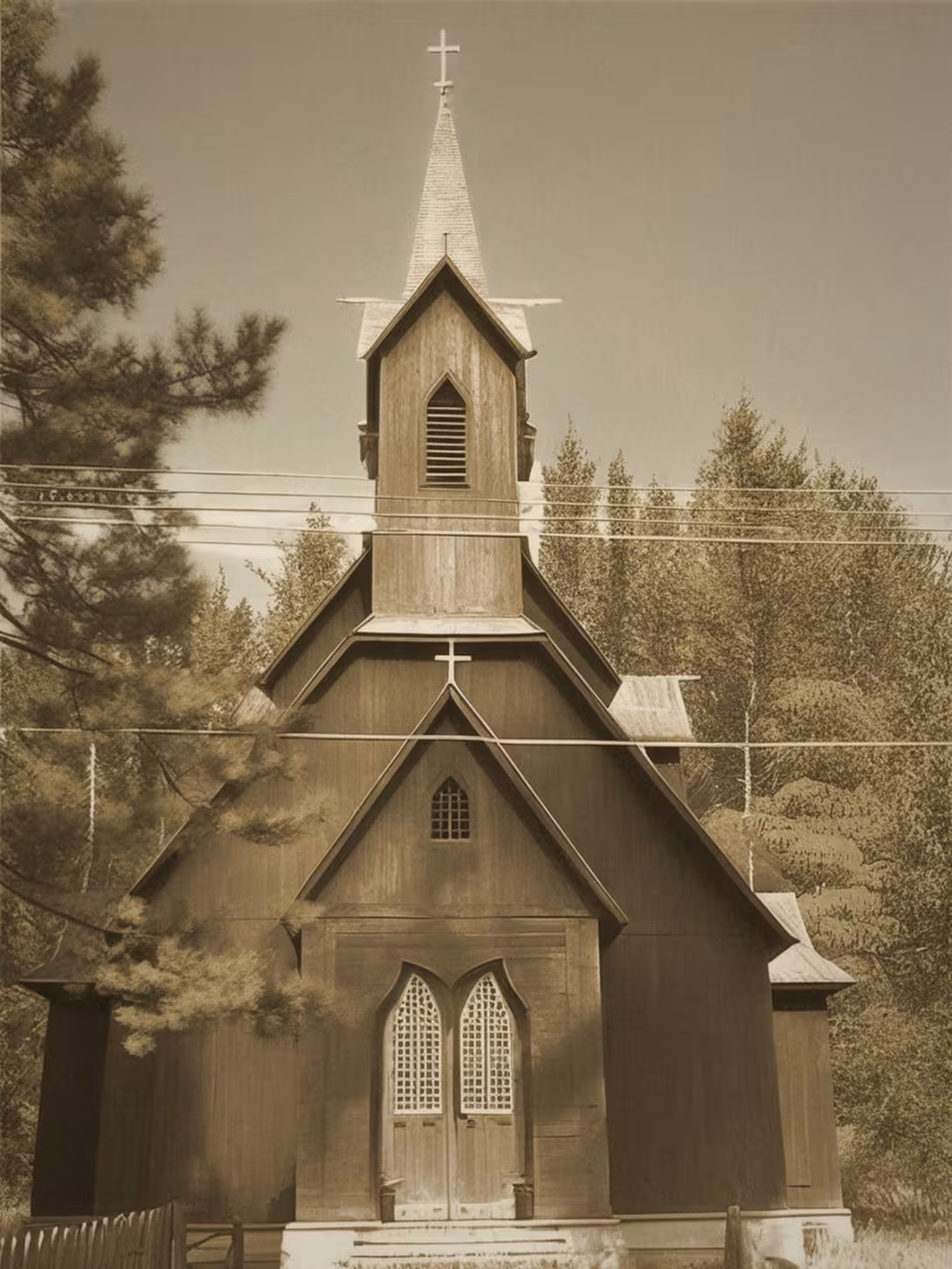
The historical appearance on the left is an AI-generated visualisation and serves as inspiration only.
Historical milestones
- 1873
- Construction of the church begins
- 1874
- Church construction is completed
- 1875
- Consecration of the church
- 1911
- Significant changes to the church, including addition of sacristy, choir, and tower
Architectural development
The church features a unique construction known as stavkirche, characteristic of Norwegian architecture from the 11th century. The original church was smaller and underwent significant changes in 1911, including the addition of a sacristy, choir, and tower.
Historical events
Consecration in 1875
Parish church status in 1911
Points of interest
– The Kostel svatého Bedřicha in Bílá has a unique "stavkirche" construction inspired by Norwegian architecture from the 11th century, making it the only original representative of this type in Central Europe.
– Cardinal Bedřich Egon Lanthrabě z Fürstenberka played a crucial role in the church's construction and was its patron. His involvement helped shape the church's design and development.
– The church's interior features wooden columns crafted from single pieces of wood, which are quite rare and impressive architectural elements.
– The 1924 organ by Vojtěch Káše from Brno is an important feature of the church's interior and adds to its cultural significance.
Guide
This guide is narrated by a synthetic voice generated by artificial intelligence.
Show guide text
This text was created by artificial intelligence and has not been editorially reviewed. It may contain inaccuracies.
The Church of Saint Henry in Bílá, in the Frýdek-Místek district, is an unusually wooden structure by Czech standards. As a cultural monument, it has been protected since nineteen sixty-four.
It was built in the years eighteen seventy-three to eighteen seventy-four by the Olomouc Archbishop Cardinal Henry Egon Lantgraf of Fürstenberg. He entrusted the construction to the chief archiepiscopal builder Antonín Kybasta. Until then, the faithful from Bílá had to travel to Ostravice for church services. The inspiration came from a church that was created for the world exhibition in Vienna in the so-called Scandinavian or Swedish style.
The church was consecrated in eighteen seventy-five and was somewhat smaller than it is today. In nineteen eleven it became a parish church. At that time, a sacristy, choir and tower were added to it, and the entire structure was raised onto a stone base.
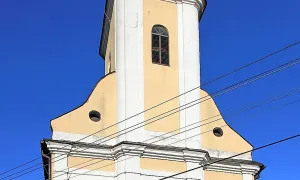
It is a three-aisled wooden church with a broken ground plan. The central rectangular nave is enclosed by a timber ceiling. A tower with slender windows and a spire is attached to the main façade, on the tip of which sits a poppy-head finial and a cross. Both the tower and roof are covered with hand-split shingle.
A special feature of the church is its construction called stavkirche, which was widespread mainly in Norway in the eleventh century. The upper windows are stained glass. The lower windows were replaced in nineteen forty-five by a Way of the Cross created by glass etching.
The pillars inside the church are each made from a single piece of wood. On the first level, they support a gallery, which has blind arcades on the sides. In the central part of the nave, the gallery is interrupted by side entrances with vestibules. In the back part of the church is a choir with three open arcades. The organ dates from nineteen twenty-four and was built by Vojtěch Káš from Brno.
Tips for visitors
When planning your visit to the Kostel svatého Bedřicha, consider arriving during the spring or autumn seasons when the weather is mild and the surrounding landscape is particularly beautiful. This will allow you to fully appreciate the church's architecture and surroundings.
Don't forget to bring your camera! The Kostel svatého Bedřicha is a photographer's dream come true, with its stunning architecture and picturesque surroundings. Be sure to capture the church from different angles and during different times of day for optimal lighting.
If you're looking to explore more of what Bílá has to offer, consider visiting the nearby [insert location(s) mentioned in V OKOLÍ]. These attractions are within a 30-minute walk or drive from the church.
Frequently asked questions
Can the monument be visited?
Religious buildings are usually open mainly during services; at other times a visit is normally arranged with the parish or the operator. We have not verified specific times.
Where is the monument?
Location: Bílá, Moravskoslezský kraj. The map on this page shows the exact spot.
Why is the monument protected?
It is listed in the Central List of Cultural Monuments of the Czech Republic as a cultural monument (register no. 26412/8-613).
Businesses nearby
Do you run a restaurant, accommodation, shop, museum, rental, wellness or other visitor service near this monument? Show yourself directly to the people heading to it — this is how they will see you in the app and on the web:
Accommodation nearby
Themed route
Tematická výletní trasa Bílá
The main goal of this thematic tour is to visit the Kostel svatého Bedřicha (Bílá), a beautiful church in the heart of the village Bílá.
Stop 1: Růžový dům Type: Historic house Why: This charming pink-colored house dates back to the 19th century and is one of the most iconic landmarks in Bílá. Its unique color and well-preserved architecture make it a must-see attraction.
Stop 2: Bílá's town square Type: Public space Why: The town square is the heart of Bílá, surrounded by historic buildings, cafes, and shops. It's a great place to relax and soak up the local atmosphere.
Stop 3: Kostel svatého Bedřicha (Bílá)** Type: Church Why: This stunning church is the main attraction of the tour. Its beautiful architecture, stunning stained-glass windows, and peaceful atmosphere make it a must-visit destination.
This thematic tour takes you through the charming village of Bílá, showcasing its unique architecture, history, and culture. The stops are designed to provide a glimpse into the daily life of the villagers and the significance of the church in their community.
Seasonal recommendations
Here is the seasonal recommendation for visiting the historic landmark, Kostel svatého Bedřicha (Bílá):
Spring
As you approach the church during spring, you'll be greeted by a blanket of greenery and blooming flowers. The gentle sunlight casts a warm glow on the stone façade, highlighting its intricate details. Take advantage of the mild weather to explore the surrounding area without the crowds that come in summer.
Practical tips: Arrive early to avoid the morning rush, and dress comfortably for a leisurely stroll. Spring is an excellent time to visit as the church's architecture is showcased beautifully against the vibrant backdrop of nature.
Summer
Summer brings warmth and long days to Bílá, making it an ideal time to explore the surrounding countryside. The church's stone walls seem to absorb the sun's rays, giving off a warm glow that invites you to linger. Be prepared for larger crowds during peak season, but don't let that deter you – the atmosphere is lively and festive.
Practical tips: Plan your visit early in the morning or later in the evening to avoid the midday rush. Wear comfortable shoes and clothing suitable for walking in the countryside. Don't forget to bring sunscreen and a hat for protection from the sun.
Autumn
As autumn arrives, the church's stone façade takes on a warm, golden hue, complemented by the vibrant colors of the surrounding foliage. The crisp air carries the scent of ripe fruit and woodsmoke, adding to the cozy atmosphere. Take your time to appreciate the beauty of nature as the seasons change.
Practical tips: Visit during the week or early morning to avoid the weekend crowds. Dress in layers for the changing weather, and don't forget a camera to capture the stunning autumn scenery.
Winter
Winters in Bílá bring a serene silence, with snowflakes gently falling onto the church's stone walls. The cold air is crisp and clean, making it an ideal time to explore the surrounding countryside on foot or by bike.
Practical tips: Plan your visit during the week or early morning to avoid the weekend crowds. Dress warmly in layers, including a hat, gloves, and scarf. Take advantage of the peaceful atmosphere to reflect on the beauty of nature and the church's history.
Visualizations and artistic views


The visualisations are generated by artificial intelligence and serve as inspiration.
Photos from the area
Real photos taken near the monument

Zdroj a licence jsou uvedeny u každého snímku.
Tips from visitors
No tips yet. Be the first!
Log in and add your tip.
Sources and literature
Photos: Martin Kovář / CC BY 3.0 — Wikimedia Commons. The author and licence also appear when you hover over the image.
Faktickým podkladem tohoto textu byl článek na Wikipedii, jehož autory jsou přispěvatelé Wikipedie. Článek je dostupný pod licencí CC BY-SA 4.0.
Location on the map
Fotografie návštěvníků
Zatím žádné fotografie. Buďte první, kdo přidá fotografii z návštěvy!
Log in a přidejte svou fotografii nebo hodnoťte.
Za ověřenou návštěvu v aplikaci získáte víc bodů — poznáme podle GPS, že jste na místě.
Reviews and comments