






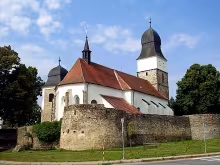
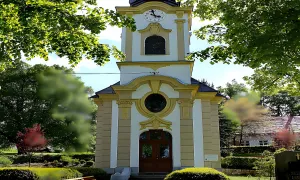
The Church of Saint John the Baptist in Velká Bíteš is a significant cultural monument and a dominant feature of this town in the eastern Czech-Moravian Highlands. Originally built from wood, it was reconstructed in stone during the 13th century in Romanesque style. By mid-14th century, it gained its current form with additions like the presbytery and a large tower. This church is protected as a cultural monument of the Czech Republic due to its historical significance and architectural evolution.
The earliest documented mention dates back to 1240 when King Václav I., also Moravian margrave, transferred patronage rights to the Cistercian monastery Porta Coeli in Tišnov. Initially wooden, it transitioned to stone in the 13th century, evolving from Romanesque to Gothic influences by mid-14th century. This period saw significant additions such as the presbytery and a large tower, reflecting broader architectural developments across Bohemia under the Luxembourg dynasty.
Architecturally, the church showcases styles that evolved over centuries. The initial Romanesque construction laid the foundation for later Gothic enhancements around mid-14th century, including the presbytery and a large tower. By mid-15th century, fortifications were added to protect both the church and its inhabitants, featuring a deep moat and drawbridge, now replaced by modern access routes.
Ownership has seen notable transitions, beginning with King Václav I.'s donation of patronage rights to Porta Coeli. Over time, it underwent various maintenance and restoration phases, with significant efforts starting in 1946 that continue today, ensuring its preservation for future generations.
An intriguing aspect is a legend about the large bell housed within the fortification tower. Its sound was reputedly so powerful it could be heard as far away as Brno, prompting an attempted purchase by Brno's councilors. To protect it from Turkish invaders who melted down Christian bells for weapons, locals buried the largest bell with a monstrance in a field near St. Antoníček chapel.
Today, the Church of Saint John the Baptist remains accessible to visitors and stands as a testament to the region's rich history and architectural heritage. Its fortifications, deep moat, and surrounding landscape offer picturesque views of the Czech-Moravian Highlands. The church serves not only as a place of worship but also as a cultural landmark inviting exploration and appreciation for its historical significance.
Visitors are encouraged to explore this remarkable site where history and architecture converge in Velká Bíteš, offering insights into the past while enjoying the serene beauty of its surroundings.
Historical milestones
- 1240
- The first written mention of the church and Velká Bíteš, with King Václav I. transferring patronage rights to the Cistercian monastery Porta Coeli.
Architectural development
The church's construction started in Romanesque style during the 13th century, transitioning to Gothic around mid-14th century with significant additions like the presbytery and a large tower. The surrounding fortifications were added for protection by mid-15th century.
Historical events
- 1300
- Construction of the stone church began, transitioning from its original wooden structure.
- 1946
- Major restoration efforts commenced and continue to this day.
Owners
The patronage rights were initially transferred to the Cistercian monastery Porta Coeli in Tišnov by King Václav I. in 1240.
Points of interest
– The Church of Saint John the Baptist was originally constructed from wood before being rebuilt in stone during the 13th century, reflecting a significant shift in architectural materials and techniques of that era.
– A curious legend surrounds one of the church's large bells, which was reputedly so loud it could be heard from Brno. This led to an attempted purchase by Brno’s councilors, highlighting its historical significance and unique acoustics.
Guide
Show guide text
Welcome to the Church of Saint John the Baptist in Velká Bíteš, a remarkable cultural monument that stands as a dominant feature of this charming town nestled in the eastern part of the Czech-Moravian Highlands. As you stand here, take a moment to absorb the sight before you: the robust stone structure with its commanding presence, reaching skyward against the backdrop of rolling hills.
The origins of this church trace back to an era when wood was the primary building material. However, in the 13th century, it underwent a significant transformation, being rebuilt in stone and adopting the Romanesque style that characterizes much of medieval ecclesiastical architecture. The church gained its current form around the mid-14th century with the addition of the presbytery and a large tower, elements which now draw your eye upward.
Let's delve into its history: the first written mention of this church and Velká Bíteš dates back to 1240 when King Václav I transferred patronage rights to the Cistercian monastery Porta Coeli. This historical context speaks volumes about the church’s importance during that period, reflecting both religious devotion and political maneuvering.
As you explore further, notice the architectural details that have stood the test of time. The Romanesque style is evident in its solid construction and rounded arches. While specific architects remain unknown, their work has left an indelible mark on this landscape.
King Václav I himself is a key historical figure associated with this church. His decision to transfer patronage rights underscores the strategic alliances of that era, linking Velká Bíteš more closely with the influential Cistercian order.
Now, let your curiosity be piqued by a curious legend surrounding one of the church's large bells. It is said that this bell holds secrets of its own, adding an air of mystery to your visit. Such stories are woven into the fabric of this place, inviting you to ponder and imagine the lives intertwined with these stones.
As we conclude our journey here, I invite you to continue exploring Velká Bíteš and discover more about its rich history and culture. Thank you for joining me on this auditory walk through time, and may your visit be both enlightening and inspiring. Safe travels as you uncover the many layers of stories that this town has to offer.
Tips for visitors
The best time to visit the Church of Saint John the Baptist in Velká Bíteš is during late spring or early autumn. During these months, the weather is generally mild and pleasant, making it ideal for exploring both the church and its surrounding landscapes. The Czech-Moravian Highlands offer stunning views that are particularly beautiful when the foliage changes color in autumn. Additionally, visiting outside of peak summer months helps avoid large crowds, allowing for a more serene experience.
Parking near the Church of Saint John the Baptist is generally available, but it's advisable to check ahead for any restrictions or limited spaces, especially during local events or holidays. Public transportation can also be used to reach Velká Bíteš; however, specific bus routes and schedules should be verified through a reliable transport search tool prior to your visit. This ensures you have the most current information regarding available options.
When visiting the church, it's recommended to bring comfortable walking shoes as there may be some uneven paths or stairs, especially around the fortifications and moat area. A camera is essential for capturing the picturesque views of the Czech-Moravian Highlands and the architectural beauty of the church itself. Early morning light provides a soft glow that enhances photography, making it an ideal time to capture stunning images.
For families with children, Velká Bíteš offers a variety of activities beyond just visiting the church. The surrounding area is great for short hikes or walks along nature trails, which can be both educational and entertaining for kids. Exploring the fortifications and imagining historical scenarios might also engage younger visitors. Additionally, there are local shops and cafes where families can relax and enjoy regional specialties.
Businesses nearby
Do you run a restaurant, accommodation, shop, museum, rental, wellness or other visitor service near this monument? Show yourself directly to the people heading to it — this is how they will see you in the app and on the web:
Nearby
The church is surrounded by fortifications and a deep moat, once crossed by a drawbridge. The landscape includes the Czech-Moravian Highlands, offering picturesque views.
Accommodation nearby
Trips and activities nearby
Guided tours, tickets and activities nearby from GetYourGuide
Search tours and activities →Themed route
Tematická výletní trasa: Kostel svatého Jana Křtitele a jeho okolí
1. Kostel svatého Jana Křtitele (Velká Bíteš) - Hlavní cíl - *Typ:* Historický kostel - *Proč stojí za návštěvu:* Tento barokní kostel, postavený v 18. století, je nejen duchovním centrem obce, ale také architektonickou perli s bohatou historií. Jeho unikátní polohu chrání hradby a hluboký rybník, které dodávají místu romantický a mírně mystický pocit.
2. Hradby a Rybník kolem kostela - *Typ:* Historická fortifikace - *Proč stojí za návštěvu:* Hradby, které kdysi chránily kostel, jsou svědky minulosti obce. Při procházce kolem rybníku si můžete užít klidné chvíle a krásný pohled na okolní krajinu, která přináší mírně vlnitou topografii typickou pro Česko-Moravské Vrchoviny.
3. Procházka po okolních cestách - *Typ:* Přírodní trasa - *Proč stojí za návštěvu:* Krátce od kostela se rozprostírají malebné chodníky, které vás zavedou skrze příjemný lesnatý a polopastvinový kraj. Tato trasa nabízí pohledy na místní faunu a flóru a je ideální pro relaxační procházku s možností pozorovat přírodní krásu regionu.
4. Věž kostela - *Typ:* Historická věž - *Proč stojí za návštěvu:* Výhled z věže nabízí jedinečnou perspektivu na obec a okolní krajinu. Je to skvělá příležitost pro fotografie, zejména když je poledne, kdy slunce osvětluje celý panoramatický pohled.
Tato trasa vám umožňuje nejen objevit historickou památku kostela svatého Jana Křtitele, ale také si užít krásnou přírodní a kulturní atmosféru okolní oblasti Velké Bíteš.
Seasonal recommendations
Spring: Visiting the Church of St. John the Baptist in Velká Bíteš during spring offers a unique experience as nature awakens around this historical site. The landscape is painted with vibrant colors from blooming flowers and fresh greenery, creating an enchanting atmosphere that complements the church's architectural beauty. As daylight extends into the evenings, natural lighting enhances the visibility of intricate details on the façade. Visitors should be prepared for occasional rain showers, so wearing comfortable layers and waterproof footwear is advisable. While the weather can be unpredictable, arriving in the late morning allows you to enjoy a quieter visit before potential afternoon crowds.
Summer: Summer at the Church of St. John the Baptist is marked by long days filled with warm sunshine that beautifully illuminates the structure's historical features. The surrounding gardens and open spaces are lush and inviting, making it an ideal time for leisurely exploration. However, this is also peak tourist season, so expect larger crowds, especially during weekends and holidays. To avoid the midday heat and throngs of visitors, plan your visit early in the morning or later in the afternoon. Light, breathable clothing is recommended to stay comfortable while exploring.
Autumn: Autumn transforms the area around the Church of St. John the Baptist into a picturesque setting with richly colored foliage that provides a stunning backdrop for photography enthusiasts. The cooler temperatures make it an ideal time for a leisurely visit without the summer heat. As daylight hours shorten, bringing along a flashlight or using your phone's light can help explore the church’s interior details during later visits. Layered clothing is essential to accommodate fluctuating temperatures throughout the day.
Winter: Winter brings a serene and mystical atmosphere to the Church of St. John the Baptist, with snow often blanketing the landscape in a pristine white layer that enhances its historic charm. The shorter days mean fewer visitors, allowing for a more intimate experience as you admire the church's architecture against the stark winter sky. However, be mindful of potentially icy paths and bring warm clothing to stay comfortable during your visit. It’s also wise to check opening hours in advance, as they may vary due to seasonal changes or weather conditions.
Visualizations and artistic views

Vizualizace jsou generovány umělou inteligencí a slouží jako inspirace.

Tips from visitors
No tips yet. Be the first!
Log in and add your tip.


Reviews and comments