






Kostel svatého Jindřicha (Karviná) Church
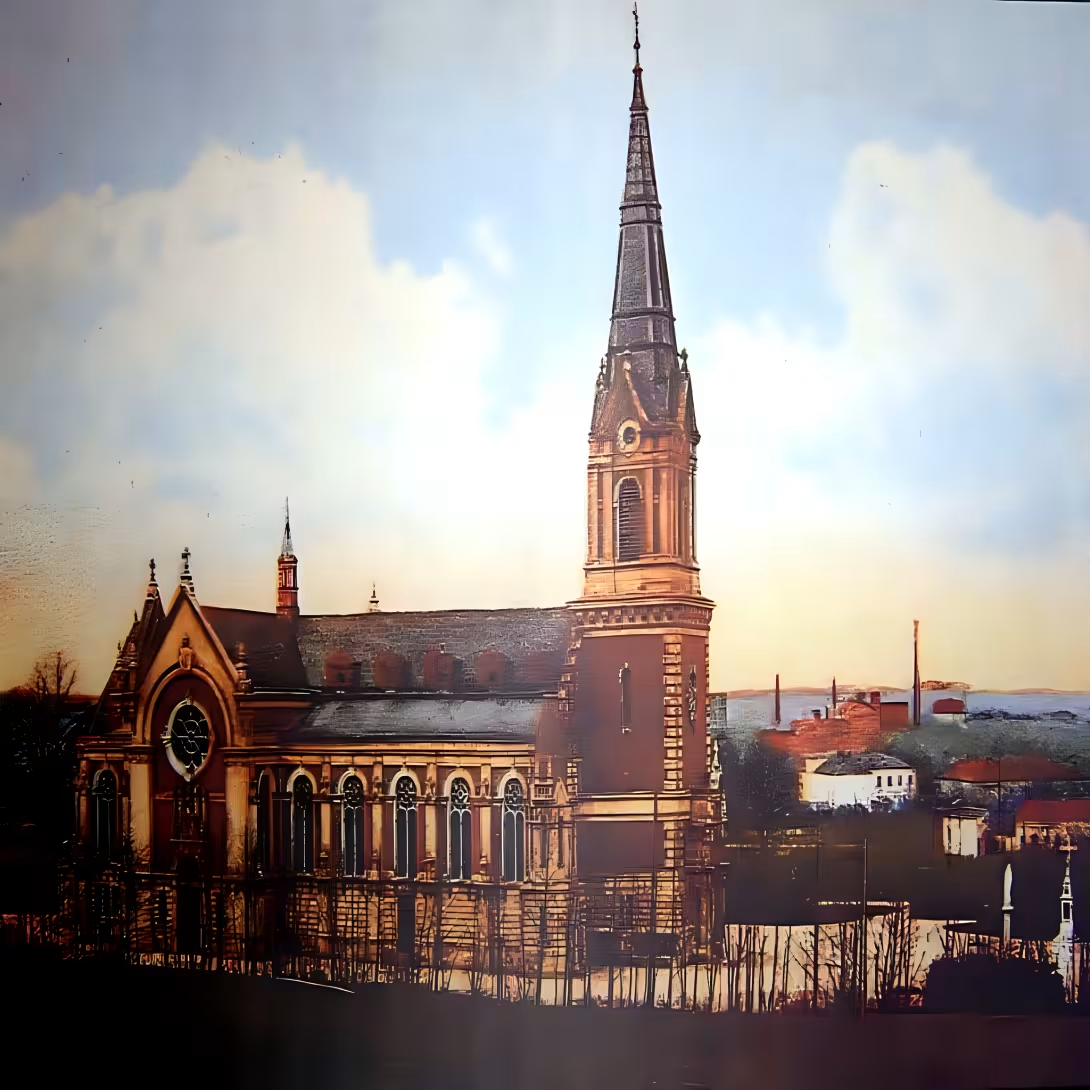
Objekt se nedochoval — na místě dnes nestojí. Následující text popisuje jeho historii, ne současnou návštěvu.
The Church of Saint Henry in Karviná, originally located in the town of Karvinná, stands as a historical monument reflecting architectural beauty and industrial challenges. Built between 1893 and 1897, this Roman Catholic church was designed by architect Bohuslav Černý and constructed under Hugo Königsberger's supervision. Its Neo-Renaissance style and capacity to accommodate up to 4,000 worshippers made it a significant religious site in Moravskoslezský kraj. Despite its architectural importance, the church was demolished in the early 1960s due to mining subsidence.
The Church of Saint Henry emerged during Bohemia's industrial growth period, particularly in mining, coinciding with urban development and economic expansion at the end of the 19th century. Construction began on June 4, 1893, under Hugo Königsberger's supervision, following plans by architect Bohuslav Černý. Completed in 1897, it featured a sandstone foundation, brick walls, and wooden beam ceilings. The church measured 66.2 meters in length and 34 meters at its widest point. Its main altar, made from marble, was dedicated to Saint Henry, with additional altars for Saints Francis of Assisi and Barbara.
Architecturally, the Church of Saint Henry exemplified the Neo-Renaissance style, characterized by grand scale and detailed design elements. The structure included a sandstone foundation and brick walls, while its ceilings were constructed from wooden beams. These materials contributed to both its aesthetic appeal and structural challenges over time. Despite several repairs due to mining impacts, the church's integrity deteriorated significantly by the mid-1950s.
Ownership and financial support for the church came from notable figures of the time. The construction costs amounted to one million korun, with a significant contribution of 300,000 korun provided by Jindřich Larisch-Mönnich, owner of the Karvinná estate. Despite its architectural significance, recognized by the State Heritage Institute in 1951 as an "architecturally valuable structure," the church faced challenges due to mining subsidence.
Key events in the church's history include its recognition as architecturally significant in 1951 and its eventual demolition on October 12, 1960. The deteriorating structural integrity led to its closure for public use by April 18, 1955, with services continuing only in a side chapel. After demolition, efforts were made to commemorate the site, including the erection of a wooden cross in 1990 and later a memorial cross in 2023.
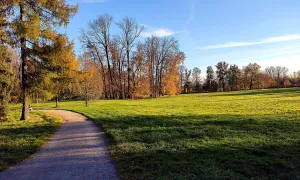
Today, the site where the Church of Saint Henry once stood is marked by a cross that outlines its former footprint. While no physical remnants remain, this monument's history offers insight into the interplay between industrial development and cultural heritage. Visitors to Karviná can reflect on the legacy of this architectural marvel and its significance in the region's historical narrative. The site serves as a poignant reminder of both the achievements and challenges faced by communities during periods of rapid industrial change.
Then and now
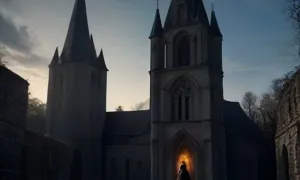
Drag the slider to compare how the landmark may have looked when it was built with the view today.
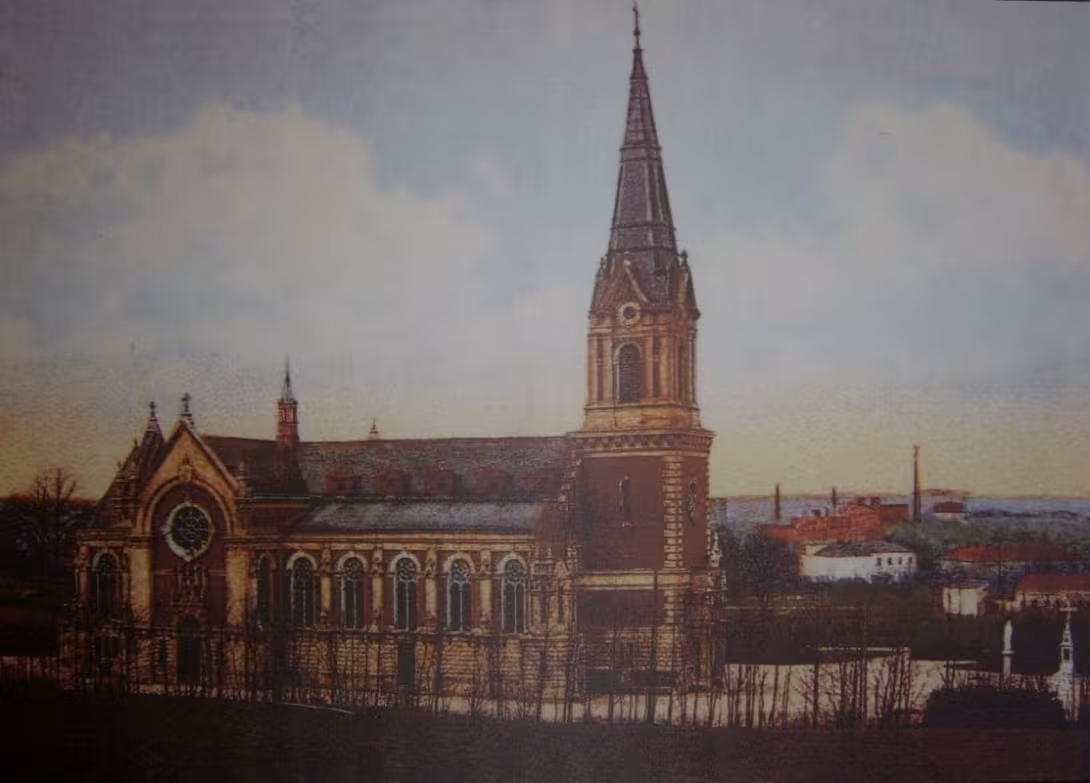
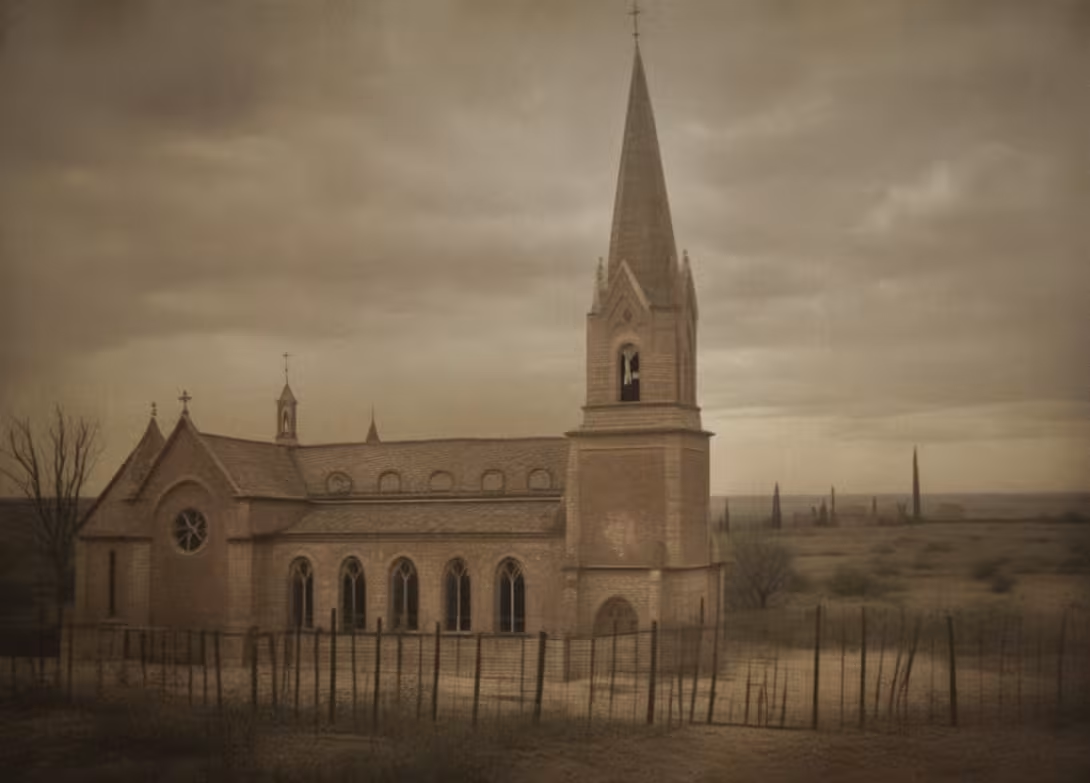
The historical appearance on the left is an AI-generated visualisation and serves as inspiration only.
Historical milestones
- 1897
- The church was completed.
- 1951
- Recognized as architecturally valuable by the State Heritage Institute.
- 1960
- Demolition of the church was completed.
Architectural development
The Church of Saint Henry was constructed using a sandstone foundation, brick walls, and wooden beam ceilings. It reached dimensions of 66.2 meters in length and 34 meters at its widest point. Despite several repairs due to mining impacts, the church's structural integrity deteriorated significantly by the mid-1950s.
Historical events
1893: Construction began on June 4th under Hugo Königsberger's supervision.
1951: The State Heritage Institute recognized it as an architecturally valuable structure.
1960: Demolition of the church was completed on October 12th.
Points of interest
- The Church of Saint Henry was built between 1893 and 1897 in the Neo-Renaissance style, designed by architect Bohuslav Černý. - It could accommodate up to 4,000 worshippers and featured a sandstone foundation with brick walls and wooden beam ceilings. - Despite its architectural significance, recognized by the State Heritage Institute in 1951, it was demolished in the early 1960s due to mining subsidence. - The church's construction costs were one million korun, with Jindřich Larisch-Mönnich contributing 300,000 korun from his estate. - After its demolition on October 12, 1960, a wooden cross was erected in 1990 and later replaced by a memorial cross in 2023 to commemorate the site.
Guide
This guide is narrated by a synthetic voice generated by artificial intelligence.
Show guide text
This text was created by artificial intelligence and has not been editorially reviewed. It may contain inaccuracies.
The Church of Saint Henry stood in the original town of Karvinná, today in the city district of Doly. It was also called the new church. It was one of the most spacious buildings in the city, yet it did not survive. At the beginning of the nineteen sixties, it was demolished due to mining influences.
Construction began on June fourth, eighteen ninety-three according to the plans of architect Bohuslav Černý and was carried out by Hugo Königsberger. It was completed in eighteen ninety-seven. The church was neo-Renaissance, built of brick on a sandstone foundation, with a ceiling made of wooden formwork. It measured sixty-six point two metres in length and at its widest point thirty-four metres. Up to four thousand believers could fit inside. The construction cost one million crowns, of which three hundred thousand was donated by the owner of the Karvinná large estate, Count Jindřích Larisch-Mönnich.
The main altar was marble and dedicated to Saint Henry. In eighteen ninety-eight, two side altars were added, those of Saint Francis of Assisi and Saint Barbara, as well as an organ. Another side altar followed in nineteen hundred and yet another two years later.
Mining beneath the city was taking its toll on the building early on. The church was repeatedly repaired, and a major renovation took place in the nineteen thirties. On November twenty-ninth, nineteen fifty-one, the State Monument Authority in Brno designated it as architecturally valuable and entered it into the heritage list. The authority recommended preserving the church. However, a petition by citizens for its preservation had only twenty signatures.
From nineteen fifty-four, the damage accelerated. An inspection on November twentieth, nineteen fifty-four revealed extensive new cracks in the masonry and flooring. The front part with the tower was subsiding faster than the rear and had collapsed by as much as one metre. From April eighteenth, nineteen fifty-five, the church was closed to the public and services were held only in a side chapel with a separate entrance. The furnishings were gradually moved to other churches. The organ, for example, is in the Church of Saint Peter and Paul in Albrechticích. Demolition took place on October twelfth, nineteen sixty.
The ground then continued to subside and a rubble dump formed there. In nineteen ninety, a wooden cross was erected there at the initiative of priest Ernest Dostál, but in nineteen ninety-five it was moved to the repaired slanted church. For a long time the site bore no reminder. In twenty twenty-three, the ground was levelled and a cross was erected in the middle of the former church. A year later, they planted a bird's-foot, which marks the footprint of the demolished building.
Businesses nearby
Do you run a restaurant, accommodation, shop, museum, rental, wellness or other visitor service near this monument? Show yourself directly to the people heading to it — this is how they will see you in the app and on the web:
Visualizations and artistic views


The visualisations are generated by artificial intelligence and serve as inspiration.
Photos from the area
Real photos taken near the monument


Zdroj a licence jsou uvedeny u každého snímku.
Tips from visitors
No tips yet. Be the first!
Log in and add your tip.
Sources and literature
Photos: autor neuveden / Public domain, rozlišení zvýšeno umělou inteligencí — Wikimedia Commons. The author and licence also appear when you hover over the image.
Faktickým podkladem tohoto textu byl článek na Wikipedii, jehož autory jsou přispěvatelé Wikipedie. Článek je dostupný pod licencí CC BY-SA 4.0.
Location on the map



Příběhy a pověsti
Legendy, pověsti a příběhy spjaté s touto památkou
Fotografie návštěvníků
Zatím žádné fotografie. Buďte první, kdo přidá fotografii z návštěvy!
Log in a přidejte svou fotografii nebo hodnoťte.
Za ověřenou návštěvu v aplikaci získáte víc bodů — poznáme podle GPS, že jste na místě.
Reviews and comments