






Socha svatého Patrika Statue
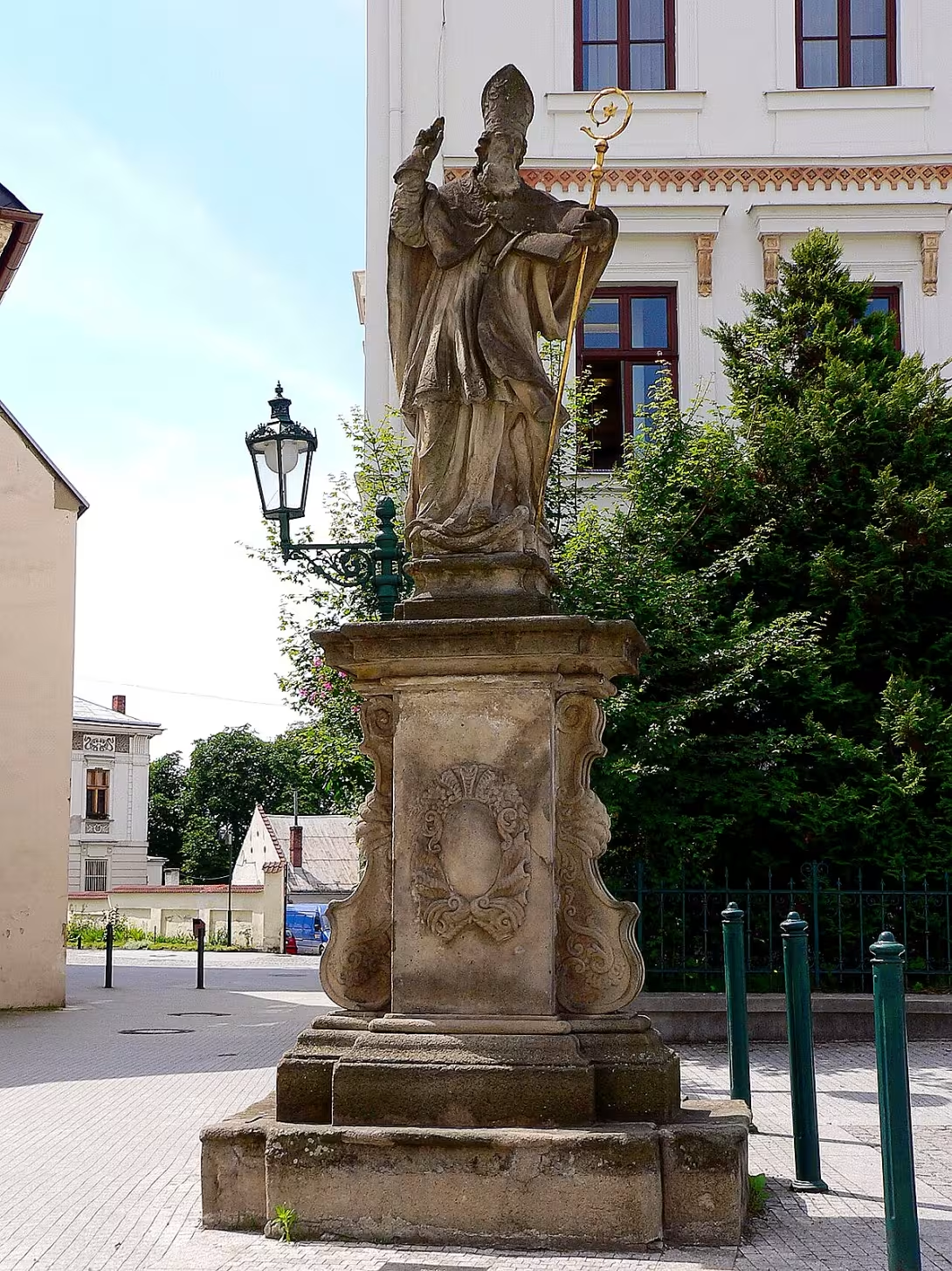
The statue of St. Patrick is a Baroque monument located near the Church of the Exaltation of the Holy Cross in Fryštát, Karviná. Erected in 1749, it is one of only two such figures in the Czech Republic and Silesia. This work represents a rare hagiographic depiction within the region.
Commissioned in 1749 as an expression of piety, the piece was funded by Count Mikuláš Taaffe z Karlingsfortu. He arrived in Silesia in 1740 after fleeing the persecution of Catholics in Ireland. This migration of nobility to the Habsburg lands occurred during the mid-18th century, the late Baroque era.
Carved from sandstone, the sculpture depicts the saint in traditional episcopal vestments. St. Patrick holds a bishop's crosier and the gospel in his left hand, while his right is raised in a gesture of blessing.
Count Mikuláš Taaffe z Karlingsfort, the sculpture's benefactor, later became the owner of the Fryštát estate.
The monument is historically significant due to its rarity. Along with a second example in Dolní Lutyně, it is one of only two representations of the saint found in the Czech Republic and Silesia.
The figure remains situated by the Church of the Exaltation of the Holy Cross in Fryštát. It serves as a tangible link between the history of Irish Catholic persecution and the development of the local estate.
This artwork is a valuable example of late Baroque art and a unique witness to the region's international history. It is a worthwhile stop for those interested in rare religious monuments.
Then and now
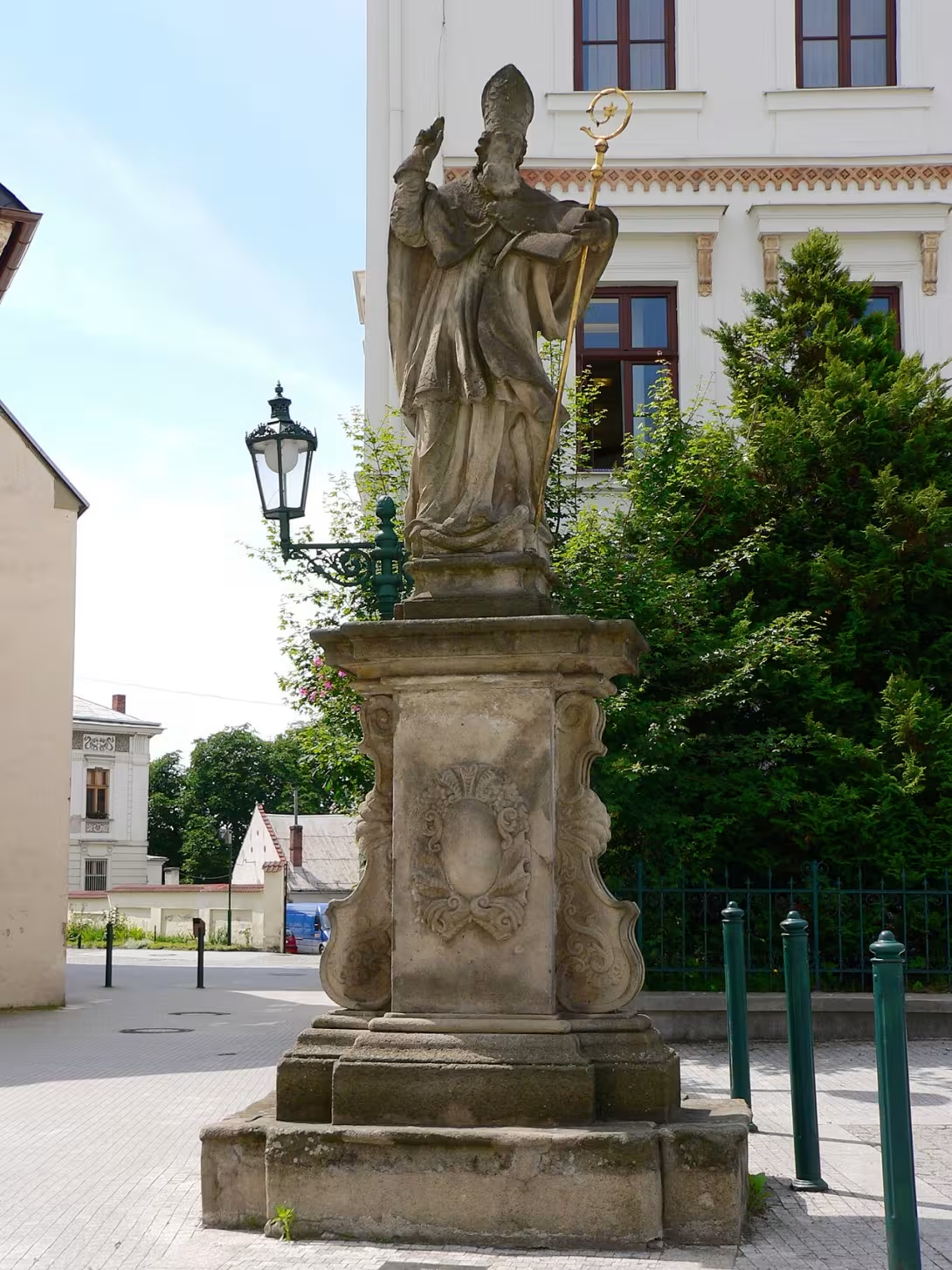
Drag the slider to compare how the landmark may have looked when it was built with the view today.
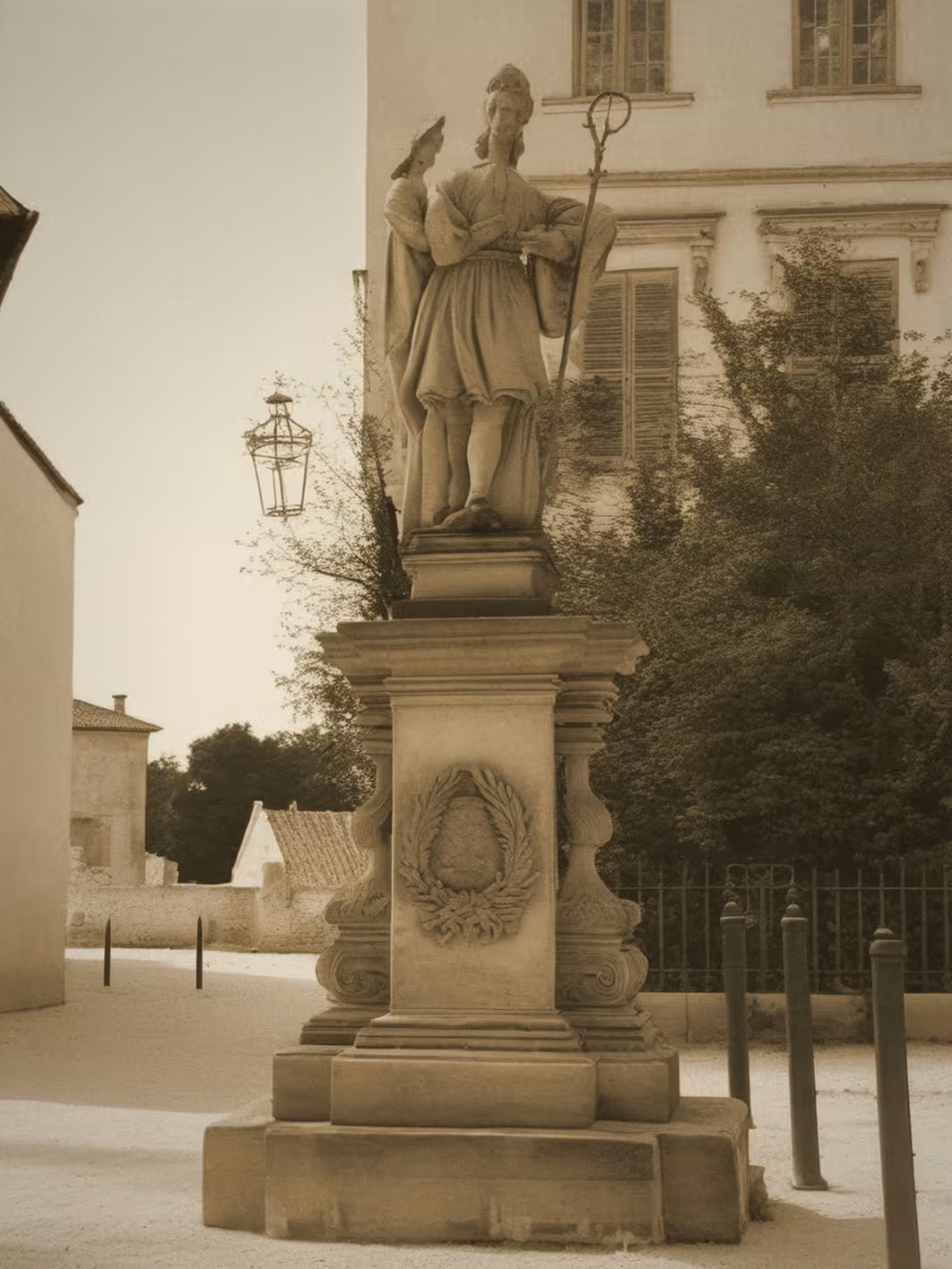
The historical appearance on the left is an AI-generated visualisation and serves as inspiration only.
Historical milestones
- 1740
- Mikuláš Taaffe z Karlingsfortu arrived in Silesia
- 1749
- The statue of St. Patrick was erected and commissioned
Architectural development
The monument is a sandstone sculpture depicting the saint in traditional episcopal attire, including a crosier and the gospel.
Historical events
1740: Mikuláš Taaffe arrived in Silesia due to the persecution of Catholics in Ireland. 1749: The statue of St. Patrick was commissioned and built.
Owners
Count Mikuláš Taaffe of Karlingsfort, who became the owner of the Fryštát estate.
Points of interest
– It is one of only two representations of the saint in the Czech Republic and Silesia, with the other located in Dolní Lutyně. – The Baroque statue was erected in 1749 and carved from sandstone. – It was funded by Count Mikuláš Taaffe z Karlingsfortu, who arrived in Silesia in 1740 after fleeing Catholic persecution in Ireland. – The sculpture depicts the saint in episcopal vestments, holding a bishop's crosier and the gospel. – The monument serves as a tangible link between the history of Irish Catholic persecution and the development of the local estate.
Guide
Show guide text
This text was created by artificial intelligence and has not been editorially reviewed. It may contain inaccuracies.
Welcome. You are standing in a place where history is etched into the very stone beneath your feet. As you pause here in Fryštát, within the heart of Karviná, take a moment to absorb the atmosphere of this surroundings. You are standing before the Statue of St. Patrick, a silent witness to the passing centuries, positioned near the solemn presence of the Church of the Exaltation of the Holy Cross. It is a place where the spiritual and the historical converge, inviting you to slow your pace and look more closely at the figure before you.
As you gaze upon this monument, your eyes are met with the enduring character of Baroque artistry. This is not merely a piece of sculpture; it is a testament to a specific moment in time, a physical manifestation of faith and social standing from the mid-18th century. The statue, carved from sandstone, carries the weight and the texture of the era in which it was created. Notice how the material, though weathered by the passage of time, still manages to convey the dignity and the importance of the figure it represents.
To understand why this statue stands here, we must travel back to the year 1749. This was a period of deep religious expression, and the creation of this monument was an act of profound piety. It was commissioned by Count Mikuláš Taaffe z Karlingsfortu, a man whose presence in this region left a lasting mark on the landscape. The Count’s connection to Silesia began nearly a decade earlier, in 1740, when he first arrived in these lands. His decision to erect this statue was more than just a civic contribution; it was a personal expression of his devotion, a way to anchor his legacy in the spiritual fabric of the community.
Now, let us direct your attention to the finer details of the sculpture itself. As you move slightly closer, observe the intricate way the saint is depicted. He is dressed in full episcopal vestments, the traditional attire of a bishop, which lends him an air of authority and sacredness. Look at his hands, for they tell the story of his mission. In his left hand, he holds the gospel, the sacred word that serves as the foundation of his faith. In his right hand, he holds a bishop's crosier, the symbol of his pastoral office and his role as a shepherd of his people. Notice his right hand as well; it is raised in a distinct gesture, a movement captured in stone that suggests a moment of teaching, blessing, or perhaps a profound connection with the divine. These details, though carved from solid sandstone, breathe life into the figure, transforming a block of stone into a character of immense spiritual significance.
The Baroque style of this statue is evident in its expressive nature and its sense of movement. Even in the stillness of the stone, there is a feeling of purpose and presence. This style was designed to move the viewer, to evoke emotion and to inspire awe, and as you stand here, you can feel the intention of the craftsmen who worked on this piece centuries ago. While the names of the specific architects and sculptors have been lost to the corridors of time, their skill remains visible in every curve and every fold of the saint's vestments.
As you contemplate the figure of St. Patrick, I invite you to consider a remarkable fact that makes this monument truly exceptional. This is not just any religious sculpture. In the entire expanse of the Czech Republic and the region of Silesia, there are only two representations of St. Patrick. The other can be found in Dolní Lutyně, making this site one of only two such sacred encounters in the whole area. This rarity elevates the statue from a local landmark to a site of significant cultural and religious interest. It is a rare piece of a larger spiritual puzzle, a unique fragment of history that you have the privilege of seeing here in Karviná.
Think for a moment about the journey of Count Mikuláš Taaffe z Karlingsfortu. From his arrival in 1740 to the commissioning of this work in 1749, his life was intertwined with the development of this region. Through his patronage, he ensured that the values of his time—faith, tradition, and the beauty of the Baroque—would be preserved for generations to come. When you look at the sandstone, you are looking at the legacy of a man who sought to leave a mark of devotion upon the earth.
As you finish your observation of the statue, take one last look at the way the light hits the sandstone, highlighting the textures and the symbols of the saint's office. The connection between the Church of the Exaltation of the Holy Cross and this statue creates a sacred space that has remained largely unchanged in its essence for nearly three hundred years.
We hope this moment of reflection has given you a deeper appreciation for the history and the artistry that surrounds you. There is much more to discover in this area, from the architectural nuances of the nearby church to the broader history of Fryštát and Karviná. We invite you to continue your walk, to keep your eyes open to the stories hidden in the stone and the streets, and to enjoy the wonderful journey of exploration that awaits you. Thank you for joining us, and please, enjoy the rest of your visit.
Tips for visitors
The best time to visit the statue of St. Patrick is during the late morning or early afternoon when the natural light is soft and even, which is ideal for appreciating the details of the sculpture without harsh shadows. Since the statue is an outdoor monument, visiting on a clear day will allow you to see the craftsmanship clearly, while overcast days can provide a dramatic backdrop for the stone figure.
Regarding access, the statue is located in the town of Fryštát, which is part of the larger municipality of Karviná. The site is easily accessible by car, and you can typically find parking in the surrounding streets or designated public parking areas near the Church of the Exaltation of the Holy Cross. If you prefer public transport, the area is reachable by local bus services, though you should check the current schedules and route numbers via a local transit search engine before your trip, as these details can change.
When visiting, it is advisable to bring comfortable walking shoes, as the area around the church and the statue may involve uneven pavement or cobblestones. Since there are no specific indoor facilities mentioned for this specific monument, bringing a small water bottle and a light jacket is recommended, especially if you plan to spend time exploring the immediate surroundings of the church.
For photography, the best spots are directly in front of the statue, allowing you to capture the full figure against the sky or with the Church of the Exaltation of the Holy Cross in the background. Early morning light can create interesting long shadows that add depth to your photos. Be mindful of other visitors and respect the quiet atmosphere of the religious site when setting up your camera.
While the provided information does not list specific attractions within a 30-minute radius beyond the immediate vicinity, the statue is situated right next to the Church of the Exaltation of the Holy Cross in Fryštát. This makes it a perfect stop if you are already visiting the church. For families with children, the open space around the statue offers a safe area for them to move around, and the historical context of the statue, erected in 1749 by Count Mikuláš Taaffe of Karlingsfort, can be an engaging topic to discuss to make the visit educational.
Businesses nearby
Nearby
The statue is situated near the Church of the Exaltation of the Holy Cross in Fryštát.
Accommodation nearby
Themed route
Thematic Tour Itinerary: Karviná and Fryštát
1. Socha svatého Patrika (Statue) - Type: Cultural Landmark - Why Visit: Begin your journey with the iconic Statue of Saint Patrick, a symbol of cultural heritage located in Karviná. This statue offers an intriguing glimpse into local traditions and is a perfect starting point for exploring nearby historical sites.
2. Kostel Výnášení Kříže (Church of the Exaltation of the Holy Cross) - Type: Historical Church - Why Visit: Just a short walk from the statue, this church in Fryštát is renowned for its architectural beauty and historical significance. Its serene atmosphere and stunning interior make it an essential stop for anyone interested in religious history or architecture.
3. Nádvoří Kostela Výnášení Kříže (Church Courtyard) - Type: Historical Site - Why Visit: Explore the church's courtyard, where you can immerse yourself in the tranquil surroundings and appreciate the historical context of this sacred site. The area provides a peaceful setting to reflect on the rich history surrounding the Church of the Exaltation of the Holy Cross.
4. Věž Kostela Výnášení Kříže (Church Tower) - Type: Architectural Feature - Why Visit: Climb up to the church tower for breathtaking views of Fryštát and its surroundings. This experience not only offers a unique perspective but also highlights the architectural prowess of this historic building.
5. Expozice v Kostele Výnášení Kříže (Church Exhibition) - Type: Cultural Exhibit - Why Visit: Conclude your tour with an exploration of the church's exhibitions, which showcase artifacts and artworks that narrate the region's rich cultural tapestry. These exhibits provide deeper insights into the local history and traditions associated with this historic site.
This itinerary offers a comprehensive experience of Karviná and Fryštát's historical and cultural landmarks, ensuring a memorable journey through time and tradition.
Seasonal recommendations
Spring brings a gentle awakening around the Statue of Saint Patrick in Karviná. The surrounding park begins to bloom, and the early morning light casts a soft, golden hue on the bronze figure, highlighting its intricate details. Visitors should aim for a weekday visit between 9 a.m. and 11 a.m., when the garden is still quiet and the occasional jogger is the only other presence. Dress in layers—light jackets or a sweater are advisable, as temperatures can fluctuate, and bring a compact rain shield just in case of sudden showers.
Summer is the busiest period, with long daylight hours and a lively atmosphere that draws both locals and tourists. The statue is illuminated by bright sunshine, which can create strong shadows that emphasize its sculptural depth, but also makes the stone base warm to the touch. To avoid the peak crowds, arrive early—ideally before 8 a.m.—or later in the afternoon after 4 p.m. Wear breathable clothing, a hat, and sunscreen, and stay hydrated; a refillable water bottle will be useful as the nearby fountains operate at full capacity during the main summer season.
Autumn offers a quieter, more reflective experience as the foliage turns amber and the air grows crisp. The low-angle light of late afternoon adds a warm glow to the statue, and the rust-colored leaves provide a picturesque backdrop for photographs. The best time to visit is mid‑week around 3 p.m., when the park is less frequented and the temperature is comfortable for a leisurely stroll. Dress in a light sweater or jacket, and consider wearing waterproof shoes in case of the occasional drizzle that characterizes the season.
Winter cloaks the Statue of Saint Patrick in a serene stillness, especially after a light snowfall that outlines the contours of the monument. Shorter daylight hours mean the statue is illuminated by the soft, diffused winter sun, creating a calm, almost reverent mood. The site opens later and may close earlier, so check the current opening times before you go. Dress warmly—thermal layers, a insulated coat, scarf, gloves, and sturdy boots are essential—and plan your visit for the late morning, around 10 a.m., when the light is brightest and the fewer visitors allow for an uninterrupted appreciation of the historic piece.
Visualizations and artistic views


The visualisations are generated by artificial intelligence and serve as inspiration.
Photos from the area
Real photos taken near the monument


Zdroj a licence jsou uvedeny u každého snímku.
Tips from visitors
No tips yet. Be the first!
Log in and add your tip.
Sources and literature
Fotografie: Hellooo / Public domain — Wikimedia Commons. The author and licence also appear when you hover over the image.
Faktickým podkladem tohoto textu byl článek na Wikipedii, jehož autory jsou přispěvatelé Wikipedie. Článek je dostupný pod licencí CC BY-SA 4.0.
Location on the map


Příběhy a pověsti
Legendy, pověsti a příběhy spjaté s touto památkou
Fotografie návštěvníků
Zatím žádné fotografie. Buďte první, kdo přidá fotografii z návštěvy!
Přihlaste se a přidejte svou fotografii nebo hodnoťte.
Za ověřenou návštěvu v aplikaci získáte víc bodů — poznáme podle GPS, že jste na místě.
Reviews and comments