



Kostel svatého Klimenta (Lipůvka) Church
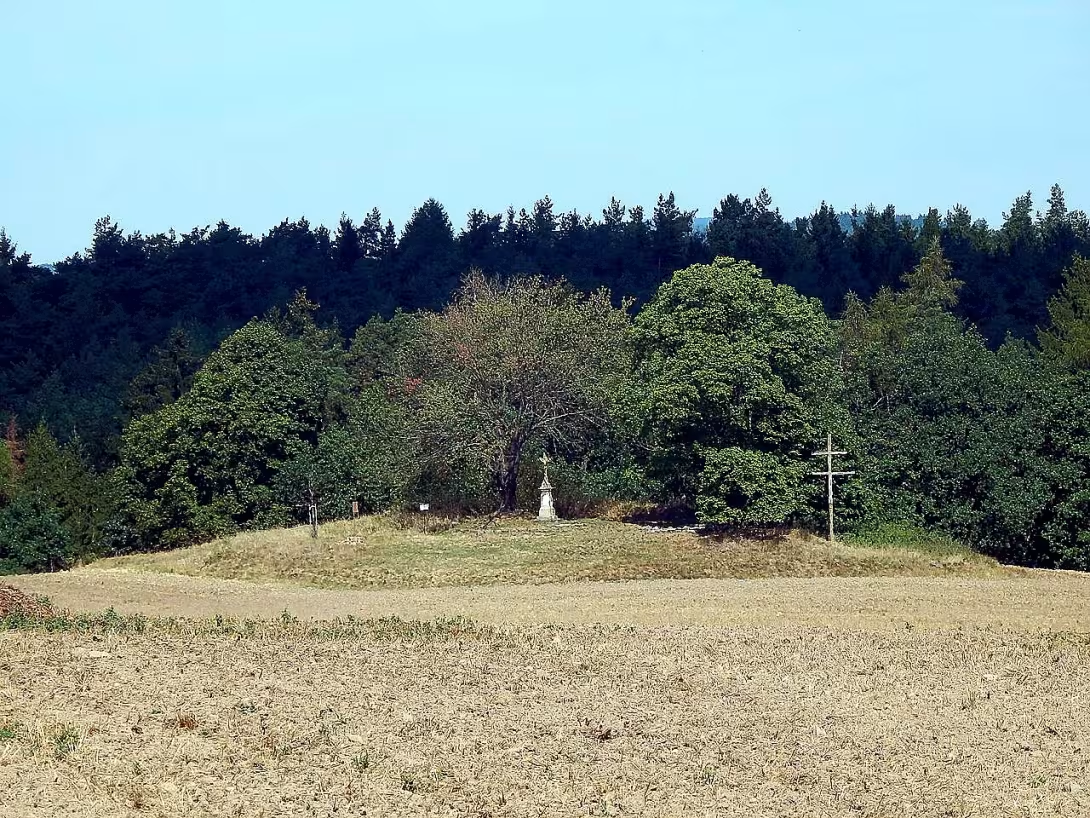
Objekt se nedochoval — na místě dnes nestojí. Následující text popisuje jeho historii, ne současnou návštěvu.
The church of St. Kliment was founded in the middle of the 13th century and was dedicated to the fourth Pope Kliment. The construction had a simple, efficient structure: a rectangular ship, which was closed by apsis on the east side, and a square tower was raised in the west. This floor plan was typical of the county churches of its time - massive, without unnecessary ornaments, designed to serve the local parish.
The church wasn't alone. There was a live settlement with a cemetery around it, where generations took turns. But this rural life had cycles and relocation. In the 15th century the settlement began to move in the eastern direction, although the temple itself remained in place and continued to serve the community. In 1655, it was buried and functioned as the mental center of the neighborhood.
The beginning of the end came gradually. In 1724 the church went through repair - the last attempt to keep it alive. But in 1787, it was officially abolished along with the cemetery. His position was taken over by the church of Saint Cecilia, which became the new parish centre for Lipovka. For the old sanctuary began the time of decline.
Fate met him in the wars of Naples. In 1811, the building was used as an observer - an iron seducer of military strategy. After the wars passed and the roofs fell, he was only a quarry. The people carried a brick and stone from it to their buildings, until there was a scythe in the landscape.
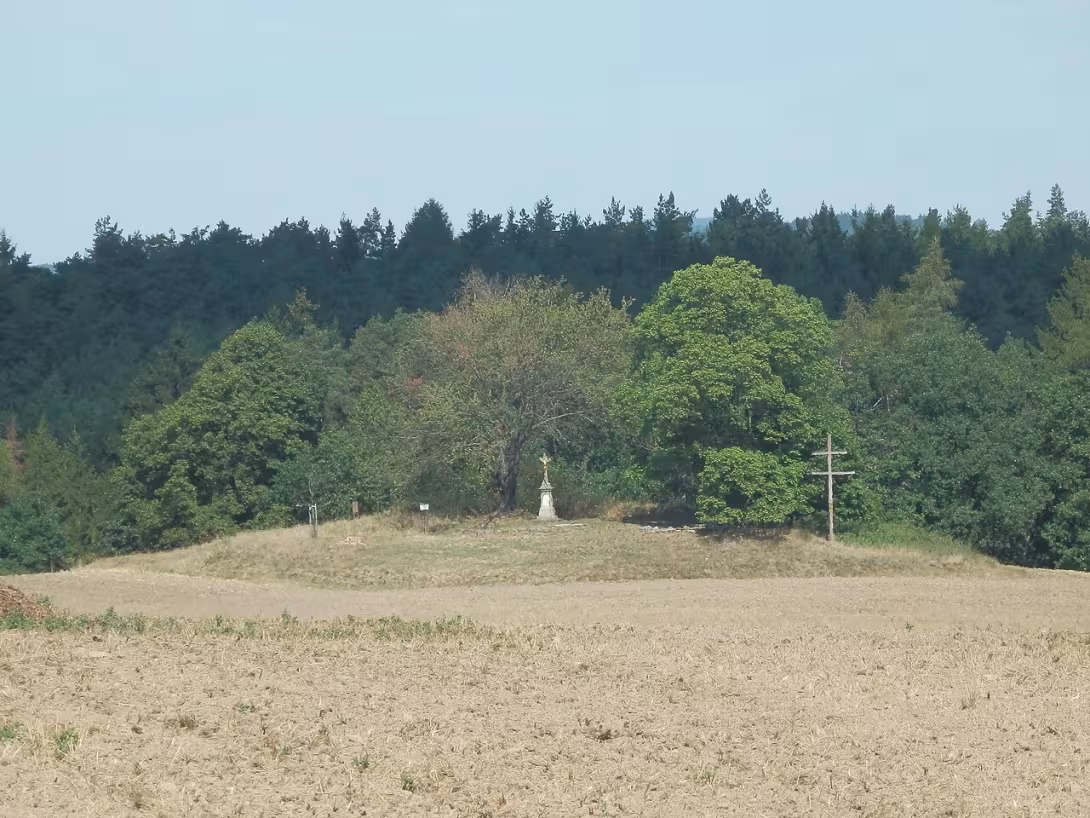
Today there is nothing but memory in the place of the former church. Two crosses stand where stone walls once reached, reminding visitors that believers once came here with joy and sorrow. The church of St. Kliment tells the story of change - how the landscape transforms, how the settlements shift, how the places that were vital at the time cease to exist. It's a lesson in stone, or rather in his absence.
Then and now
Drag the slider to compare how the landmark may have looked when it was built with the view today.
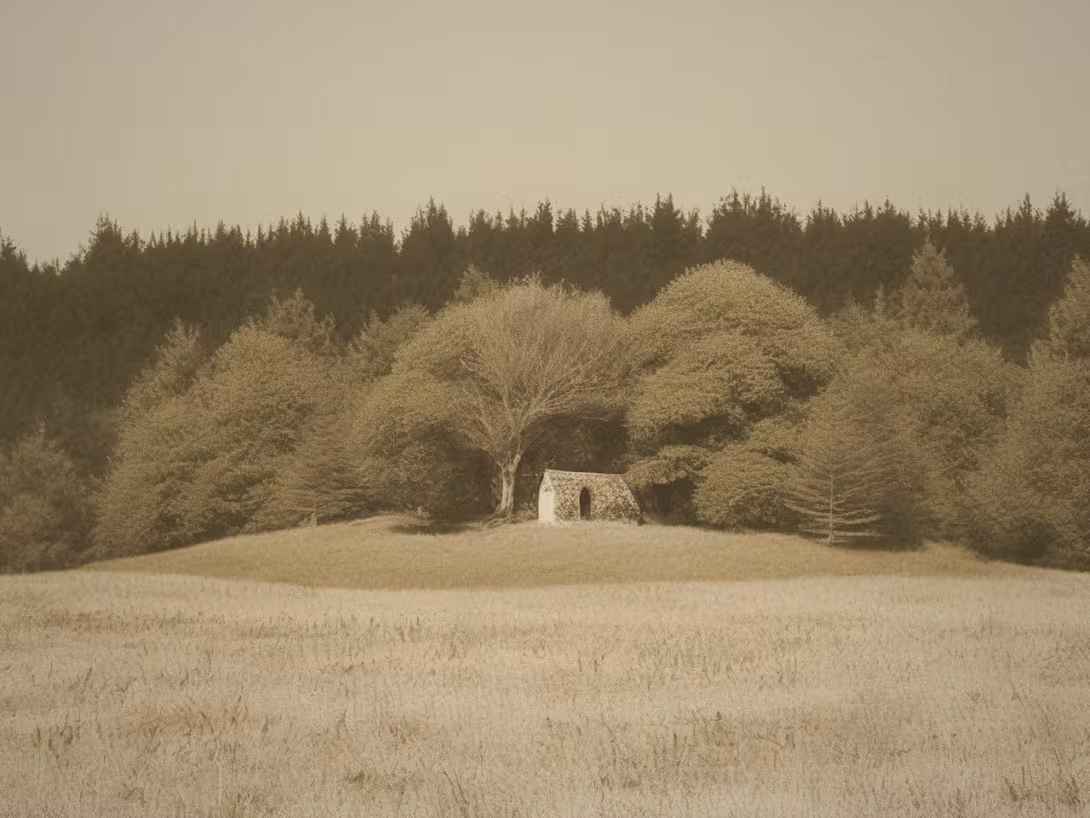
The historical appearance on the left is an AI-generated visualisation and serves as inspiration only.
Historical milestones
- 13th Century (half)
- The establishment of the church of St. Kliment as part of a medieval settlement.
- 15th Century
- Moving the settlement east, the church remained in its original place.
- 1787
- Cancellation of the church and cemetery, replaced by the church of St. Cecilia in Lipovka.
- 1811
- The church served as an observer during the Naples Wars.
Architectural development
The church was originally a single-boat Gothic temple with an apsid and a tower. In the 17th century he went through minor modifications, but in the 18th century he served only as a ruin. After the cancellation in 1787 he was gradually dismantled for construction material.
Historical events
In 1655 it was still buried at the church, in 1724 it was repaired, in 1787 it was abolished and in the 19th century it served as an observer during the wars of Naples.
Points of interest
- The Church of St. Kliment was built in the middle of the 13th century and dedicated to Pope Kliment.
- His original floor plan was simple: rectangular boat, eastern apsida and western square tower, typical of the district churches of that time.
- Around the church was a settlement with a cemetery, which in the 15th century gradually moved in the eastern direction while the church remained in its original place.
The last repair of the church was in 1724, when they were still trying to maintain its functionality before it was abolished in 1787.
- During the wars of Naples, the church served as a military observer in 1811, then it was used as a quarry and completely disappeared.
Guide
This guide is narrated by a synthetic voice generated by artificial intelligence.
Show guide text
This text was created by artificial intelligence and has not been editorially reviewed. It may contain inaccuracies.
At Lipůvka there once stood the Church of Saint Clement. Today it no longer exists and its location is remembered only by two crosses.
The church was built in the middle of the thirteenth century and was dedicated to Saint Clement, the fourth pope. It consisted of a rectangular nave, with an apse adjoining it on the eastern side and a square tower on the western side. A cemetery and a settlement stretched around the church. In the fifteenth century, the settlement moved eastward.
People were still buried at the church in the year sixteen fifty-five. In seventeen twenty-four the building underwent repairs. It was only in seventeen eighty-seven that the church was decommissioned along with the cemetery, and its role was taken over by the Church of Saint Cecilia in Lipůvce.
However, the old church was put to use one more time. In eighteen eleven, during the Napoleonic Wars, it served as an observation post. In the following years, only a ruin remained of it and people took building material from it.
For kids
Imagine going back to when Lipůvka was a small village at the foot of the top. The Church of St. Kliment was her heart, a place where people came to pray and celebrate. How did it look here? There were people living here who lived from the ground, kept animals and ran business. The village was full of life, sounds and smell.
It was like a small town in the media! The church of St. Kliment was the dominant of the village, its turret held high above the trees. People came to church for their religious ceremonies to remember important days and events.
Businesses nearby
Do you run a restaurant, accommodation, shop, museum, rental, wellness or other visitor service near this monument? Show yourself directly to the people heading to it — this is how they will see you in the app and on the web:
Events nearby





Zdroj akcí: otevřená data měst a obcí ČR (Národní katalog otevřených dat) a kalendář akcí Národního památkového ústavu.
Nearby
Within a few kilometres is the church of Saint Cecilia in Lipovka (founded in the 18th century) and the natural landscape of the South Moravian Region with forests and field formations typical of the region.
Visualizations and artistic views


The visualisations are generated by artificial intelligence and serve as inspiration.
Photos from the area
Real photos taken near the monument

Zdroj a licence jsou uvedeny u každého snímku.
Atmosphere of the place
This atmospheric visualisation of the place and period was generated by artificial intelligence. It is not real footage of the location.
Tips from visitors
No tips yet. Be the first!
Log in and add your tip.
Sources and literature
Photos: Isolda11 / CC BY-SA 3.0 — Wikimedia Commons. The author and licence also appear when you hover over the image.
Faktickým podkladem tohoto textu byl článek na Wikipedii, jehož autory jsou přispěvatelé Wikipedie. Článek je dostupný pod licencí CC BY-SA 4.0.
Location on the map


Příběhy a pověsti
Legendy, pověsti a příběhy spjaté s touto památkou
Fotografie návštěvníků
Zatím žádné fotografie. Buďte první, kdo přidá fotografii z návštěvy!
Log in a přidejte svou fotografii nebo hodnoťte.
Za ověřenou návštěvu v aplikaci získáte víc bodů — poznáme podle GPS, že jste na místě.
Reviews and comments