



kostel svatého Martina (Dambořice) Church
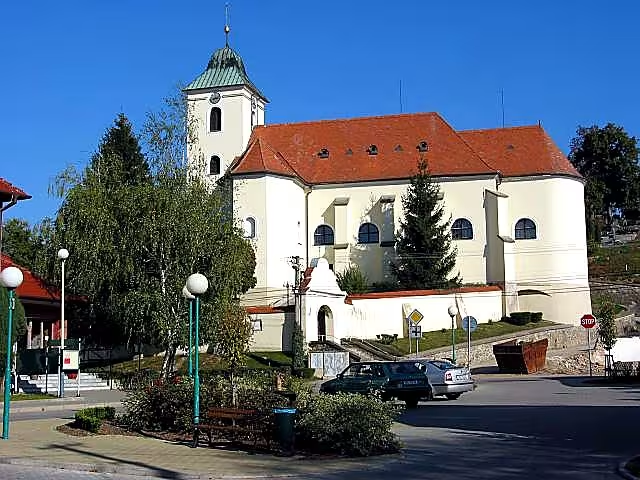
The Church of Saint Martin in Dambořice is a Roman Catholic parish located in the village within the Hodonín District. It holds cultural monument status in the Czech Republic. First recorded in 1326, its main structure dates back to the 17th century, reflecting significant architectural developments from that era. Major renovations occurred between 1909 and 1910, replacing the old chancel with a new one and adding a sacristy and an oratory.
The church's origins are documented as early as 1326, but its historical core is traced to the 17th century—a time of religious and political shifts in Bohemia under the Habsburg Monarchy. This period introduced Baroque architectural elements that influenced later renovations in the early 20th century.
Architecturally, it features a single-nave structure with an apse-ended chancel. A four-sided sacristy is attached to the eastern wall, and an oratory sits above it. A distinctive polygonal tower projects from the northern façade, enhancing its visual appeal. The smooth facades are interrupted by half-round arched windows supported by buttresses, typical of Baroque design.
Throughout history, the church has experienced various changes in ownership and administration, though specific details remain undocumented. However, significant renovations took place between 1909 and 1910, involving the demolition of the old chancel and construction of a new one, along with additional structures like the sacristy and oratory.
Inside, visitors can find several notable features. A late 14th-century wood carving of Madonna with Child adds historical depth to its interior. Additionally, a ciborium crafted in 1747 by Brno silversmith Jan Kristián Fischer is housed within, showcasing exquisite craftsmanship from that era. The church's tower also holds an intriguing artifact: a bell cast in 1649.
Today, the Church of Saint Martin remains accessible to visitors and continues as a place of worship for the local community. Its historical significance, architectural beauty, and rich interior artifacts make it a worthwhile destination for those interested in Czech cultural heritage. The church stands not only as a testament to religious devotion but also as a witness to centuries of history, inviting visitors to appreciate its enduring legacy.
Then and now
Drag the slider to compare how the landmark may have looked when it was built with the view today.
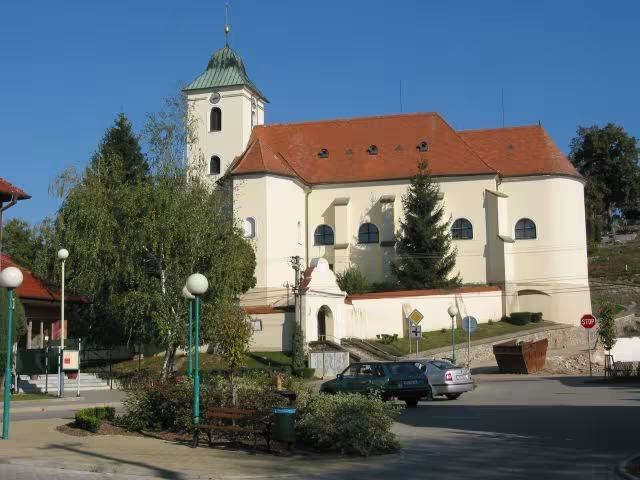

The historical appearance on the left is an AI-generated visualisation and serves as inspiration only.
Historical milestones
- 1326
- The church is first mentioned in historical records.
- 1909-1910
- Renovations included the demolition of the old chancel and construction of a new one.
Architectural development
The Church of Saint Martin has undergone several architectural phases. Its core structure from the 17th century was significantly altered in the early 20th century with the addition of a new chancel, sacristy, and oratory. The church features smooth facades interrupted by half-round arched windows supported by buttresses.
Historical events
The church is first mentioned in historical records in 1326.
Between 1909-1910, significant renovations included the demolition of the old chancel and construction of a new one.
Guide
This guide is narrated by a synthetic voice generated by artificial intelligence.
Show guide text
This text was created by artificial intelligence and has not been editorially reviewed. It may contain inaccuracies.
The Church of Saint Martin in Dambořicích in the Hodonín district is a Roman Catholic parish church. It is protected as a cultural monument of the Czech Republic.
The first mention of the church in Dambořicích dates from the year 1326. However, the age of the current structure is not entirely clear. Its oldest part, the nave, apparently did not originate before the 17th century. In the years 1909 to 1910, the old chancel was demolished and replaced with a new one, together with a sacristy and an oratory.
The church has a single nave, which is followed by a narrower chancel terminated by a semicircular apse. A four-sided sacristy adjoins the eastern wall, above which is an oratory on the first floor. From the center of the northern facade rises a prismatic tower. The facades are smooth, reinforced by buttresses, and are pierced by windows with semicircular vaults.
The most precious part of the furnishings is a wooden statue of the Madonna with child from the end of the 14th century. The ciborium, which is a vessel for keeping the Eucharist, was made in the year 1747 by a Prague silversmith named Jan Kristián Fischer. In the tower hangs a bell cast in the year 1649.
Tips for visitors
The best time to visit the Church of Saint Martin in Dambořice is during late spring or early autumn when the weather is pleasant, and the surrounding countryside is lush with greenery. This period also coincides with fewer tourists, allowing for a more serene experience. The church's architecture and historical significance are better appreciated without the distraction of large crowds.
For those preferring public transport, local buses may serve the area; however, it is recommended to verify current routes and schedules through a reliable travel app or website.
When visiting the Church of Saint Martin, bring comfortable walking shoes as you might want to explore the surrounding village and its paths. A camera is also essential for capturing the church's intricate details, especially during golden hour when the light beautifully illuminates the structure. Don't forget to carry water and some snacks if planning an extended visit.
For photography enthusiasts, the best spots to capture the Church of Saint Martin are from the front entrance or the side where natural light enhances its architectural features. Early morning or late afternoon provides the most flattering lighting conditions. Additionally, consider visiting during a local festival or event for unique photo opportunities with vibrant community activities in the background.
In Dambořice and nearby areas within 30 minutes, you can explore other cultural sites such as historical landmarks or nature trails that offer scenic views of the region. These excursions provide a broader understanding of the area's heritage and natural beauty, making them ideal for those interested in history and outdoor activities.
Frequently asked questions
Can the monument be visited?
Religious buildings are usually open mainly during services; at other times a visit is normally arranged with the parish or the operator. We have not verified specific times.
Where is the monument?
Location: Dambořice, Jihomoravský kraj. The map on this page shows the exact spot.
Why is the monument protected?
It is listed in the Central List of Cultural Monuments of the Czech Republic as a cultural monument (register no. 1000123714).
Businesses nearby
Do you run a restaurant, accommodation, shop, museum, rental, wellness or other visitor service near this monument? Show yourself directly to the people heading to it — this is how they will see you in the app and on the web:
Accommodation nearby
Trips and activities nearby
Guided tours, tickets and activities nearby from GetYourGuide
Affiliate link: if you buy from the partner, we may receive a commission. The price for you does not change.
Search tours and activities →Themed route
Tematická výletní trasa: Kostel svatého Martina (Dambořice)
1. Kostel svatého Martina (Dambořice) - Typ: Historická památka, kostel - Proč stojí za návštěvu: Tento barokní kostel je nejvýraznější architektonickou památkou v obci Dambořice. Jeho bohaté historie a umělecké prvky, jako jsou fresky a sochy, přitahují návštěvníky z celého regionu.
2. Obecní úřad (Dambořice) - Typ: Historický stavební objekt - Proč stojí za návštěvu: Nachází se v blízkosti kostela a je příkladem místní architektury. Jeho historie jako centra obecní správy odráží dlouhou tradici místního samosprávného života.
3. Přírodní park (okolí Dambořice) - Typ: Přírodní rezervace - Proč stojí za návštěvu: Tento park nabízí krásné příležitosti pro relaxaci a prozkoumání místní flóry a fauny. Je ideálním místem pro kroky po kostele, kde si můžete užít klidu v přírodě.
4. Místní tržiště (Dambořice) - Typ: Tradiční tržiště - Proč stojí za návštěvu: Zde můžete objevit místní produkty a potraviny, což je skvělý způsob, jak se ponořit do kulturního dědictví obce. Je to také místo pro setkání s místními obyvateli a poznávání jejich života.
Tato trasa vám nabídne komplexní pohled na historii, kulturu a přírodu Dambořic, což je ideální způsob, jak si prohlédnout tuto malebnou obec.
Seasonal recommendations
Spring: Visiting the Church of Saint Martin in Dambořice during spring offers a unique experience as nature awakens around this historic site. The surrounding landscape is adorned with blooming wildflowers and lush greenery, creating a picturesque backdrop that enhances the church's serene atmosphere. As daylight extends into the evening, visitors can enjoy the soft, natural lighting that beautifully illuminates the church’s architecture. To make the most of your visit, consider wearing comfortable walking shoes for exploring the nearby trails and carrying an umbrella in case of spring showers. Early mornings or late afternoons are ideal times to avoid larger crowds while taking advantage of the pleasant weather.
Summer: Summer is a vibrant time to explore the Church of Saint Martin, with long days providing ample light to appreciate its architectural details. The warm atmosphere invites visitors to enjoy outdoor activities in the surrounding countryside, making it a perfect season for those who love nature and history alike. However, this period also sees an increase in tourists, so arriving early is advisable to avoid crowds and ensure a more personal experience. Dressing in lightweight clothing and bringing sun protection is recommended due to the higher temperatures.
Autumn: Autumn brings a magical transformation to Dambořice with its warm hues of reds, oranges, and yellows enveloping the Church of Saint Martin. The cooler weather makes for comfortable exploration, while the changing leaves create a stunning visual contrast against the church's historic facade. This season is ideal for photography enthusiasts looking to capture the picturesque landscape. As daylight hours shorten, planning your visit during midday can help maximize natural light for exploring both inside and outside the church.
Winter: The Church of Saint Martin in winter offers a serene and almost mystical experience as snow blankets the area, transforming it into a quiet haven away from bustling tourist spots. The shorter days mean that visits are best planned around daylight hours, with early mornings offering particularly peaceful moments before larger groups arrive. Visitors should dress warmly in layers to enjoy their time comfortably while exploring the church’s interior, which provides a cozy respite from the cold outside. The winter atmosphere lends itself well to reflection and appreciation of the church's historical significance amidst the tranquil surroundings.
Visualizations and artistic views


The visualisations are generated by artificial intelligence and serve as inspiration.
Photos from the area
Real photos taken near the monument


Zdroj a licence jsou uvedeny u každého snímku.
Tips from visitors
No tips yet. Be the first!
Log in and add your tip.
Sources and literature
Photos: Pavel Škrha; Original uploader was Zsdamborice at cs.wikipedia / CC BY-SA 3.0 — Wikimedia Commons. The author and licence also appear when you hover over the image.
Faktickým podkladem tohoto textu byl článek na Wikipedii, jehož autory jsou přispěvatelé Wikipedie. Článek je dostupný pod licencí CC BY-SA 4.0.
Location on the map




Příběhy a pověsti
Legendy, pověsti a příběhy spjaté s touto památkou

Fotografie návštěvníků
Zatím žádné fotografie. Buďte první, kdo přidá fotografii z návštěvy!
Log in a přidejte svou fotografii nebo hodnoťte.
Za ověřenou návštěvu v aplikaci získáte víc bodů — poznáme podle GPS, že jste na místě.
Reviews and comments