



kostel svatého Martina (Rosice) Church
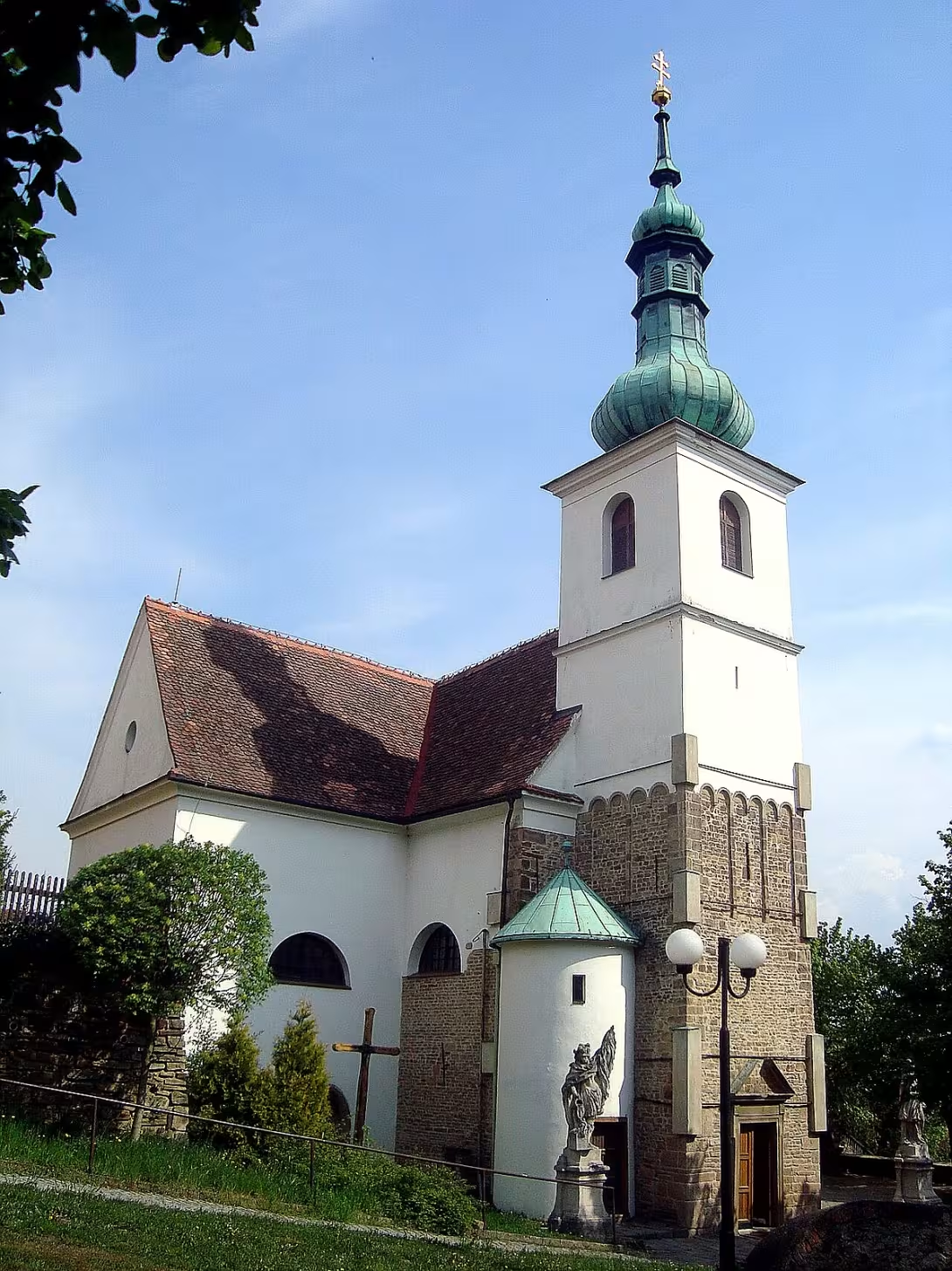
The Church of Saint Martin in Rosice is evidence of architectural development and historical importance in the Czech Republic. Located in Rosice, Brno-venkov District, serves as a parish and dean church for the local community. Originally built in the early 13th century with the influence of Romanesque, he went through significant transformations in Gothic, Renaissance and Baroque periods. Its architectural path, recognised as a cultural monument of the Czech Republic, reflects wider European trends during these periods.
The origin of St. Martin's church dates back to the beginning of the 13th century when Bohemia was part of the Holy Roman Empire under King Ottokar I. This period has seen significant architectural developments throughout Europe and gothic styles are beginning to emerge. The original construction of the church probably took place at the end of the 12th century, but at the beginning of the 13th century it stood as a stone building with a pressurized and western tower that remains today. Its roots laid the foundation for subsequent architectural adaptations.
Throughout his history, the Church of St. Martin saw various improvements. In the late Middle Ages, Gothic adjustments extended the structure with the addition of the Northern Chapel. The Renaissance brought further changes, including the construction of the South Chapel, which added to the spatial complexity of the church. The Baroque renovation later changed Western entrance and window design, reflecting the stylistic preferences of this time. These transformations not only strengthened the aesthetic attraction of the church, but also its functional capacity.
the church served as more than just a place of worship; It was a place of historical importance to the local community. In particular, it worked as a burial ground for prominent personalities, especially nobles. This role underlines its importance in the social and cultural structure of Rosice. The presence of two nearby cemeteries - now unused cemeteries southwest of the ship and the former parish cemeteries in the east and south-east - further underlines its historical connection with local burial practices.
In 1998 the church won three new bells dedicated to the Holy Trinity, Maria and Saint Martin. These bells replaced those confiscated during world wars and supplemented the oldest bell in the tower. This amendment underlines the efforts of the community to preserve and honor its cultural heritage despite historical non-traditions.
Today, the Church of St. Martin remains a vibrant part of the cultural landscape Rosice. As a protected cultural monument, it continues to serve its parishioners and attracts visitors who are interested in its rich history and architectural beauty. Its availability as a place of worship and a historical place makes it a valuable destination for those who explore the Jihomoravský kraj area.
The Church of Saint Martin stands not only as a religious personality, but as a chronicle of architectural development and community heritage. Its permanent presence invites visitors to explore its historical past and appreciate its role in shaping the cultural identity of Rosice. Whether its historical significance or architectural beauty, visiting this remarkable church promises a rewarding experience.
Then and now
Drag the slider to compare how the landmark may have looked when it was built with the view today.
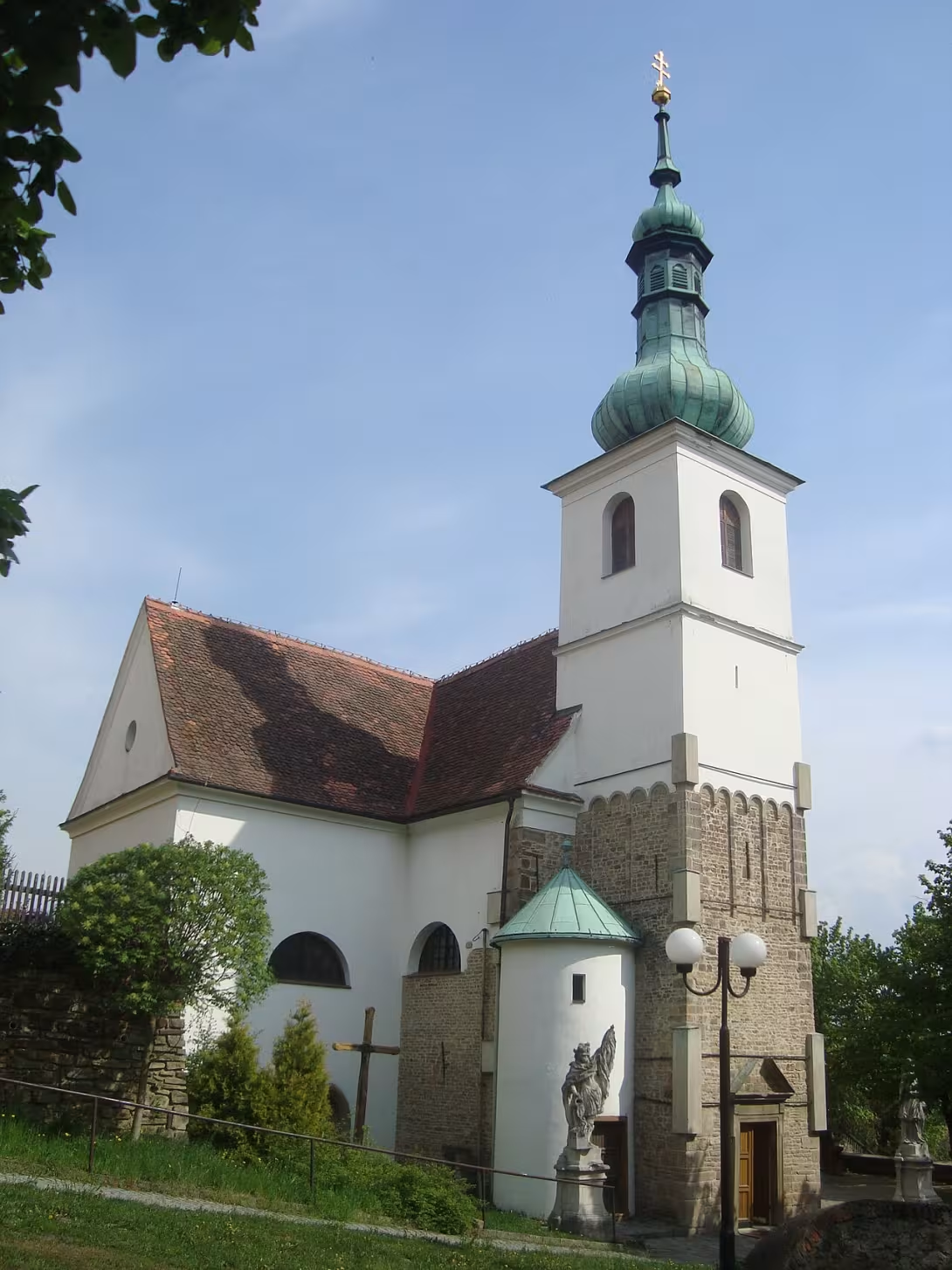
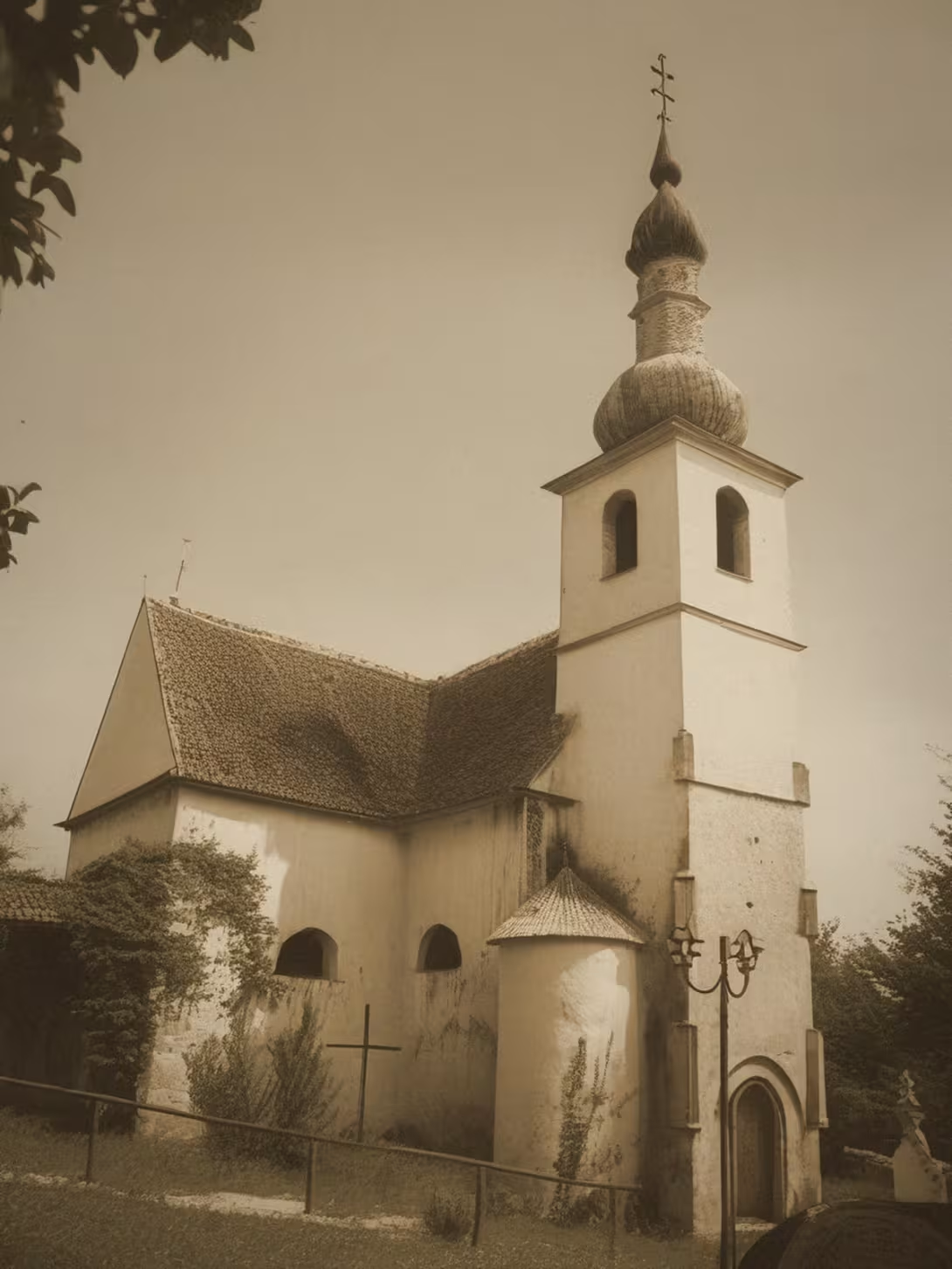
The historical appearance on the left is an AI-generated visualisation and serves as inspiration only.
Architectural development
The Church of Saint Martin began as a Romanesque structure in the early 13th century. Later it was extended by Gothic elements, including the Northern Chapel. The southern chapel was added during the Renaissance. The Baroque renovation changed the west entrance and windows.
Historical events
The original Romanesque construction was built in the early 13th century.
In the late Middle Ages the church passed through Gothic modifications and expansions.
Part of the Renaissance changes was the addition of the South Chapel.
Baroque renovations changed Western entrance and window design.
Points of interest
- The western tower Church of Saint Martin is one of the few surviving buildings from the original 13th century building, which offers a rare view of the early Czech architecture in the midst of later stylistic changes.
- During the Baroque period, not only was the western entrance and windows rebuilt, but the interior also saw significant changes, including frescoes, which had since been lost in time, reflecting dramatic artistic shifts of the era.
- the church was connected to the legends of hidden treasures buried under its land during the time of the conflict, fanning local folklore and plotting between treasure hunters for centuries.
- In addition to serving as a burial ground for the nobles, the Church of St. Martin was entrusted as a secret meeting place during a period of political unrest, illustrating its role outside religious functions in historical community life.
- The oldest bell in the tower church is considered cast from metal originally intended for weapons, symbolizing the conversion from battle goals to spiritual, when it rang over Rosice.
Guide
This guide is narrated by a synthetic voice generated by artificial intelligence.
Show guide text
This text was created by artificial intelligence and has not been editorially reviewed. It may contain inaccuracies.
The Church of Saint Martin in Rosice near Brno is a Roman Catholic church and cultural monument. It serves as the parish church of Rosice parish and also as the deanery church of Rosice deanery.
Its origins date back to the Romanesque period. The church probably comes from the 12th century and was already standing by the beginning of the 13th century. It was a single-nave stone building with a presbytery and a western tower, which has survived to this day. The church was entered from the south side back then.
Over the centuries, the building underwent several transformations. During the Gothic period, the church was modified and expanded with a northern chapel, which originally stood separately. During the Renaissance renovation, a southern chapel was added. Baroque modifications then changed the entrance: from that time on, people entered the church from the west, through the tower. The windows were also replaced. The interior acquired its present appearance in the 18th century, when the main and side altars, a pulpit, and other decorations were created.
The bells that the church had were confiscated during the world wars. They were replaced only in 1998 by three new bells dedicated to the Holy Trinity, the Virgin Mary, and Saint Martin. Thus they supplemented the oldest bell.
The church was also the final resting place of significant figures of the parish, primarily the local nobility. The oldest cemetery was spread throughout the immediate vicinity of the church. To this day there are two cemeteries by the church. Southwest of the church nave lies a separate children's cemetery of innocents, which was not closed down but is no longer used. From the east and southeast, the former parish cemetery adjoins the church, now a non-public plot of land.
Frequently asked questions
Can the monument be visited?
Religious buildings are usually open mainly during services; at other times a visit is normally arranged with the parish or the operator. We have not verified specific times.
Where is the monument?
Location: Rosice, Jihomoravský kraj. The map on this page shows the exact spot.
Why is the monument protected?
It is listed in the Central List of Cultural Monuments of the Czech Republic as a cultural monument (register no. 46889/7-944).
Businesses nearby
Do you run a restaurant, accommodation, shop, museum, rental, wellness or other visitor service near this monument? Show yourself directly to the people heading to it — this is how they will see you in the app and on the web:
Nearby
There are two cemeteries nearby: an unused children's cemetery southwest of the ship and a former parish cemetery now private country east and southeast of the church. The original burial ground has spread all over the area.
Accommodation nearby
Trips and activities nearby
Guided tours, tickets and activities nearby from GetYourGuide
Affiliate link: if you buy from the partner, we may receive a commission. The price for you does not change.
Search tours and activities →Themed route
Thematic walking tour: Rosice and St. Martin's Church
1. Church of St. Martin (Rosice) - Type: Historical landmark - Why Visit: This stunning church, located in the heart of Rosice, is a masterpiece of Gothic architecture with a rich history dating back to the 14th century. Visitors can admire his complex stone work and explore his peaceful interior, which is located beautiful frescoes and historical artifacts.
2. Unused Children's Cemetery - Type: Historical pages - Why Visit: Located southwest of the ship, this unused cemetery offers a thrilling view of the past. It serves as a silent witness to the history of Rosice, which calls for reflection on the lives that were once linked to this sacred place.
3. Former parish cemetery (now private countries) - Type: Historical pages - Why Visit: Located east and southeast of the church, this area was originally part of a parish burial ground. Although it is now private, its historical significance is evident in the landscape and offers views of past practices and traditions of the community.
4. Instant Church Victory - Type: Historical survey - Why Visit: Go around the immediate surrounding church to discover the remains of the original burial ground that once spread in this area. This survey provides a deeper understanding of the historical context and development of the sacred spaces Rosice.
This thematic tour offers an intimate journey through Rosice, which focuses on rich history and cultural heritage focused on St. Martin's Church and its surroundings.
Seasonal recommendations
Spring: The church of St. Martin in Rosie in spring buying one experience, where openness and warm sun rays connect with the designation around the monument. The green leaves of the trees create a vertex of vermin that transmits new and new hope into the atmosphere of St. Martin's skeleton. Inventories can expect small crowd pride, because it's like the visibility of new information on the historical environment. It is possible to decide if, within the framework of this structure, they are listed in a direct declaration of remission of the amount due and that this amount is early or can be used at night to avoid any starting crowd.
Summer: For years, St. Martin's church in Rosice has created a place to visit, when the warm sunny suvat illuminates it with architectural beauty and gives it to the atmosphere of life. Green trees offer a relief from the flying sun, while the guilty grass around the church asks the pit-desk background for photos. This time of year goes to a time when mass pride, especially in the main summer season, is different from the historical environment, as the sum of all permitted plans. They should be added early in the morning, or they should spend the evening avoiding a true mass of heat, and turning themselves in a light suit suitable for warm weather. Forget to take the sun and shelter against UV September.
Autumn: The chateau of St. Martin's church in Rosie in the autumn store encouraging national conditions that make tree leaves to the golden and red colors. This change brings to the atmosphere of St. Martin's church a single beauty and romantic touch. While the crowd's pride is diminishing, they order a small amount of materials with front evenings. It should be provided that, within the framework of the measure in question, which provides for the remission of aid and that this Regulation is binding in the Official Journal. This time of year is also ideal for quiet prochet through historic terrain with my crowd puree.
Winter: The winter challenges of St. Martin's Cube in Rosice encourage calm and potential atmosphere when cold products move or have a historical character. Consequently, it may be possible to reach an agreement on public procurement. It is necessary to determine the CHP plants, all furs or other insulating layers, and to wear protective shoes for cold bellies. The remaining amount, written on the basis that with the minimum mass pride to be applied, means that the amount of St. Martin and his historical details should be reduced. Incentive entities should also have an effect on the fact that, in the advent period when it is itself effective, even if competitive actions are not applicable.
Visualizations and artistic views


The visualisations are generated by artificial intelligence and serve as inspiration.
Photos from the area
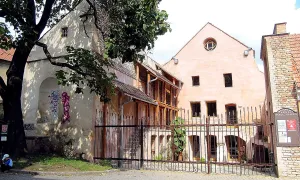
Real photos taken near the monument


Zdroj a licence jsou uvedeny u každého snímku.
Tips from visitors
No tips yet. Be the first!
Log in and add your tip.
Sources and literature
Photos: Dendrofil / Public domain — Wikimedia Commons. The author and licence also appear when you hover over the image.
Faktickým podkladem tohoto textu byl článek na Wikipedii, jehož autory jsou přispěvatelé Wikipedie. Článek je dostupný pod licencí CC BY-SA 4.0.
Location on the map



Příběhy a pověsti
Legendy, pověsti a příběhy spjaté s touto památkou
Fotografie návštěvníků
Zatím žádné fotografie. Buďte první, kdo přidá fotografii z návštěvy!
Log in a přidejte svou fotografii nebo hodnoťte.
Za ověřenou návštěvu v aplikaci získáte víc bodů — poznáme podle GPS, že jste na místě.
Reviews and comments