






Kostel svatého Mikuláše (Tvrdonice) Church
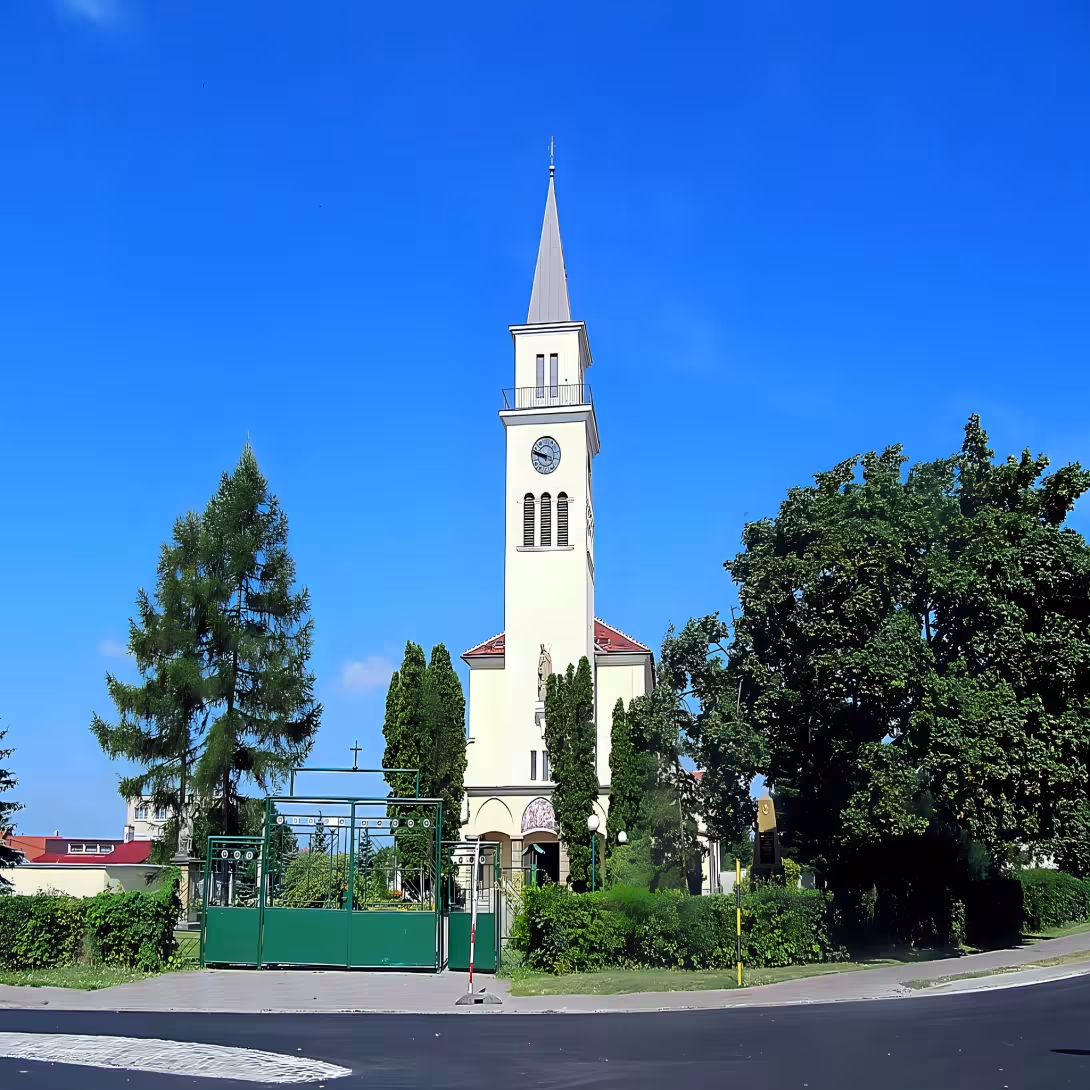
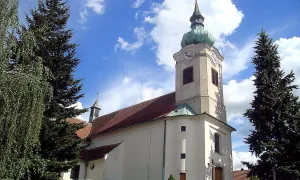
The Church of Saint Nicholas in Tvrdonice is a Roman Catholic church located in the village of Tvrdonice, within the Břeclav District of the South Moravian Region. Constructed between 1940 and 1941, this functionalist-style building serves as the parish church for the local community. Notable for its simple yet architecturally clean interior design, painted stained glass windows depicting saints alongside figures in traditional local attire, and a lunette above the entrance showcasing Christ the Savior from the original 19th-century structure, it is an important cultural and religious site.
The history of the Church of Saint Nicholas dates back to 1673 when the first mention of a church dedicated to Saint Nicholas was recorded. Over time, structural challenges due to unstable ground conditions led to multiple reconstructions. In 1879, an earlier baroque-style church had to be demolished after landslides caused significant damage. A neo-Gothic replacement constructed between 1880 and 1884 faced similar issues, necessitating yet another rebuild. The current functionalist structure was built from 1940 to 1941 on a more stable site.
Architecturally, the Church of Saint Nicholas reflects the functionalist style that emerged in the early 20th century. This design emphasizes simplicity and functionality, evident in the church's clean lines and unadorned interior. The stained glass windows are particularly noteworthy for their artistic depiction of saints and local figures in traditional attire, adding a cultural dimension to the building’s aesthetic. Additionally, the lunette above the entrance, originally from the 19th-century structure, features Christ the Savior, linking the church's past with its present.
The construction of the current church was overseen by R. D. Josef Hrabal, who served as the spiritual administrator of the local parish starting in 1938. His significant contribution to the building process is a testament to his dedication to the community’s religious life. The foundation stone for this new structure was laid on June 30, 1940, with five thousand attendees marking the occasion. Despite the challenging political climate of World War II and Nazi occupation in Czechoslovakia during this period, the church's construction proceeded, underscoring its importance to the local community.
Throughout its history, the Church of Saint Nicholas has been a focal point for the people of Tvrdonice. Its resilience against natural challenges and its ability to adapt architecturally reflect the enduring spirit of the community. The church not only serves as a place of worship but also as a symbol of cultural continuity and local identity.
Today, the Church of Saint Nicholas remains an active parish church, open for services and visits. Its historical significance, combined with its unique architectural features, makes it a worthwhile destination for those interested in religious history and architecture. Visitors can appreciate both the functionalist design and the artistic elements that make this church a notable landmark in Tvrdonice.
The Church of Saint Nicholas stands as a testament to the resilience and cultural heritage of Tvrdonice. Its historical journey from baroque to neo-Gothic, and finally to functionalism, reflects broader architectural trends while maintaining its local significance. This monument invites visitors to explore its rich history and appreciate its role in the community's spiritual life.
Then and now
Drag the slider to compare how the landmark may have looked when it was built with the view today.
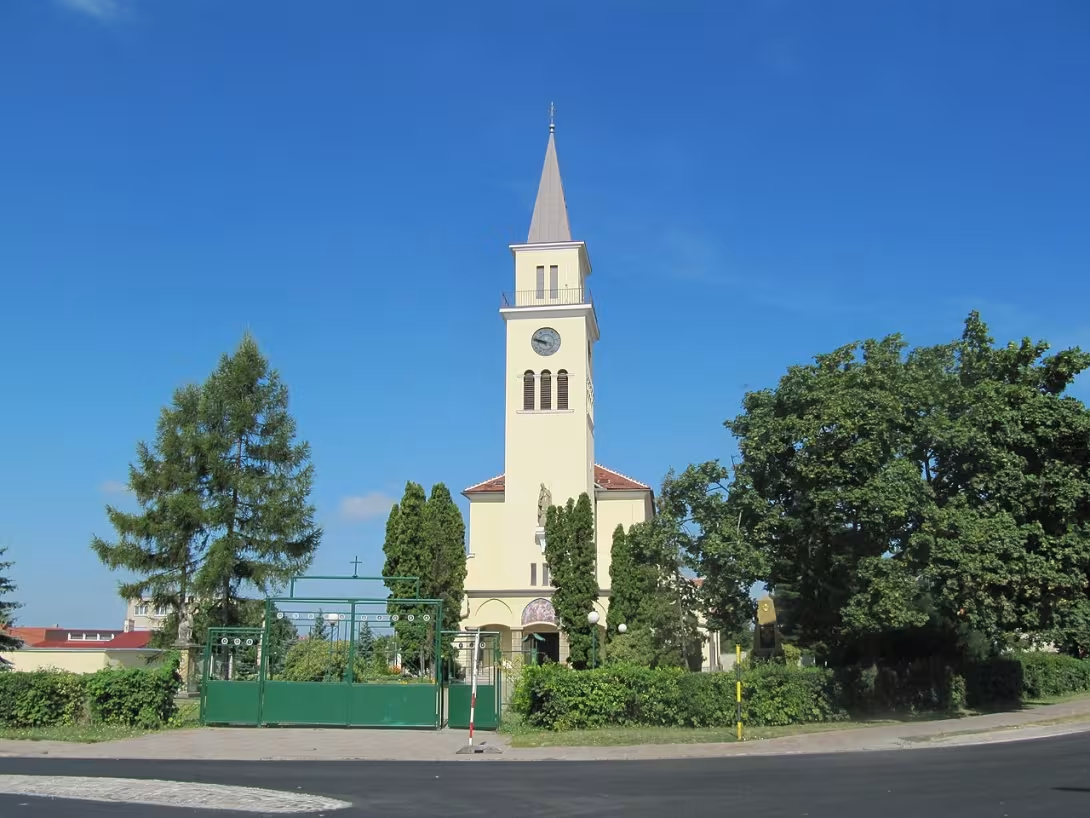
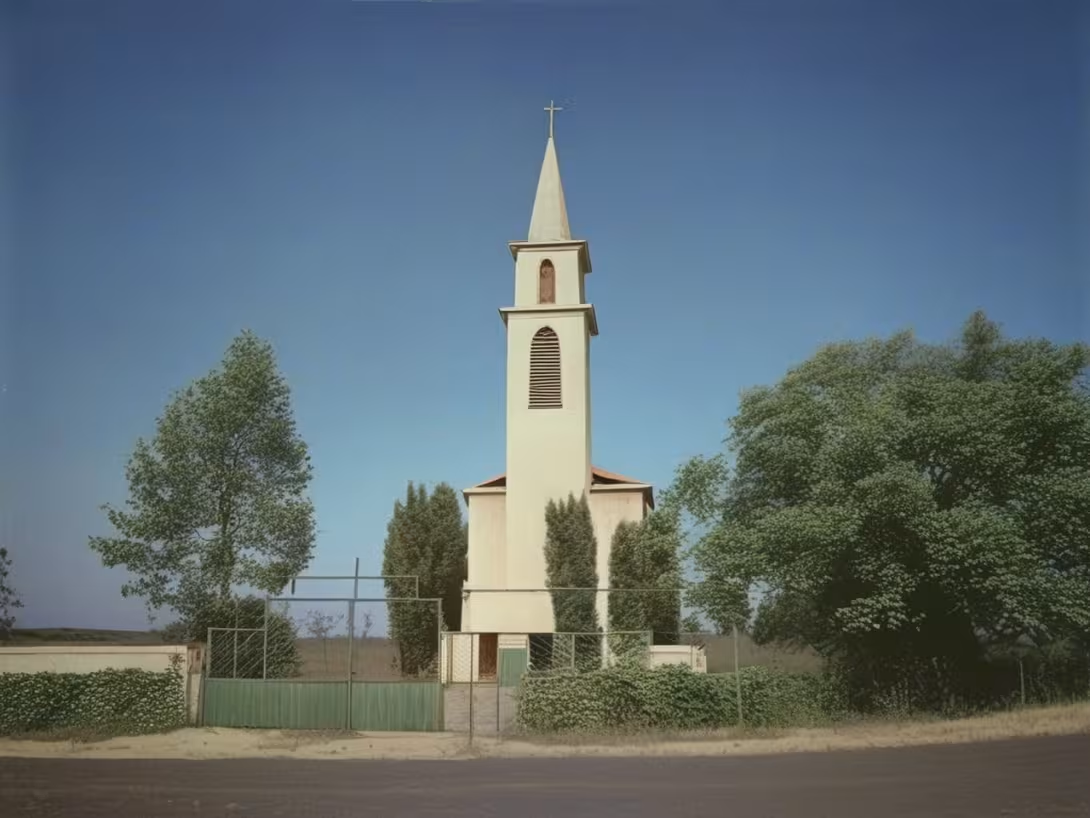
The historical appearance on the left is an AI-generated visualisation and serves as inspiration only.
Historical milestones
- 1673
- First mention of a church dedicated to Saint Nicholas in Tvrdonice.
- 1879
- Demolition of the baroque-style church due to landslides.
- 1880
- Construction began on a new neo-Gothic style church.
- 1940
- Laying of the foundation stone for the current functionalist church with five thousand attendees.
- 1941
- Consecration of the newly built functionalist church.
Architectural development
The Church of Saint Nicholas has undergone several architectural transformations due to unstable ground conditions. Initially, a baroque-style church was constructed but demolished in 1879 after landslides caused structural damage. A neo-Gothic replacement built between 1880 and 1884 also succumbed to similar issues, leading to the construction of the current functionalist structure from 1940 to 1941.
Historical events
The first mention of a church dedicated to Saint Nicholas in Tvrdonice dates back to 1673.
In 1879, an earlier baroque-style church was demolished due to structural instability caused by landslides.
A new church built between 1880 and 1884 in the neo-Gothic style also faced similar issues and had to be replaced.
Points of interest
- Despite the challenges of World War II and Nazi occupation in Czechoslovakia, construction on the Church of Saint Nicholas proceeded without interruption, highlighting its significance to the local community during a tumultuous period.
- The stained glass windows in the church are unique for their depiction of both saints and figures dressed in traditional local attire, blending religious iconography with cultural heritage specific to Tvrdonice.
- Architecturally, the church features a lunette above the entrance that originally came from the 19th-century structure. It depicts Christ the Savior, creating a visual link between the church's historical past and its present form.
- The Church of Saint Nicholas has undergone multiple reconstructions due to unstable ground conditions, with each iteration reflecting changes in architectural style—from baroque to neo-Gothic, and finally to functionalist—demonstrating adaptability over centuries.
- R. D. Josef Hrabal played a crucial role as the spiritual administrator starting in 1938 and oversaw the construction of the current church, which began with a foundation stone-laying ceremony attended by five thousand people on June 30, 1940.
Guide
This guide is narrated by a synthetic voice generated by artificial intelligence.
Show guide text
This text was created by artificial intelligence and has not been editorially reviewed. It may contain inaccuracies.
Welcome to the Church of Saint Nicholas in Tvrdonice, a remarkable testament to resilience and architectural innovation nestled within this serene village in the Břeclav District of the South Moravian Region. As you stand here, take a moment to absorb the unique ambiance surrounding this Roman Catholic church, which serves as the parish church for the local community. Notice its modern lines that distinguish it from more traditional ecclesiastical structures, reflecting a period when functionalism was embraced in architecture.
The history of this site is rich and layered. The first mention of a church dedicated to Saint Nicholas dates back to 1673, marking the spiritual significance of this location for centuries. However, challenges arose with the baroque-style church built later being demolished in 1879 due to landslides—a testament to the precarious nature of its foundation. Undeterred by these setbacks, construction began on a new neo-Gothic style church in 1880, only to be replaced once more.
The current structure was born out of necessity and vision during uncertain times. In 1940, amidst World War II and Nazi occupation, the foundation stone for this functionalist church was laid with great community involvement—five thousand people witnessed its inception. By 1941, despite the turmoil surrounding them, the newly built church was consecrated, symbolizing hope and continuity.
As you look around, take note of the clean lines and minimalist design characteristic of the functionalist style that defines this building. The architecture speaks to a period when functionality and simplicity were paramount, contrasting with the ornate styles of its predecessors.
This site holds stories of resilience not just in construction but also through individuals like R. D. Josef Hrabal, who played pivotal roles during these transformative years. Their contributions have left an indelible mark on this community.
One intriguing aspect of this church is how it was completed without interruption despite the challenges of its time. This speaks volumes about the dedication and importance placed upon it by those who built it.
As you explore further, let yourself be drawn into the atmosphere of this place—a blend of history, architecture, and community spirit. We invite you to delve deeper into its stories and perhaps uncover more layers of its fascinating past.
Thank you for joining us on this journey through time at the Church of Saint Nicholas in Tvrdonice. May your visit inspire reflection and a deeper appreciation for the stories embedded within these walls.
Frequently asked questions
Can the monument be visited?
Religious buildings are usually open mainly during services; at other times a visit is normally arranged with the parish or the operator. We have not verified specific times.
Where is the monument?
Location: Tvrdonice, Jihomoravský kraj. The map on this page shows the exact spot.
Businesses nearby
Do you run a restaurant, accommodation, shop, museum, rental, wellness or other visitor service near this monument? Show yourself directly to the people heading to it — this is how they will see you in the app and on the web:
Accommodation nearby
Themed route
Tematická výletní trasa: Kostel svatého Mikuláše (Tvrdonice)
1. Kostel svatého Mikuláše, Tvrdonice - Typ: Religiózní památka - Proč stojí za návštěvu: Tento barokní kostel je nejenom duchovním centrem obce, ale také architektonickým skvostem s bohatou historií. Jeho interiér nabízí krásné fresky a sochy, které přitahují návštěvníky z celého regionu.
2. Obecní úřad Tvrdonice - Typ: Administrativní budova - Proč stojí za návštěvu: Přestože je to primárně administrativní místo, obecní úřad v Tvrdonicích nabízí historický pohled na místní správu a architekturu. Zajímavé pro ty, kteří chtějí poznat více o organizaci malého českého obce.
3. Zastávka autobusové zastávky v centru Tvrdonic - Typ: Veřejný prostor - Proč stojí za návštěvu: Centrum obce s jeho zastávkou nabízí klidný pohled na místní život. Je to ideální místo pro krátké odpojení a poznání, jak se dnešní Tvrdonice propojují s okolím.
4. Dřevěné křesťanské sochy v nádvoří kostela - Typ: Umělecký exponát - Proč stojí za návštěvu: Tyto sochy jsou součástí nádvoří kostela svatého Mikuláše a představují důležitou část místní kulturní tradice. Jsou to vysoce umělecky hodnotné práce, které zaujmou jak milovníky umění, tak návštěvníky s zájmem o historii.
Tato trasa nabízí pohled na kulturní a duchovní život v Tvrdonicích, od hlavního kostela přes administrativní centrum obce až po umělecké exponáty.
Seasonal recommendations
Jar: During the spring season, St. Nicholas Church in Tvrdonice offers a special atmosphere as blooming pink trees and shrubs cast their reflections on the ancient stone walls of the church. Sudden rain showers can occur due to temperature changes, so it's advisable to bring along an umbrella or raincoat. This time of year typically attracts fewer visitors than summer, allowing for a more relaxed exploration of the site. An earlier afternoon is ideal for visiting when temperatures are pleasant and you can enjoy the spring sunshine.
Leto: Summer in Tvrdonice offers long days filled with light that beautifully illuminates St. Nicholas Church. Nature around the monument showcases its full splendor with lush greenery and blooming fields. Due to the popularity of summer destinations, it's best to visit the church in early afternoons to avoid crowds. Make sure to bring along sunglasses for sun protection and plenty of water to stay hydrated during the heat. This season is also perfect for a visit at twilight when the church bathes in romantic hues.
Podzim: Autumn in Tvrdonice provides a unique atmosphere with changing leaf color palettes that add a romantic touch to St. Nicholas Church. Temperatures are usually mild, and sunny days offer ideal conditions for exploring the monument. However, it's wise to have slightly warmer clothing on hand for chilly evenings or rain. This time of year is relatively less visited, allowing you to enjoy a peaceful tour without excessive crowd pressure.
Zima: A winter visit to St. Nicholas Church in Tvrdonice offers a completely different view as the church is surrounded by snow and icicles. The atmosphere is calm and quiet, enabling an unhindered exploration of the monument's history without the disturbance of crowds. It's important to wear warmer clothing for protection against the cold and have appropriate boots with anti-slip soles, especially if there's a thick layer of snow. Winter days are shorter, so we recommend visiting in the early afternoon to ensure enough time to fully experience this extraordinary view.
Visualizations and artistic views


The visualisations are generated by artificial intelligence and serve as inspiration.
Photos from the area
Real photos taken near the monument

Zdroj a licence jsou uvedeny u každého snímku.
Tips from visitors
No tips yet. Be the first!
Log in and add your tip.
Sources and literature
Photos: palickap / CC BY 3.0, rozlišení zvýšeno umělou inteligencí — Wikimedia Commons. The author and licence also appear when you hover over the image.
Faktickým podkladem tohoto textu byl článek na Wikipedii, jehož autory jsou přispěvatelé Wikipedie. Článek je dostupný pod licencí CC BY-SA 4.0.
Location on the map

Příběhy a pověsti
Legendy, pověsti a příběhy spjaté s touto památkou
Fotografie návštěvníků
Zatím žádné fotografie. Buďte první, kdo přidá fotografii z návštěvy!
Log in a přidejte svou fotografii nebo hodnoťte.
Za ověřenou návštěvu v aplikaci získáte víc bodů — poznáme podle GPS, že jste na místě.
Reviews and comments