



kostel svatého Prokopa (Čehovice) Church
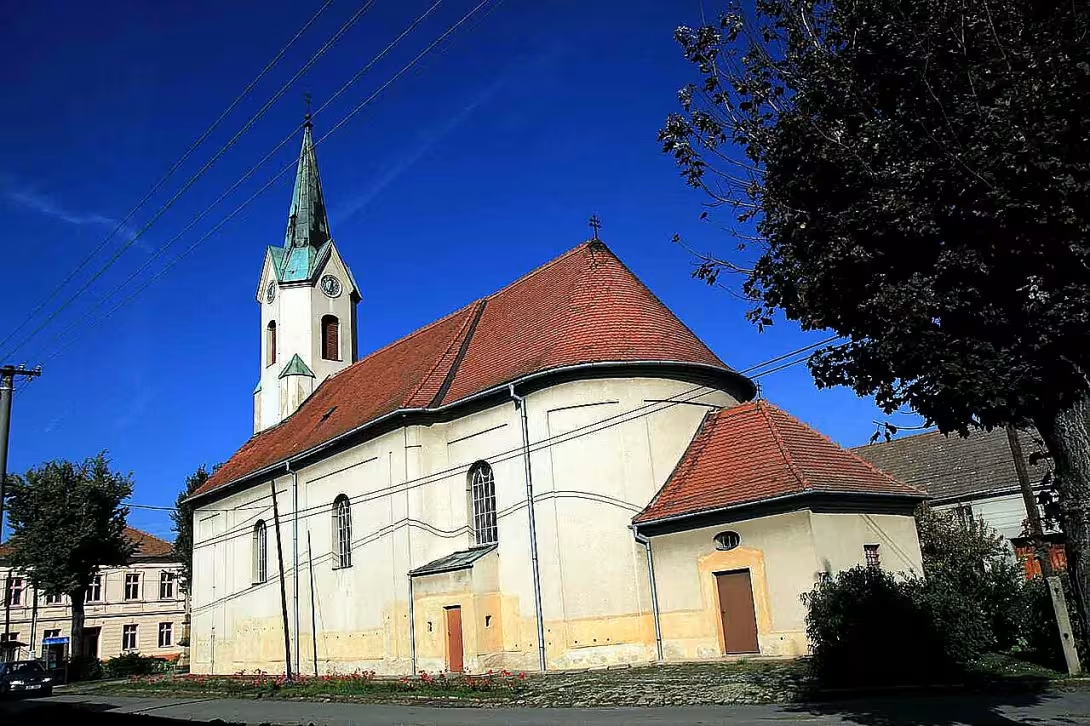
The church of St. Prokop has deeper roots than could be seen from its present appearance. The original part of the village Čehovice stood on a hill called the Guard and its first written mention was received in 1299. During the 30-year war - at the latest around 1634, as indicated in the chapel - the old Čehovice was burned. A part of the population then moved to a new place, approximately 1.5 km northeast to the plain where they had the proximity of the water source at the river Vřívka. Another part stayed and repaired its settlements. So until the end of the 18th century there were two settlements - one on the hill, one in the valley.
Both parts of the village were connected by a single temple. The church of St. Prokop on the hill actually shared. They came here to baptize their children, to make marriages, to bury their dead. In memory of this mutual piety, the inhabitants of both settlements in 1666 and 1667 let two new bells (about 30 and 10 kg each) pass for the church. The bells were not sanctified until September 1698 by the Bishop of Olomouc in Prostějov.
During the 18th century, when the population of the original settlement was shrinking, the new Čehovice became dominant. It was decided to build a modern church in a new settlement. The old church on the hill was demolished in 1784, but the applicable masonry and parts were transferred to the new building - including the medieval bells. At the site of the original temple, the past reminded future generations of a new object: the chapel of St. Prokop from 1804.
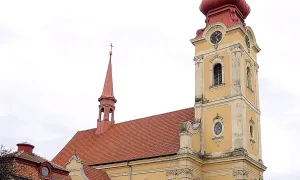
The new church grew up as a simple sacrament of Baroque architecture, built by the cargo of Count Franz Joseph Jan from Khünburg, the then owner of the townhouse. The construction was completed in 1789. As his appearance shows to this day, he had a tower and a simple floor plan, a certain time was decorated with a sandus tower above the ship (built in 1865), which was removed in repairs 1946-1947.
The history of the medieval parish dates back to 1423, later disappeared in 1639 and the church was subject to the parish in Klenovice. The Czech parish was restored as a curacia in 1784, it became a separate parish only in 1870.
They tried the construction of time and elements. The Great Fire in May 1820 destroyed a part of the village, including both transmitted bells. Maintenance fell over the years. In particular, only the necessary maintenance took place during the communist decades and the situation gradually deteriorated.
It was only later that repairs took place. In 2009, the church was soundproofed, the lighting and organ were repaired. But a really big maintenance came in 2013: the old plaster from the first republic was removed, the church and the tower were newly plastered, moisture was professionally addressed, the roof was repaired. Today he stands between the parish, the school and the municipal office as a storyteller of long ages.
Then and now
Drag the slider to compare how the landmark may have looked when it was built with the view today.
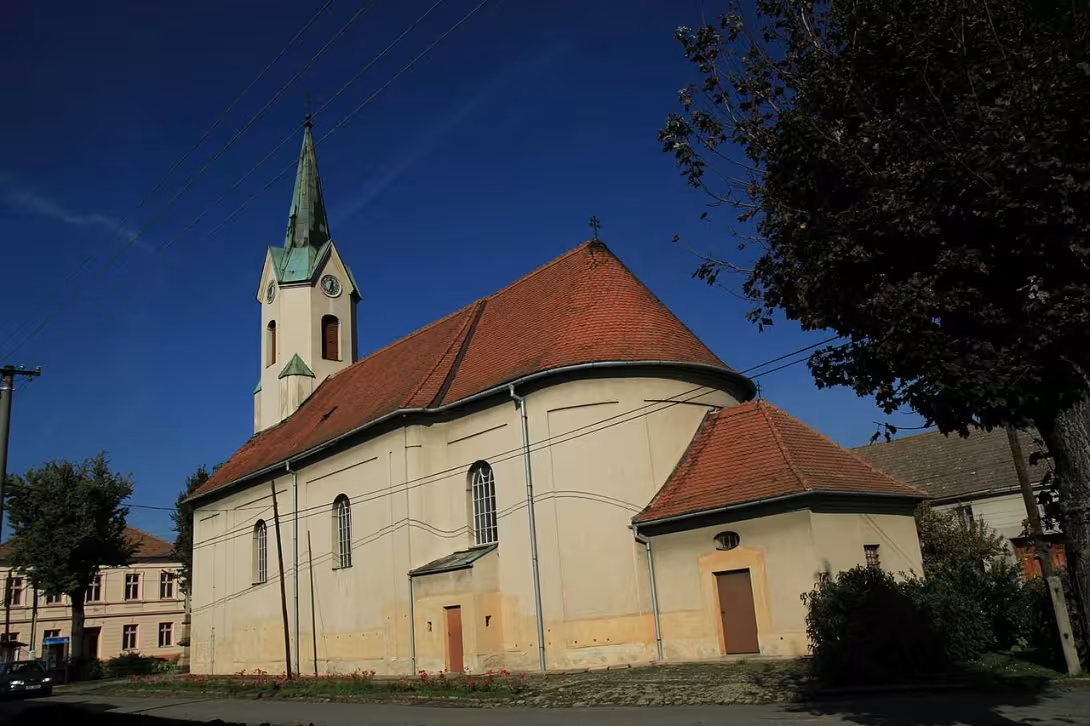

The historical appearance on the left is an AI-generated visualisation and serves as inspiration only.
Historical milestones
- 1299
- First written mention of the village Čehovice (formerly Čehovice)
- 1634
- Likely burning down the original village Čehovice during the 30-year war
- 1666-1667
- The cast of two bells for the original church of St. Prokop, which were sanctified in 1698
- 1788-1789
- Status of the present Baroque Church of St. Prokop
- 1958
- The church was declared a cultural monument
Architectural development
The original church from the 17th century was baroque, but it was demolished in 1784. The new church was built in 1788-1789 from parts of the original masonry and mobiliary. In 1865, the tower was raised and the Sanktus Tower was added and later removed (after World War II). In 2013, extensive repairs were carried out, including removal of damaged plaster and removal of moisture.
Historical events
1634 - likely to burn down the original village of Čehovic during the 30-year war; 1666-1667 - cast two bells for the original church; 1784 - the establishment of a new cemetery and the demolition of the original church; 1804 - construction of the chapel of St. Prokop at the site of the original church.
Owners
Franz Joseph Jan, Count of Khhnburg (18th century)
Points of interest
- The church of St. Prokop in Čehovice originally served both parts of the village - an old settlement on the hill Stráž as well as a new settlement in the valley, which was created after a 30-year war.
- In the years 1666 and 1667, the inhabitants of the two settlements for the church had two new bells lit up by the Bishop of Olomouc in Prostějov in 1698.
- The old church on the hill was demolished in 1784, but its usable parts, including medieval bells, were transferred to a new church in the valley.
- The new church was built in 1789 as a simple Baroque building, originally with a tower and a sanctus tower, which was removed after war damage in 1946-1947.
- The church was damaged several times in the past, for example by a large fire in May 1820, which destroyed both the transmitted bells.
Guide
This guide is narrated by a synthetic voice generated by artificial intelligence.
Show guide text
This text was created by artificial intelligence and has not been editorially reviewed. It may contain inaccuracies.
The Church of Saint Prokopius is a single-nave Baroque building in the middle of the village of Čehovice in the Prostějov district. Adjoining it are a rectory, a school, and a municipal office. It was built in the years 1788 to 1789 at the expense of Count František Josef Jan of Khünburg, the then owner of the Tovačov estate. It has been a cultural monument since 1958.
But its story begins elsewhere. The original Čehovice, first mentioned in writing in 1299, stood on a hill called Stráž. It was probably burned down during the Thirty Years' War. This is indicated by the date 1634 on a chapel there. Part of the inhabitants then settled about a kilometer and a half to the northeast, in the plain by the Vřesůvka stream, mainly because of the proximity to water. The rest repaired their homesteads on the hill and stayed. Until the end of the eighteenth century, two Čehovices thus existed side by side – the old one on the hill and the new one in the valley.
The inhabitants of both settlements together repaired the old Church of Saint Prokopius on the hill and went there for services. They baptized their children there, held weddings, and buried their dead in the cemetery around the church. They also together acquired two new bells, cast in 1666 and 1667. They weighed approximately thirty and ten kilograms. They were consecrated by the Bishop of Olomouc on September tenth, 1698 in Prostějov.
The old Čehovice gradually declined, the new one grew, and so they began to consider building a church in the new village. In 1784 a new cemetery was created, and that same year the old church was demolished. The usable stonework, part of the furnishings, and both bells were transferred to the new building. In 1804, a chapel of Saint Prokopius was built on the site of the original church.
The parish in Čehovice is documented as early as the fifteenth century, but it ceased to exist in 1639. It was gradually restored, in 1784 as a curacy and in 1870 as an independent parish. During a major fire in the village on May fifteenth, 1820, both old bells were destroyed. In 1865 the tower was heightened and a sanctus tower was added above the nave. It was destroyed during repairs to the church, which was heavily damaged during the Second World War. During the totalitarian regime, only essential maintenance was carried out and the building deteriorated.
In 2009 the church received a sound system, new interior lighting, and restored organs. A major renovation came in 2013. The peeling birch-concrete plaster from the time of the First Republic was removed, the church and tower received new plaster, the masonry was professionally dried, and the saddle roof was repaired.
Frequently asked questions
Is kostel svatého Prokopa (Čehovice) open to the public?
Yes, the church is open to the public. The opening hours are from 9:00 to 16:00.
How do I get to the place by car / public transport?
The church of St. Prokopa is located in the heart of the village Čehovice. By car you can arrive directly in front of the church, public transport is available in nearby Prostějov.
How much is the entrance fee and is it paid on the spot?
Payment is made directly at the entrance.
Is the tour suitable for children and seniors?
Yes, a tour of the church of St. Prokop is also suitable for families with children and seniors. The church has a ramp for people with disabilities.
How long does the tour take?
The tour of St. Prokop's Church takes approximately 30 minutes.
What are the opening times and booking is required?
The church of St. Prokop is open to the public from 9:00 to 16:00. Reservation is not necessary, but it is recommended for groups over 10 people.
What's interesting in the immediate vicinity?
In the immediate vicinity of the church of St. Prokop there is a rectory, school and municipal office. The historical centre of the city of Prostějov can also be visited near the village Čehovice.
For kids
Imagine going back to the past when Čehovice became part of the Kingdom of Moravia. The church of St. Prokop was not yet built, but life in the village was full of life and energy.
At the time there were mostly peasants and merchants. They were people who took care of crops, pastures and other villages. The village was small, but life was full of festivals, holy days and disasters.
Businesses nearby
Do you run a restaurant, accommodation, shop, museum, rental, wellness or other visitor service near this monument? Show yourself directly to the people heading to it — this is how they will see you in the app and on the web:
Nearby
Around the church there is a chapel of St. Prokop (on the site of the original settlement), rectory, municipal office and school. Near the village there is a natural landscape with a stream of Vřívka and forests. There are other historical villages such as Tovachev and Klenovice on Hana within a 5 km radius.
Accommodation nearby
Trips and activities nearby
Guided tours, tickets and activities nearby from GetYourGuide
Affiliate link: if you buy from the partner, we may receive a commission. The price for you does not change.
Search tours and activities →Themed route
Thematic cruise route: The road to the Holy Prokop and the Hanac rural atmosphere
1. Church of St. Prokop in Čehovice * Type: * pilgrimage church from the 17th century with Baroque decoration and valuable statues. He is dedicated to St. Prokop, patron saint of Hana, and his interior keeps rare altar paintings and woodwork. The church is surrounded by a chapel of St. Prokop, which resembles the original settlement and strengthens the spiritual importance of the place.
2. St. Prokop Chapel * Type: * A small Baroque chapel on the village, built on the site of an older settlement. It is associated with the legend of the miraculous revelation of the Holy One and offers a quiet place for prayer. Around the chapel lies the historical core of the village with preserved rural architecture.
3. Fara and Municipal Office in Čehovice * Type: * A set of historical buildings from the 18th-19th century, which documents the life of the local community. A farm with classicist elements and a simple municipal office reflect typical Hanac rural administration. You can see how religious and civic life intersects here.
4. The river Sour and the surrounding forests * Type: * Natural landscape with picturesque stream and woodland, ideal for a short walk. The spring is a typical example of Hanaic watercourses and its surroundings offer a peaceful environment for relaxing or observing local flora and fauna.
5. The village of Klenovice on Hané * Type: * Neighborhood village with preserved rural development and historical core. It lies only a few kilometres from Čehovice and is known for its traditional way of life. Walk through its streets shows an authentic Hanaic village without tourism.
Seasonal recommendations
Spring In the spring months, when the surrounding landscape awakens to life, the church of St. Prokop gains on picturesque grounds thanks to flowering trees and green meadows. The sun's rays penetrate through the stained glass and create a light and shadow game on the stone walls that gives the interior a calm, meditative atmosphere. The air is fresh, but still cold, and in the surroundings the singing of birds is heard, making the visit an ideal experience for nature lovers. It is recommended to visit the monument in March or April when the crowds are minimal and the weather is favourable for walking around. It is suitable to dress layered - warm but light to easily adapt to temperature fluctuations. The best time is the afternoon, when the sun shines pleasantly, but it's not too hot yet.
Summer In summer months, when the church is surrounded by hot air and sunlight, the visit offers shade and relief from heat. The interior of the church, protected from direct sun, is an ideal place to relax, while the outdoor area attracts to walk around the surrounding fields and forests. In the main summer season the monument is visited more often, so it is advisable to come early morning or late afternoon to avoid crowds. Light, breathable clothes, hat and sunglasses are recommended as well as plenty of water. The temperatures may be high, which is why it is good to have a light blanket or raincoat for any storms.
Autumn The autumn visit of the church of St. Prokop is magical thanks to the golden garment of the surrounding nature and the peaceful atmosphere created by deciduous trees and snorting leaves. The sun sets earlier, and so the interior of the church becomes warmer and cosy, lit only by natural light, which penetrates through narrow windows. In advent time, the church appears to be a place suitable for meditation and rest, while outside a quiet landscape is spread ready for winter sleep. It is recommended to visit a monument in October or November when the crowds are minimal and the weather is pleasant for walks. Suitable is warm but comfortable clothes, shoes with good grip and possibly umbrella, because autumn weather is usually variable.
Winter The winter visit to the church of St. Prokop offers a unique atmosphere where the snow cover of surrounding fields and forests gives the landscape a fabulous look. The sunlight, reflected from the white snow, creates fine, silvery glare in the interior of the church, while there is peace and quiet outside. In winter, the monument is open only for a limited time, so it is good to check the opening hours in advance. It is recommended to warm but comfortable clothes that protect against frost and snow as well as solid shoes. The best time to visit is the afternoon when the light is pleasant and there are fewer people out there. The winter atmosphere of the church and its surroundings is ideal for those seeking peace and inspiration.
Visualizations and artistic views


The visualisations are generated by artificial intelligence and serve as inspiration.
Atmosphere of the place
This atmospheric visualisation of the place and period was generated by artificial intelligence. It is not real footage of the location.
Tips from visitors
No tips yet. Be the first!
Log in and add your tip.
Sources and literature
Photos: DavidFajfr / CC BY-SA 3.0 — Wikimedia Commons. The author and licence also appear when you hover over the image.
Faktickým podkladem tohoto textu byl článek na Wikipedii, jehož autory jsou přispěvatelé Wikipedie. Článek je dostupný pod licencí CC BY-SA 4.0.
Location on the map
Příběhy a pověsti
Legendy, pověsti a příběhy spjaté s touto památkou

Fotografie návštěvníků
Zatím žádné fotografie. Buďte první, kdo přidá fotografii z návštěvy!
Log in a přidejte svou fotografii nebo hodnoťte.
Za ověřenou návštěvu v aplikaci získáte víc bodů — poznáme podle GPS, že jste na místě.
Reviews and comments