






Kostel svatého Valentina (Bravantice) Church
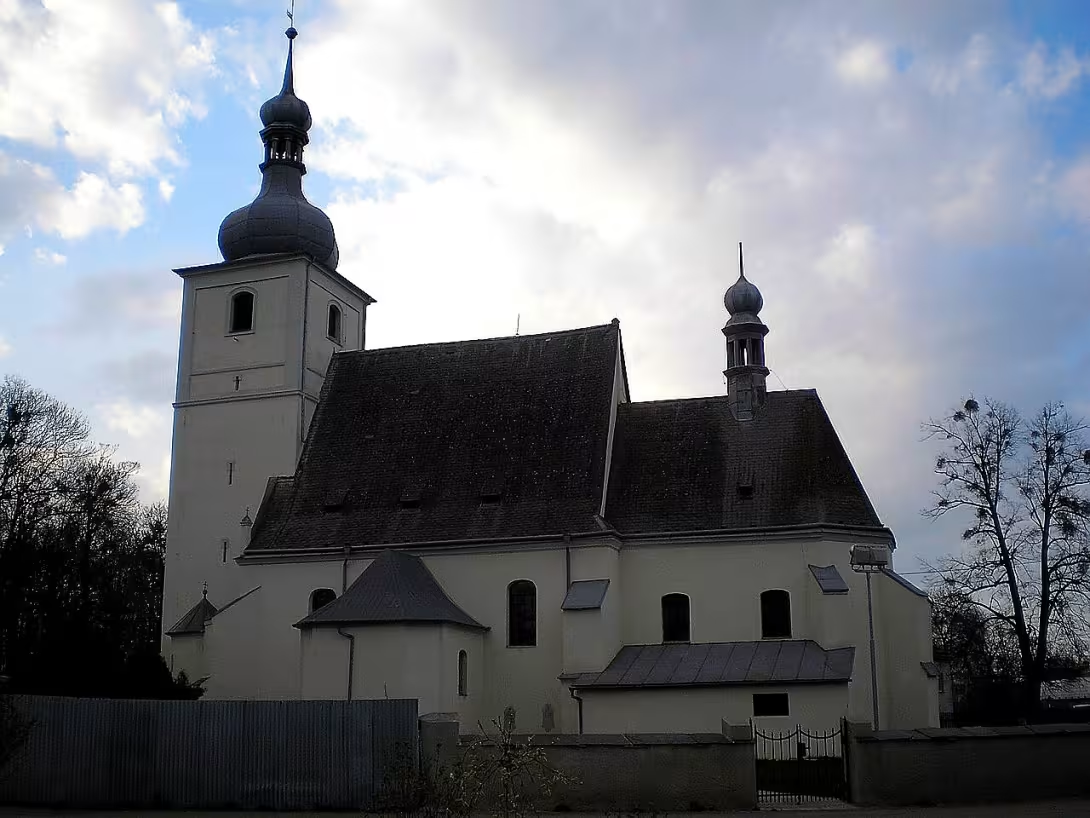
The Church of Saint Valentine in Bravantice is a significant cultural monument located at the heart of this village within the Moravskoslezský kraj region. It belongs to the Roman Catholic Church and serves as the parish church for the Bravantice parish under the Bílovec deanery, part of the Ostrava-Opava diocese. This baroque-style church is notable not only for its architectural features but also for its historical significance, being one of the oldest churches in the region with records dating back to at least 1440.
The origins of the Church of Saint Valentine trace back to a first documented mention in 1343 when Heinrich Rohr, then owner of the Bravantice estate, funded a cross for the altar. However, this claim remains unverified. The church's earliest confirmed record dates to June 15, 1440, when the Bravantice parish priest became a clergyman at Bílovec Church. Around 1600, the local population converted to Protestantism but reverted to Catholicism following the Thirty Years' War. This historical context reflects broader religious and political shifts in Bohemia during these centuries.
Architecturally, the church underwent significant transformations over time. Initially mentioned in 1343, it was reconstructed around 1672 when it was rededicated to the Assumption of the Virgin Mary. The structure features a single-nave design with a polygonal chancel and an octagonal tower added later on. In 1779, Václav Thalher from Fulnek undertook the reconstruction of the nave's vault. Further enhancements included ceiling paintings by Anton Blosch in 1797 and steeple renovations in 1854. The church also boasts a bell tower rebuilt in the late 18th century on a Gothic foundation.
Throughout its history, the Church of Saint Valentine has seen various administrative changes. It is currently under the Roman Catholic Church's ownership, serving as the parish church for Bravantice since 2005 when it was administratively linked to Olbramice. The church and its surrounding area are rich in cultural heritage, featuring additional monuments such as a statue of the Virgin Mary of Sorrows, the Mount of Olives sculpture, and Bravantice Castle.
Key events in the church's history include restoration work following flooding in 1998, which uncovered a gravestone belonging to Johanka Bravantská z Chobřan who died in 1542. In 2008, funding was provided for the restoration of the Mount of Olives sculpture. These restorations and discoveries highlight the church's enduring cultural significance.
Today, the Church of Saint Valentine stands as a testament to its rich history and architectural evolution. It is surrounded by other cultural monuments, enclosed within a brick wall with boulder slabs, adding to its historical ambiance. Visitors can appreciate not only the church itself but also the surrounding sculptures and castle, making it a worthwhile destination for those interested in exploring Moravian heritage.
The Church of Saint Valentine offers a unique glimpse into the religious and architectural history of Bravantice. Its blend of baroque elements with earlier influences makes it an intriguing site for visitors. Whether drawn to its historical significance or architectural beauty, this church is certainly worth a visit.
Then and now
Drag the slider to compare how the landmark may have looked when it was built with the view today.
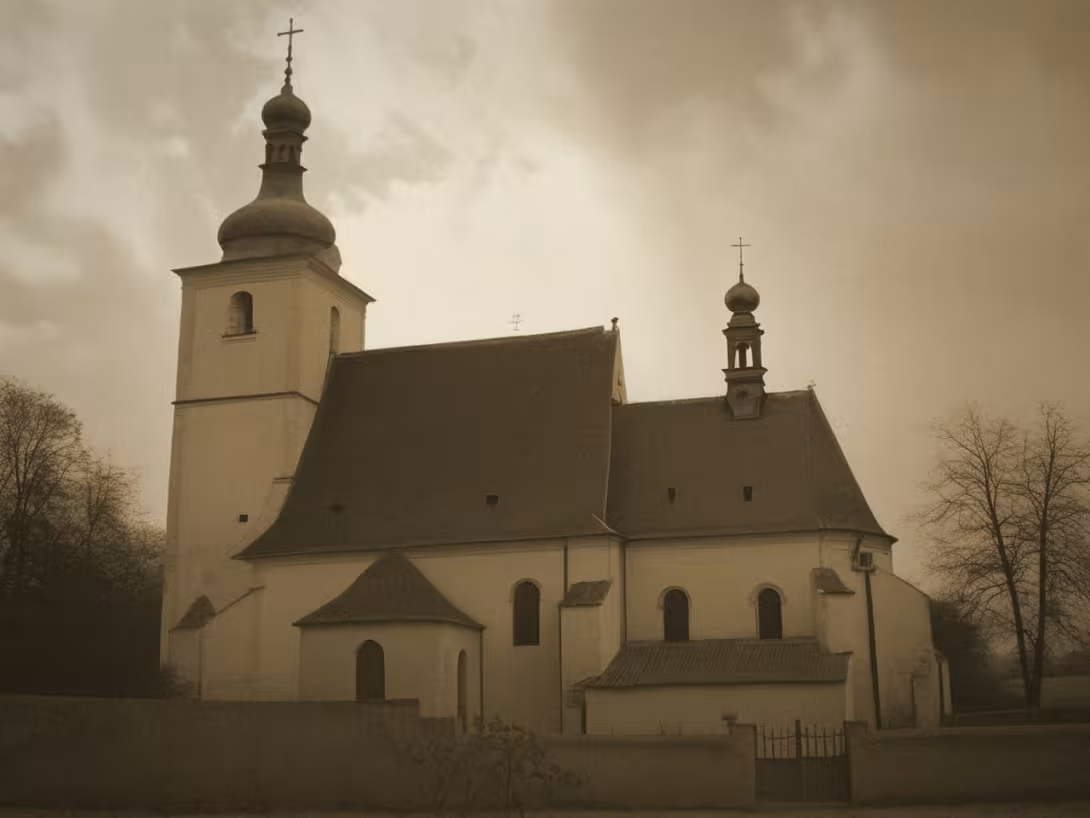
The historical appearance on the left is an AI-generated visualisation and serves as inspiration only.
Historical milestones
- 1440
- The first written record of the church when the Bravantice parish priest became a clergyman at Bílovec Church.
- 1672
- Reconstruction and rededication to the Assumption of the Virgin Mary.
- 1779
- Vault reconstruction by Václav Thalher from Fulnek.
- 1998
- Restoration work following flooding uncovered a gravestone.
Architectural development
The Church of Saint Valentine underwent significant architectural changes over the centuries. Initially mentioned in 1343, it was rebuilt around 1672 and rededicated to the Assumption of the Virgin Mary. The church features a single-nave structure with a polygonal chancel and an octagonal tower added later. In 1779, the nave's vault was reconstructed by Václav Thalher from Fulnek. Further enhancements included a new ceiling painting in 1797 by Anton Blosch and steeple renovations in 1854.
Historical events
First documented mention of a cross funded by Heinrich Rohr for the altar in 1343.
In 1440, the church's first written record was made when the Bravantice parish priest became a clergyman at Bílovec Church.
Around 1600, the inhabitants converted to Protestantism but returned to Catholicism after the Thirty Years' War.
In 1998, restoration work following flooding uncovered a gravestone of Johanka Bravantská z Chobřan who died in 1542.
Points of interest
- The Church of Saint Valentine was initially mentioned as a site for an altar cross funded by Heinrich Rohr in 1343, though this claim is unverified and the earliest confirmed record dates to 1440.
- During the early 1600s, the local population converted to Protestantism but reverted to Catholicism after the Thirty Years' War, reflecting broader religious shifts in Bohemia during that period.
- In 1998, restoration work following flooding led to the discovery of a gravestone belonging to Johanka Bravantská z Chobřan, who died in 1542, shedding light on historical figures associated with the church.
- The church's architectural evolution includes significant transformations like the reconstruction around 1672 and the addition of an octagonal tower; it also features ceiling paintings by Anton Blosch from 1797.
- In 2008, funding was secured for the restoration of the Mount of Olives sculpture, highlighting ongoing efforts to preserve the cultural heritage surrounding the church.
Guide
This guide is narrated by a synthetic voice generated by artificial intelligence.
Show guide text
This text was created by artificial intelligence and has not been editorially reviewed. It may contain inaccuracies.
Welcome to the Church of Saint Valentine in Bravantice, a remarkable cultural monument nestled at the heart of this charming village. As you stand here, take a moment to absorb the serene ambiance that envelops this historic site, where centuries-old stories whisper through its walls.
The origins of this church trace back to 1440 when it was first documented as part of the Bravantice parish. Initially mentioned in connection with an altar cross funded by Heinrich Rohr in 1343, though unverified, the earliest confirmed record places us here in the mid-15th century. Over time, the church has witnessed significant transformations, including a major reconstruction around 1672 when it was rededicated to the Assumption of the Virgin Mary.
As you gaze upon its structure, notice how the architecture reflects baroque influences, particularly evident after its reconstruction. The vaults were reconstructed in 1779 by Václav Thalher from Fulnek, adding a layer of historical depth and architectural intrigue. While specific architects remain unknown, their work has left an indelible mark on this sacred space.
Throughout the early 1600s, Bravantice experienced religious shifts as the local population converted to Protestantism before returning to Catholicism, illustrating the dynamic spiritual history that surrounds this church. These historical nuances add layers of complexity and richness to its story.
An intriguing aspect of this site is a gravestone uncovered during restoration work following flooding in 1998. This discovery adds an element of mystery, inviting you to ponder the lives and stories of those who once walked these grounds.
As you continue your exploration, let yourself be drawn into the church's atmosphere, where history and spirituality converge. We invite you to delve deeper, discovering more about its past and present significance within the Bravantice community. Thank you for joining us on this journey through time at the Church of Saint Valentine.
Businesses nearby
Do you run a restaurant, accommodation, shop, museum, rental, wellness or other visitor service near this monument? Show yourself directly to the people heading to it — this is how they will see you in the app and on the web:
Nearby
Surrounding the church are other cultural monuments including a statue of the Virgin Mary of Sorrows, the Mount of Olives sculpture, and Bravantice Castle. The area is enclosed by a brick wall with boulder slabs.
Accommodation nearby
Themed route
Tematická výletní trasa: Kostel svatého Valentina a kulturní památky Bravantice
1. Kostel svatého Valentina (Bravantice) *Typ:* Historický kostel *Proč stojí za návštěvu:* Kostel svatého Valentina je architektonickou perli Bravantic, která přitahuje návštěvníky svou historií a krásnou gotickou stavbou. Je to ideální místo pro ty, kdo mají zájem o duchovní architekturu a historii regionu.
2. Socha Panny Marie Zarmoucené *Typ:* Kulturní památka *Proč stojí za návštěvu:* Umístěná v blízkosti kostela, tato socha představuje klíčový duchovní symbol pro místní obyvatelstvo. Je to krásné místo k zamyšlení a nabízí pohled na historické umělecké tradice regionu.
3. Socha Golgota (Mount of Olives) *Typ:* Historická socha *Proč stojí za návštěvu:* Tato socha představuje důležitou součást kulturního a historického prostředí Bravantic. Je to významné umělecké dílo, které nabízí pohled na biblická témata zpracovaná místními řemeslníky.
4. Zámek Bravantice *Typ:* Historický zámek *Proč stojí za návštěvu:* Zámek je významnou historickou památkou, která nabízí pohled na životní styl a architekturu minulých dob. Je to ideální místo pro ty, kdo mají zájem o historii regionu a jeho aristokratické tradice.
5. Ohradní zeď s balvanskými deskami *Typ:* Historická stavba *Proč stojí za návštěvu:* Tato ohrada obklopující památkové areál představuje architektonickou zajímavost a nabízí pohled na historický způsob ochrany klíčových míst. Je to krásné místo pro chvíli relaxace v malebném prostředí.
Tato trasa poskytuje komplexní pohled na kulturní a historické památky Bravantic, nabízejíc návštěvníkům hluboký vhled do bohaté minulosti regionu.
Seasonal recommendations
Jaro: In the spring season, St. Valentine's Church in Bravantice can boast of beautiful blooming flowers, with surrounding green meadows and trees offering vibrant nature. Sunny days provide gentle illumination that highlights the church’s architectural details and creates a mild and tranquil atmosphere. It is advisable to visit the monument on weekday mornings or afternoons when there are fewer visitors, allowing for a more relaxed tour. We recommend wearing comfortable shoes and light clothing with an option to add layers, as temperatures can be variable.
Léto: During summer, St. Valentine's Church is surrounded by lush greenery and blooming surroundings, creating the perfect environment for relaxation. The sun illuminates the church more intensely, highlighting its historical roof details and colorful frescoes. Summer is the peak tourist season, so it’s best to visit the monument early in the morning or later in the evening to avoid peak hours and larger crowds. Wearing light clothing, a hat, and protective sunglasses is key for comfort during your visit.
Podzim: In the autumn months, St. Valentine's Church offers a unique atmosphere as tree leaves in the surrounding area turn into golden and red hues. Sunny days bring warm and clear light that highlights the church structure with a new perspective. Visiting the monument at this time of year means you can expect slightly fewer visitors than during summer, allowing for more peaceful tours. We recommend wearing warmer clothing and an option to add layers, as autumn can be chilly.
Zima: During the winter months, St. Valentine's Church offers a calm and quiet atmosphere. Fewer visitors and snow covering the surrounding landscape create an idyllic setting ideal for relaxation and reflective tours. Sunny days illuminate the church with gentle light while shadows add a mystical quality. Since opening hours are shorter and visitor numbers lower, it’s best to visit the monument early in the day. Wearing warm clothing, including leather boots or a hat, is essential for comfort during your winter visit.
Visualizations and artistic views


The visualisations are generated by artificial intelligence and serve as inspiration.
Photos from the area
Real photos taken near the monument


Zdroj a licence jsou uvedeny u každého snímku.
Atmosphere of the place
This atmospheric visualisation of the place and period was generated by artificial intelligence. It is not real footage of the location.
Tips from visitors
No tips yet. Be the first!
Log in and add your tip.
Sources and literature
Fotografie: Enogih-leviatan at Czech Wikipedia / Public domain — Wikimedia Commons. The author and licence also appear when you hover over the image.
Faktickým podkladem tohoto textu byl článek na Wikipedii, jehož autory jsou přispěvatelé Wikipedie. Článek je dostupný pod licencí CC BY-SA 4.0.
Location on the map

Příběhy a pověsti
Legendy, pověsti a příběhy spjaté s touto památkou

Fotografie návštěvníků
Zatím žádné fotografie. Buďte první, kdo přidá fotografii z návštěvy!
Přihlaste se a přidejte svou fotografii nebo hodnoťte.
Za ověřenou návštěvu v aplikaci získáte víc bodů — poznáme podle GPS, že jste na místě.
Reviews and comments