






Kostel Všech svatých v Litoměřicích Church
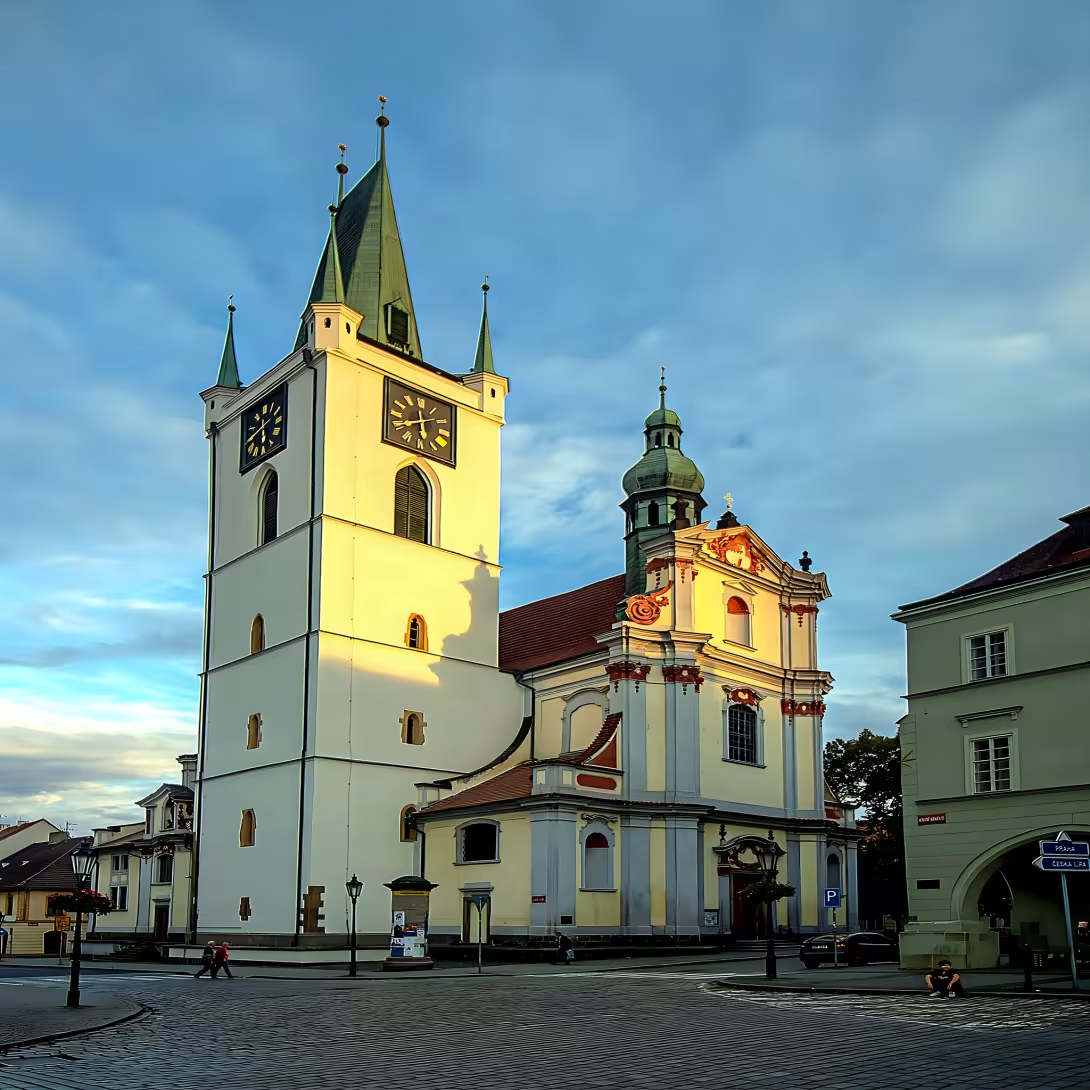
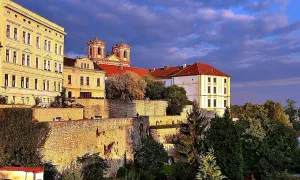
The Church of All Saints stands on the corners of Long and Jesuit Street in the southeast corner of the Peace Square, right opposite the Old Town Hall. It is due to the fact that he became one of the most famous objects of Litomeric, first of all, the white color of the facade, which earned him the nickname "white church." The tower is 54 metres high with a gallery and a tower clock. In the interior, the visitor notices the painting of Christ on Mount Olivetsky from the Litomeric Master from the beginning of the 16th century; The statue of the Virgin Mary with Jesus on the south side of the building will then attract attention from the outside. The church is protected as a cultural monument.
The construction has a long and complex development. In the place of today's baroque church there was originally a very old Romanesque temple from the first half of the 12th century - the oldest preserved wall in the whole city is located here. He went through many reconstructions over time. The first written mention dates back to 1235, when the church was part of the early medieval town fortification and had an adjacent cemetery that worked there until 1790. Around 1350, the church author Konrád Waldhauser started preaching here.
In the 15th and 16th centuries, the construction was changed according to the styles at the time. In 1480 the temple went through a Gothic reconstruction. A year later, in 1501, he initiated the builder's rebuilding of the tower, which lasted throughout the 16th century - in 1554, the tower clock appeared on it, thirty years later, in 1584, there was a gallery with turrets. The shorter ship had three tent roofs from 1570, the shape of which resembled the chalice - a reflection of the calvary religion of the then population. The ship was extended west in 1612. There is still a "virgin tower" with the year 1616 on the ridge of the roof behind today's front.
The Baroque reconstruction was initiated by Giulio Broggio, which between 1697 (some sources show 1676) to 1703 added the dome chapel of St. Roch and St. John Nepomuk along the sides of the building and the chapel of St. Barbara. His son Octavio Broggio continued in 1717-1724, when he added a side boat and another chapel, while doing a full baroque of the entire building and involving an older medieval tower. Both Broggis were then buried under the presbytery of the church. The stucco works were performed by Franz and Matheus Dollinger, stonework Andreas Kraus, Pilaster warheads made by Petr Bianco and vases with flames Josef Fischer. Bigger repairs took place in 1740- 1746, then externally especially in 1888 and 1925, inside 1897- 1898 and 1935. At the beginning of the 21st century, there was another restoration under the leadership of Dean Karl Havelka.
The present church represents a Baroque building of the longitudinal, basilical type with polygonal presbytery in the Gothic core, which surrounds lower sacristy extensions, side boat and chapel. The three-part facade is highlighted by two continuous vertical pillars with decorative rims. The main portal in the editorial frames the vases and corrugated roms, above which the axis window is turned off. The presbytery in the core of origin from around 1280 document the walled windows preserved under the roof of the northern side chapel. In the interior, the main ship has cross vaults with richly stacked ribs and thick profiled ledge with angel plastic. The high pilasters with Corinthian warheads from Peter Bianka separate the arcades leading to the lateral chapels.
The monument remains an important church of Litoměřice and a witness to its building and art history from the Middle Ages to the modern times.
Then and now
Drag the slider to compare how the landmark may have looked when it was built with the view today.
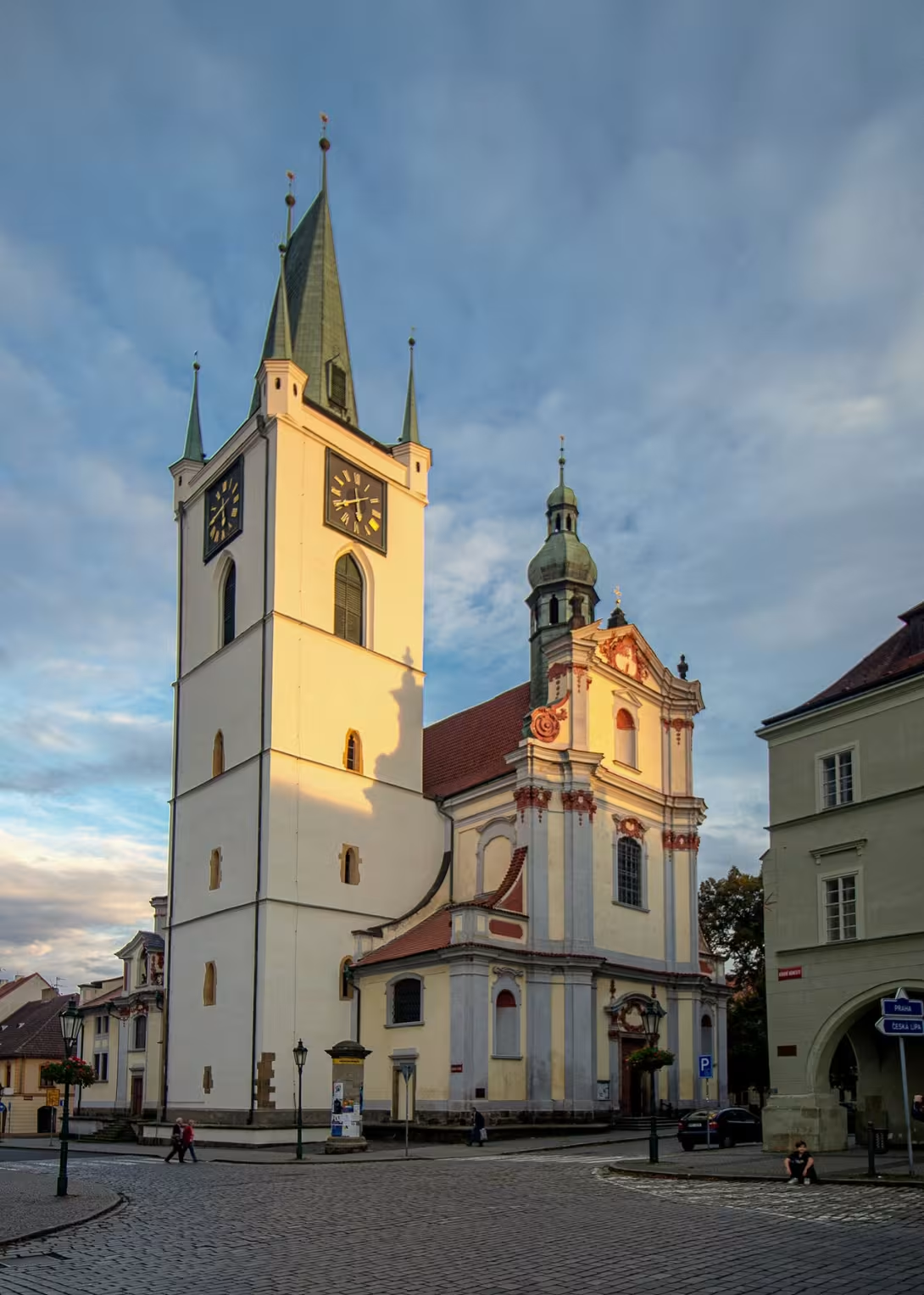

The historical appearance on the left is an AI-generated visualisation and serves as inspiration only.
Historical milestones
- 1150
- The beginning of the construction of the Romanesque church, preserved masonry in presbytery.
- 1235
- First written mention of the church, part of the city fortification.
- 1480
- Gothic church reconstruction.
- 1501
- The beginning of the church tower reconstruction.
- 1554
- Finish the tower clock.
- 1570
- Shipshape change, captured by three tent roofs.
- 1612
- The passage of the c
Architectural development
The church was created as a Romanesque building in the first half of the 12th century, later underwent Gothic reconstruction (1480) and gradual modifications of the tower in the 16th century. In 1697- 1703 and 1717- 1724 it was rebuilt baroque, while the original Gothic tower was preserved. The interior is decorated with stuccaturas and rich decoration, including cross vaults and Pilastres with Corinthian warheads. The exterior features a white facade, baroque facade and Gothic elements of the tower.
Historical events
- 1235
- The first written mention of the church, which was part of the city fortification and had an adjacent cemetery.
- 1480
- Gothic church reconstruction.
- 1697-1703
- Baroque reconstruction under the guidance of architect Giulio Broggio, including the addition of the central dome chapel of St. Roch and St. John Nepomuk.
- 171717-1724
- The completion of the Baroque reconstruction by Octavius Broggie, who connected the medieval tower to the church.
Points of interest
- The Church of All Saints is known for its white façade, which gave him the nickname "White Church.".
- Church tower, 54 meters tall, is a dominant city and is equipped with a gallery and a clock tower.
- In the interior there is a painting * Christ on Mount Olivet * from the local master from the beginning of the 16th century.
- There's a statue of the Virgin Mary and Jesus on the south side of the church.
- The oldest preserved masonry in the church comes from a Romanesque temple from the first half of the 12th century.
Guide
This guide is narrated by a synthetic voice generated by artificial intelligence.
Show guide text
This text was created by artificial intelligence and has not been editorially reviewed. It may contain inaccuracies.
Welcome to one of the most significant monuments of Litomeric - the Church of All Saints! You are standing in front of an impressive construction, whose white facade rises above the city as a symbol of its history. This church, also known as the "White Church," is a unique witness of many centuries - from Romanesque roots to Baroque glory. Look around you: you have a facade that immediately captures you with its purity and monumentality. Now raise your head - a massive tower rises above the roof, nearly fifty-four meters high, which dominates the entire area. Its Gothic elements and clock towers, which have been reporting time since the beginning of the sixteenth century, have supplied this place with something magical.
Let's go back to the past. The first mention of the church dates back to 1235 when it was part of the city fortification. But its roots go even deeper - in the middle of the twelfth century, when there was a Romanesque church. The preserved wall in the presbytery still reminds us of the original structure. Later, in the fifteenth century, the church passed through a Gothic reconstruction that gave it its present form. And when your eyes stay on the tower, know that its construction started in 1501 - and even the clock you see on the top is over four centuries old!
Now pay attention to what surrounds you. The facade of the church you are so interested in is white - and that is the source of his favorite nickname. But beware, it is not a random choice: this color was meant to symbolize purity and sacrament. Also look at the details on the facade - although some statues and architectural elements have lost their original expression over time, their silhouette still radiates dignity. And if you look at the side entrances, you'll see that the church's ship has an interesting shape - three tent roofs, which were built in the 16th century, add unique features to the construction.
Church All the saints witnessed many lives and destinies. One of the most important figures associated with this place was Konrád Waldhauser, a major reformer and preacher who worked here in the first half of the sixteenth century. His sermon attracted hundreds of people, and although his life ended tragically, his influence on the city remained inherent. And when you go in - if you decide to explore the interior - you'll see more traces of the past. For example, the painting * Christ on Mount Olivet *, which has been hanging here since the beginning of the sixteenth century, is the work of a local master and is one of the most valuable treasures of the church.
But you do know that this church also holds one interesting secret? According to legend, people have been hiding here in the past from the enemy or from adverse events. The mighty walls and the high tower provided safety, so the church became not only a place of prayer, but also a refuge. And if you look at the clock that keeps ticking, try to imagine what sound they made at a time when the city wasn't as calm as it is today.
In front of you lies not only a monument, but a story that is constantly developing. Whether you decide to explore its interior, climb the panoramic view tower or just sit on the bench and feel the atmosphere, know that every step here is the way of time. Kostel Všech svatých v Litoměřicích is not just a rock and plaster - it is a place where the past and the present meet.
Thank you for taking the time to meet him. May its beauty and history inspire you - and perhaps bring you back. Goodbye!
Tips for visitors
{'paragraph': 'The best time to visit the Church of All Saints is in the summer months, especially in June or September. At these times the weather is pleasant and the church is lit with natural light, which creates ideal conditions for the tour of the interior. In addition, concerts or cultural events are often held in these months, which can enrich the visit. If you prefer peace, avoid weekends and holidays when the church is often crowded.'}
{'paragraph': 'Parking near the church is possible in several places. It is recommended to use the parking lot near the Peace Square, which is only a few minutes' walk away. The location is available by car and by public transport; Check the current connection in the search engine. If you arrive by car, take care of the local road signs, as there are often restrictions on vehicles in the city centre. '}
{'paragraph': 'When visiting the church, wear comfortable clothes and shoes, as the tour of the interior and surrounding area includes a corridor by stairs and walk around the surrounding area. In the winter months it is advisable to dress warmer because the church is not always heated enough. You will also bring a small notebook or camera if you want to record details of architecture and decoration.'}
{'paragraph': 'Photography in the church is permitted, but care must be taken to respect other visitors and do not touch historical elements. The best places for photography are the interior with rich Baroque decoration and tower gallery, where there is a great view of the city. The ideal time for quality images is morning or afternoon, when light falls favourably and creates fewer shadows.'}
{'paragraph': 'Several other interesting places are worth visiting around the church. The Old Town Hall on the Peace Square, located opposite the church, offers an opportunity to know the historical center of the city. Litomeric chateau, about 1.5 kilometers north-east, is another great destination for history lovers. For those who like ecclesiastical architecture, it is advisable to visit the Church of St. Stephen, which is located about 0.8 kilometers west.'}
{'paragraph': 'For families with children, a visit to the Church of All Saints is interesting thanks to its rich history and the possibility to know medieval architecture. Children can see the tower gallery and find out what Litoměřice looked like in the past. In the vicinity of the church you can also visit Litoměřický chateau where children can participate in interactive programs or walks with guides. It is also recommended to visit the City Museum in Litomerice, which is only a short walk away from the church and offers interactive exhibitions for children.'}
Frequently asked questions
Is Kostel Všech svatých v Litoměřicích open to the public?
Yes, the church is open all year round and open to the public. The best time to visit is from 9: 00 to 5: 00.
How do I get to the place by car / public transport?
By car you can arrive in the centre of Litoměřice, where the church is situated. Parking is available on nearby streets or in garages. Public transport is available line 1 and 2.
How much is the entrance fee and is it paid on the spot?
Admission to the church is free, but contributions are welcome for maintenance of the sights.
Is the tour suitable for children and seniors?
Yes, a church tour is suitable for all age groups. It is possible to order a special tour for families with children.
How long does the tour take?
The church tour takes approximately 30 minutes, but can be extended according to the interest of visitors.
What are the opening times and booking is required?
The church is open Monday to Friday from 9: 00 to 5: 00. Reservation of the tour is not necessary, but it can be ordered in advance for groups over 10 persons.
What's interesting in the immediate vicinity?
In the immediate vicinity of the church there is a Peace Square with city hall and other historical buildings. In the surroundings you can also visit the lithomeric museum or gallery.
For kids
Imagine going back 1025 years to when Litoměřice was a young town with more close contact with its surroundings. All the saints' church stood in the center of the city as if it were his heart. And it is this church that today is a monument that breaks us together.
How did it look here? There were people here who lived for a living in agriculture and trade. The city was surrounded by forests and rivers that supplied water to ponds and navigated wood goods to the city. It was a time when people tried to survive on narrow ground.
Businesses nearby
Do you run a restaurant, accommodation, shop, museum, rental, wellness or other visitor service near this monument? Show yourself directly to the people heading to it — this is how they will see you in the app and on the web:
Events nearby





Zdroj akcí: otevřená data měst a obcí ČR (Národní katalog otevřených dat) a kalendář akcí Národního památkového ústavu.
Nearby
{'memories': [{\ 'nazen': 'Old Town Hall in Litoměřice', 'type': 'Town Hall', 'distance': 'opposite the Church on the Peace Square'}, 'church', 'type': 'chateau': 'distance', 'nature': ('parks'): [{'sites': 'Peace Square', 'description': 'Church', 'distant buildings': 'approximately 0,8 km west'}, 'priroda': [{'sites': 'Peace Square', 'description': 'The church with historical buildings and greens where the church is located'}}}}}}}}}}}}
Accommodation nearby
Trips and activities nearby
Guided tours, tickets and activities nearby from GetYourGuide
Affiliate link: if you buy from the partner, we may receive a commission. The price for you does not change.
Search tours and activities →Themed route
Daily trip route to Litomerice
1. Church of All Saints * * Enter this beautiful Gothic church from the 14th century, which is one of the oldest and most important temples around. Its rich decoration and historical value are a great example of medieval architecture.
2. Old Town Hall on Peace Square * * It's not a simple building, it's a monument with a rich history that symbolizes the city. The local square is a living centre where cultural traditions and modern life meet.
3. Church of St. Stephen * * A larger church with neoclassical appearance is worth visiting for its peaceful atmosphere and picturesque surroundings. It's the perfect place for a short time's rest after a walk.
Conclusion You can go back to the centre of Litomeric and enjoy local coffee or refreshments on Peace Square . The whole route can be completed in 2-3 hours walking.
Seasonal recommendations
Spring Spring in the Church of All Saints offers magical light that penetrates the window windows and illuminates the interior with pastel shades. The exterior garden, where the quiet cemetery part is situated, is awakened to life - the primordial tulips and spring grass bloom, while the old leaves on the edge of the complex are lit with new leaves. The atmosphere is light, as if the church was breathing after winter peace. It is convenient to visit the church early in the morning when it is still cold outside, but the sun begins to heat stone walls. Put on light, but still warm jackets, because the morning winds can be cool, and don't forget the comfortable shoes - the journey along the stone walkways of the cemetery can be slippery on the rains. Avoid the main working days, where schools often come here, and you better visit the church on Friday afternoon when the surroundings are quieter.
Summer In the summer months, the Church of All Saints shines with sunlight, which breaks the windows and creates colored games of light and shadows on the walls. The outer space is a revived greenery, where high grass decays in the cemetery and wild flowers bloom among the tombstones. The atmosphere is lively but also calm - ideal for walking between historical tombstones and old monuments. The best time to visit is early morning, until 9 hours ago, when you avoid crowds of tourists and high temperatures. Dress light but protective clothing - the sun on the stone surfaces strongly reflects, and remember the hat or sunglasses. In the main summer season it is often warm in the church, so bring a light leather or cotton bag so that your hands don't sweat when you touch statues and altars.
Autumn Autumn visit to church All saints are like travelling to another world - window windows turn light into golden and orange shades that illuminate the interior as if surrounded by forest autumn shine. The outer garden is transformed into a sea of yellow and red leaves that rustle on the wind and create a quiet symphony. The atmosphere is mysterious, as if the church reminded that time flies - old tombstones and stone sculptures are surrounded by a colourful background that emphasizes them even more. Visit the church in September when the weather is still pleasant, and avoid October when there are often rains and the wind can be unpleasant. Put on a warm jacket, but easy to keep warm, and waterproof shoes - autumn rains can make it difficult to walk around the cemetery. The best time is in the afternoon, when the sun shines tilted and creates long shadows on the walls of the church that provide a visit to the magical atmosphere.
Winter Winter Church All saints are like fire in the ice world - stained glass breaks light on blue and silver shades that reflect from snow in the cemetery and create incredible contrasting beauty. The outside of the church is surrounded by a white landscape where fine snow dust is settled between the tombstones, while the old trees on the edge of the complex are dressed in an ice coat. The atmosphere is calm and reflexive, as if time stood still - ideal for meditation or walks between historical monuments. Visit the church in December, when the advent light gives the place even more mystery, but avoid the holidays when there are more crowds. Put on a warm but unhardy jacket to keep your body warm, and waterproof shoes - snow and ice can be slippery. The best time is the afternoon when the light is out, but it is not yet as long as the summer, and the church is lit with pleasant twilight light. In advent time you can enjoy peace in the church, which is rare in densely visited places.
Visualizations and artistic views


The visualisations are generated by artificial intelligence and serve as inspiration.
Photos from the area
Real photos taken near the monument

Zdroj a licence jsou uvedeny u každého snímku.
Atmosphere of the place
This atmospheric visualisation of the place and period was generated by artificial intelligence. It is not real footage of the location.
Tips from visitors
No tips yet. Be the first!
Log in and add your tip.
Sources and literature
Fotografie: VitVit / CC BY-SA 4.0, rozlišení zvýšeno umělou inteligencí — Wikimedia Commons. The author and licence also appear when you hover over the image.
Faktickým podkladem tohoto textu byl článek na Wikipedii, jehož autory jsou přispěvatelé Wikipedie. Článek je dostupný pod licencí CC BY-SA 4.0.
Location on the map
More monuments – Litoměřice-Město
Show all in the municipality

Příběhy a pověsti
Legendy, pověsti a příběhy spjaté s touto památkou
Fotografie návštěvníků
Zatím žádné fotografie. Buďte první, kdo přidá fotografii z návštěvy!
Přihlaste se a přidejte svou fotografii nebo hodnoťte.
Za ověřenou návštěvu v aplikaci získáte víc bodů — poznáme podle GPS, že jste na místě.
Reviews and comments