






Koukalův statek – hotel Selský dvůr Homestead
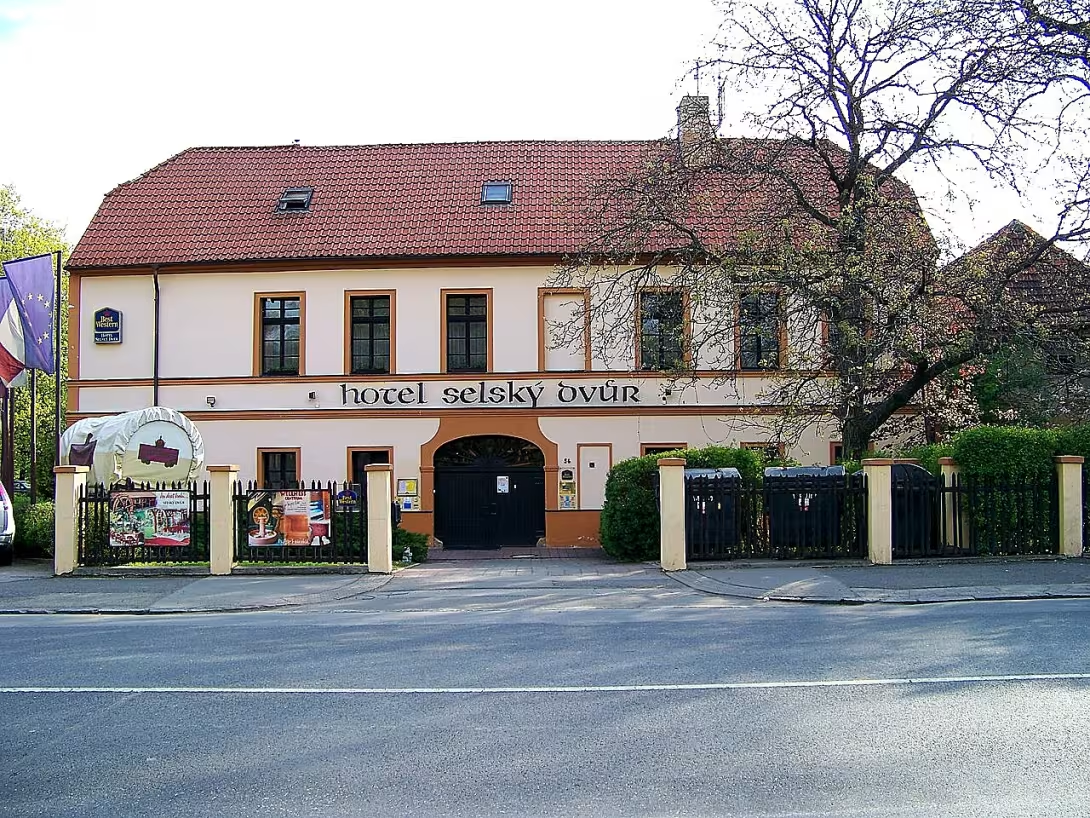
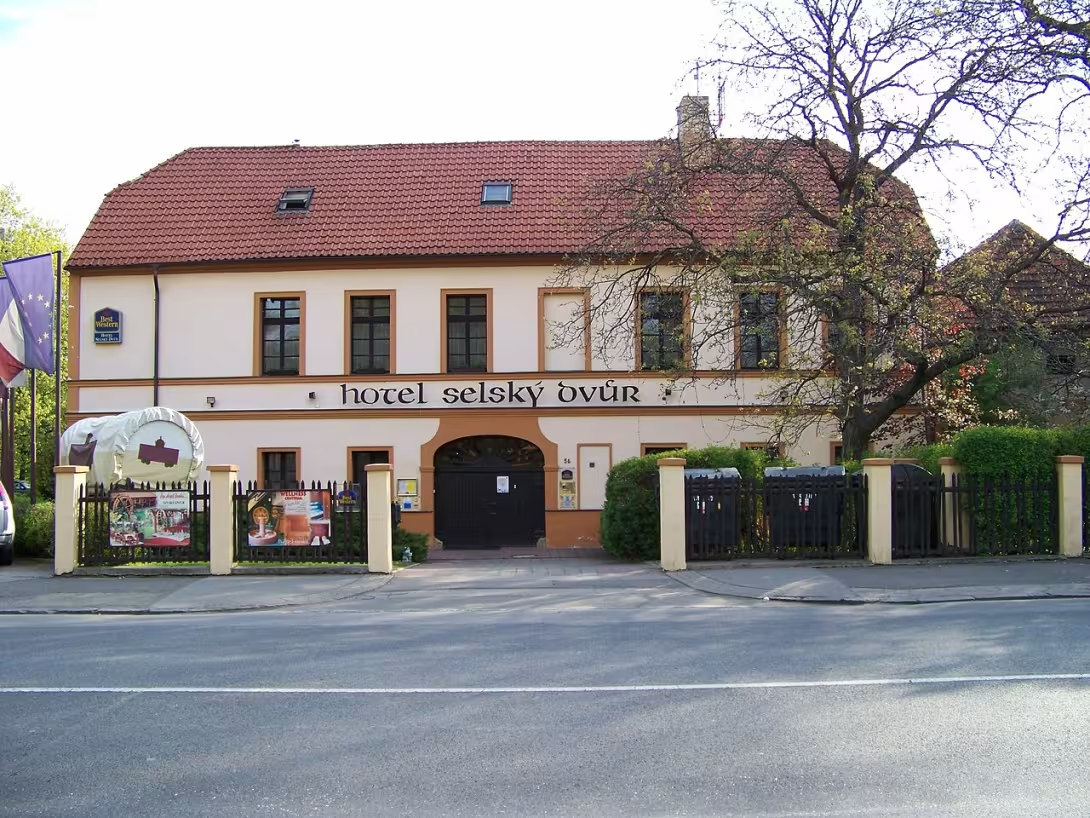
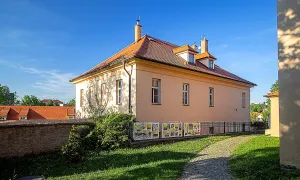
Hotel Selský courtyard, formerly known as Koukal's farmhouse, is a historic rural estate in Prague Hostivaři. Its roots date back to the 16th century. Since 1958, the building has been protected as a cultural monument of the Czech Republic. After extensive reconstruction, completed in 2005, it serves as a hotel.
The first written reference to the farm dates back to 1567. According to the grunt book, he was held by Martin Hoch, who inherited the building from his father. Historical sources suggest that it was probably a Baroque area at the time. Another preserved message from 1654 marks the object as a cottage. Today's Classicist form was built at the turn of the 18th and 19th centuries. This change reflected the then enlightened tendencies and development of rural architecture in Czech countries.
The construction is storey, walled and has a square plan with a semi-wooden roof. During the Classicist reconstruction, the plan expanded towards the north. The facade has changed from the original five axes to the current seven. The facade is broken by a cordon and a parapet ledge, ending with a finished crown ledge. The windows are lined with champagne. The interior of the ground floor has until today preserved historical monastery vaults with lunettes.
After World War II, the farm was nationalized, leading to its gradual decay. In 1985, the building was in a very bad technical state that threatened its existence. At that time, the economic part of the site was also demolished. Many years of repairs followed, which were completed in 2005 by adapting to the hotel.
The Koukal estate represents an important example of the transformation of historical rural architecture in the urban environment Hostivaře. Visitors can appreciate preserved classicist elements and monastery vaults during the tour, which resemble the original character of the estate. Thanks to the position close to the Hostivař Park and dam, the object is a suitable goal for interested people in history and architecture.
Then and now
Drag the slider to compare how the landmark may have looked when it was built with the view today.
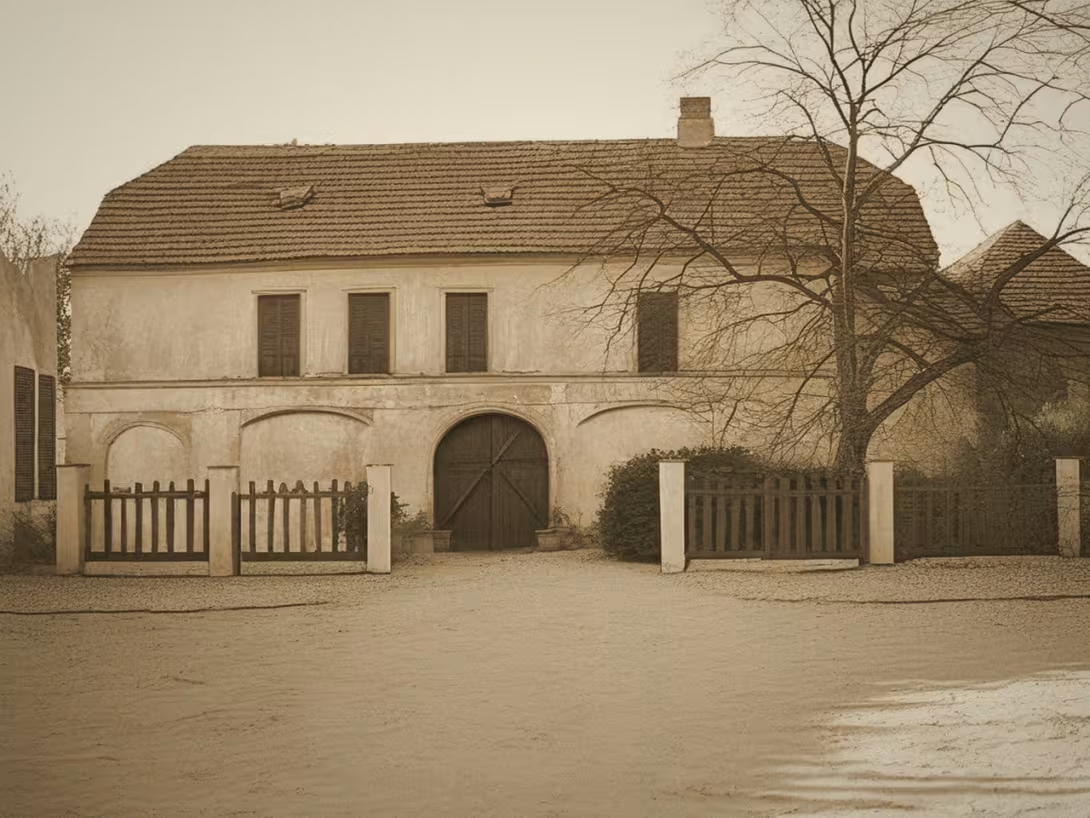
The historical appearance on the left is an AI-generated visualisation and serves as inspiration only.
Historical milestones
- 1567
- First written mention of Koukal's estate in the grunt book.
- 1958
- The building was declared a cultural monument.
- 1985
- The construction was in very poor condition and the economic building was demolished.
- 2005
- Reconstruction and operation of the hotel is completed.
Architectural development
At the turn of the 18th and 19th centuries, the original Baroque complex was rebuilt in a classical style. During this reconstruction, the floor plan was extended and the facade was changed from five axes to seven. The monastery vault with lunnets was preserved in the interior.
Historical events
The first written mention of the farm dates back to 1567. In 1958, the building was declared a cultural monument. After a long period of decaying and reconstruction it was opened as a hotel in 2005.
Owners
Martin Hoch (1567), after World War II nationalized.
Points of interest
- The roots of this historic rural estate go back to the 16th century. - Since nineteen hundred fifty-eight, the object has been protected as a cultural monument. - The first written reference to the farm dates back to the year 1560, when Martin Hoch held it. - The interior of the ground floor has until today preserved historical monastery vaults with lunnets. - After World War II, the estate was nationalized, which led to its gradual deterioration and in nineteen hundred and eighty-five the economic part of the site was destroyed.
Guide
Show guide text
This text was created by artificial intelligence and has not been editorially reviewed. It may contain inaccuracies.
Welcome to Hostivaři. Stop for a moment, take a breath and look around you. You are standing right in front of a place that is a silent witness to the transformation of our city, to the Koukal farm, which we now know as the Selské Court Hotel. The first impression from this place is very strange, isn't it? It feels like you've found a piece of old country in the heart of the city district, an island of peace and history that has survived for centuries. Look at the overall form of the area. In front of you, the space that once served as the center of economic life is spread out, a place where work on the ground was intertwined with daily struggle for survival and the flourishing of rural wealth. Let us now return together in time, very deeply, to the sixteenth century. Imagine Hostivař at the time. It was not the space you know today, but rather a set of scattered settlements and fields. The first written mention of this estate dates back to 15 hundred and sixty-seven. We'll find it in the so-called grunt book, which was basically a record of land ownership and housing. It is this year that the farm is associated with the name Martina Hocha. Martin Hoch was the man who held this farm and cultivated the land at the time. It is fascinating to think that while we stand here today with modern technology in our ears, more than four styles ago Martin Hoch here planned his harvest and cared for his economy. This continuity, this constant transmission from generation to generation, is what makes this place a real treasure. Now pay attention to the construction itself. If you look at the exterior appearance of the buildings, you'll see that the farm doesn't have one single face, but it's the result of a long development. The original 16th century brought with it a basic structure, but what you see before you today is primarily the work of a later period. Notice harmony and balance in the building lines. This classical form of the complex, which is so dominant, comes from the turn of the eighteenth and nineteenth centuries. Classicism tried to return to purity and order, which is also evident here. Take a look at the facade and feel the atmosphere of calm that this architecture radiates. Although we do not know the names of the particular architects who have proposed these modifications, their work carries the spirit of their time when rural settlements began to turn into representative houses that were intended to emit stability and prosperity. When we think about the fate of this place, we find that the road didn't just lead up. The history of the Koukal farm is full of takeoffs and falls. In nineteen hundred fifty-eight, the building was recognised as a cultural monument of the Czech Republic. This was a very important step, because the state admitted by this declaration that this building has an irreplaceable value for our National Grandpa ICT and that it must be protected for future generations. However, protection on paper is sometimes not enough to survive the building physically. Let's move forward in time to nineteen hundred and eighty-five. That was the time when the farm was in very bad shape. Imagine a sad sight of crumbling walls and abandoned spaces. The situation was so critical that unfortunately some parts were forgotten. In that year, an economic building had to be demolished, which was already in a dangerous state. It was a moment of deep sadness for all who valued the history of Hostivař, because with this building part of the original character of the entire court disappeared. The farm seemed to lose its original face forever. But the story of the Court of Selah does not end here. That is where the greatest power of historical monuments lies - in their ability to be reborn. Years of anticipation and preparation followed by extensive reconstruction. It was a challenging job in which to preserve the maximum original character and at the same time to give new life and modern use. This great recovery was completed in two thousand and five. It was then that the operation of the hotel started, which now hosts visitors from around the world. It's a beautiful example of how an old country estate can transform into a place of hospitality without losing its soul. Now, if you look around, try to imagine how the sounds that have been heard have changed over the centuries. From the rustling of horses and the screaming of birds in the sixteenth century, to the silence of the classical mansion, to today's fine noise of the modern city. One of the interesting things that may interest you is that the roots of this place are so deep that they become a bridge between the old agricultural Hostivař and today's Prague. The interior of the ground floor has until today preserved elements that resemble the original destination of the building, making them silent witnesses to the past. So you're standing in front of a building that survived wars, changes in regimes, and periods of deep demise. From Martin Hoch in the year fifteen hundred sixty-seven to today's guests who spend their free time here, Koukal's farm is a symbol of endurance. It's a place where history meets the present and where every brick tells its own little story about the people who lived here, worked and dreamed. Now that you know the story of this place, I suggest you look at the surrounding space in peace. Feel the contrast between historical walls and the surrounding environment. If you have the chance, walk around the premises and consider how you feel about this transformation from the estate to the hotel. It's a fascinating example of how we can honor the past and integrate it into modern life. Thank you for accompanying me on this short journey through time. I hope this interpretation helped you see more than just a beautiful building in the Koukal estate, but a real living organism that breathes through history. I wish you the rest of the day in Hostivaři and enjoy further exploring the secrets of our city. Goodbye.
Tips for visitors
The best time to visit is during spring or summer months, when you can fully enjoy the atmosphere of the historic courtyard and surrounding area. In this period the outdoor environment of the estate is the most maintained and offers pleasant seating.
The location is well accessible by car and by public transport. Parking is possible in the nearby area, but we recommend using the search engine for the current routes and stops that will bring you directly to the historical part of Hostivaře.
For photography we recommend using the morning or evening light, which beautifully depicts the details of the historical architecture of the farm. The best pictures are taken from the courtyard where the contrast between the original masonry and the surrounding greenery stands out.
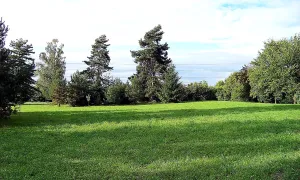
The surrounding area is a large Hostivař park and Hostivař dam, which are ideal for walks. For history lovers we recommend to go through the original historical core Hostivaře, which has preserved its rural character.
The location is suitable for families with children due to the proximity of nature. The paths in the park are suitable for carriages and the surroundings of the dam offer plenty of space for children's games and relaxation in nature.
Businesses nearby
Do you run a restaurant, accommodation, shop, museum, rental, wellness or other visitor service near this monument? Show yourself directly to the people heading to it — this is how they will see you in the app and on the web:
Events nearby

Zdroj akcí: otevřená data měst a obcí ČR (Národní katalog otevřených dat) a kalendář akcí Národního památkového ústavu.
Nearby
Hostivařský park, Hostivařská přehrada, historické jádro Hostivaře.
Accommodation nearby
Trips and activities nearby
Guided tours, tickets and activities nearby from GetYourGuide
Affiliate link: if you buy from the partner, we may receive a commission. The price for you does not change.
Search tours and activities →Themed route
Koukalův statek – hotel Selský dvůr - type: historical settlement with accommodation - why: offers an authentic atmosphere of rural life and the possibility of exploring original buildings and comfortable residence. Hostivař park - type: urban greenery with paths and ponds - why: ideal place for a quiet walk or picnic with a view of the water area and tree alley. Hostivař dam - type: water tank serving recreational purposes - why: allows for a boat ride, fishing or watching waterbirds in a quiet environment. Historical kernel Hostivaře - type: set of ancient houses and squares - why: it retains the original character of the village with typical architecture and offers several cafes and shops with local products.
Seasonal recommendations
Spring brings to Hostivaře freshness and awakening life. The trees start to green around the farm and the first flowers bloom, creating a promising and fresh mood. The light is fine in this period, ideal for observing the appearance of the place. I practically recommend you prepare your layered clothes because the weather can be variable. The best time to visit is early morning, when the air is the cleanest and the traffic is not yet high.
In the summer months, the mood is full of strength and sun. The surrounding area is densely green and the air smells of nature. Due to the high temperatures and greater interest of people, it is advisable to arrive as soon as possible after opening to ensure peace and shade. To move outside, choose light and breathable clothes and do not forget to protect against sunlight.
Autumn turns the neighborhood into a colorful world full of gold and brown shades. Morning fog gives the place a quiet and a little mysterious touch. It is important to wear fixed shoes because the wet ground can be slippery. The best is to visit the place in the afternoon when the sun creates a beautiful, warm light and underlines the color of the leaves.
Winter brings peace and quiet to the area. Although nature is in decline, frost and possible snow create a very cozy and fabulous mood. Due to low temperatures it is necessary to wear very warm clothes. Plan a visit around noon to use as much daylight as possible, and always check in advance the opening hours that may be shorter during this period.
Visualizations and artistic views


The visualisations are generated by artificial intelligence and serve as inspiration.
Photos from the area
Real photos taken near the monument

Zdroj a licence jsou uvedeny u každého snímku.
Tips from visitors
No tips yet. Be the first!
Log in and add your tip.
Sources and literature
Photos: ŠJů (cs:ŠJů) / CC BY-SA 3.0 — Wikimedia Commons. The author and licence also appear when you hover over the image.
Faktickým podkladem tohoto textu byl článek na Wikipedii, jehož autory jsou přispěvatelé Wikipedie. Článek je dostupný pod licencí CC BY-SA 4.0.
Location on the map


Příběhy a pověsti
Legendy, pověsti a příběhy spjaté s touto památkou
Fotografie návštěvníků
Zatím žádné fotografie. Buďte první, kdo přidá fotografii z návštěvy!
Log in a přidejte svou fotografii nebo hodnoťte.
Za ověřenou návštěvu v aplikaci získáte víc bodů — poznáme podle GPS, že jste na místě.
Reviews and comments