



Kovářov Fortress
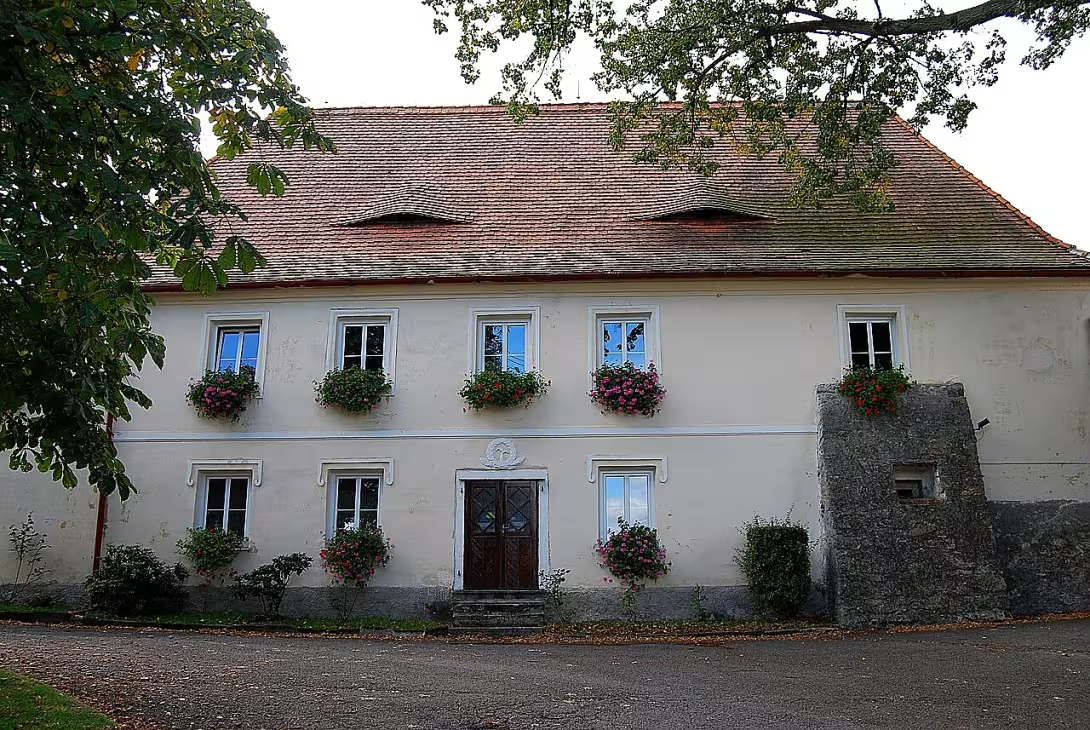
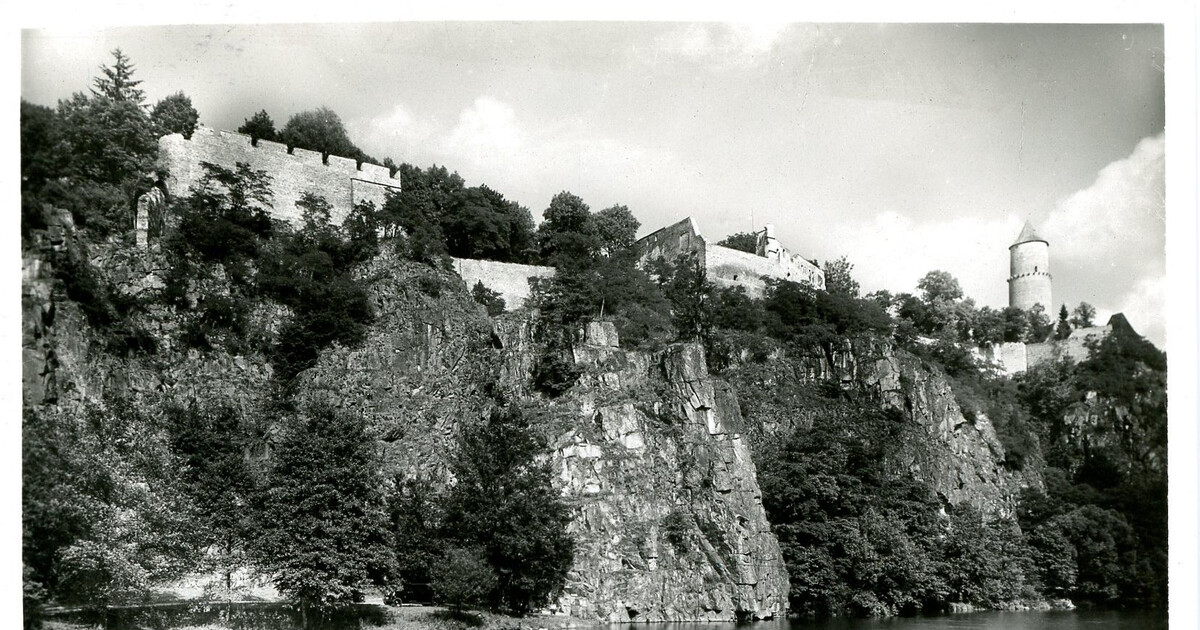
Kovářov is a historical fortress in the northwest part of the village of the same name in the district of Sand in South Bohemia. The building is now part of residential house No. 25. Since the beginning of the fifteenth century he has served as a storehouse and is protected as a cultural monument. Its importance lies in a dominant position in the immediate vicinity of the Church of All Saints, which underlines the historical nature of the place.
The oldest history of the fortress is connected to the family of the Bohemian Brusz from Kovářova, which at the beginning of the 15th century owned one of the parts divided by the village. At that time, the object performed the function of a seat with the sailing court. The emergence of the fort falls into the late Middle Ages, when the Czech countries went through political instability and Hussite wars. In 1421, King Zikmund awarded the blacksmith's farm to Matìj Brus as a reward for the merit of defending Karlstejn.
The architectural form of the building is based on medieval foundations and later Renaissance modifications. In the north part of the house No. 25, the vaulted rooms and rectangular stone portals were preserved, which are evidenced by the Renaissance phase. The rest of the building dates back to the second half of the nineteenth century. The facade is cut horizontally by the cordon ledge and the structure strengthens the support of the quarry stone. The house is covered with a rolled-up saddle roof, which overlaps the pavement on the south side throughout the width of the shield facade.
Property relations to the fortress have been variable over the centuries. After the Brusse family, Jan z Rožmberka, brothers from Jetřichovice or the Hrušky family from Trkov appeared among the holders. In 1549, the Hrušků had a fortress, courtyard and village written into the restored Earth records. At the end of the sixteenth century, namely in 1592, he bought Kovářov Jan Jiří ze Švamberka and joined it to the Eagle Manor. By doing so, the seat definitely lost its original function and was subsequently bought by one of the local subjects.
Key events in the history of the building include 1415, when Matìj Brus sold his salary to canons from the church of St. George, or 1589, when New Kovářov was connected to the Orlik estate. These changes reflect the process of centralisation of the estate administration, which gradually replaced the former feudal fragmentation.
Today the blacksmith's fortress is a valuable proof of the development of the manor, which was transformed from a fortified building to a common residential building. It is an interesting destination for visitors thanks to its location right at the Church of All Saints, which provides a historical depth. Visiting this place offers the opportunity to see the history of small nobility in the South Bohemian region.
Historical milestones
- 1415
- Matej Brus sold his salary from the blacksmith's fortress and court to canons from St. George's Church.
- 1421
- King Zikmund donated the blacksmith's farm for merit in defending Karlstejn.
- 1549
- The Trkov Prunks have registered the fort, courtyard and village Kovářov into the renewed Earth plates.
- 1592
- Jan Jiří ze Švamberka bought Kovářov and connected it to the Eagle Manor.
Architectural development
The original medieval fortress was modified in the Renaissance, which is evidenced by the vaults of arched rooms and stone portals. The rest of House No. 25 comes from the second half of the 19th century. The facade is broken by the cordon ledge and the structure strengthens the support of the quarry stone.
Historical events
In 1415 Matej Brus sold his salary to canons. In 1421 King Zikmund awarded the farm for its merit in defending Karlstejn. In 1589, New Kovářov was connected to the Eagle Manor.
Owners
The House of Brusz from Kovářov, Jan z Rožmberka, the brothers from Jetřichovice, the Prunks from Trkov, Jan Jiří ze Švamberka.
Points of interest
The fort is now part of a residential house with a descriptive number of 25. - In 1421, King Zikmund awarded the blacksmith's farm to Matìj Brus as a reward for the merit of defending Karlstejn. - In the north part of the house there were valleys of arched rooms and rectangular stone portals from the Renaissance period. - After joining the Orlik estate in 1592, the mansion lost its original function and then bought it by one of the local subjects. - The building is protected as a cultural monument and is located in close proximity to the Church of All Saints.
Guide
Show guide text
This text was created by artificial intelligence and has not been editorially reviewed. It may contain inaccuracies.
Welcome to the village Kovářov. Right now, when you're standing here listening to my words, you're in a place where history can't just be read in books, but you can literally feel it in every stone detail and atmosphere that still persists. In front of your eyes is a historical fortress that carries traces of centuries. Notice how this building dominates its surroundings. Its location in the north-west part of the village is not random; it was chosen to dwell above the surroundings and in a close neighborhood with the Church of All Saints, creating a whole whole, which has been the heart of this place for centuries. Although this building now seems to be part of a normal rural environment, its true nature is much deeper and older than it might seem at first sight.
Let us return together to the deep last century to understand how this object was created and what fate it was accompanied by. The history of this fortress begins to manifest itself in documents at the beginning of the 15th century. Imagine 1415. At that time, there was a crucial moment when Matej Brus, a man whose name is inextricably linked to this fort, sold a salary from the blacksmith's fortress and the court to canons from St. George's Church. At that time, this act laid the foundations for future ownership relationships and set the direction that this estate has followed for generations to come. The fort was not just an ordinary house, but it was the manor of a small estate that played its part in the social structure at the time.
But now pay attention to one of the most important events in this place. If you look around you, you may not realize that this place was once a reward for the highest courage and loyalty. In 1421 there was a miracle that changed the status of this farm. King Zikmund, one of the most important monarchs of his time, awarded the blacksmith's estate to Matìj Brus as a direct reward for his merit in defending Karlstejn. Imagine the weight of the moment when the royal decision brought glory and stability right here in this quiet corner of the country. This event added unprecedented importance to the fort and linked it to the greatest events of royal politics and state defense.
Time passes, along with the fate of the people who lived and ruled here. After this period followed an era of different families, which gradually took turns and each time they came to Kovářova left their mark. In the middle of the sixteenth century, exactly in 1549, the Hrušková of Trkova became history. They had the fort, court and entire village Kovářov written into the then restored Earth plates, confirming their power over this territory. Later, in 1592, however, the situation changed again when Jan Jiří ze Švamberka bought Kovářov and decided to join it in the extensive Orlik estate. By doing so, a small but significant farm became part of a much larger whole, affecting its economic and political character for years.
But now look at the very structure that stands right in front of you. Perhaps you're surprised by her present appearance. It's fascinating to see how history can organically connect with modern times. Today, this historic fortress is no longer a separate fortified residence, as it once was, but it is fully integrated into a residential building that carries a descriptive number of twenty-five. However, this integration is only superficial; inside these walls is still the true architecture of the past.
If you have the opportunity to enter the interior areas, especially the northern part of the house, you should pay attention to the details that are left behind. In these parts there are masterfully performed valenas arched rooms that are typical of the then construction and provide the interior with a sense of stability and grandeur. Notice also rectangular stone portals. These portals come from the Renaissance period and are a silent witness to the time when architecture began to focus on harmony and geometric accuracy. Although these elements are now part of private living space, their presence reminds us that under the layers of modern modifications the heart of the old Renaissance building is still pulsing.
So this whole object is a fascinating story about survival and transformation. From the defense mansion, which was a reward for heroism at Karlstejn, to the seat of noble families such as the Hrušks of Trkov or Švamberk, to today's form of a part of the residential house. Every person you can name in the historical records here - whether it be Matej Brus, Kunát ze Zvíkova, Jan z Rožmberka, Jan Hruška z Trkova or Jan Jiří ze Švamberka - left their invisible trail at this point.
In conclusion, I would like to invite you here for further observation. Even though the fort now appears to be part of a common house, try to look at it again, but this time with the eyes of a man from the 15th or 16th century. Feel the dominant position, feel the proximity of the church and imagine the times when the fate of the estate was decided here. The Kovářov fortress is not just a building; It is the living darkness of human courage, noble rule and constant movement of time. Thank you for joining us on this short journey of history, and we wish you a pleasant rest of the tour of this beautiful place.
Tips for visitors
The ideal time to visit is during the late spring or summer afternoon, when the sun illuminates the facade of the fortress and the neighboring Church of All Saints, which creates an impressive atmosphere for both sightseeing and photography.
You can easily reach the village Kovářov by car.
To visit, pack comfortable shoes suitable for movement in the historical area and surroundings. Don't forget the camera, the best pictures will be taken from the area at the Church of All Saints, where the historical architecture of the fortress will stand out in all its detail.
In the vicinity of the fortress we recommend to visit the Church of All Saints, which forms with the fort one historical whole. In the wider area is the attractive aim of Castle Orlík, which offers rich possibilities for a longer trip within the region.
For families with children the location is suitable thanks to the quiet environment of the village Kovářov. The walk around the fortress and the church is not difficult, which is especially appreciated by parents with smaller children looking for an easy trip to history.
Frequently asked questions
Can the monument be visited?
Some buildings of this kind are open for guided tours, others serve another purpose or are privately owned. We have not verified whether and when this monument is open – please ask the operator.
What are the opening hours and admission?
We have not verified the opening hours or admission. Current information is published by the operator.
Why is the monument protected?
It is listed in the Central List of Cultural Monuments of the Czech Republic as a cultural monument (register no. 1000136863).
Businesses nearby
Do you run a restaurant, accommodation, shop, museum, rental, wellness or other visitor service near this monument? Show yourself directly to the people heading to it — this is how they will see you in the app and on the web:
Events nearby
Zdroj akcí: otevřená data měst a obcí ČR (Národní katalog otevřených dat) a kalendář akcí Národního památkového ústavu.
Nearby
The village Kovářov, the Church of All Saints, in the wider area of the castle Orlík.
Accommodation nearby
Themed route
Thematic cruise route from Kovářova
1.Kovářov (fortress) - Type: Historical landmark - Why is it worth a visit: This fortress is one of the best preserved Gothic strongholds in the Czech Republic. Its rich history and architectural design offer an insight into the life of the nobles of the past.
2. The Church of All Saints - Type: Religious monument - Why is it worth a visit: This church is an important cultural and historical monument of the village Kovářov. Its architecture and interior are an example of baroque art that deserves the attention of every passenger.
3. Castle Eagle - Type: Historical chateau - Why is it worth a visit: Castle Orlík, located near Kovářova, is known not only for its history and architecture, but also for its beautiful view of the surrounding landscape. It is an ideal place to relax after visiting the fortress.
This route offers travelers the opportunity to familiarize themselves with the historical and cultural richness of the Kovářova area, each of the visited places has its unique properties.
Seasonal recommendations
In spring, the fortress Kovářov wakes up with nature. The trees are starting to bloom around the building and the surrounding landscape is getting fresh green. The lighting is very pleasant for shooting details of architecture thanks to the softer sun. We recommend wearing layered clothes because morning cold can be overlooked. There are fewer visitors in this period, so you can enjoy a quiet atmosphere without large groups of people.
Summer months bring the longest days and intense sunlight, which beautifully highlights the texture of historical walls. Vegetation is in the fullest bloom and the surroundings are very lively. In the main summer season, however, count on more tourists, so it is best to arrive immediately after opening. Don't forget the sun cap, enough water and light, breathable clothes to make your tour pleasant even in the heat.
Autumn visit offers a nostalgic atmosphere, where morning fog often floats around the fort and leaf colours turn into golden and brown shades. The light is low and very dramatic in this period, which gives the memory a mystery. It is advisable to prepare a waterproof jacket and warmer clothing as the weather can change quickly. The ideal time for a walk is in the morning when the air is the cleanest.
In winter Kovářov works very calmly and even slowly, especially if the surrounding area is covered with snow. Short days and low sun create sharp shadows on historical facades. This season is ideal for those who seek silence and want to escape the summer rush.
Visualizations and artistic views


The visualisations are generated by artificial intelligence and serve as inspiration.
Photos from the area
Real photos taken near the monument


Zdroj a licence jsou uvedeny u každého snímku.
Tips from visitors
No tips yet. Be the first!
Log in and add your tip.
Sources and literature
Photos: Richenza / CC BY-SA 3.0 — Wikimedia Commons. The author and licence also appear when you hover over the image.
Faktickým podkladem tohoto textu byl článek na Wikipedii, jehož autory jsou přispěvatelé Wikipedie. Článek je dostupný pod licencí CC BY-SA 4.0.
Location on the map
Příběhy a pověsti
Legendy, pověsti a příběhy spjaté s touto památkou
Fotografie návštěvníků
Zatím žádné fotografie. Buďte první, kdo přidá fotografii z návštěvy!
Log in a přidejte svou fotografii nebo hodnoťte.
Za ověřenou návštěvu v aplikaci získáte víc bodů — poznáme podle GPS, že jste na místě.
Reviews and comments