






Malovaný dům v Třebíči Museum building
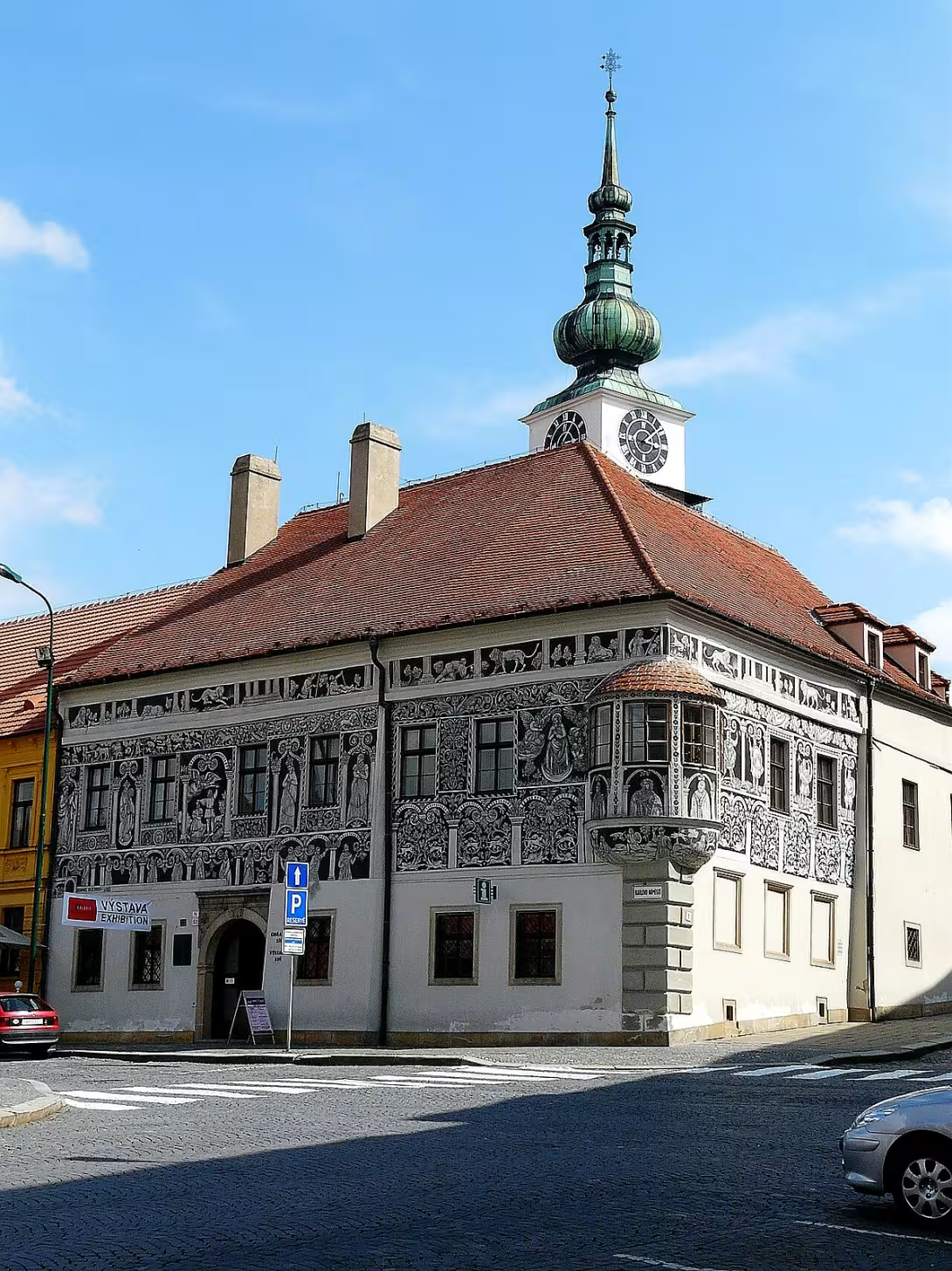
The painted house is a Renaissance corner object with a graphic decoration, which stands on the southwest edge of Charles Square in Třebíč. This significant historical building with a descriptive number 53 is now a gallery, exhibition hall and information centre.
The building was built by the Venetian buyer Francesco Calligardi as a business in colonial goods. In 1617 he bought it from the founder's brother, Nicholas Calligardi, Jan Janek Strážnický. Later, other families owned the house, such as Bolzano or Dominik Bissato. The son of the last named accepted the Czech name and acted as a town chronicler. Due to the origin of the first owner, the building was called the Františkovský house.
Architectural is a Renaissance building with a richly decorated facade. Under the ledge are depicted scenes of the hunter and wolf, between the windows of the biblical figure. The Ark adorns the theme of the Virgin Mary with three angels. On the side of Hasskov Street you can see figures with hunting gear, on the left side of the house there is a woman playing on the lute, another depiction of the Virgin Mary and secular figures. The lower part of the facade is complemented by portraits of townspeople, all framed with ornaments.
Over the centuries, the sgraffiti has been covered. The reconstruction took place only in 1903 thanks to Professor Josef Kozlanski's Professor of Třebíč Gymnasium. In the 1970s, the walls began to deflect into the street, which required a seven-year shutdown and demanding bailout. After repairs and cleaning the sgraffiti, the house was reopened on 30 April 1987 to the public. Currently, the plastering condition is critical as they deviate from the ground by several centimetres. The years 2026 and 2027 are therefore planned for a large rescue operation involving injection and restoration work worth CZK 4.8 million.
The house has been performing a cultural function since the late 20th century. After the velvet revolution, the poet and painter Ladislav Novák exhibited here, with 15 years of Luboš Kressa as curator of the gallery. There were exhibitions of artists such as Miroslav Řídký, František Mertl, Jiří Slíva, Zdeněk Šplíchal and Josef Březina. Since 2017, a historical stereoscope Kaiserpanorama has been installed in the building, modified for digital projection while preserving the original illusion. There is a ceremonial hall on the floor of the building.
The painted house represents valuable proof of Renaissance urban architecture and its importance in the economic life of the city. Visiting this place offers a unique opportunity to see historical sgraffiti decoration and get acquainted with current exhibitions in the heart of Třebíč.
Then and now
Drag the slider to compare how the landmark may have looked when it was built with the view today.
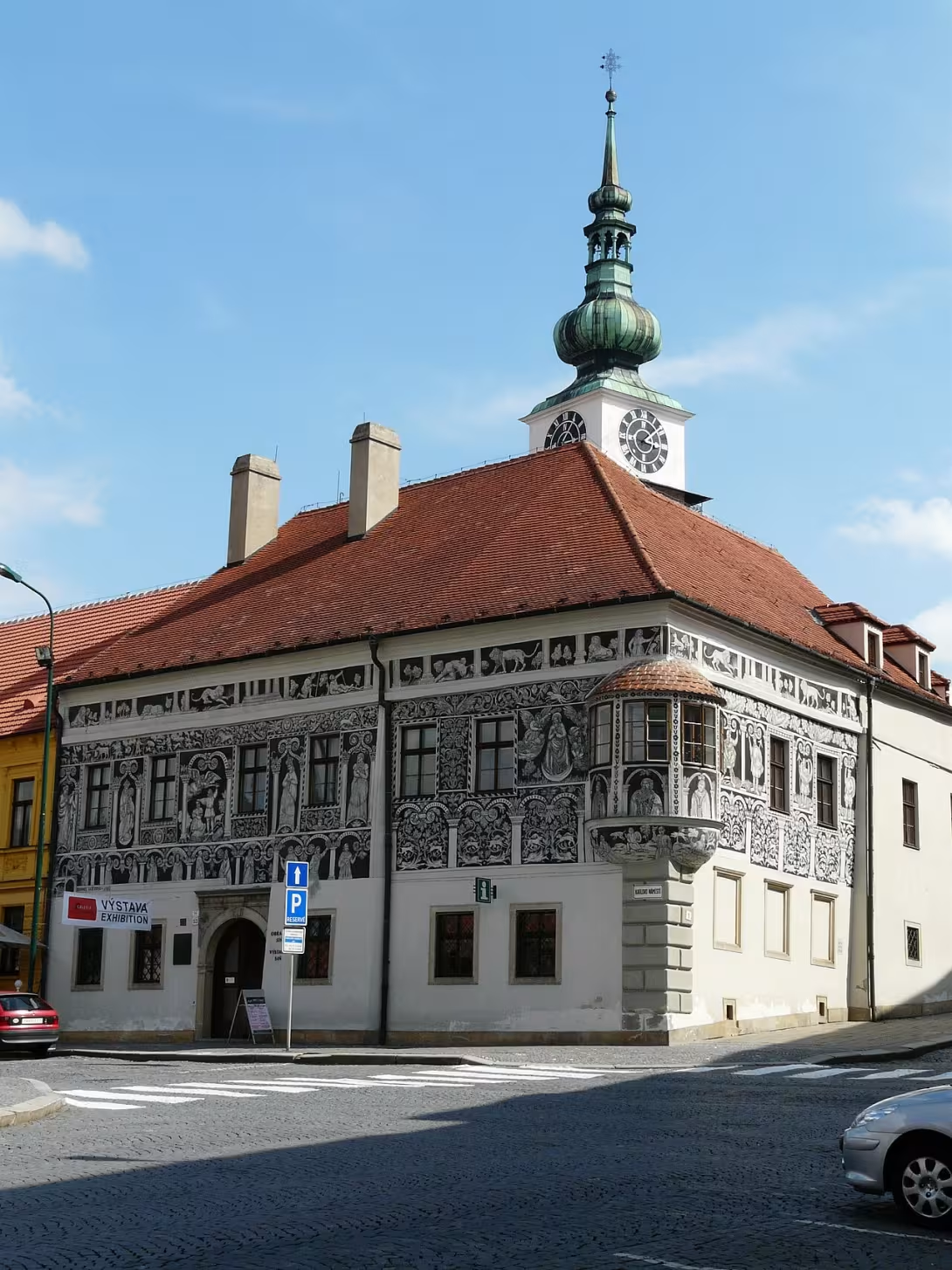
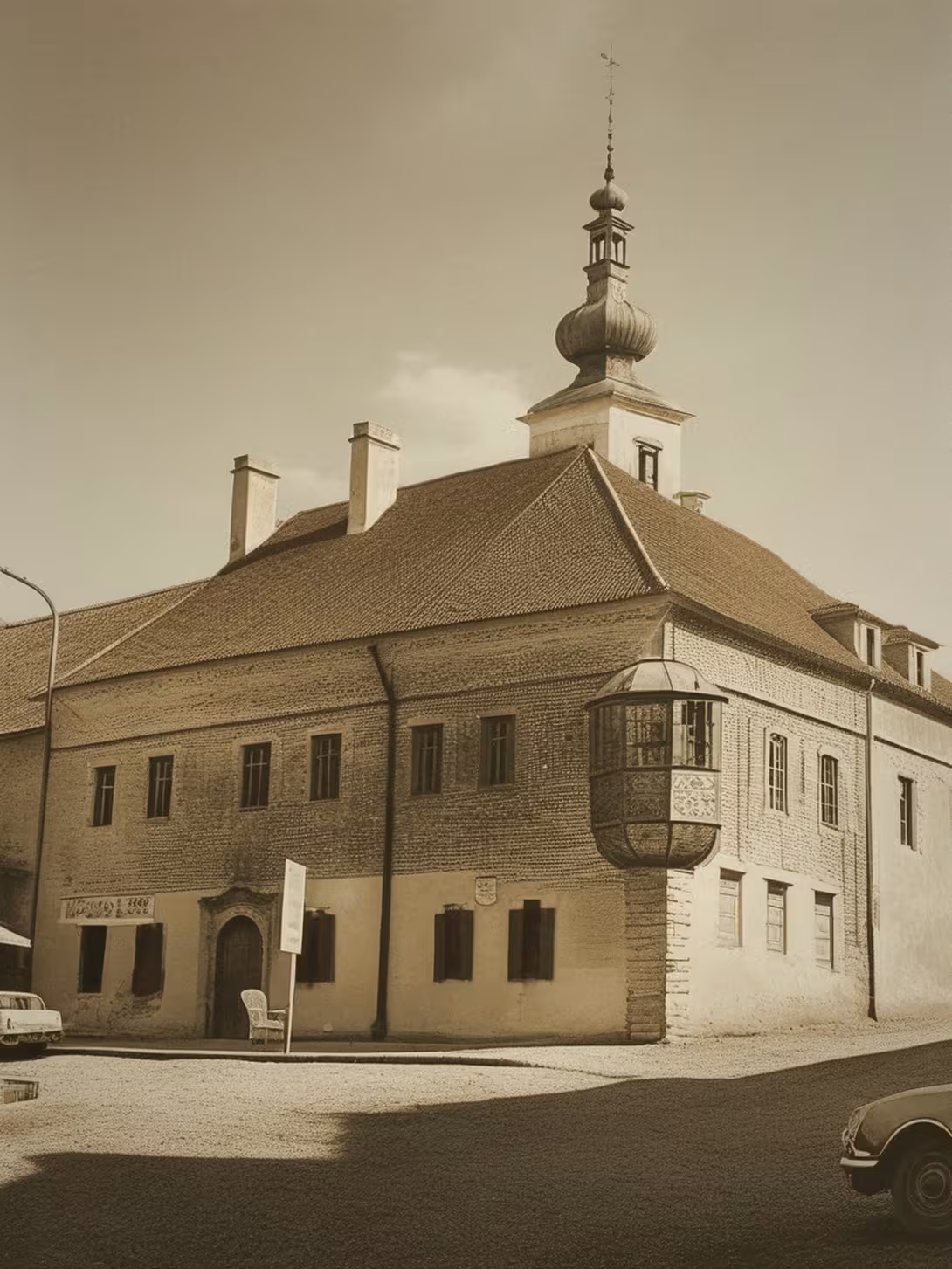
The historical appearance on the left is an AI-generated visualisation and serves as inspiration only.
Historical milestones
- 1617
- The sale of Jan Jank's house to Strážnický.
- 1987
- Reopening the house after repairs and cleaning sgraffiti.
- 2025
- The survey confirmed the critical state of plaster and the need for rescue work.
Architectural development
Originally, the Renaissance department store was modified over the centuries, while the sgraffiti was covered in a certain period. In the 1970s, there was a bailout to deflect the walls into the street. Currently, a demanding rescue of sgraffiti decoration is planned by injection and restoration works.
Historical events
1903: Renovation by Professor Josef Kozlanský. 1987: Reopening the house after seven years of reconstruction. 2017: Installation of historical stereoscope Kaiserpanorama.
Owners
Francesco Calligardi, Jan Janek Strážnický, family of Bolzans, family of Dominic Bissad.
Points of interest
- The building was built in the late 16th century by the Venetian buyer Francesco Calligardi as a business of colonial goods, for which the construction was called the Františkovský house. - The facade of the house is richly decorated with sgraffiti, which shows, for example, hunter with wolf, biblical characters, Virgin Mary with three angels, a woman playing the lute or portraits of townspeople. - In the 1970s, the walls of the house began to deflect into the street, which required a seven-year shutdown and demanding bailout. - Since 2017, a historical stereoscope Kaiserpanorama has been installed in the building, which has been modified for digital projection while preserving the original illusion. - Currently, the plastering condition is critical because they deviate from the ground by several centimetres, and for the years 2026 and 2027 a rescue operation of CZK 4.8 million is planned.
Guide
Show guide text
This text was created by artificial intelligence and has not been editorially reviewed. It may contain inaccuracies.
Welcome to the heart of Trembie. You are standing in Charles Square, where history meets the daily life of this city. In front of your eyes is one of the most important Renaissance monuments of the entire region, the Painted House. Before we go into his secrets, allow you to pause for a moment, soak up the atmosphere of this square and perceive the presence of this building, which has been tracking the movement of people, horses and modern cars for centuries. This house is not just an ordinary house, it's a living book that tells stories about wealth, travel to distant countries and art that try to resist time.
Let's now go back deep into the past, specifically to the end of the sixteenth century. Imagine the Třebíč, a city prosperous by trade. It was at this time that this impressive object was built by a Venetian buyer named Francesco Calligardi. Why would a man from Venice, the center of world trade, choose this place? The answer is in his profession. Calligardi set up a colonial goods store here. Imagine the smells that spread from this house to the surroundings - exotic spices, rare types of coffee, sugar or other valuables, which were the symbol of luxury and high status. It was because of this business focus that the building was called the Františkov house, which is the name that bears the reflection of its original destiny.
Now pay attention to the facade, which is undoubtedly the greatest treasure in this place. Look at the walls of the house and try to perceive the incredible richness of decoration. What you see is not just an ordinary painting, but a masterpiece with a technique called sgraffito. This method requires enormous patience and precision - it is created by scraping patterns on multiple layers of plaster to reveal the color of the bottom layer. Feel the richness of detail that now surrounds you. If you look closely, you can see figures on the walls that look like they just stepped out of ancient legends. You will see hunters moving in the wilderness, perhaps even hunters accompanied by a wolf, which gives the facade certain dynamics and tension. In addition to these secular scenes, spiritual motives appear. Note the biblical characters and above all the beautiful views of the Virgin Mary with three angels. This combination of everyday life, hunting and sanctity creates a unique whole that was very suggestive of the people back then. In addition, you can see the portraits of townspeople, which gives us insight into the then social structure and how important it was for the then elite to present their position through architecture and art.
But the history of this house was not just a linear stream of success. The house has undergone many changes in owners and functions. For example, in the year one thousand six hundred and seventeen there was a significant milestone when the house was sold to Jan Janka Strážnický. Since then, the times have changed, political regimes and ways of life have changed, but the house has continued. In more modern history, the house has become an important cultural point. In a thousand and nine hundred and eighty-seven, the building underwent a major repair and cleaning of sgraffiti, reopening itself to the public in a new form. Many people took part in this process and in the care of the house, among which names such as Ladislav Novák or Josef Kozlanský appear in the records, who have contributed to the fact that we are now able to track these sgraffits at all.
But now I must lure you to a little deeper reflection on the fragility of this place. Even though the Painted House appears to be a solid and hard building, time is constantly affecting it. You may notice that some parts of its surface require special care. The surveys carried out in the year two thousand twenty largely confirmed that the state of plaster is in critical condition. So what you're seeing in front of you is in some kind of danger right now. It's fascinating, but also sad, how much our cultural heritage depends on a constant effort to save it. The need for rescue work is now a priority so that these unrepeatable sgraffiti are not lost for future generations.
The interesting thing that you might find interesting when you look at the house is the constant change between what is visible and what is hidden beneath the surface. Every layer of plaster you see is the result of the work of craftsmen hundreds of years ago. It's like layering time itself. This house is not just a building, it is an architectural dialogue between a Venetian businessman who wanted luxury, and Czech craftsmen who materialized his vision into stone and plaster.
I hope this brief insight into the history of the painted house has helped you better understand its meaning and beauty. You stand before a witness to history, which, despite its present fragility, still stands here to tell us about its glory. Please continue your walk around Charles Square and pay attention to other sights you will find in this city. Every stone and facade here has a story that just waits to be discovered. Thank you for your attention and I wish you a pleasant continuation of the tour of Třebič.
Tips for visitors
We recommend a visit in the morning during the working week when the Charles Square is calmer and you can better see the unique Renaissance façade without disturbing influence of the surrounding traffic.
The monument is located right in the city centre. Parking is possible on marked areas in Charles Square. The location is easily accessible by foot from the main public transport hubs; We recommend checking the specific connection in the current connection search engine.
The best light to capture the details of the painted facade is during sunny days when colors and sgraffiti stand out. The ideal position for the film is from the opposite side of the square from where you can capture the house in its entire architectural context.
In the immediate vicinity you can visit the City Library of Třebíč, the Basilica of St. Prokop or the Jewish Quarter, which are monuments of UNESCO. For families with children the location is suitable thanks to flat terrain square, which allows comfortable movement with a pram.
Businesses nearby
Do you run a restaurant, accommodation, shop, museum, rental, wellness or other visitor service near this monument? Show yourself directly to the people heading to it — this is how they will see you in the app and on the web:
Nearby
Charles Square in Třebíč, City Library of Třebíč, the Basilica of St. Prokop and the Jewish Quarter (UNESCO monuments).
Accommodation nearby
Themed route
Thematic cruise route: Painted house and cultural monuments of Třebíč
1. Malová house (gallery) - Main destination Type: Cultural monument Why is worth visiting: Malovaný dům v Třebíči is a unique architectural pearl that attracts its colorful facades and historical elements. It's the perfect place to start your cultural trip to Trebic.
2. Charles Square - Historical Center Type: Square Why is it worth a visit: After exploring the painted house, go to Charles Square, which is the heart of the city. Here you will enjoy a quiet moment and appreciate the historical character surrounded by ancient buildings.
3. City library Třebíč - Cultural institutions Type: Library Why is worth a visit: The City Library offers not only rich resources for readers, but also space for cultural events. It's an ideal place to relax and explore the history of the city.
4. Basilica of St. Prokopax - Historical monument Type: Basilica Why is it worth visiting: This Romanesque Basilica is the oldest stone in the Czech countries and represents an important cultural and historical object. It's a key place to understand the history of Třebič.
5. Jewish Quarter - UNESCO Memorial Type: Historical area Why is it worth a visit: The Jewish Quarter is one of the oldest Jewish settlements in the Czech Republic and belongs to UNESCO monuments. It's a place full of history that offers a view of the past of the city.
This route will guide you through the most important cultural and historical points of Třebíč, which will enable you to deeply understand the rich tradition of this region.
Seasonal recommendations
In spring, the inner city awakens and the soft sunlight highlights the details of historical architecture. The atmosphere is fresh and calm, which is ideal for observing artistic elements in the gallery. Due to an ongoing accident, we recommend monitoring the actual accessibility of the paths to the object. Get dressed in layers because the morning cold may be a friend, but the afternoon heat will surprise you. It's the best time to visit without big groups of people.
The summer season brings intense sun to Třebič and lively activity in the surrounding streets. Due to the main summer season, visitors have more movement at the sights, which is why it is best to arrive first thing in the morning to avoid the biggest crowds and narrow heat. Choose light and breathable clothes. As part of the ongoing repairs, prepare for possible dust in the vicinity of the construction works.
Autumn offers a magical atmosphere thanks to golden lighting and foggy morning clocks that give the historical centre a deep character. Leaf falling on the pavement creates a melancholy touch that matches the artistic aroma of the gallery. Prepare warmer clothes and waterproof shoes because the humidity may be higher. Afternoon visits are ideal for capturing the most beautiful light for taking pictures.
In winter, the inner city is quiet and feels mysterious, especially in the advent period. The light is weaker and the daily time is shorter, which often affects the opening hours of the monument. Due to the emergency condition and snow, be nosy when walking along nearby roads that can be slippery. The need is warm and practical winter equipment to make your tour pleasant despite the cooler indoor areas.
Visualizations and artistic views


The visualisations are generated by artificial intelligence and serve as inspiration.
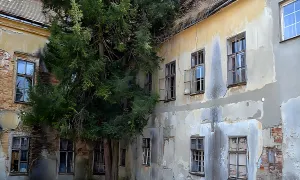
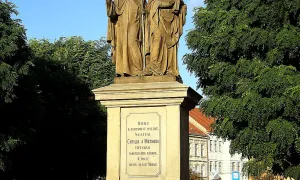
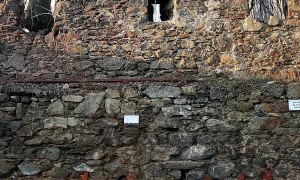
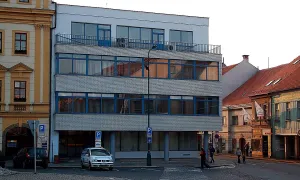
Photos from the area
Real photos taken near the monument


Zdroj a licence jsou uvedeny u každého snímku.
Tips from visitors
No tips yet. Be the first!
Log in and add your tip.
Sources and literature
Photos: Delfínka / Public domain — Wikimedia Commons. The author and licence also appear when you hover over the image.
Faktickým podkladem tohoto textu byl článek na Wikipedii, jehož autory jsou přispěvatelé Wikipedie. Článek je dostupný pod licencí CC BY-SA 4.0.
Location on the map
Příběhy a pověsti
Legendy, pověsti a příběhy spjaté s touto památkou
Fotografie návštěvníků
Zatím žádné fotografie. Buďte první, kdo přidá fotografii z návštěvy!
Log in a přidejte svou fotografii nebo hodnoťte.
Za ověřenou návštěvu v aplikaci získáte víc bodů — poznáme podle GPS, že jste na místě.
Reviews and comments