



Mariánská kaple ve Znojmě Chapel
Objekt se nedochoval — na místě dnes nestojí. Následující text popisuje jeho historii, ne současnou návštěvu.
Mariánská Kaple in Znojmo was once an important religious site located at Mariánské náměstí. Originally built as a stone column with an image of the Virgin Mary in 1730, it transformed into a small rotunda-style chapel between 1821 and 1822 to protect the statue from weather damage. The site is notable for its historical changes and eventual demolition under political pressures in 1952.
The origins date back to 1730 when local baker Waigart or Weigart erected a stone column with an image of the Virgin Mary as gratitude for recovering from illness. This structure served both religious and community purposes, marking it as a site of devotion. Over time, the need to protect the statue led to its replacement by a more durable chapel.
Architecturally, the site began as a simple stone column but evolved into a small rotunda-style chapel constructed between 1821 and 1822 by Josef Dämisch. This new structure was built to safeguard the Virgin Mary statue and included specific conditions set by the bishop's consistory upon its consecration on July 13, 1822. In 1840, an image of the Virgin Mary painted by Anton Ferenz was installed in the chapel, enhancing its religious significance.
Ownership changed several times. Initially maintained by Waigart or Weigart, it later passed to manželé Ulrich a Barbara Scharfnitzlovi (Schafnitzovi) in 1818. In 1871, Agnes Adámková sold the property to Znojmo town, although her husband Jakob Adámek later claimed compensation for its omission from the sale agreement. The town eventually took ownership and maintained it until its demolition.
Key events include its consecration in 1822 with specific religious practice conditions. In 1923, a war memorial was erected during reconstruction to honor World War I victims. However, political changes under communist rule led to its closure on January 7, 1952, and subsequent demolition on June 7, 1952, due to conflicts with plans for a new monument.
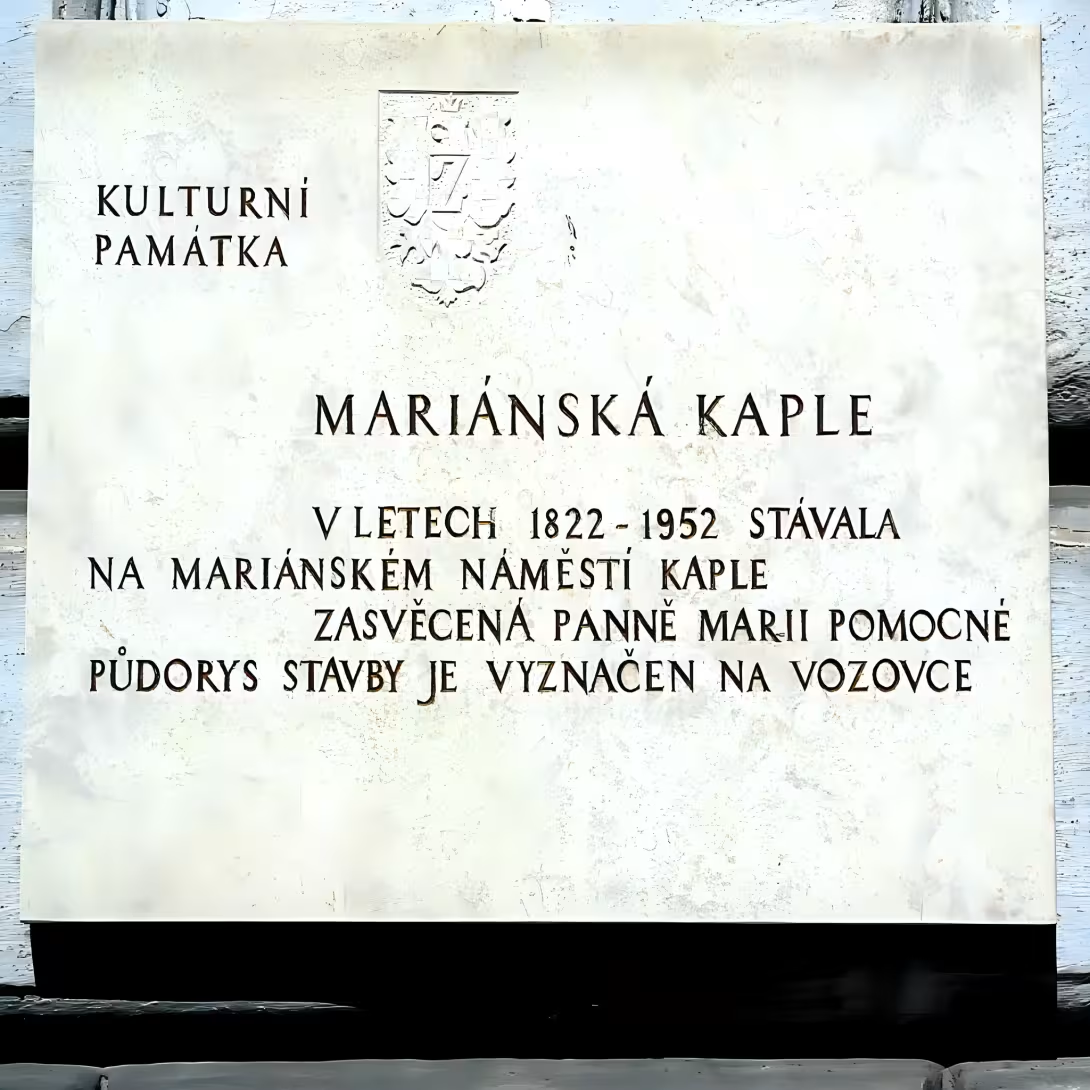
Today, the site where Mariánská Kaple once stood is marked by a commemorative plaque and ground markings outlining the former chapel. These remnants serve as a poignant reminder of its historical significance within Znojmo's urban landscape. The area remains rich with other historical sites and buildings, making it an intriguing destination for those interested in exploring the region's history.
Mariánská Kaple offers a unique glimpse into the religious and political transformations that have shaped Znojmo over centuries. Its story is a testament to local devotion and broader historical forces, inviting visitors to reflect on its legacy within the town's rich tapestry of history.
Historical milestones
- 1730
- Waigart or Weigart erected a stone column with an image of the Virgin Mary.
- 1821
- Construction began on a rotunda-style chapel to protect the statue.
- 1822
- Chapel consecrated by bishop's consistory with specific religious conditions.
- 1840
- Installation of an image of the Virgin Mary painted by Anton Ferenz.
- 1923
- War memorial erected during reconstruction to honor World War I victims.
- 1952
- Chapel closed and demolished due to political pressures under communist rule.
Architectural development
The site initially featured a stone column with an image of the Virgin Mary, erected in 1730. In 1821-1822, a small rotunda-style chapel was constructed by Josef Dämisch to protect this statue. The chapel underwent modifications over time, including the installation of a painting by Anton Ferenz in 1840.
Historical events
- 1822
- The chapel was consecrated on July 13, with conditions set by the bishop's consistory.
- 1923
- A war memorial for World War I victims was erected during a reconstruction project.
- 1952
- The chapel was demolished on June 7 due to political reasons under the communist regime.
Points of interest
- The Mariánská Kaple's origins can be traced back to a local baker named Waigart or Weigart, who erected the original stone column as an act of gratitude for recovering from illness in 1730.
- A unique aspect of the chapel's consecration in 1822 was that it came with specific conditions set by the bishop's consistory regarding religious practices allowed at the site.
- In 1923, during reconstruction efforts, a war memorial was added to honor those who perished in World War I, reflecting the evolving historical significance of the site beyond its religious origins.
- The chapel changed hands multiple times before being sold to Znojmo town by Agnes Adámková in 1871. Later, her husband Jakob Adámek contested the sale for not including compensation, highlighting personal conflicts intertwined with its history.
- Despite its demolition under communist rule in 1952, a commemorative plaque and ground markings now mark where Mariánská Kaple once stood, serving as a poignant reminder of its historical significance within Znojmo's urban landscape.
Guide
This guide is narrated by a synthetic voice generated by artificial intelligence.
Show guide text
This text was created by artificial intelligence and has not been editorially reviewed. It may contain inaccuracies.
The Marian Chapel in Znojmo no longer stands. It was located on Mariánské náměstí, which received its name from the chapel, and its story lasted one hundred and thirty years.
On its site, there first stood a stone column depicting the Virgin Mary from the year seventeen hundred and thirty. A local master baker named Waigart donated it as thanks for recovery from a serious illness. At the same time, he paid for a lamp to be lit there three times a week.
The column stood on a vineyard. When the married couple Ulrich and Barbara Scharfnitzlovi purchased it on the fourth of May, eighteen eighteen, from the Roder family from Nový Šaldorf, they took on the responsibility of caring for the statue and the lamp. So they would not have to constantly repair the statue, they requested permission from the magistrate in November eighteen twenty-one to build a small chapel with a domed roof and a roof lantern over it. The magistrate agreed in February eighteen twenty-two.
The higher district office, however, determined that it was a new chapel, and for that, the approval of the bishop's consistory was needed. The magistrate was therefore sharply reprimanded for unauthorized permission. The consistory approved the construction retroactively on the seventeenth of May, eighteen twenty-two, when the chapel by the district architect Joseph Dämische was already nearly finished. However, it attached a condition. During the evening prayer, which took place there on weekdays after the Feast of the Visitation of Mary, no more than four candles were permitted to be lit besides the Eternal Light. The chapel was consecrated in the evening of the thirteenth of July, eighteen twenty-two. In the year eighteen forty, a painting of the Virgin Mary by Anton Ferenz was added to it.
In the year eighteen seventy-one, Agnes Adámková sold the land with the chapel to the city. However, the chapel was not mentioned in the purchase contract. Her husband Jakob Adámek continued to light the lamp in it and collected donations from the collection box. In eighteen ninety-five, he then demanded compensation from the city. The city granted it to him, and it was only then that the chapel became city property.
During renovations of the square in nineteen twenty-three, a monument to those who fell in the First World War was created there. The city wanted to move the chapel about one hundred meters, but the Second World War prevented it. In nineteen forty-nine, the idea of moving it returned, but again it was not carried out. The square, meanwhile, had been renamed Stalingradské náměstí, and the communist authorities planned a monument to the Red Army there. The chapel was in their way. It was closed and in June nineteen fifty-two it was demolished by members of the people's militia. The painting of the Virgin Mary was transferred to the Church of Saint Nicholas.
In recent years, the idea of rebuilding the chapel has arisen, but so far it has not been possible to accomplish it. A memorial plaque on a nearby building commemorates the lost structure. Its floor plan is marked by indentations in the surface of the roadway.
Businesses nearby
Do you run a restaurant, accommodation, shop, museum, rental, wellness or other visitor service near this monument? Show yourself directly to the people heading to it — this is how they will see you in the app and on the web:
Nearby
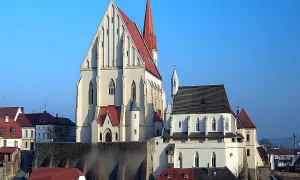
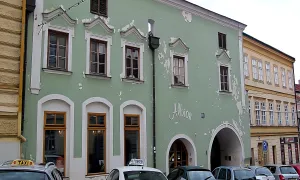
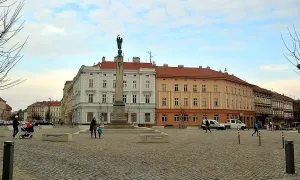
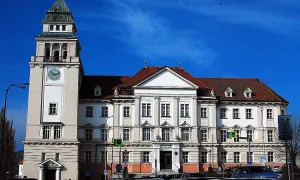
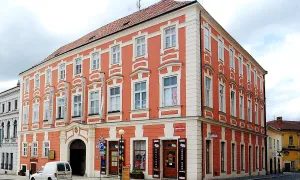
Mariánské náměstí, where the chapel once stood, is now part of Znojmo's urban landscape. The area features other historical sites and buildings within a 5 km radius.
Visualizations and artistic views


The visualisations are generated by artificial intelligence and serve as inspiration.
Photos from the area
Real photos taken near the monument


Zdroj a licence jsou uvedeny u každého snímku.
Tips from visitors
No tips yet. Be the first!
Log in and add your tip.
Sources and literature
Faktickým podkladem tohoto textu byl článek na Wikipedii, jehož autory jsou přispěvatelé Wikipedie. Článek je dostupný pod licencí CC BY-SA 4.0.
Location on the map

Příběhy a pověsti
Legendy, pověsti a příběhy spjaté s touto památkou
Fotografie návštěvníků
Zatím žádné fotografie. Buďte první, kdo přidá fotografii z návštěvy!
Log in a přidejte svou fotografii nebo hodnoťte.
Za ověřenou návštěvu v aplikaci získáte víc bodů — poznáme podle GPS, že jste na místě.
Reviews and comments