



kostel svaté Kateřiny (Znojmo) Church
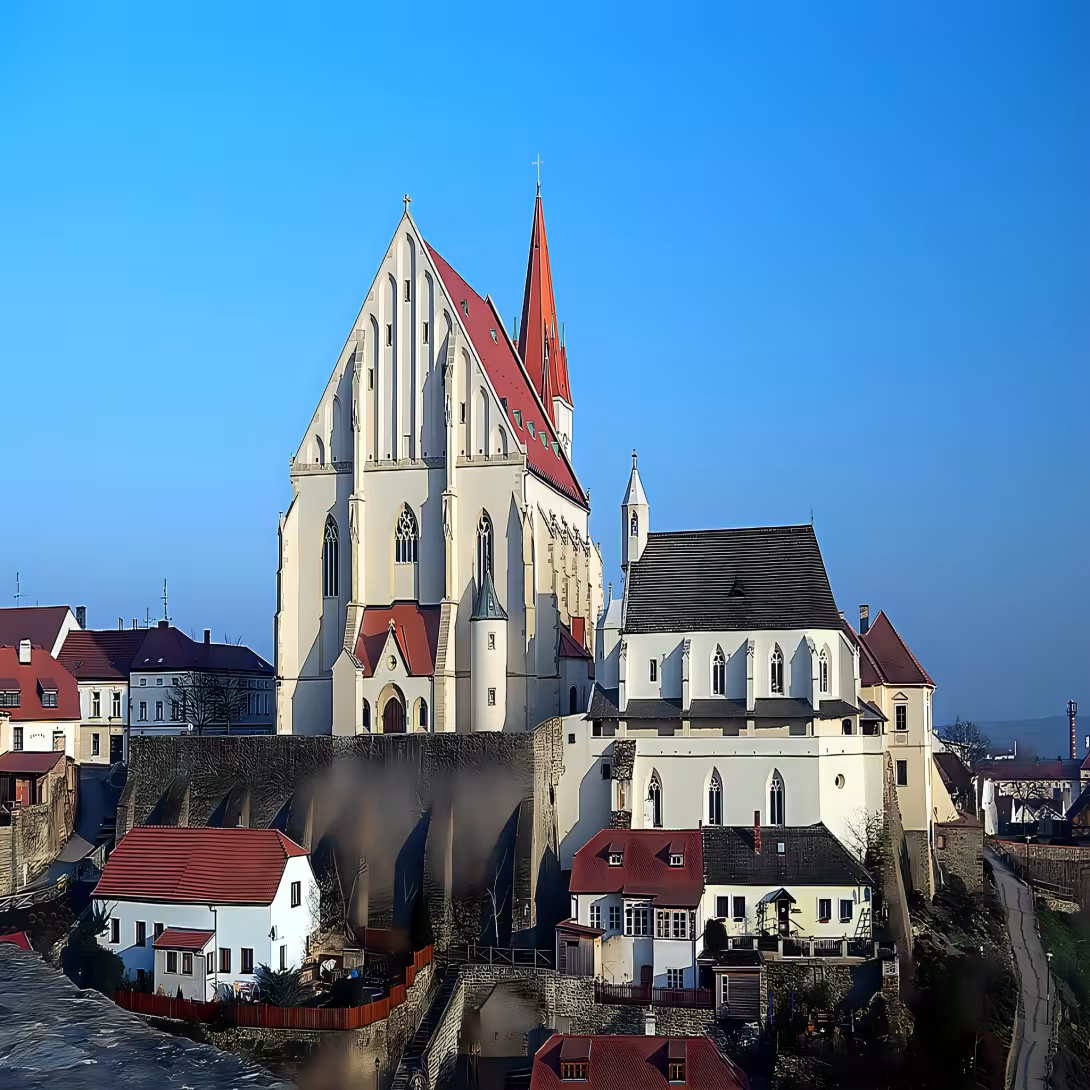
Objekt se nedochoval — na místě dnes nestojí. Následující text popisuje jeho historii, ne současnou návštěvu.
At the site of today's Freedom Square in Znojmo was once the church of St. Catherine - originally known as the church of St. Elizabeth. The construction took place in the Upper Suburb in front of the city walls and was part of a local hospital, which was starал about the poor and sick. This church was therefore of fundamental social importance for its time.
The hospital that owned the church disappeared at the end of the 16th century. The dedication went to another building in the second hospital in Lower Suburb. The construction on the Upper Suburb was then in the trash until the baker master Christian Corada restored it. Between 1702 and 1705 the church financed from its resources and gifts. The work was completed by the consecration of the church on 25 November 1705 by Dean Karl Tesch. Corada had several small flats built in the neighbourhood, which reminded the whole area of the monastery.
In 1714, Corada tried to get carmelitans to start a hospice in the location. However, the Znojemský Dean did not find the need for a third monastery of the beggar order in the city and the Consaire in Olomouc agreed - the management doubted the future economic autonomy of such an institution. Thus, the further development of a decent life has never happened.
Under the Yosefin reforms, the parish administration was reorganized. St. Catherine's Church, which has so far served as the philistine of St. Nicholas, has been promoted to a local subservient parish near the Holy Cross. His equipment came from abolished monasteries - among the bells were those from the Minorite monastery in Znojmo.
In 1825 the sacral existence of the building ended. It was cancelled as a local, desecrated and sold on January 10th for the benefit of the Moravian Religious Fund. The building was transformed into a living space - surprisingly, it served as a hostel for Jewish travellers who were banned from living within the city walls. Later, the building was demolished. Today, only the foundations of the Gothic church, protected as a cultural monument of the Czech Republic, remain.
Then and now
Drag the slider to compare how the landmark may have looked when it was built with the view today.
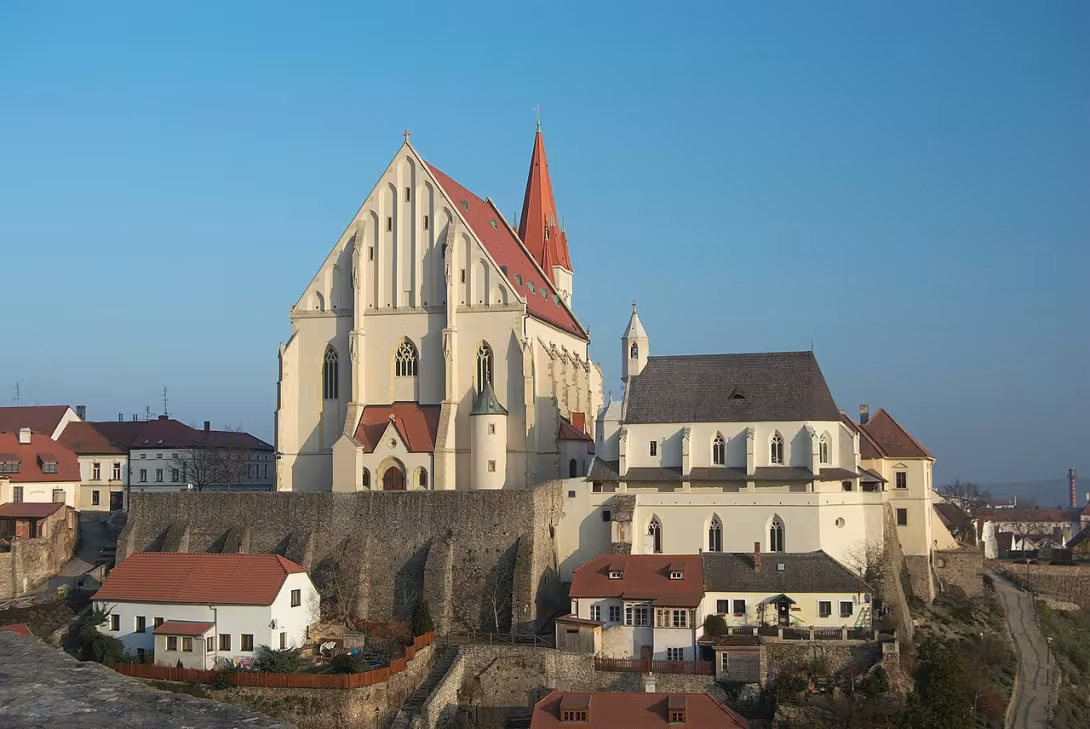

The historical appearance on the left is an AI-generated visualisation and serves as inspiration only.
Historical milestones
- 1702
- Beginning of church renewal
- 1705
- Church ordination
- 1825
- Sale of the church to the Moravian Religious Fund
Architectural development
Originally a Gothic temple from the 14th century, which was restored in the early 18th century. Later, the building was converted into a residential building and then demolished.
Historical events
1702-1705: Church renewal; 25 November 1705: Church ordination; 1825: Sale of the Moravian Religious Fund.
Owners
Moravian Religious Fund (since 1825)
Points of interest
- Originally, the church was known as St. Elizabeth's. He was part of a hospital for the poor and the sick in Upper Suburbia. - Between 1702 and 1705 it was restored by baker master Christian Corada from his own resources and gifts. - The church equipment came from the abolished monasteries, including the bells from the Minorite monastery in Znojmo. - The building later served as a hostel for Jewish travellers who were forbidden to live inside the city walls.
Guide
This guide is narrated by a synthetic voice generated by artificial intelligence.
Show guide text
This text was created by artificial intelligence and has not been editorially reviewed. It may contain inaccuracies.
On the present-day Svobody Square in Znojmo, in the place of the former Upper Suburbs, there once stood the Church of Saint Catherine. Today it no longer stands, but its remains are protected as a cultural monument of the Czech Republic, under the name of the foundation masonry of the originally Gothic Church of Saint Elizabeth. For the church changed its dedication throughout its history.
Originally it was a Gothic church of Saint Elizabeth, which belonged to a municipal hospital. That hospital was located outside the city walls. At the end of the sixteenth century the hospital ceased to exist and the dedication to Saint Elizabeth was transferred to a church in the Lower Suburbs, where the second hospital stood.
The abandoned church in the Upper Suburbs was renovated between seventeen hundred two and seventeen hundred five. A master baker named Christian Corada was instrumental in this, and the construction was paid for from private funds and donations. On the twenty-fifth of November, seventeen hundred five, the Znojmo dean Karel Tesch consecrated the church, this time as the Church of Saint Catherine.
Corada built several small apartments next to the church, so the entire compound resembled a monastery. His son was a layman of the Carmelite order in Vienna in Leopoldstadt. In seventeen hundred fourteen Corada attempted to enable the Carmelites to establish a hospice there. However, the Znojmo dean saw no need for a third mendicant monastery in the city. The consistory in Olomouc took the same view, for they did not believe that the monastery would be able to support itself economically in the future.
In the Josephine period the parishes were reorganized. The Church of Saint Catherine, previously a subsidiary to the Church of Saint Nicholas, was elevated to a localia within the parish of the Holy Cross. Its furnishings came from various dissolved monasteries. A second bell came from the minorite monastery in Znojmo, and later the church received a third bell as a gift.
In the year eighteen twenty-five the localia was abolished. The church was desecrated and on the tenth of January, eighteen twenty-five it was sold for the benefit of the Moravian Religious Fund. After reconstruction it became a residential building, which served as lodging for Jewish travelers. The laws of that time did not allow them to live within the city walls. Later the building was demolished.
For kids
Imagine going back to the past into the Middle Ages, right into the city of Znojma. Where would you go? What do you want to see?
It was like a game of "Magic Wizard" where you imagine yourself in another world. But this isn't a game, this is real! Znojmo was once a truly magical city. It lay by the river Dyje and was the capital of the entire region.
Businesses nearby
Do you run a restaurant, accommodation, shop, museum, rental, wellness or other visitor service near this monument? Show yourself directly to the people heading to it — this is how they will see you in the app and on the web:
Nearby
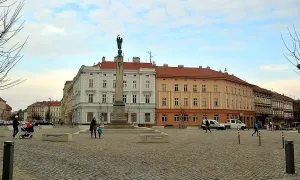
Freedom Square in Znojmo, former Upper Suburb.
Visualizations and artistic views


The visualisations are generated by artificial intelligence and serve as inspiration.
Photos from the area
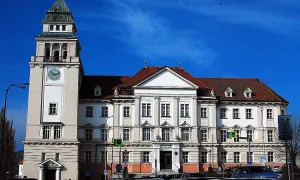
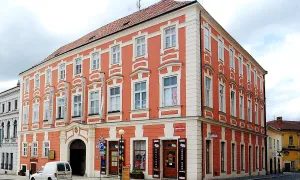
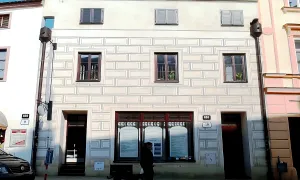
Real photos taken near the monument

Zdroj a licence jsou uvedeny u každého snímku.
Atmosphere of the place
This atmospheric visualisation of the place and period was generated by artificial intelligence. It is not real footage of the location.
Tips from visitors
No tips yet. Be the first!
Log in and add your tip.
Sources and literature
Faktickým podkladem tohoto textu byl článek na Wikipedii, jehož autory jsou přispěvatelé Wikipedie. Článek je dostupný pod licencí CC BY-SA 4.0.
Location on the map

Příběhy a pověsti
Legendy, pověsti a příběhy spjaté s touto památkou
Fotografie návštěvníků
Zatím žádné fotografie. Buďte první, kdo přidá fotografii z návštěvy!
Log in a přidejte svou fotografii nebo hodnoťte.
Za ověřenou návštěvu v aplikaci získáte víc bodů — poznáme podle GPS, že jste na místě.
Reviews and comments