

Maroldova vila Villa
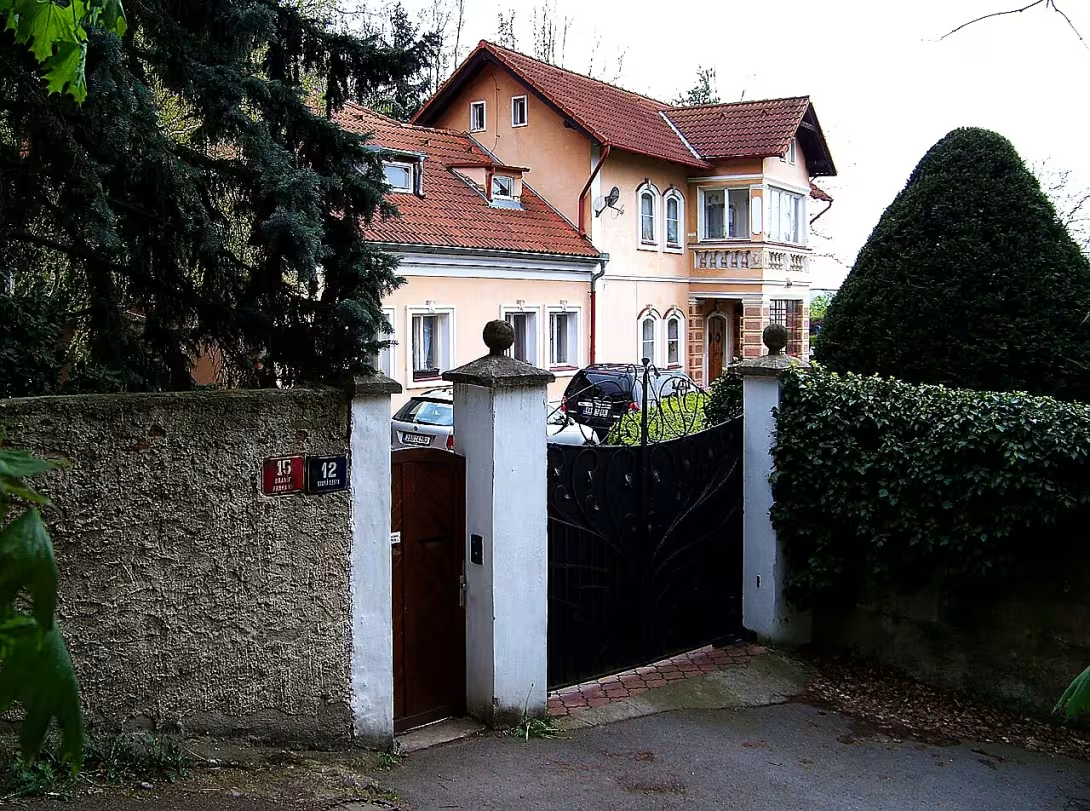
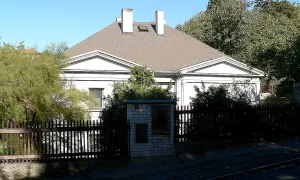
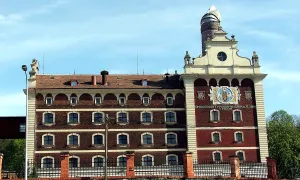
Maroldova vila is a classicist family house in Prague 4-Braník in Stará cesta street. It comes from the first half of the 19th century. The building is protected as a real cultural monument of the Czech Republic. It is important in its architecture, which is set in rocky terrain above Vltava.
The villa is situated below the southwest slope of the road leading to the residential district of Dobeška. Her history is closely linked to the painter Ludek Marold, who was born here in 1865. He was raised in this house by Aunt Joseph, sister of the painter's mother. Later, Joseph was also raised by Ludek's son and his wife.
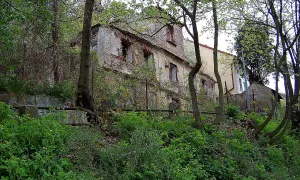
The monument protected area consists of a single-storey villa, a terraced garden, a fenced wall, a staircase and a garage with a terrace. The building consists of two parts which have been gradually modified. The older part of the house shows segmented windows with a jeweler at the top. On the ground floor, the windows are equipped with ribbon lining, a jewel in translation and a richly profiled crown ledge. The later extension was subsequently glazed on the ground floor and on the floor.
Among the other owners was the businessman Polenda, who repaired the villa. On the property he built a filling plant on a spring of water gushing from limestone massif. However, the expert subsequently demonstrated that the water is not drinking due to the high content of ammonia, which led to its introduction into the channel.
In the 1960s, the villa was in a decayed state, on the basis of which a demolition notice was issued. The destruction of the building prevented the early declaration of the house for a cultural monument. Subsequently, repairs were carried out and the last major reconstruction was carried out in the 1990s.
Maroldova vila presents a valuable example of historical residential architecture in Braník. Its preservation allows you to see the urban development of the Dobeška area. Visiting this place is recommended to all who are interested in Prague architecture of the 19th century.
Then and now
Drag the slider to compare how the landmark may have looked when it was built with the view today.
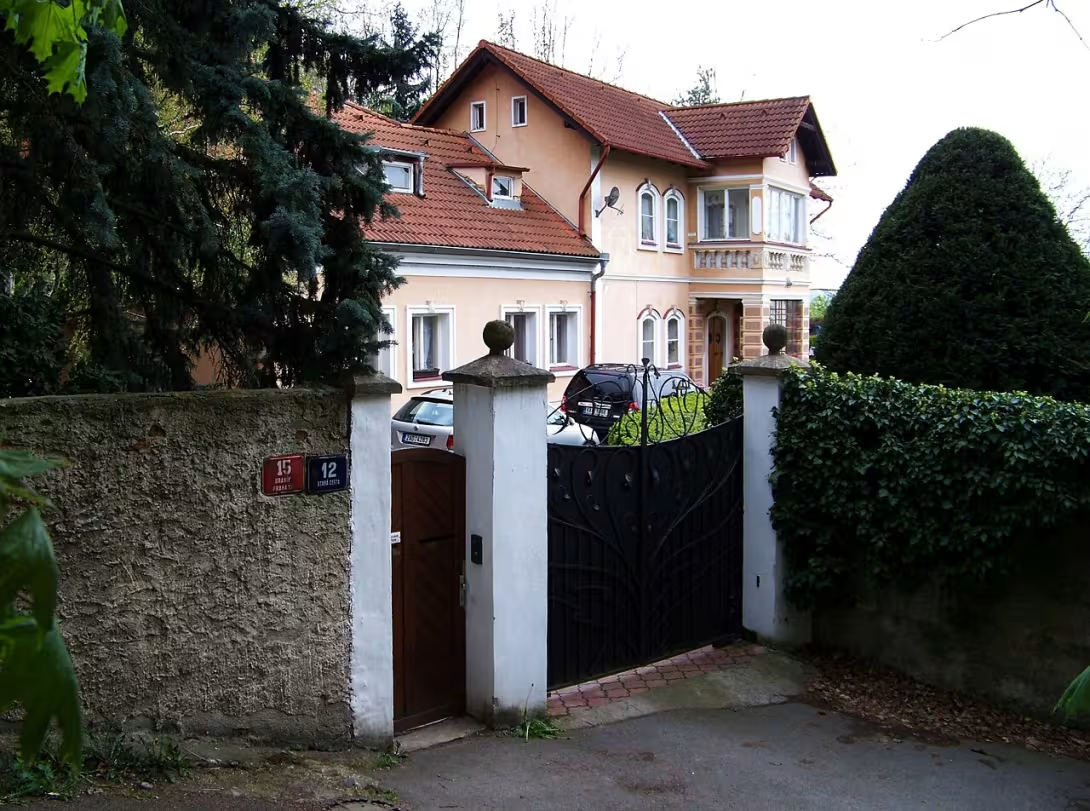
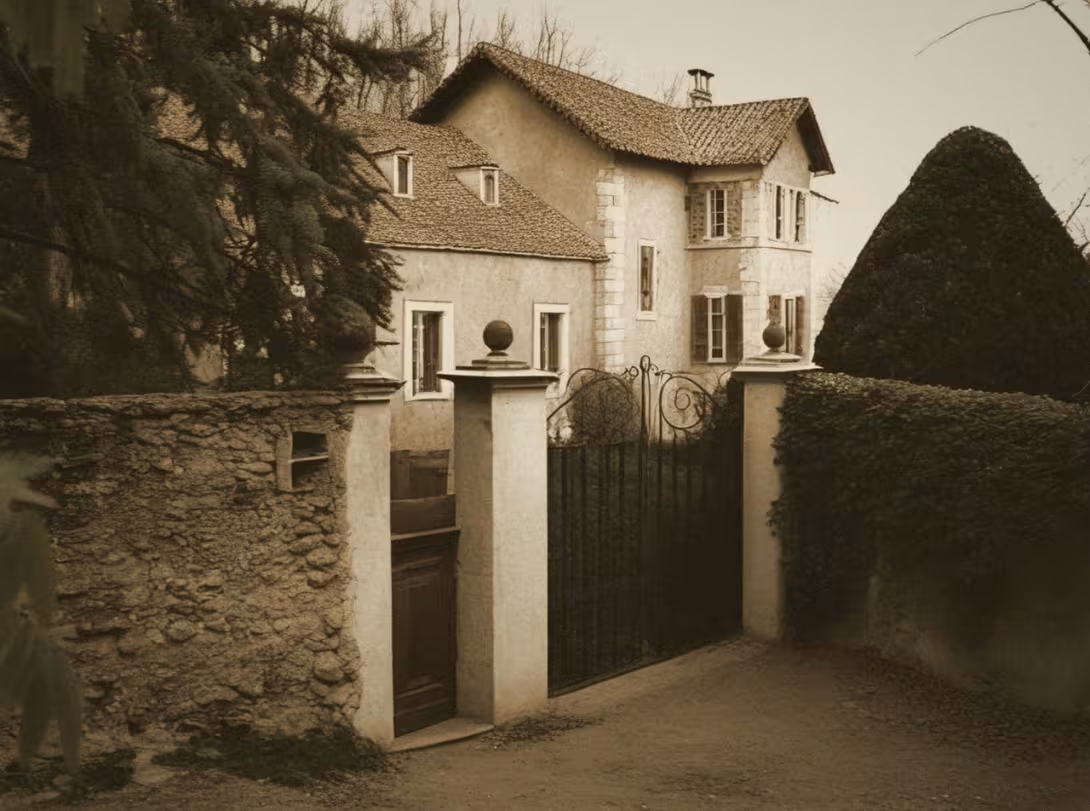
The historical appearance on the left is an AI-generated visualisation and serves as inspiration only.
Historical milestones
- 1865
- Birth of painter Luďka Marolda
- 1960
- Issue of a demolition area on a degraded object
- 1990
- Last major reconstruction of the building
Architectural development
The one-storey villa consists of two gradually modified parts. The older part shows windows segmented with a jeweler, while on the ground floor there are windows with a richly profiled crown ledge and ribbon edge. The ground floor and the annex floor were also glazed.
Historical events
In the 1960s, a demolition notice was issued to the building, but it was prevented from declaring the house a cultural monument.
Owners
Josef (aunt of painter Marold), businessman Polenda
Points of interest
- It's a classic family house from the first half of the 19th century, which is set in rocky terrain above the Vltava. - The painter Luděk Marold was born in the house and later his wife lived here. - Businessman Polenda built a water fountain here, but it was not drinking because of the high ammonia content. - In the 1960s, a demolition notice was issued for the house because it was in a decrepit state. - In addition to the one-storey villa, the memorial area includes a terrace garden, a wall, a staircase and a garage with a terrace.
Guide
This guide is narrated by a synthetic voice generated by artificial intelligence.
Show guide text
This text was created by artificial intelligence and has not been editorially reviewed. It may contain inaccuracies.
Welcome to Braník. Right now, you're standing in front of a building that carries silent testimony about ancient times, art and human destinies. In front of you is Maroldova vila, a family house that is today protected as a real-estate cultural monument. If you look at her, you may see her calm and certain grandeur brought to this place. The building is naturally set in rocky terrain above the Vltava River, which gives it a special character. You're standing in Old Road Street, and if you look behind the building, you'll see the slope of Dobeška, which, as a protective cloak, surrounds the entire area.
Let's go back in time a little bit now. This building dates back to the first half of the nineteenth century. At the time, it was not created here as a monumental building for nobles, but as a family house to be used for living. He's a typical classical-style representative, which means he's betting on balance and simplicity, without excessive ornaments. Imagine what this place looked like over a century ago, when the surrounding nature was even more wild and the way here was not as easy as today.
Now pay attention to what you see right in front of you and around you. Maroldova vila is not just the house itself, but the whole set of elements that form one harmonious whole. Notice how the space around the house is laid out. The area includes a terraced garden that follows the natural slope of the terrain. Take a look at the fenced wall that defines the privacy of this place, and also the staircase that connects the different levels of the garden and house. Also note the garage with terrace. Although these are details that may seem small, they tell the story of how people dealt with this rocky foundation and how they adapted space for their needs. See the front of the house and feel the atmosphere of the place where architecture and nature are connected.
When we talk about this house, we can't forget the personality that is inherent in it. He's a painter, Luděk Marold. This is where he was born in a thousand eight hundred sixty-five. Imagine a young boy growing up in this environment, surrounded by greenery and views of the river. The villa was not ruled by him at the time, but by his aunt Joseph, who raised him here. It is fascinating to think that it was in these walls that the childhood of a man who later became a famous painter was formed. Later his wife lived here, so the house became a real family home, where generations intertwined and everyday life mixed with a creative spirit.
But the history of this house is not just a story about art and family happiness. It's also a story about fighting time and extinction. If we look at the mid-twentieth century, namely the year one thousand nine hundred sixty, we find that the villa was in very poor condition. The building has been destroyed enough to issue a demolition notice. This means that at that time it was believed that the house was irreparable and would have to be levelled. But it is a lucky coincidence and a merit of the people that there has been no demolition. The building survived, and in the year one thousand nine hundred and ninety, it underwent the last major reconstruction, which can now stand before you in such a state and you can admire it.
Now I want to take you to one of the interesting things that may be a little unusual and a little funny, but it also speaks about the entrepreneurial spirit at the time. There was a businessman named Polenda at the villa. He built a filling house here on a spring of water. At that time, clean water was a valuable commodity, and Polenda wanted to profit from it. But nature had its own plan. Turns out the water from this spring wasn't drinking. Why? Because it contained too much ammonia. So imagine the disappointment of the people who came here hoping for a refreshing drink just to find that water from this place is chemically unsuitable for drinking. It's a little detail that reminds us that even in such a beautiful and historic place, things have become very earthly and practical.
Now, if you look at the villa as a whole again, remember what paradox we see here. On one side there is the fineness of the painting talent Luďka Marolda and the classicist elegance of the house, on the other side there is a rough rocky terrain, the threat of total destruction of the building and the undrinkable water from the spring. It's these contrasts that make Marold's villa a place with a soul. It's not just a dead building made of stone and mortar, but a living organism that has survived for decades, changes in regimes and its own decay.
Notice how the light hits the facade and how the house rises above the surroundings. It's a place that encourages thought. Who's been through here? What did Aunt Joseph talk to Ludek about? What kind of dreams did the painter have when he looked out the window at the brave landscape? These questions remain unanswered, but that is where the magic of visiting puppets like this lies.
I suggest you now go around the building in peace, walk around the area and try to imagine how the view of Prague in the nineteenth century fell apart from this place. Feel the silence that exists here and let the history of this house consume you. Maroldova vila is a small piece of Prague's children's puzzle, which reminds us that even in forgotten corners of the city there are great stories.
Thank you for walking together through the history of this house. I hope you are interested in Maroldova vila with its modesty and its endurance. It is now up to you whether you will continue to discover other brave beauties, or whether you will let the silence of this historic place be heard here for a while. I wish you a pleasant rest of the day and a wonderful experience while researching our city. Goodbye.
Tips for visitors
For the best experience we recommend a visit in spring or summer months, when the surrounding green is the most extinct and the building excels. The ideal time for viewing architecture is late afternoon, when the sun illuminates the facade at a mild angle.
The road to the place is possible both by car and through public transport. Please check the current connection and range options in the transport connection search engine.
If you want to focus on photography, you can get the best views of the building from the roads leading under the slope. The soft light during the late afternoon gives the historical walls a very pleasant look.
After visiting the villa, you can go for a walk in the nearby residential area of Dobeška or go towards the river Vltava. These areas are suitable for a quiet walk with the family.
For comfortable movements in this part of the city we recommend to take with you comfortable shoes, which is suitable for walking around the historic area.
Frequently asked questions
Can the monument be visited?
This is a residential or farm building, not a museum with opening hours. Please view it from public space and respect the owners' privacy. We have no information about access to the interior.
Where is the monument?
Location: Braník. The map on this page shows the exact spot.
Why is the monument protected?
It is listed in the Central List of Cultural Monuments of the Czech Republic as a cultural monument (register no. 1000001886).
Businesses nearby
Do you run a restaurant, accommodation, shop, museum, rental, wellness or other visitor service near this monument? Show yourself directly to the people heading to it — this is how they will see you in the app and on the web:
Events nearby
Zdroj akcí: otevřená data měst a obcí ČR (Národní katalog otevřených dat) a kalendář akcí Národního památkového ústavu.
Nearby
🏰 Historic sites (766)
- obětem Květen 1945 0.2 km
- Pomník obětem 1945 Karel Špirk 0.2 km
- Mistr Jan Hus 0.6 km
- Základní kámen TT Hlubočepy-Barrandov 0.7 km
- obětem a mstitelům 0.8 km
- Panna Maria Svatohorská 0.8 km
- Branické ledárny 0.9 km Ledařská 7/3
- svatý Jan Nepomucký 0.9 km
- Hradiště Děvín 1.2 km
- Musoleum 1.4 km Nádražní 2 +420 721 029 804 web
- Kostka Gallery 1.5 km
- JUDr. Milada Horáková 2.5 km
- Padlý hrdina Václav Veverka 2.6 km
- Pomník padlým v 1. světové válce 2.6 km
- Gotický sklep 2.7 km +420 261 225 304 web
- Libušina lázeň 2.7 km
- základy knížecí akropole 2.7 km
- Galerie Vyšehrad 2.7 km +420 261 225 304 web
- Remains of the Gothic Palace 2.7 km
- svatý Vavřinec 2.7 km
🍽️ Restaurants and dining (5434)
- Kulovna 0.1 km
- Grilled - Kebab & Pizza 0.1 km Ke Krči 1041/2 +420 607 454 838
- Na Jezerce 0.2 km web
- bar divadla Dobeška 0.2 km +420 604 442 978
- Periferie Cafe 0.3 km Branická 49 web
- Restaurace Trezor 0.4 km U Staré pošty 1 web
- Hostinec U kohouta 0.4 km Branická 65/147
- Objekt kafe 0.5 km Branická 224/73 web
- Il Giardino 0.5 km Bezová web
- U dvou kaštanů 0.6 km Branická 83 +420 776 377 555 web
- Cafe Residence 0.7 km Ke Krči 1873/60 +420 737 536 386 web
- Folklore Garden 0.7 km
- U Velasu 0.8 km
- OANH'S BANH MI 0.8 km
- Link Kitchen 0.8 km Jeremenkova 920
- SOHO 0.8 km Podolské nábřeží 1108/1 web
- Kofyka Café 0.8 km Podolská
- Gemüse Corner Kebab 0.8 km
- Čínské bistro FENG ZE 0.8 km Podolská 451/38 +420 241 403 146; +420 723 298 776
- Kebab To go 0.8 km +420773745185
🏨 Accommodation (814)
- U Divadla 0.4 km U Staré pošty 247/6 +420 777 738 609 web
- Hotel Bohemians 0.6 km Modřanská 1107/51 web
- Hotel Sanssouci 0.6 km web
- Intercamp Kotva 1.0 km web
- Prokop 1.1 km
- Braník 1.2 km
- Start 1.2 km Branická 146 +420244462950 web
- Botel Racek 1.3 km +420 241 004 811 web
- Barta a Tichý 1.6 km
- Minihotel Vitex 1.7 km Pravá 619/6
- Sporthotel Oáza 1.7 km +420 241 440 820 web
- Praguecamp 1.7 km Císařská louka 162 +420 702 145 150 web
- hotel Vladař 1.8 km
- Occidental Praha 2.0 km +420 296 772 111 web
- Hotel Smaragd 2.0 km
- Panorama Hotel 2.1 km Milevská 1695/7 +420 261 161 111 web
- Apartmány a ubytování Vila Barbora 2.1 km Doudova 22
- Michael 2.2 km +420 241 093 500 web
- Hotel iNOS 2.2 km
- Hotel Pankrác 2.4 km Na Pankráci 76 +420 261 211 918
🚲 Rentals and sport (546)
- Hoffi Surf Shop 0.2 km Modřanská 33/120 web
- Caravan Centrum 0.3 km
- Bushidokai Praha 0.5 km Ke Krči 593/35 +420 603 462 642 web
- Krab Cycles 0.6 km Modřanská 1107/51 +420 777 827 399 web
- Loděnice Bohemians 0.6 km
- Leman Sport 0.7 km Branická 275/93 +420 244 463 478 web
- Klub Kanoistů Slavia 0.8 km
- Skicentrum Podolí 0.8 km web
- Půjčovna lodiček 1.0 km +420 739 000 022 web
- Universitní sportovní klub Praha 1.1 km
- Areál loděnice Sparta Praha 1.1 km web
- FK Zlíchov 1914 1.2 km
- Devold Brand Store - Norská móda 1.2 km Strakonická 1151/2c +420 720 981 766 web
- Klubovna I. plaveckého klubu otužilců Praha 1.2 km U Kempinku 1801/2 web
- Kola na statku 1.3 km
- Plavecký areál Podolí 1.3 km Podolská 47 +420 220 407 311; +420 241 431 795 web
- Armádní sportovní centrum Dukla 1.4 km +420 973 219 582 web
- Tělocvičná jednota Sokol Pražský 1.4 km web
- ŘEKA - Klub pro vodní sporty, z.s. 1.4 km web
- Vodácký Ráj 1.5 km Císařská louka ev.27 +420 257 215 439; +420 603 441 272 web
🥾 Hiking and nature (389)
- Milenecká vyhlídka 0.1 km
- Jezerka 0.2 km
- skála Rozloučení 0.3 km
- Vávrova vyhlídka 0.3 km
- Klobouček 0.6 km
- park Adolfa Borna 0.9 km
- PP Dvorecké stráně 1.0 km
- Kavčí hory 1.2 km
- Děvín 1.6 km
- Pod Děvínem 2.1 km
- Libušina studánka 2.3 km
- Magorova studánka 2.3 km
- Na Rovinách 2.4 km
- Mariánský pramen 2.4 km
- Social Impact 2 2.7 km
- Paví vrch 2.7 km
- Vyšehrad 2.8 km
- Lumírovy sady 2.8 km
- Karlachovy sady 2.8 km
- Slavín 2.8 km
Accommodation nearby
Trips and activities nearby
Guided tours, tickets and activities nearby from GetYourGuide
Affiliate link: if you buy from the partner, we may receive a commission. The price for you does not change.
Search tours and activities →Themed route
Here is the design of the cruise route:
1. The residential area of Dobeška (residential area) - A walk between beautiful houses that shows a rich history of local architecture. 2. Maroldova vila (Memorial House) - The main destination of the journey, where one can admire the unique structure and its inner spaces. 3. River Vltava (water flow) - Ideal place to relax by the water and finish the trip in nature.
Seasonal recommendations
In spring, the villa of September accompanied by awakened nature and blooming trees. The soft spring light pleasantly highlights the facade details and the overall atmosphere is fresh. We recommend visiting the place in the morning when the air is the cleanest. Due to the variable weather, it is advisable to wear a light jacket or raincoat.
The summer season brings rich green vegetation and sharp contrasts that give the construction a plastic look. The sun fully illuminates the entire area of the house, which is ideal for observing architecture. The best time to walk are early mornings or late evenings when it is not too hot. Don't forget the comfortable, light shoes and sun protection.
In autumn the surroundings of the villa turn into golden and brown tones, which coincides with the historical character of the building. A fog wound gives the place a mysterious and peaceful atmosphere. For the best visual experience, choose the afternoon time when the low sun hits the walls beautifully. Get dressed in layered clothes and prepare your scarf against the cold wind.
In winter, the building acts sparingly and stands out significantly from the landscape due to exposed vegetation. Snow can create a clear contrast with the colour of the facade, which is very harmonious. We recommend a short visit in full winter equipment including warm gloves and hat. The ideal time is around noon when the most daylight is available.
Visualizations and artistic views


The visualisations are generated by artificial intelligence and serve as inspiration.
Photos from the area
Real photos taken near the monument


Zdroj a licence jsou uvedeny u každého snímku.
Tips from visitors
No tips yet. Be the first!
Log in and add your tip.
Sources and literature
Photos: ŠJů / CC BY-SA 3.0 — Wikimedia Commons. The author and licence also appear when you hover over the image.
Faktickým podkladem tohoto textu byl článek na Wikipedii, jehož autory jsou přispěvatelé Wikipedie. Článek je dostupný pod licencí CC BY-SA 4.0.
Location on the map
Příběhy a pověsti
Legendy, pověsti a příběhy spjaté s touto památkou

Fotografie návštěvníků
Přidat fotografiiZatím žádné fotografie. Buďte první, kdo přidá fotografii z návštěvy!
Máte k místu vzpomínku nebo zajímavý příběh?
Log in a přidejte svou fotografii nebo hodnoťte.
Za ověřenou návštěvu v aplikaci získáte víc bodů — poznáme podle GPS, že jste na místě.
Reviews and comments
⭐ Byli jste tu? Ohodnoťte památku a pomozte dalším. Přihlásit přes Google →