






Úpravna vody a čerpací stanice vršovické vodárny Waterworks
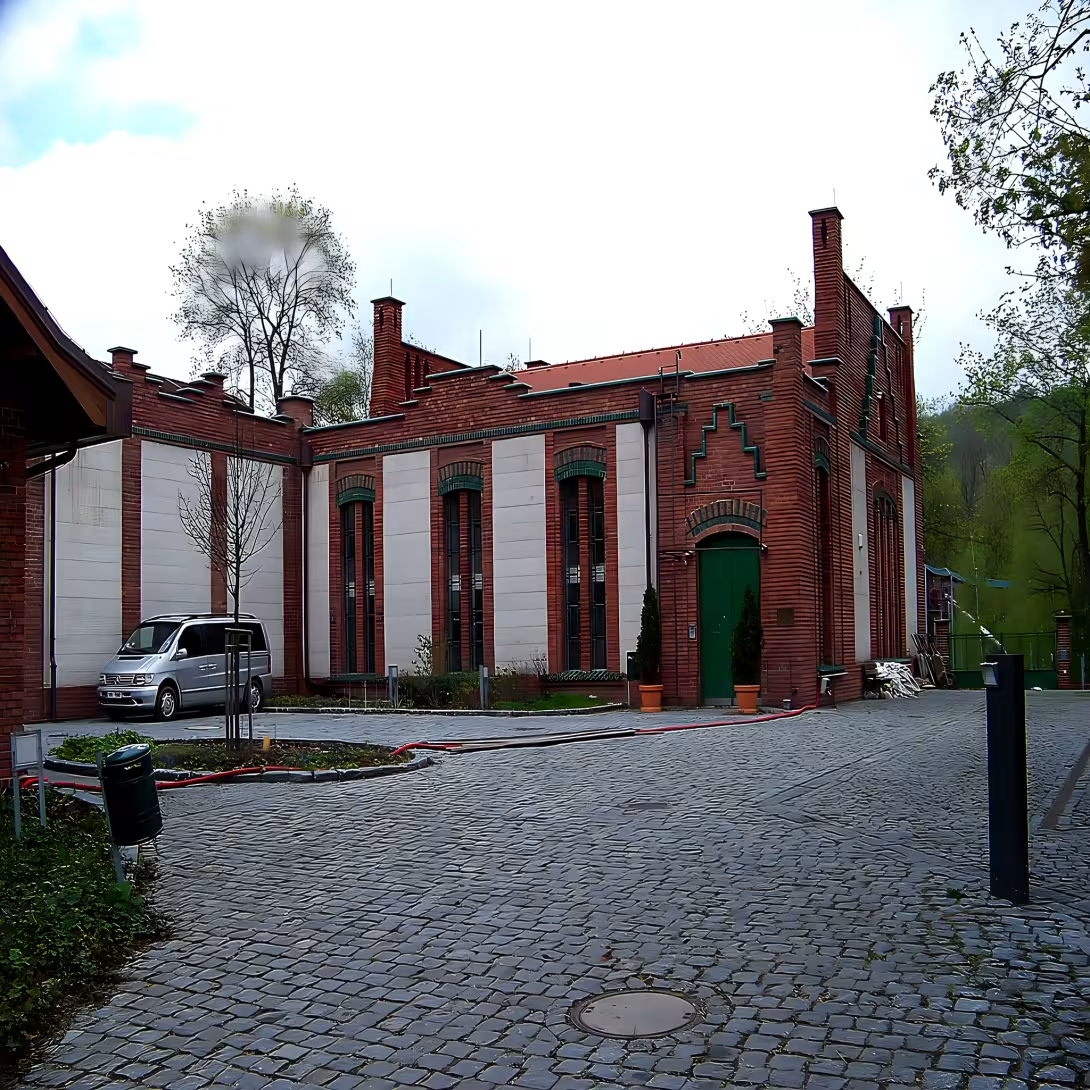
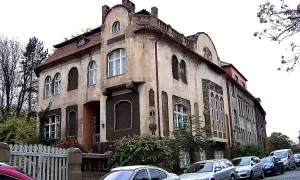
The Úpravna vody a čerpací stanice vršovické vodárny, a historic water treatment plant, is located in Braník, Prague. Built in 1907, it features a unique geometric secession style design. Originally designed to supply drinking water to Vršovice, the plant was constructed between 1906 and 1907.
The origin of the Úpravna vody a čerpací stanice vršovické vodárny dates back to 1905, when the source of water was identified. Jan Kotěra created the design, which has become iconic in Prague's architectural landscape.
The original structure included two intake wells, a machinery room, a coal-fired boiler house, and a residential building. Over time, the plant underwent expansions and modernizations, including the addition of new machinery and infrastructure. In 1921-1922, it was expanded to increase its capacity and efficiency.
Throughout its operational years, the Úpravna vody a čerpací stanice vršovické vodárny played an important role in supplying drinking water to Prague's residents. During the 1950s, it served as a backup source of drinking water, and from the 1960s until the 1970s, it was used as a reserve water source for civil defense purposes.
Today, the Úpravna vody a čerpací stanice vršovické vodárny is a protected cultural monument in the Czech Republic. Between 2009-2011, the site underwent a comprehensive restoration project, which included renovating the original building's facade and creating a new park area. The restored plant now serves as a cultural and social center, offering visitors a unique glimpse into Prague's industrial past.
The Úpravna vody a čerpací stanice vršovické vodárny is an important piece of Prague's history, with its geometric secession style design making it a must-see for architecture enthusiasts. Visitors can explore the restored plant and learn about its significance in Prague's water supply system.
Historical milestones
- 1905
- Water source identified for the plant
- 1906-1907
- Construction of the water treatment plant
- 1921-1922
- Expansion to increase capacity and efficiency
- 1950s
- Used as backup drinking water source in the 1950s
- 1960s-1970s
- Reserve water source for civil defense (1960s‑1970s)
- 2009-2011
- Comprehensive restoration; now a cultural centre (2009‑2011)
Architectural development
The plant was built according to the design of Jan Kotěra, featuring a geometric secession style. The original structure included two intake wells, a machinery room, a coal-fired boiler house, and a residential building.
Historical events
Source of water identified in 1905
Construction completed in 1907
Expansion and modernization in 1921-1922
Points of interest
– The Úpravna vody a čerpací stanice vršovické vodárny is a historic water treatment plant located in Braník, Prague.
– Built in 1907, it features a unique geometric secession style design that has become iconic in Prague's architectural landscape.
– The plant was originally designed to supply drinking water to Vršovice and underwent expansions and modernizations over the years.
– It played an important role in supplying drinking water to Prague's residents throughout its operational years.
Guide
Show guide text
This text was created by artificial intelligence and has not been editorially reviewed. It may contain inaccuracies.
Welcome to Braník. As you stand here today, take a moment to truly absorb the presence of the building before you. You are looking at the Úpravna vody a čerpací stanice vršovické vodárny, a structure that serves as a magnificent testament to the industrial and architectural ambition of early twentieth-century Prague. It is easy to overlook such sites when they blend into the urban landscape, but as you stand here, try to sense the weight of its history and the purpose it was built to serve. This is not merely a collection of walls and roofs; it is a monument to the vital necessity of water and the era of rapid urban expansion that shaped the city we know today.
To understand why this building exists in this specific form, we must travel back in time to the very beginning of the twentieth century. At that time, the neighborhood of Vršovice was growing, and with growth came the urgent need for reliable, clean drinking water. The quest for a solution began in 1905, when a suitable water source was finally identified, setting the stage for one of the most significant infrastructure projects of the era. Construction began shortly after, and by 1907, the Úpravna vody a čerpací stanice vršovické vodárny was complete. It was designed with a singular, clear mission: to provide the lifeblood of the Vršovice district, ensuring that as the population expanded, the quality of life followed suit.
As you begin to look more closely at the structure, I invite you to direct your attention to its unique architectural character. This building is a masterpiece of the geometric secession style, a movement that sought to move away from the overly ornate, floral patterns of earlier Art Nouveau and toward something more structured, modern, and rhythmic. This design was the vision of Jan Kotěra, one of the most influential architects in Czech history. Kotěra was a pioneer, a man who understood that even a functional, industrial facility like a water treatment plant deserved to be a work of art.
As you observe the facade, notice how the architecture speaks through shape and line rather than through excessive decoration. The geometric secession style is evident in the way the building utilizes form to create a sense of order and strength. Look at the rhythm of the windows, the precision of the lines, and the way the overall composition feels both solid and sophisticated. Even without looking at specific ornaments, you can feel the modernity that Jan Kotěra intended to convey. He believed that architecture should be honest and integrated with its purpose, and in this water treatment plant, you can see that harmony between industrial utility and aesthetic elegance. The building does not just house machinery; it expresses the confidence of an era that believed progress and beauty could go hand in hand.
The story of this site did not end with its initial construction in 1907. Like many great landmarks, it evolved alongside the city. As the needs of Prague changed, so did the facility. Between 1921 and 1922, the plant underwent a significant expansion. This was not merely a cosmetic change but a necessary evolution to increase its capacity and efficiency, ensuring it could meet the demands of an even larger and more complex urban environment. This period of growth reflects the broader history of Prague itself—a city constantly adapting, expanding, and refining its infrastructure to support its people.
As we move forward through the decades, the role of the Úpravna vody a čerpací stanice vršovické vodárny took on even more serious, almost secretive, undertones. During the 1950s, the plant served as a vital backup drinking water source, a silent guarantor of safety for the citizens. This importance only intensified during the 1960s and 1970s. During these decades, the facility was designated as a reserve water source for civil defense. Imagine the building during those years—a functional, highly controlled site, standing as a critical component of the city's emergency preparedness. It was a place of utility and necessity, tucked away in the landscape, performing a vital role that most people would never even think about, yet one that was essential for the stability of the community.
For many years, the building remained a silent witness to the passing of time, its industrial purpose slowly fading as newer technologies and different urban priorities emerged. However, the story of this site reached a beautiful turning point at the start of the twenty-first century. Recognizing the immense historical and architectural value of Jan Kotěra's work, a comprehensive restoration project was launched between 2009 and 2011. This was a period of rebirth. The goal was not just to repair the structure, but to breathe new life into it, preserving the integrity of the geometric secession design while preparing it for a completely different future.
Today, you are witnessing the result of that careful preservation. The Úpravna vody a čerpací stanice vršovické vodárny has completed its transformation from a closed industrial facility into a vibrant cultural centre. It has transitioned from a place that processed water to a place that processes ideas, art, and community connection. It is a rare and wonderful thing to see a building move from the realm of pure utility into the realm of culture, yet this site has done so with remarkable grace.
There is something truly fascinating about the way this building has survived. It has been a provider of life through water, a guardian of safety through civil defense, and now, a provider of inspiration through culture. It has stood through the rapid growth of the early 1900s, the expansions of the 1920s, the tensions of the Cold War era, and finally, the modern era of restoration and renewal.
As you continue your walk around the site, I encourage you to look at the building from different angles. Notice how the light hits the geometric surfaces and how the structure commands its space in Braník. Whether you are interested in the technical history of water management, the architectural genius of Jan Kotěra, or simply the atmosphere of a beautifully restored historic landmark, there is much to discover here. Take your time, feel the history beneath your feet, and enjoy the unique character of this extraordinary place. Thank you for joining me on this brief journey through time. Please, continue your exploration and enjoy the rest of your visit.
Tips for visitors
The best time to visit the Úpravna vody a čerpací stanice vršovické vodárny is during spring or autumn when the weather is mild and sunny, making it perfect for photography.
Parking is available near the site, but be aware that spaces are limited. You can also use public transportation, with buses and trams running regularly in the area.
When visiting, don't forget to bring a camera to capture the unique architecture of this historic water treatment plant. Wear comfortable shoes for walking around the site.
For photography enthusiasts, the best spots to capture stunning images are near the main building and along the surrounding paths. The golden hour is ideal for capturing beautiful light.
If you're looking for something to do nearby, consider visiting the Braník neighborhood, which offers a charming atmosphere and local shops to explore.
Businesses nearby
Events nearby

Zdroj akcí: otevřená data měst a obcí ČR (Národní katalog otevřených dat) a kalendář akcí Národního památkového ústavu.
Accommodation nearby
Trips and activities nearby
Guided tours, tickets and activities nearby from GetYourGuide
Affiliate link: if you buy from the partner, we may receive a commission. The price for you does not change.
Search tours and activities →Themed route
Braník Waterworks and Surroundings
The main attraction of this tour is the Braník Water Treatment Plant and Pumping Station, a unique industrial heritage site. The surrounding area offers a glimpse into the history and daily life of the community.
Stop 1: Braník Water Treatment Plant Type: Industrial Heritage Site Why visit: This impressive plant has been in operation since the early 20th century, providing clean water to the local population. Take a guided tour to learn about its history and inner workings.
Stop 2: Vršovická Street Type: Local Street Life Why visit: This charming street is lined with shops, cafes, and restaurants, offering a taste of everyday life in Braník. Stop by the local bakery for a traditional Czech pastry or grab a coffee at one of the cozy cafes.
Stop 3: Braník Park Type: Green Oasis Why visit: This peaceful park is a great place to relax and unwind, surrounded by lush greenery and scenic views. Take a leisurely stroll or sit down on a bench and enjoy the tranquility of this hidden gem.
Stop 4: Komenského Square Type: Local Community Hub Why visit: This bustling square is the heart of Braník's social scene, hosting various events and festivals throughout the year. Grab a snack from one of the food stalls or simply people-watch and soak up the atmosphere.
This tour offers a unique blend of industrial heritage, local culture, and natural beauty, providing an unforgettable experience in the charming town of Braník.
Seasonal recommendations
Spring brings a refreshing energy to Úpravna vody a čerpací stanice vršovické vodárny (vodárna) in Braník. The awakening nature and budding greenery provide a soft, vibrant contrast to the industrial architecture, while the gentle spring light is ideal for photography. Visitors should wear layered clothing to adapt to fluctuating temperatures and are encouraged to visit during weekday mornings to enjoy a quieter atmosphere.
During the peak summer season, the site is bathed in bright, intense sunlight that emphasizes the rich textures of the brickwork. The surrounding foliage is at its lushest, creating a shaded sanctuary within the urban environment. To avoid the midday heat and the largest crowds of the season, it is best to arrive early in the morning, wearing light, breathable clothing and bringing sun protection.
Autumn transforms the area around Úpravna vody a čerpací stanice vršovické vodárny (vodárna) with a palette of gold and amber leaves, creating a moody and nostalgic atmosphere. The soft, slanted light of the late afternoon is particularly striking against the historical structures. Practical footwear, such as waterproof boots, is recommended for the damp ground, and late afternoon visits are ideal for capturing the golden hour.
In winter, the site takes on a serene and stark beauty, especially when the red bricks are contrasted against a blanket of snow or a grey, wintry sky. The atmosphere is quiet and contemplative, offering a peaceful escape from the city. Visitors must dress in warm, thermal clothing and should keep in mind that opening hours are typically shorter during this period, particularly during the advent season.
Visualizations and artistic views


The visualisations are generated by artificial intelligence and serve as inspiration.
Photos from the area
Real photos taken near the monument

Zdroj a licence jsou uvedeny u každého snímku.
Tips from visitors
No tips yet. Be the first!
Log in and add your tip.
Sources and literature
Fotografie: ŠJů / CC BY-SA 3.0, rozlišení zvýšeno umělou inteligencí — Wikimedia Commons. The author and licence also appear when you hover over the image.
Faktickým podkladem tohoto textu byl článek na Wikipedii, jehož autory jsou přispěvatelé Wikipedie. Článek je dostupný pod licencí CC BY-SA 4.0.
Location on the map
Příběhy a pověsti
Legendy, pověsti a příběhy spjaté s touto památkou
Fotografie návštěvníků
Zatím žádné fotografie. Buďte první, kdo přidá fotografii z návštěvy!
Přihlaste se a přidejte svou fotografii nebo hodnoťte.
Za ověřenou návštěvu v aplikaci získáte víc bodů — poznáme podle GPS, že jste na místě.
Reviews and comments