






Matiční ulice Other
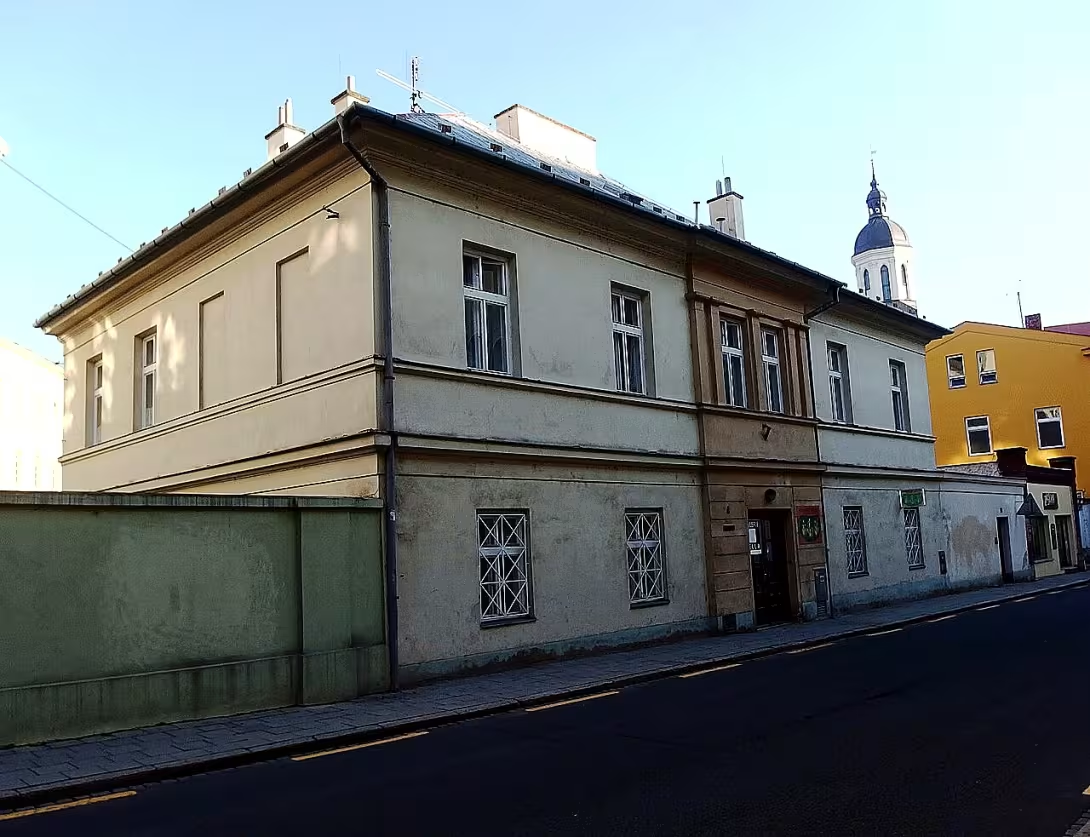
Matiční ulice in Ústí nad Labem is notable for a controversial wall constructed there in 1999. Situated in the Krásné Březno district, this site became a symbol of social division between family home residents and marginalized inhabitants, primarily from the Roma community. The wall's brief existence drew significant national and international attention due to its implications on human rights and social integration.
The origins of Matiční ulice's notoriety trace back to 1998 when discussions began about constructing a barrier to address complaints from long-term residents regarding the behavior of marginalized inhabitants, particularly Roma people. The wall was completed in October 1999 but faced immediate opposition and was demolished by November of the same year. This incident occurred against a backdrop of broader European discussions on social inclusion and minority rights during the late 1990s.
Architecturally, the wall was initially planned as a four-meter-high sound barrier but was ultimately constructed at 1.8 meters using ceramic bricks. The design included plans for adjacent children's playgrounds near social housing blocks. Despite its construction, domestic and international pressure led to its dismantling after just six weeks.
The Czech government played a role in the events surrounding Matiční ulice by providing funds for relocating some homeowners as part of efforts to resolve tensions related to the wall's construction. This intervention highlighted the complexities involved in addressing socio-economic disparities within urban settings.
Key events at Matiční ulice include immediate opposition faced by the wall upon its completion, with dozens of Roma physically blocking its construction and dismantling parts that had already been built. The wall's demolition was influenced by both domestic and international pressure, including criticism from figures such as American congressman Christopher Smith and European Commissioner Günter Verheugen. After its removal, parts of the wall were repurposed at a zoo in Ústí nad Labem to separate areas within the facility.
Today, Matiční ulice stands as a poignant reminder of the challenges associated with social integration and human rights. The site is worth visiting for those interested in understanding the socio-political dynamics of the late 1990s in Czech society. It serves as an educational example of how physical barriers can symbolize deeper societal issues that require thoughtful resolution beyond mere construction or demolition.
Historical milestones
- 1999
- The controversial wall in Matiční ulice was constructed.
- 1999
- The wall was demolished following protests and political intervention.
Architectural development
Initially planned as a four-meter-high sound barrier, the wall was ultimately constructed at 1.8 meters using ceramic bricks. It included plans for adjacent children's playgrounds near social housing blocks. The wall was dismantled after six weeks due to domestic and international pressure.
Historical events
In 1998, discussions began about constructing a barrier in Matiční ulice to address complaints from long-term residents about the behavior of socially marginalized inhabitants, primarily Roma people. The wall was completed in October 1999 but faced immediate opposition and was demolished by November of the same year.
The Czech government provided funds for the relocation of some homeowners as part of efforts to resolve tensions related to the wall's construction.
Points of interest
- The wall at Matiční ulice was initially designed to be a four-meter-high sound barrier but ended up being constructed at 1.8 meters using ceramic bricks, reflecting the tension between intended security measures and practical execution.
- After its demolition, parts of the controversial wall were repurposed at a zoo in Ústí nad Labem, serving as an unusual reminder of the site's history by separating different areas within the facility.
- The Czech government’s involvement included funding for relocating some homeowners to mitigate tensions related to the wall's construction, highlighting the complex socio-economic challenges faced during this period.
- International criticism played a significant role in the wall's demolition, with figures such as American congressman Christopher Smith and European Commissioner Günter Verheugen voicing their opposition, illustrating the global attention the incident garnered.
- Despite its brief existence of just six weeks, Matiční ulice became an enduring symbol of social division and human rights issues, serving as a poignant reminder of the challenges associated with integrating marginalized communities.
Guide
This guide is narrated by a synthetic voice generated by artificial intelligence.
Show guide text
This text was created by artificial intelligence and has not been editorially reviewed. It may contain inaccuracies.
Welcome. You are standing in front of one of the most controversial landmarks in Ústí nad Labem – Matiční Street. Look up and take a deep breath. It looks like time has stopped here. Take a look at the facades of the buildings that adorn the street. Notice that some of them look quite unusual.
Let's move forward in time. In 1999, a controversial wall was built here intended to serve as a four-meter sound barrier. However, it was ultimately constructed only 1.8 meters high from firebrick. As you can see, it appears to have been built with some tension between the original intention and practical execution.
Now pay attention to what happened after this wall's demolition. After its removal, some of its parts were dismantled and used for other purposes. Some of them are now located in museums and galleries where they serve as a reminder of this controversial event.
This is a place where different communities meet and important events have taken place. Although there were no significant personalities who made history here, there are many stories worth listening to. One such story is about how people tried to overcome their differences and sought ways to understand each other.
An interesting fact is that this wall was just one of many similar structures in Europe at the time. However, its existence had a fundamental impact on local communities and became a symbol of division. After its demolition, a new chapter could begin in the city's history.
Come take a closer look and explore this landmark from various angles. It is a place that will stay with you even after your visit.
Tips for visitors
The best time to visit Matiční ulice is during late spring or early fall when the weather is pleasant, allowing for a comfortable exploration of the area without the extremes of summer heat or winter cold. This period also offers softer natural lighting which can enhance the visual experience of the site's historical and architectural elements.
When visiting Matiční ulice, it's advisable to bring comfortable walking shoes and weather-appropriate clothing, as you may spend time exploring the surroundings on foot. A camera or smartphone with a good camera is recommended to capture the unique architectural features of the controversial wall and other sights in the area.
For photography enthusiasts, early morning light can offer dramatic shadows and highlights along Matiční ulice, making it an ideal time for capturing compelling images of the wall and its surroundings. Additionally, visiting during less busy times, such as weekday mornings, may provide opportunities for more candid shots without large crowds.
Nearby attractions within a 30-minute travel distance include other historical sites in Ústí nad Labem that offer insight into the city's rich cultural heritage. Families with children might enjoy exploring these areas together, providing both educational value and entertainment as they learn about local history.
Frequently asked questions
Can the monument be visited?
We have not verified whether this monument is accessible. Please ask the owner or operator, or the local municipal office.
Where is the monument?
Location: Ústí nad Labem, Ústecký kraj. The map on this page shows the exact spot.
Businesses nearby
Do you run a restaurant, accommodation, shop, museum, rental, wellness or other visitor service near this monument? Show yourself directly to the people heading to it — this is how they will see you in the app and on the web:
Accommodation nearby
Themed route
From Matiční Street, we head towards the Churches of the Most Holy Trinity (about 0.5 km). We enter the historic center of the city and visit the baroque church from the years 1710–1712.
From there, we head towards Republic Square (about 0.2 km). Here you will find a statue of St. John of Nepomuk and a memorial to victims of Nazi terror.
From the square, we head towards Church of St. James (about 0.3 km). This is a Romanesque rotunda from the 12th century.
From the church, we head towards Peace Square (about 0.2 km). Here you will find a memorial to victims of World War I and a statue of St. John of Nepomuk.
Seasonal recommendations
Jaro
In the springtime, Matiční Street in Ústí nad Labem is enlivened by activity. The forests around the city begin to bloom and trees are adorned with flowers. The atmosphere is full of optimism and hope for a new beginning. For visitors, the best time to visit Matiční Street during the spring season is in May or April when the weather is warm and sunny. We recommend bringing light clothing suitable for leaving winter behind, such as bright outfits and boots with good grip, to prevent falls on wet pavements.
Léto
In the summer season, Matiční Street in Ústí nad Labem buzzes with life and energy. Tourists and visitors mingle with locals, creating a relaxed and laid-back atmosphere. The best time for a visit is in June or July when the weather is warm and sunny. We suggest arriving early before larger crowds gather so that visitors can explore the landmark in peace without unnecessary delays.
Podzim
In autumn, Matiční Street in Ústí nad Labem is surrounded by the colors of fall foliage. The forests around the city turn into shades of gold, orange, and red, creating a beautiful atmosphere. For visitors, the best time to visit Matiční Street during the autumn season is in September or October when the weather is cooler but still pleasant. We recommend bringing suitable clothing such as warm outfits and boots with good grip to prevent falls on wet pavements.
Zima
In winter, Matiční Street in Ústí nad Labem is quiet and peaceful. Snowflakes cover trees and streets, creating a serene atmosphere. For visitors, the best time to visit Matiční Street during the winter season is in December or January when the weather is cold and snowfall is frequent. We recommend bringing warm clothing and boots with good grip to prevent falls on wet pavements.
Visualizations and artistic views


The visualisations are generated by artificial intelligence and serve as inspiration.
Tips from visitors
No tips yet. Be the first!
Log in and add your tip.
Sources and literature
Faktickým podkladem tohoto textu byl článek na Wikipedii, jehož autory jsou přispěvatelé Wikipedie. Článek je dostupný pod licencí CC BY-SA 4.0.




Příběhy a pověsti
Legendy, pověsti a příběhy spjaté s touto památkou
Fotografie návštěvníků
Zatím žádné fotografie. Buďte první, kdo přidá fotografii z návštěvy!
Log in a přidejte svou fotografii nebo hodnoťte.
Za ověřenou návštěvu v aplikaci získáte víc bodů — poznáme podle GPS, že jste na místě.
Reviews and comments