



Mauzoleum jugoslávských vojínů Mausoleum
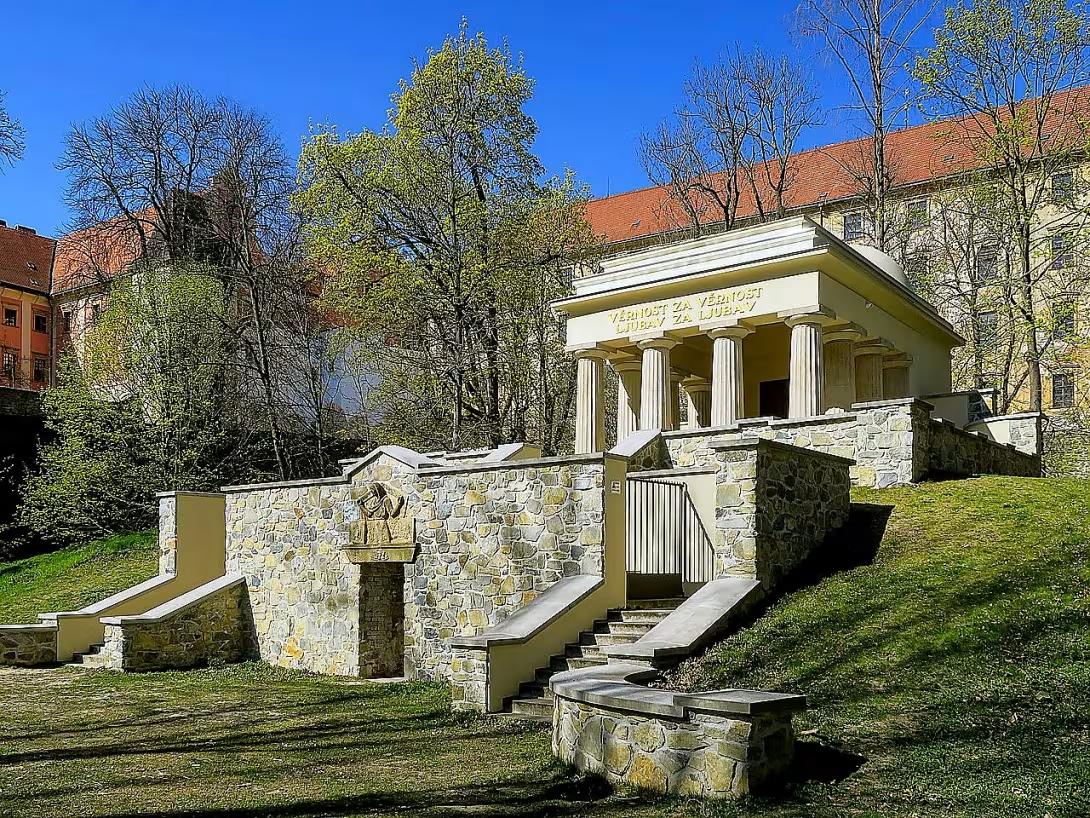
Mauzoleum jugoslávských vojínů is located in Handless orchards in the historical center of Olomouce. This monumental building in the style of neoclassicism was built in 1926 and serves as a final rest for approximately 1200 Yugoslav soldiers who died during the First World War. Mausoleum is important not only architecturally and historically, but also as a symbol of mutual gratitude between Czechoslovakia and Yugoslavia.
According to the design of architect Hubert Aust, the mausoleum was built at the expense of the Czechoslovak-South Slavic League. Its creation is linked to the historical context after the First World War, when Czechoslovakia sought to consolidate relations with newly created countries like Yugoslavia. The ceremony of the mausoleum took place on 11 July 1926 and has since become an important monument for the inhabitants of Olomouce and the region.
Architectural mausoleum is characterized by stylized design of neoclassicism. The chapel has an 11 metres high dome and three rows of Doric columns located on an artificially led hill. The interior contains a cube of 14 × 7 metres, where the remains of the soldiers are stored in small wooden coffins. The skeleton is accessible by a walled portal decorated with sandstone relief of grieving women and the characters of Yugoslavia and Czechoslovakia, created by sculptor Julius Pelikan. Above the entrance to the crypt there is a relief with similar symbolism and the inscription "TRUTH - LJUBAV ZA LJUBAV," expressing a bond between the two countries.
The original owner of the mausoleum was Yugoslavia, but after its disintegration, it went into the hands of the successor states. Since 2015, the mausoleum has been owned by the city of Olomouce, allowing its reconstruction and preservation for future generations. It was registered as a real-estate cultural monument on 3 May 1958, highlighting its historical and cultural importance.
The art decoration of the mausoleum includes frescoes of saints in Byzantine style, completed twelve years after its construction. These elements add another layer of historical and cultural value to already rich architectural design.
In the past, the mausoleum has been threatened several times by a deteriorating state, leading to discussions on reconstruction projects in 1990 and 1998. These plans were implemented only partially due to uncertainties of ownership. After the decision of the court on the transfer of property to the city of Olomouc, the reconstruction of the mausoleum started in the first stage and was completed in 2020 with the repair of the outer mantle and interior. The third stage focuses on the underground space of the skeleton, including restoration of coffins and remediation of private remains.
Today, the mausoleum of Yugoslav private citizens is a monument of deep historical significance and a place reminiscent of the importance of international bond and mutual support. It's a place where history, art and memory of war victims meet. It offers visitors not only an opportunity to look at architectural beauty and artistic elements, but also to think about history and relations between nations.
Mausoleum is now open to the public and it is worth visiting not only for its historical value but also as part of the cultural heritage Olomouce. It tells the story of mutual gratitude and love among nations, which remains relevant in the current world context.
Then and now
Drag the slider to compare how the landmark may have looked when it was built with the view today.
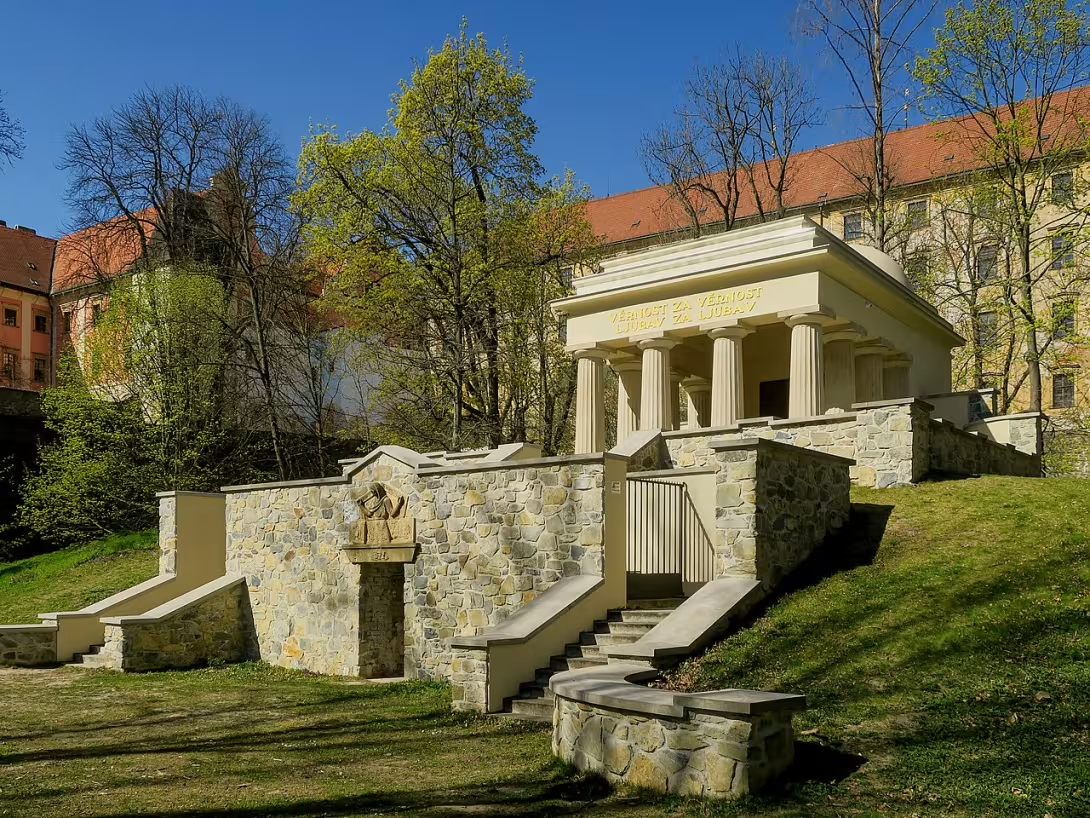

The historical appearance on the left is an AI-generated visualisation and serves as inspiration only.
Historical milestones
- 1926
- The ceremony of the mausoleum.
- 1958
- Registration as a cultural monument.
Architectural development
The mausoleum was built according to the design of architect Hubert Aust. The reconstruction started in 2016, which included repairs to the outer mantle and interior. The third stage focuses on the underground space of the skeleton.
Historical events
- 1926
- The ceremony of the mausoleum.
- 1958
- Mausoleum was registered as a real-estate cultural monument.
- 2016
- The start of the reconstruction of the mausoleum in the first stage.
Owners
The original owner was Yugoslavia, after its break-up by the successor states. Since 2015 the mausoleum has been owned by the city Olomouce.
Points of interest
- Mausoleum is located in Handless orchards in the historical center of Olomouce. - It was built in 1926 in the style of neoclassicism as the last rest for approximately 1200 Yugoslav soldiers who died during the First World War. - Architect Hubert Aust designed a mausoleum at the expense of the Czechoslovak-South Slavic League and is characterized by an 11-metre dome and three rows of Doric columns. - Mausoleum was registered as a real-estate cultural monument on May 3, 1958, highlighting its historical and cultural importance. - Since 2015 the mausoleum has been owned by the city Olomouce, which has enabled its reconstruction and preservation for future generations.
Guide
Show guide text
This text was created by artificial intelligence and has not been editorially reviewed. It may contain inaccuracies.
Welcome to Handless orchards in the historical center of Olomouce, where you are just in front of one of the most remarkable monuments of this area. Mauzoleum jugoslávských vojínů awaits you with its monumental architecture and deep historical significance. Before you there is a building in the style of neoclassicism, whose Doric columns and elegant lines attract the attention of every visitor.
Let's dive into the creation of this monument. In 1926, the mausoleum was festively consecrated as the final rest for approximately 1200 Yugoslav soldiers who fell for their country during the First World War. This monumental house of the dead was built on the costs of Czechoslovakia as a symbol of mutual gratitude and friendship between the two countries.
Look up to the elegant facade decorated with Dorian columns. These architectural elements not only add grandeur and elegance to the construction, but also resemble the ancient Greek culture that was once again in construction at that time. Note the relief inscription on the facade, which expresses mutual gratitude between Czechoslovakia and Yugoslavia.
Although specific historical figures associated with the mausoleum are not known, its creation is an important chapter in diplomatic and cultural relations between the two countries. The interesting thing about this place is that the mausoleum was registered as a cultural monument in 1958, highlighting its historical and cultural value.
Now look at the surrounding environment. Mausoleum is located in the middle of Handless orchards, which gives this place a peaceful and reflective character. This location in the historical center of Olomouce offers not only a memorial to the soldiers of the First World War, but also an opportunity for visitors to relax and remember.
Before you go on the streets of Olomouc, we invite you to stay for a moment and think about the historical significance of this place. Mauzoleum jugoslávských vojínů is not only a monument to the past, but also a witness to important cultural and diplomatic relations.
Thank you for your visit and wish you many other discoveries during your stay in Olomouci.
Tips for visitors
The best time to visit Mauzole of the Yugoslav Private is in the spring or autumn season when the weather is pleasant and the Park of Handless Sets offers beautiful green frames. These months are also ideal for shooting due to mild light, which underlines architectural details of the construction.
When visiting Mausoleum, wear a suitable suit because the interior can be cold. It is also good to have a map and information with you from the official site of the sights to help you better understand the history and architecture of the site.
Mausoleum photography offers some interesting perspectives. The best light for photos can be found in the morning or evening when the sun is lower in the sky and illuminates the facade more elegantly. The interior also offers possibilities for interesting images, especially in places with rich decorative elements.
There are several other cultural monuments and park zones around Mausoleum. The historical centre Olomouce is nearby and offers various architectural pearls and museums. For families with children, parks in the surroundings can be an ideal place for a short rest or play.
Frequently asked questions
Can the monument be visited?
We have not verified whether this monument is accessible. Please ask the owner or operator, or the local municipal office. According to the heritage register restoration is under way, so access may be restricted.
Where is the monument?
Location: Olomouc, Olomoucký kraj. The map on this page shows the exact spot.
Why is the monument protected?
It is listed in the Central List of Cultural Monuments of the Czech Republic as a cultural monument (register no. 1000120793_0002).
Businesses nearby
Do you run a restaurant, accommodation, shop, museum, rental, wellness or other visitor service near this monument? Show yourself directly to the people heading to it — this is how they will see you in the app and on the web:
Events nearby
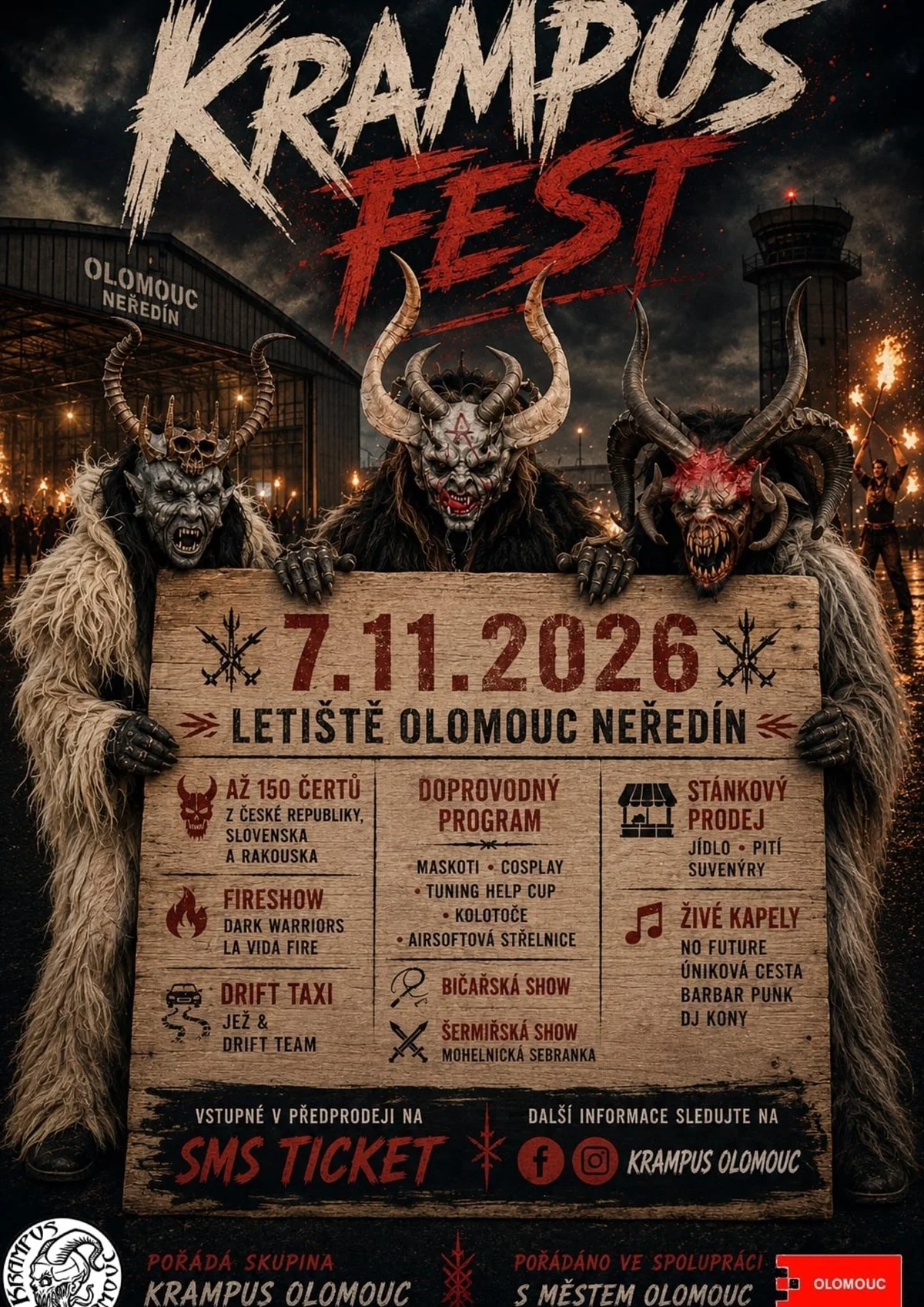
Zdroj akcí: otevřená data měst a obcí ČR (Národní katalog otevřených dat) a kalendář akcí Národního památkového ústavu.
Nearby
Mauzoleum se nachází v Bezručových sadech, historickém centru Olomouce. V okolí jsou další kulturní památky a parkové zóny.
Accommodation nearby
Trips and activities nearby
Guided tours, tickets and activities nearby from GetYourGuide
Affiliate link: if you buy from the partner, we may receive a commission. The price for you does not change.
Search tours and activities →Themed route
Thematic cruise route: Mauzoleum jugoslávských vojínů and surroundings
1.Mauzoleum jugoslávských vojínů - Type: Memorial - Why is it worth a visit: this important place worships the memory of 5,000 soldiers who died during World War II. Architecture and historical context offer a deep view of the past.
2. Handless sets - Type: Park - Why is it worth a visit: These green spaces are an ideal place to relax after visiting the mausoleum. The historical park offers beautiful pavements and places for relaxation.
3. Historical Center Olomouce - Type: Cultural landmark - Why is it worth a visit: The city centre is full of architecturally important buildings and historic streets that represent the rich history of Olomouce. It's an ideal place to walk after visiting the mausoleum.
4. St. Wenceslas Cathedral - Type: Religious object - Why is it worth a visit: This cathedral is one of the most significant monuments in Olomouci. It is known for its architecture and historical history, which attract many visitors.
5. Freedom Square - Type: Public area - Why is it worth a visit: This central square is the life heart of Olomouce, where there are many cultural and historical monuments. It's the perfect place to end a trip.
This route offers a view of the rich history and culture of Olomouce, beginning with the serious honours of soldiers and ending with the living central areas of the city.
Seasonal recommendations
Spring: In the spring period, Mauzoleum jugoslávských vojínů is transformed into a place full of life where flowering shrubs and trees colour the surrounding nature. Sun rays illuminate architectural elements of the monument with beautiful shadow effects, creating a unique atmosphere. In this period, it is advisable to visit a place in the early afternoons where crowds are still trying to avoid and nature is gaining beauty. Enough warm clothes are recommended due to sudden changes in the weather.
Summer: For years Mausoleum has become a center of attention for many tourists who enjoy warm days and beautiful sunshine. The atmosphere is charged with energy, while nature is gaining life with fully developed vegetation. It is advisable to visit the memory early in the morning or late in the evening to avoid the high temperatures and crowds that may be present in the main summer season. Don't forget your sunglasses and enough drinking.
Autumn: In autumn Mausoleum becomes melancholic beauty when leaves fall from trees and create a colorful wallpaper on the ground. The sun's rays shining through the holiday of leafy trees give the architecture a mild, warm light. In this period, it is best to visit the memory in the prehistoric hours, when the crowds are still trying to avoid and the atmosphere is becoming calm. Warm clothes are recommended for colder weather.
Winter: The winter season brings a unique atmosphere for Mauzoleu, when the snow cover decorates architectural elements and creates a quiet environment. The sunlight is less intense, which gives the memory something mysterious and peaceful. The important thing is to have warm clothes and protective shoes for a cool surface if snow is in place.
Visualizations and artistic views


The visualisations are generated by artificial intelligence and serve as inspiration.
Photos from the area
Real photos taken near the monument

Zdroj a licence jsou uvedeny u každého snímku.
Tips from visitors
No tips yet. Be the first!
Log in and add your tip.
Sources and literature
Photos: Jan Jeništa / CC BY-SA 4.0 — Wikimedia Commons. The author and licence also appear when you hover over the image.
Faktickým podkladem tohoto textu byl článek na Wikipedii, jehož autory jsou přispěvatelé Wikipedie. Článek je dostupný pod licencí CC BY-SA 4.0.
Location on the map

Příběhy a pověsti
Legendy, pověsti a příběhy spjaté s touto památkou

Fotografie návštěvníků
Zatím žádné fotografie. Buďte první, kdo přidá fotografii z návštěvy!
Log in a přidejte svou fotografii nebo hodnoťte.
Za ověřenou návštěvu v aplikaci získáte víc bodů — poznáme podle GPS, že jste na místě.
Reviews and comments