






Mariánský sloup Statue
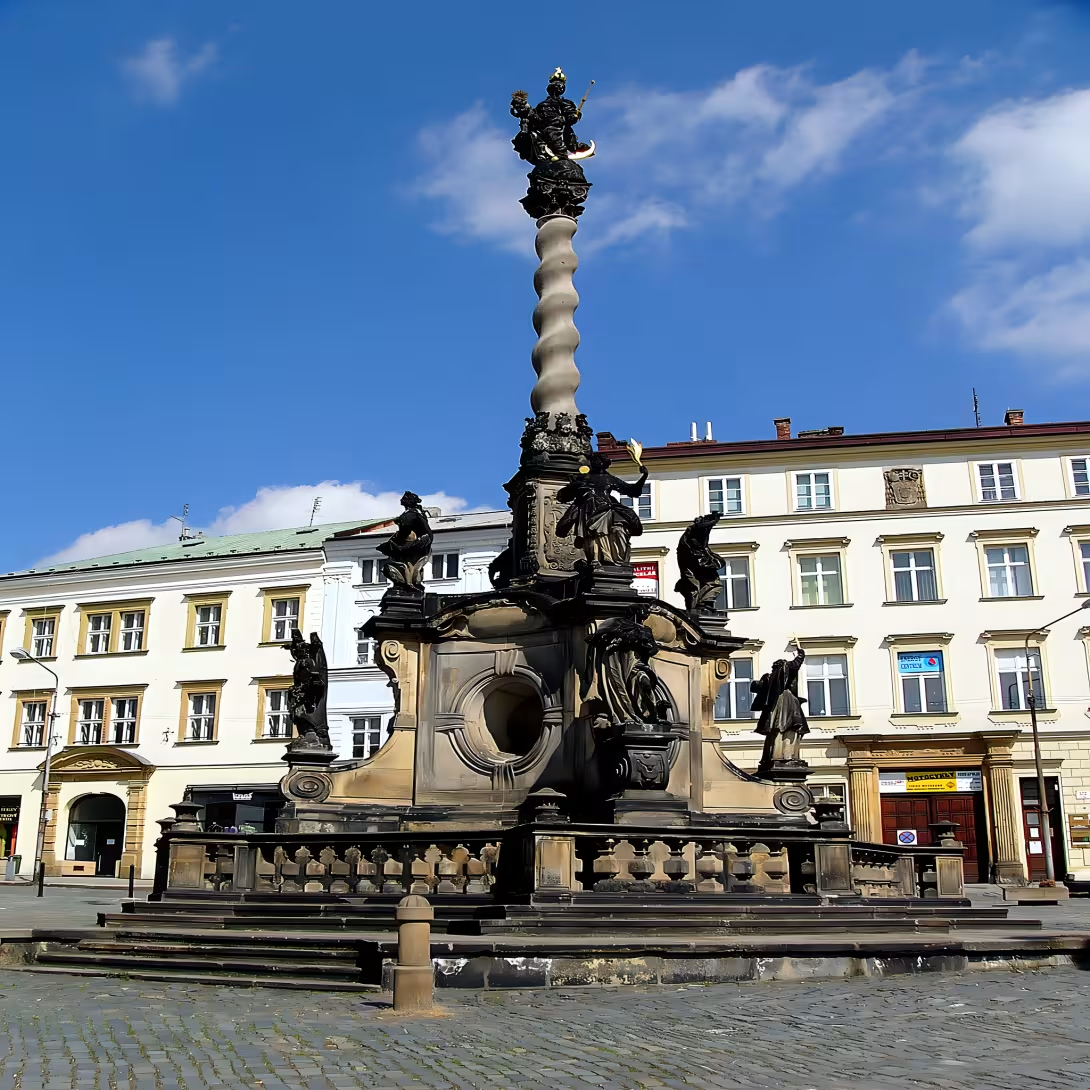
On the Lower Square in XZ0 The ZXi stands for a baroque pestilence column, one of a number of similar monuments that arose in Central Europe as gratitude for ending the pestilence epidemic. This column is a typical testimony through which Moravia passed in the lower 1710 decade and how the civil community tried to preserve its memory.
The column was created by builder Václav Render from 1715 to 1723. It originated as an expression of the gratitude of Olomouc townspeople, because the plague that struck Moravia between 1714 and 1716 finally ended. It was common practice - the pestilence columns were built in a number of European cities as a symbol of the release from a dangerous disease and at the same time as a request for protection for the future.
The architectural decoration of the column was the work of two leading sculptors of his time. Jan Sturmer created key elements - the dominant statue of the Virgin Mary Immaculata at the top of the column, supplemented by the statues of St. Francis Xaversky and St. Charles Boromei. Tobiáš Schütz depicted the remaining statues. The lower range of statues includes St. Rocha, St. Charles Boromei, St. Francis Xaversky and St. Sebastian. The upper row brings together St. Pavlín, patron saint of the city of Olomouce, together with St. Rosalie, Saint Catherine of Sienska and Saint Barbora of Nicomedia. The individual figures had a protective function - they were patrons and patrons, believed in their ability to protect against plague and other misfortunes.
The column also had dramatic moments. In 1758 it was damaged by the Prussian siege of Olomouce. As a result of this destruction, the statue of St. Sebastian was later replaced. This intervention is one of the facts showing how intense military operations in the region were.
Age took its toll on the pillar. Between 1985 and 1992 the column passed through a large restaurant. During it, the original tormented, i.e. twisted column was replaced by a copy - a typical solution for preserving authentic elements when threatened by natural influences. Since 1995, Mariánský sloup, along with the column of the Holy Trinity and a set of baroque coughs, has been included among the national cultural monuments according to the government regulation.
The column remains an important part of the urban space Olomouce and recalls not only a specific historical event, but also the way in which society tried to cope with the crises of its time.
Then and now
Drag the slider to compare how the landmark may have looked when it was built with the view today.
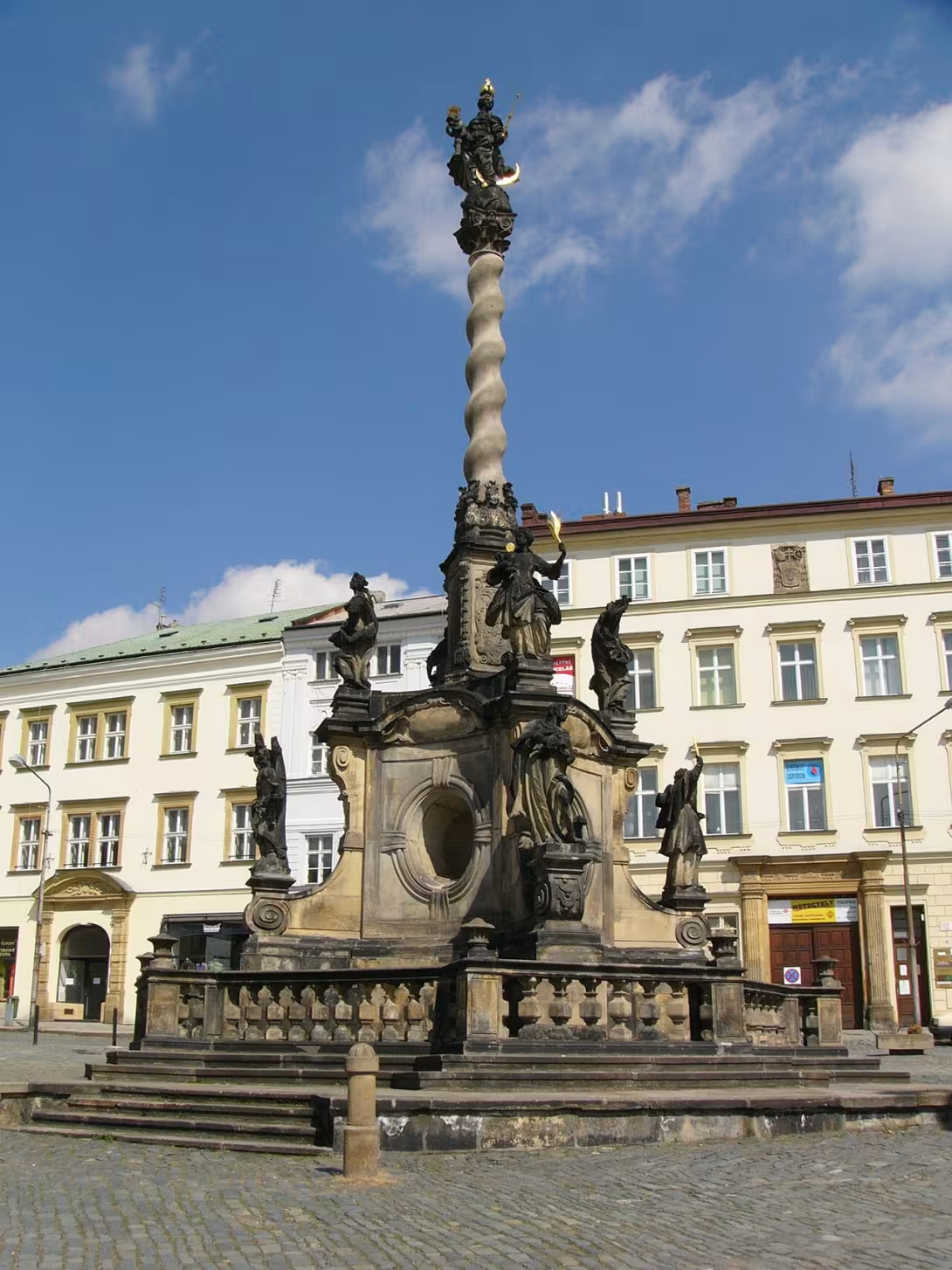
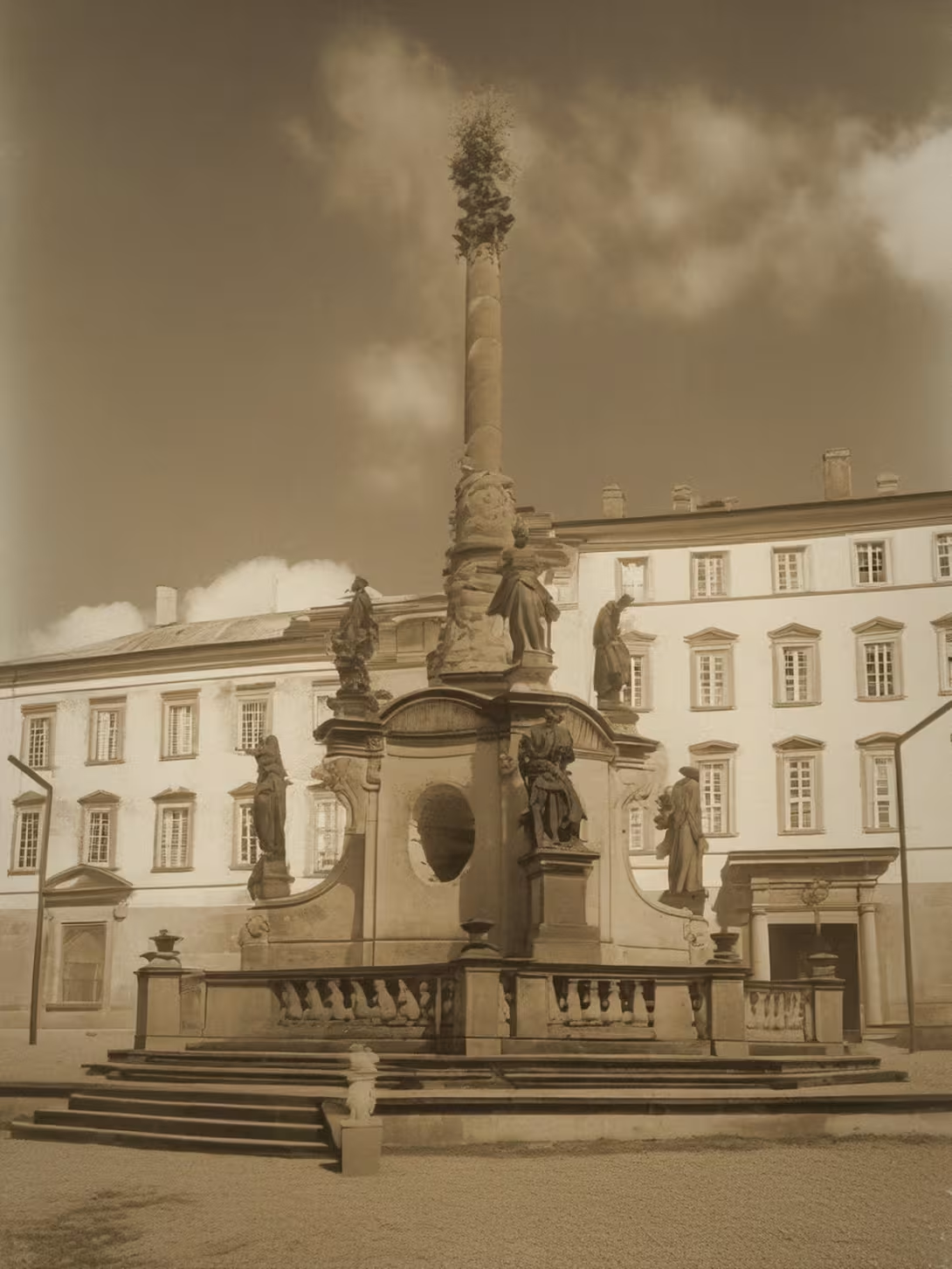
The historical appearance on the left is an AI-generated visualisation and serves as inspiration only.
Historical milestones
- 1715-1723
- Built by sculpture decoration and completion of the construction of the Marian column as a thank you for ending the plague epidemic.
- 1758
- Damage to the column during the Prussian siege of Olomouc and subsequent replacement of the statue of St. Shebestian.
- 1985-1992
- Restoring the column where the original tormented column was replaced by a copy.
- 1995
- Declaration of a pillar for a national cultural monument.
Architectural development
The column was built in 1715-1723 according to the project Václav Render. Originally, it had a tormented (twisted) shape, which was replaced by a copy during restoration in 1980-1992. The statues of the saints and the Virgin Mary Immaculate were created by sculptors Jan Sturmer and Tobiáš Schütz. The column is built of stone and decorated with sculpture decoration in Baroque style.
Historical events
1714-1716: The plague epidemic in Moravia, which affected the creation of a pillar as a thank you for saving the city.
1723: Completion of the construction of the Marian Column.
1758: The damage to the column during the Prussian siege of Olomouce, the subsequent replacement of the statue of St. Sebastian.
1995: Declaration for a national cultural monument.
Points of interest
- The column was built between 1715 and 1723 as a thank you to Olomouc townspeople for ending the plague epidemic in Moravia from 1714 to 1716.
- The dominant statue of the Virgin Mary Immaculata at the top of the column is the work of sculptor Jan Sturmer, who also created the statues of Saint Francis of Xaversky and Saint Charles of Boromei.
- The lower series of statues includes St. Roch, St. Charles Boromei, St. Francis Xaversky and St. Shebestian, while the upper row represents St. Pavlín, patron saint Olomouce, and other saints.
Guide
This guide is narrated by a synthetic voice generated by artificial intelligence.
Show guide text
This text was created by artificial intelligence and has not been editorially reviewed. It may contain inaccuracies.
Welcome to one of the most important monuments of Olomouce - Mariánské column, which rises above the Lower Square as a symbol of faith, gratitude and resilience. You are standing in front of a massive Baroque building, the top of which is decorated by the majestic statue of the Virgin Mary Immaculata, erected to heaven as a protector of the city. Look up and get carried away into a world where art, history and human faith intersect.
This column is not only a stone's monument, but a living testament to the difficult times. It was created as a thank you for saving Olomouce from the plague epidemic, which affected the whole of Moravia between 1714 and 1716. The city, which then faced not only the disease, but also the fear, decided to build this monument as an expression of gratitude to the Virgin Mary and to the saints who should have been patrons of protection from the plague. The construction began soon after the outbreak, in 1715, and lasted eight years - until 1723. Every stone, every statue on his body carries the memory of those who survived and those who fell.
Now let's take a closer look at what you're seeing. In front of you, there is a tall pillar whose base is decorated with eight statues of saints. Each one symbolizes the protection against the plague or is associated with Olomouc. Among them you will find St. Shebestian, patron saint of the plagues, St. Roch, protector of the epidemic, or St. John of Nepomuk, who at that time was worshipped as the protector of the city. Notice how statues are not only static - their possession, gestures and facial expression emit life and emotional strength. The top of the column, where the Virgin Mary Immaculata stands, is the work of the master sculptures of John Sturmer, who also created the statue of St. Francis Xaversky, one of the most important patrons of the column.
The architecture of the column is a typical example of baroque style, which at that time brought a dramatic line to art and architecture, rich decoration and deep religious significance. The column is not only a sculpture piece, but also an architectural masterpiece piece. Its shape narrows upwards, giving it a sense of ascension and spiritual lift. Every detail - from reliefs to statues - has been carefully thought out to express not only gratitude, but also the belief that the fate of the city can be entrusted to God and the saints.
Now pay attention to some of the key stories and personalities that are closely connected to this place. Not only Olomouc townspeople, but also important artists of the time, are behind the creation of the column. In addition to Jan Sturmer, who created sculptures, the sculptor Tobiáš Schütz, who was involved in the implementation of some sculptures, was also a key figure. The architect Václav Render then designed the overall form of the column which still captures its harmony. But beware - the column did not always have the form you see today. During the Prussian siege Olomouce in 1758 was damaged, and the statue of St. Shebestian had to be replaced by a new one. Until 1992, the original column, which was damaged over time, was replaced by a copy to preserve its original form.
And now it's time for something that will interest you. Did you know that the column was built not only to thank you for saving us from the plague, but also as a symbol of the unity of the city? Olomouc townspeople gathered and decided that this monument would be built out of their own resources. Everyone contributed as much as possible - from rich traders to simple craftsmen. This collective gestus makes the pillar not only religious, but also social. And another interesting thing: during the restoration in the 1980s, the original column was made of a local sandstone that was deformed over time. In order to preserve its original form, it was replaced by a copy, while the original parts are now stored in the depositary.
Before you leave, take another look at this wonderful monument. You stand before a work that combines art, faith and history. The column is not only a stone monument, but a living place where generations of Olomouc meet. In 1995, it was declared a national cultural monument, which confirms its uniqueness. Whether you are religious or not, you stand before a place that radiates strength and hope.
If you have time, go around the Lower Square - here you will find other gems that will bring you even closer to the spirit of this beautiful Moravian metropolis. May the visit of the Marian Column bring you not only knowledge, but a sense of connection to the past. Thank you for taking the time to explore this memory, and wish you another beautiful moment in Olomouci. Goodbye!
Frequently asked questions
Is Mariánský sloup open to the public?
Yes, Mariánský sloup is open to the public all year round from morning to night.
How do I get to the place by car / public transport?
You can reach the parking lot near St. Wenceslas Square or use the city transport (tram line 1, stop OlomoucKY Square).
How much is the entrance fee and is it paid on the spot?
The entrance to the Marian Column is free.
Is the tour suitable for children and seniors?
Yes, the tour is suitable for all age groups.
How long does the tour take?
A tour of the Marian Column takes about 15-30 minutes.
What are the opening times and booking is required?
Mariánský sloup is available all year round from morning to evening, no booking required.
What's interesting in the immediate vicinity?
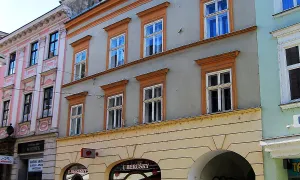
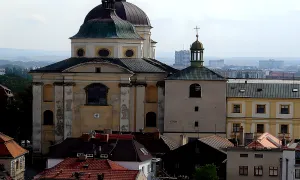
The church of St. Wenceslas and XZ0 is located near the Marian Column ZX square with many historical buildings and statues.
For kids
Imagine going back 303 years to when our city Olomouc was still a small town full of life and sounds. It was an era before 1723 when one of the most famous historical monuments of our city - Mariánský sloup began to be built.
She lived in XZ0 at the time. ZXi a lot of people who worked in fields, in their workshops or as businessmen. The city was full of life and sounds - blacksmiths' melts, carving cleavers and voices of people talking on the streets could be heard.
Businesses nearby
Do you run a restaurant, accommodation, shop, museum, rental, wellness or other visitor service near this monument? Show yourself directly to the people heading to it — this is how they will see you in the app and on the web:
Nearby
Olomouc Square, St. Wenceslas Church
Accommodation nearby
Trips and activities nearby
Guided tours, tickets and activities nearby from GetYourGuide
Affiliate link: if you buy from the partner, we may receive a commission. The price for you does not change.
Search tours and activities →Themed route
Thematic cruise route Olomouc - Baroque beauty and historic atmosphere
1.Mariánský sloup * Statue * - Symbol of Faith and Baroque Championship. The extraordinary sculpture work from the 17th century, which dominates the Lower Square and is one of the most important monuments of the city. The visit is an ideal start for the Olomouc Baroque architecture.
2. Column of the Holy Trinity * Statue * - Second Baroque column in the Lower Square, smaller but equally impressive. Its location in close proximity to the Marian Column creates a harmonious set of sacral monuments and offers an interesting comparative view of two important sculptures.
3. Baroque fountains * Sculpture decoration * - The surrounding fountains of the square are decorated with sculptures and reliefs that illustrate the baroque artistic journey. Their visit will complement the perception of the local sculpture tradition and offer the opportunity to observe details that often remain unbiased by the audience.
4. Olomouc Castle * Castle * - About a kilometer west of the centre lies this medieval fortress with a rich history. Even more distant, his visit is a logical continuation of the trip, as he connects the sacral and military past of the city. The castle also offers views of Mariánský sloup and surrounding panorama.
5. Park Pod Špilberk * Park * - Towing from urban activity in green space about 1.5 km north. The park is ideal for relaxing after a walk through the historic centre and offers a quiet environment with the possibility of sitting by the water surface or under the trees.
Seasonal recommendations
Spring brings to Olomouce awakening nature and soft, gradually elongating light, which beautifully modulate the details of the sculpture work of the Marian column. In this period the atmosphere is calm and the air fresh, allowing long walks around the square without fear of overheating. Practical advice for a spring visit includes layered clothing because temperatures can be variable and it is cold in the morning or evening. The best time is the late afternoon when the sun rises above the roof and illuminates the memory of the side, while the crowds of tourists are still minimal. It is recommended that footwear with good grip, as the square tiles can be slippery after the rains.
Summer is the most frequent season for Mariánský sloup, when the city is full of visitors and atmosphere is alive. Strong sunlight creates sharp shadows that can overshadow some details of the statue, so it is ideal to visit a monument either early in the morning or late in the afternoon when light is softer and more tolerable. Given the expected crowds in the main summer season, I recommend arriving before 10: 00 a.m. so you can enjoy the view without undue delay. Clothes should be light and breathable, sun protection in the form of a hat and sunglasses is essential. Do not be discouraged by the noise that is typical of summer tourism, and choose the calmer edge of the square for better photo shoot.
Autumn offers the most beautiful colour palette, where the coloured leaves of the surrounding trees create a dramatic contrast with a stone statue. Light is lower and warmer at this time, which gives the whole space a romantic and thoughtful touch. The atmosphere is colder and often accompanied by a soft fog, which can cover the memory with a mysterious veil. For the autumn visit, it is necessary to carry an umbrella and a waterproof jacket, because precipitation is more common. The best time for a tour is in the morning, when visibility is best and the crowd starts to slow down after the summer rush. Hot gloves and scarf are already in place, especially if you plan to stay longer outside.
Winter brings a unique atmosphere of silence and relaxation to the Marian Column, when the city is quiet and the monument stands out against the background of the grey sky or snow cover. Short days and low sun create long shadows and specific, cold lighting that emphasizes the texture of stone. In advent time, the surroundings can be illuminated by Christmas decorations, which adds to the magic, but also to the number of people. Practical advice includes maximum thermal insulation, including winter shoes, gloves and caps, because it can be very cold outside. The most suitable time is the late afternoon when evening lighting is switched on and the monument is obtained by magic, while avoiding morning frost and gray morning.
Visualizations and artistic views


The visualisations are generated by artificial intelligence and serve as inspiration.
Photos from the area
Real photos taken near the monument


Zdroj a licence jsou uvedeny u každého snímku.
Atmosphere of the place
This atmospheric visualisation of the place and period was generated by artificial intelligence. It is not real footage of the location.
Tips from visitors
No tips yet. Be the first!
Log in and add your tip.
Sources and literature
Fotografie: Michal Maňas / CC BY 4.0, rozlišení zvýšeno umělou inteligencí — Wikimedia Commons. The author and licence also appear when you hover over the image.
Faktickým podkladem tohoto textu byl článek na Wikipedii, jehož autory jsou přispěvatelé Wikipedie. Článek je dostupný pod licencí CC BY-SA 4.0.
Location on the map
Příběhy a pověsti
Legendy, pověsti a příběhy spjaté s touto památkou
Fotografie návštěvníků
Zatím žádné fotografie. Buďte první, kdo přidá fotografii z návštěvy!
Přihlaste se a přidejte svou fotografii nebo hodnoťte.
Za ověřenou návštěvu v aplikaci získáte víc bodů — poznáme podle GPS, že jste na místě.
Reviews and comments