



Městská věž v Třebíči Church tower
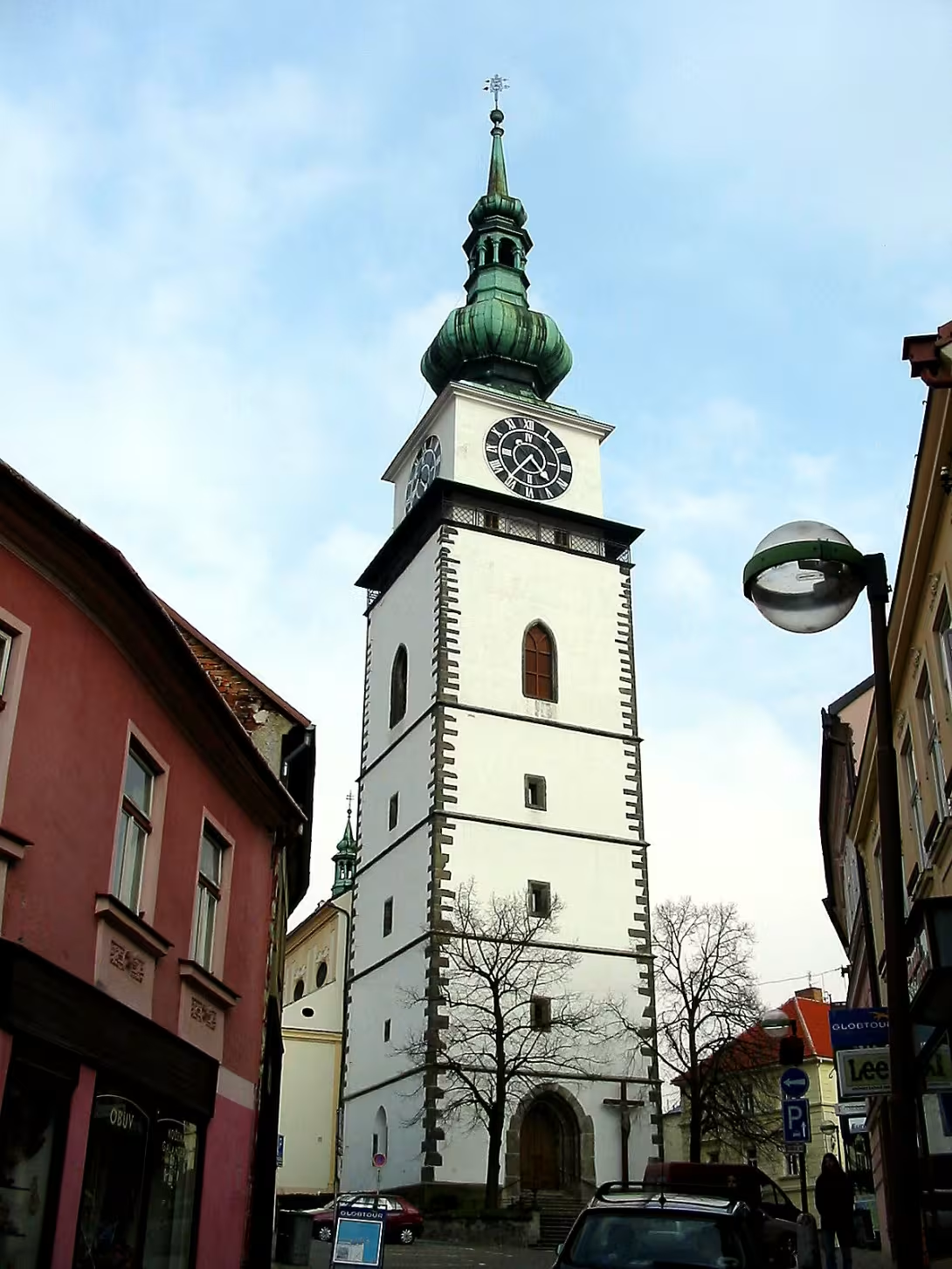
Městská věž v Třebíči is a 75-metre high dominant building from the 14th century, which originally served as part of the city fortification. It is located in the location Vnitřní Město and is known for its clock with a diameter of 5.5 meters, which is among the largest in Europe.
It originated around 1335, when Margrave Charles, later known as Karel IV., promoted Třebíč to a city with the same rights as Znojmo. With this position, it was obliged to build walls, the tower of which was an integral part in the function of urban voice. City scribe Eliáš Střelka Náchodský described it as a masterfully executed stone building with a cellar and a municipal chamber.
The current height of the building up to the top of the cross is 75 metres, the gallery is at 35 metres. In 1458 the tower was expanded and increased, thus taking the form of a near present day. In the years 1572- 1575 there were modifications in which stone and brick vaults were set up, apartment for trumpets and chamber for the clock. The oak tree from Hostimi, built by the carpenter Jiřík z Vídně, ended with two onions, gilded copper poppy, star and moon. The current cross with the bans dates back to 1862 and its author was builder Dominik Herzán. The last external and internal adjustments took place in 1996.
The tower survived several disasters. In 1468, its peak was burned in the invasion of a Hungarian army led by Matthias Korvin. The coal tried to undermine and overturn the tower, but this was impossible thanks to solid foundations. Other big fires destroyed the top tower between 1577 and 1822. In 1612 the construction was damaged by a wind storm which caused the rudder to fall with the star.
The bells and clocks played an important role in its historical development. In 1459, a big bell with a golden hoop was cast, but in 1468 the Hungarian army was smashed. From his shards, in 1481 a new bell was struck. In the 16th century, the tower served as a place for trumpets to guard the city. After the fire in 1577, German clock was installed with cimbals, which, unlike the original Czech clock, measured twelve hours twice a day.
In 1715 the tower underwent a major reconstruction, during which the nojemite carpenter Mates Messerer and his assistant Hans Karl Micher rebuilt the peak. On it was placed 160 kilograms of heavy cross and a new head with Latin church chronicle of Dean Martin Josef Matlocio. In 1716 the tower was connected to the church of St. Martin, thus becoming a parish tower and was added to it with a spiral staircase.
Today the City Tower is one of the most prominent architectural dominance of Třebíča. Its historical value consists of a combination of original defence functions and subsequent reconstructions that reflect the craft development of various epoch.
The city tower is a fascinating witness to the urbanization and political clashes of medieval Europe. Its visit offers insight into the history of urban fortification and technical development of the clock shop.
Then and now
Drag the slider to compare how the landmark may have looked when it was built with the view today.
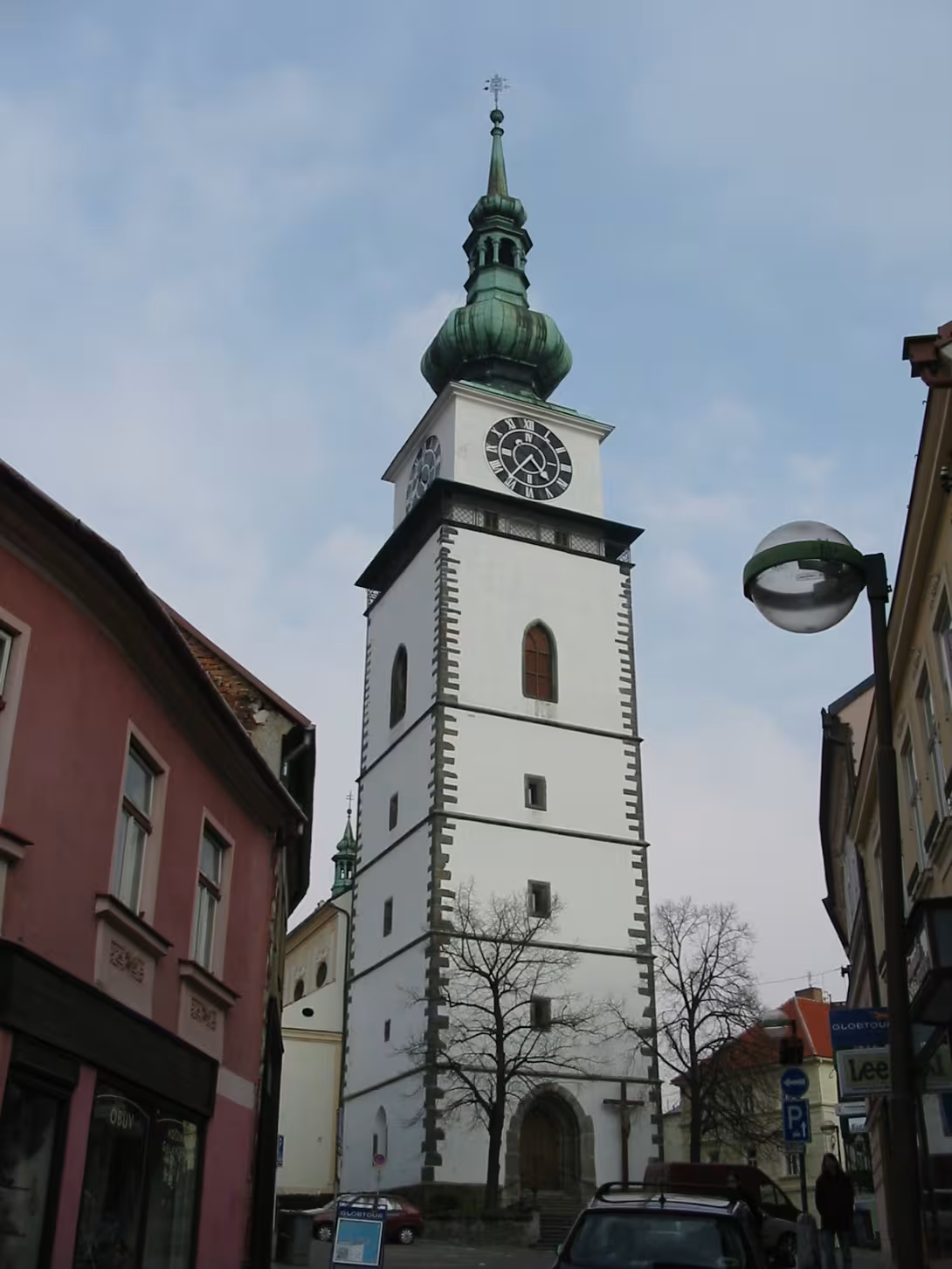

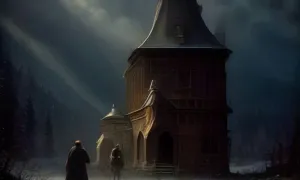
The historical appearance on the left is an AI-generated visualisation and serves as inspiration only.
Historical milestones
- 1335
- The promotion of Třebíč to the city and the construction of the tower as part of the fortification.
- 1458
- A significant expansion and increase of the tower to almost today's appearance.
- 1468
- Burning the top of the tower during the raid of the army of Matthias Korvin.
- 1862
- The emergence of the current roof with the pits.
Architectural development
Originally, the medieval voice was greatly expanded in 1458. After several fires, reconstruction took place, including modifications during the Renaissance period and in 1862. The current scourge created by Dominik Herzán.
Historical events
In 1468, the top of the tower was burned by the Hungarian army. In the years 1577 and 1822 she was hit by major fires. In 1862, the current crop was built.
Points of interest
- The tower is 75 meters high and has clock diameters of 5.5 meters, which are among the largest in Europe. - Originally created in the 14th century as part of the city fortification and served as a urban voice. - In 1468, the Hungarian army tried to undermine and overthrow the tower, but it was impossible because of solid foundations. - From the wreckage of the great bell, which smacked the Hungarian army in 1468, in 1481 a new bell was struck. - In 1716 the building was connected to the church of St. Martin and became a parish tower.
Guide
Show guide text
This text was created by artificial intelligence and has not been editorially reviewed. It may contain inaccuracies.
Welcome to Třebíč, a city with rich history and beautiful monuments. You're standing in front of one of the most famous symbols of this city, the City Tower. Look up at this formidable structure that dominates the entire inner city at 75 meters. Its huge clock and historical appearance are truly beautiful and attract the attention of anyone who gets here.
The creation of this tower is closely linked to an important moment in the history of Třebíč. In 1335 the city was promoted to a city and as part of this process the construction of the City Tower started, which originally served as an important part of the fortifications. Over the years, the tower has been gradually expanded and increased, which has led to an almost present form that we can appreciate today.
Look closer at the architecture of the tower. Notice its huge clock with a diameter of 5.5 meters - one of the most significant details of this monument. These clocks are among the largest in Europe and are the real proof of the past-era builders' championship. The inner structure of the tower has been designed to serve as an urban voice, indicating its key task in the history of the city.
This tower also has connections with several key personalities and events. Karel IV., Emperor of Rome, played a role in the promotion of Třebíč to the city. In 1468, however, the tower became a scene of a dramatic violent attack by a Hungarian army led by Matthias Korvin, who tried to undermine and overthrow the tower. Thanks to the solid foundations, he failed to do so, which suggests her undeniable resistance.
It is also interesting that in 1862, the current scourge was built on the tower. This detail gives the tower its modern character and ensures its protection against the violence of weather conditions.
Let's move closer to the tower and look at its facade. Each detail tells its own story, which makes the City Tower in Trebic not only an architectural work but also a living historical document. Now look up and imagine how you could see from this height in times past.
You can feel the atmosphere of history surrounding this location as you walk around the City Tower. Třebíč is full of other attractions and monuments waiting for your visit.
Thank you for your attention to the Town Tower in Třebíč. I hope you enjoyed her history and beauty. Don't forget to explore other parts of this fascinating city. When we meet again - be with God!
Tips for visitors
Best time to visit City towers are the period from spring to autumn when the weather is favourable and light ideal for photography. This time of year offers the best possibilities for entertainment and exploring historical details of the construction.
Access to the tower is easy by car and public transport.
When planning a visit, take a quality camera with you, especially if you are interested in shooting architecture. It is also important to carry sunglasses and plenty of drinking water, especially during the summer months.
For shooting the City Tower is the best place on the west side where the sun lights up the building when it starts to get dark. This time of day offers ideal conditions for capturing details and colors of local architecture.
In the vicinity of the Town Tower you can visit St. Martin's Church, located in the same location. This church offers interesting history and architectural details, making it an ideal complement to the tower.
Frequently asked questions
Can the monument be visited?
Religious buildings are usually open mainly during services; at other times a visit is normally arranged with the parish or the operator. We have not verified specific times.
Where is the monument?
Location: Vnitřní Město. The map on this page shows the exact spot.
Why is the monument protected?
It is listed in the Central List of Cultural Monuments of the Czech Republic as a cultural monument (register no. 1000137044_0002). It is protected as part of a larger listed ensemble.
Businesses nearby
Do you run a restaurant, accommodation, shop, museum, rental, wellness or other visitor service near this monument? Show yourself directly to the people heading to it — this is how they will see you in the app and on the web:
Nearby
Kostel svatého Martina
Accommodation nearby
Themed route
1. Church of St. Martin (type: church) - Historical temple which forms the spiritual center of this place. 2. Městská věž v Třebíči (type: bottom of the tower) - Exploring the external appearance of this dominant. 3. Městská věž v Třebíči (type: view) - Output to the upper part for observing the surroundings from the height.
Seasonal recommendations
Spring: In spring, the town tower in Třebič is strangely lit by sunlight, which is projected through a foggy atmosphere. The flowers are beginning to bloom and bring live color shine to the city. This time is ideal for a visit due to mild temperature, however, when sunny and rainy days appear alternately. It is recommended that you wear clothes on multiple layers so that you can adjust the heat. Although there are usually fewer people than in the main summer period, we still recommend visiting the early morning or late evening when the place is quieter and the atmosphere is soothing.
Summer: During the summer period, the town tower in Třebíč reaches life under strong sunlight, which highlights historical architecture. The inner city is filled with tourists and this is the time when most visitors are present. The temperatures are high, which means that suitable clothing is light and light fabric that protects against the sun. The best time to visit is in the morning or in the evening when the temperature is lighter and fewer people walk the streets.
Autumn: In autumn, Třebíč gains unique atmosphere thanks to the golden shine of the leaves. The sun sets early, creating a romantic and slightly melancholy mood that is perfect for walking the city streets around the tower. The temperatures are increasingly decreasing, so it is recommended to wear warmer clothes and perhaps even an umbrella, because the springs are common. Visit the city in the early afternoon when the atmosphere is calm and nature offers the most beautiful views.
Winter: Winter brings The quietness and snow beauty of the city tower is dressed in a white dress. Sunlight is projected on snow and creates dazzling contrasts with historic buildings. The temperatures are cold, so it is important to have warm clothes, protective glasses and maybe even shoes suitable for snow. The best time to walk the streets is on a day when the sun illuminates the city with its warm light and creates magical experiences.
Visualizations and artistic views


The visualisations are generated by artificial intelligence and serve as inspiration.
Photos from the area
Real photos taken near the monument

Zdroj a licence jsou uvedeny u každého snímku.
Tips from visitors
No tips yet. Be the first!
Log in and add your tip.
Sources and literature
Photos: Original uploader was Parkis at cs.wikipedia / Public domain — Wikimedia Commons. The author and licence also appear when you hover over the image.
Faktickým podkladem tohoto textu byl článek na Wikipedii, jehož autory jsou přispěvatelé Wikipedie. Článek je dostupný pod licencí CC BY-SA 4.0.
Location on the map
Příběhy a pověsti
Legendy, pověsti a příběhy spjaté s touto památkou
Fotografie návštěvníků
Zatím žádné fotografie. Buďte první, kdo přidá fotografii z návštěvy!
Log in a přidejte svou fotografii nebo hodnoťte.
Za ověřenou návštěvu v aplikaci získáte víc bodů — poznáme podle GPS, že jste na místě.
Reviews and comments