






Městský dům (Andělská Hora, 1000141195) House
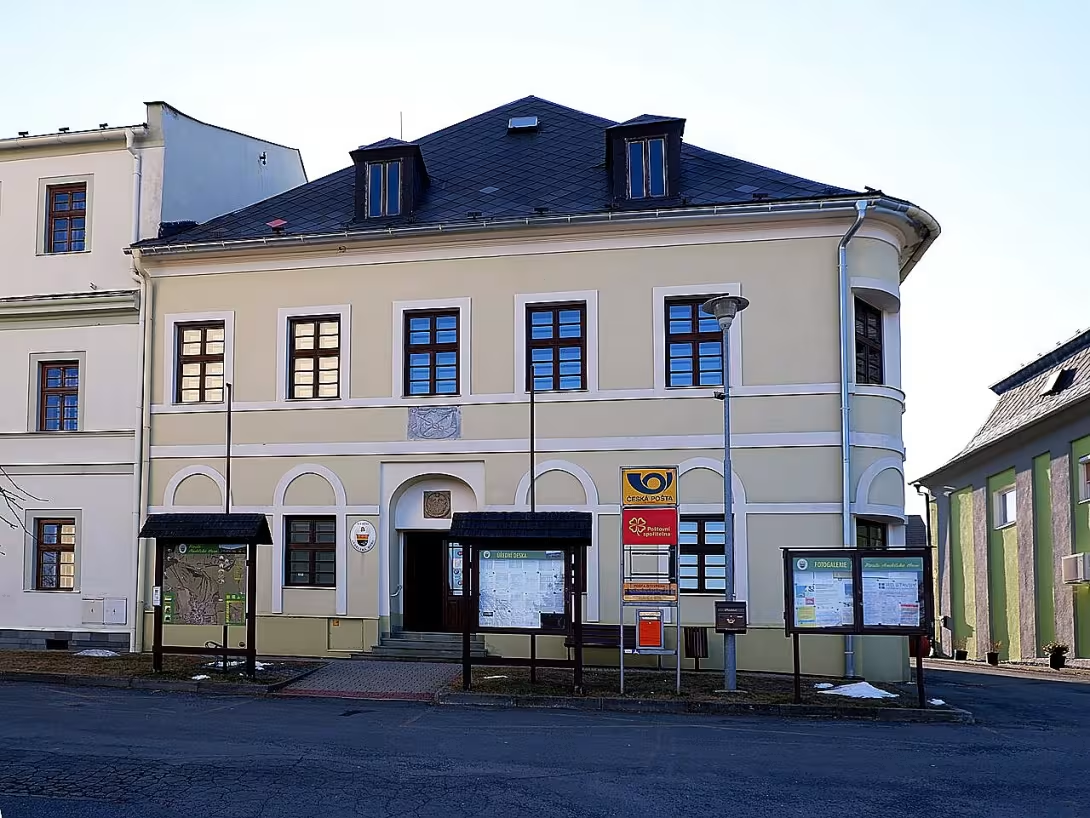
The Municipal House, property number 197, is a historical brick corner residence on the western side of the square in Andělská Hora ve Slezsku. Originally built in the 18th century with an older core, it is a registered cultural monument in the Central List of Cultural Monuments of the Czech Republic. Today, it serves as the official seat of the local municipal office.
During the 18th century, the broader region saw active baroque building development and municipal urban growth under Habsburg rule. The municipal house reflects a common pattern where earlier construction phases were adapted over time to match prevailing architectural trends.
Architecturally, the building is a two-story plastered baroque structure with a hip roof covered in asbestos cement slate. The main street facade spans five window axes and features a ground-floor entrance portal framed by windows set in blind arcades with strip rustication. The side facade mirrors this five-axis layout and also includes strip rustication. Inside the ground floor, the main hallway has sail vaulting, the rear left section contains a broken staircase, and the remaining rooms feature mostly flat ceilings.
The Municipality of Andělská Hora manages the property, using it for local governance. Over the centuries, the structure underwent multiple architectural alterations and modifications.
A notable chapter in its physical history involved exterior styling. Before the mid-20th century, the structure featured an Art Nouveau facade. In 1965, extensive and unsympathetic modernizations removed the Art Nouveau elements and inappropriately modified the windows and facade. Decades later, following 2002, a restoration effort reversed these mid-century changes by reconstructing the facade and creating new windows and doors to match the original historical state.
Presently, the municipal house remains integrated into the town development of Andělská Hora ve Slezsku, functioning actively as the municipal office. Visitors exploring the square can observe its restored baroque exterior, historic window axes, and rustic facade details. A visit to the site offers a tangible connection to the region's architectural layering, showcasing how historic preservation successfully brought a municipal landmark back to its documented appearance.
Historical milestones
- 18th century
- The municipal house with an older core was built on the western side of the square.
- 1965
- The building underwent inappropriate window and facade modifications, and the Art Nouveau facade was removed.
- 2002
- Following this year, the facade was reconstructed and windows and doors matching the original state were manufactured.
Architectural development
Built in the 18th century with an older core, the building underwent several subsequent modifications. In 1965, significant alterations changed the windows, facade, and removed the Art Nouveau elements. A later reconstruction after 2002 restored the windows, doors, and the facade closer to their original historical state.
Historical events
Several alterations took place, most recently in 1965 when inappropriate window and facade modifications were made, including the removal of the Art Nouveau facade. After 2002, the facade was reconstructed and windows and doors matching the original state were manufactured.
Owners
Municipality of Andělská Hora
Points of interest
– The Municipal House is a historical brick corner residence located on the western side of the square in Andělská Hora ve Slezsku and currently serves as the official seat of the local municipal office. – Originally built in the 18th century with an older core, the building is a registered cultural monument in the Central List of Cultural Monuments of the Czech Republic. – Before the mid-20th century, the structure featured an Art Nouveau facade, which was removed in 1965 during extensive and unsympathetic modernizations. – Following 2002, a restoration effort reversed the mid-century changes by reconstructing the facade and creating new windows and doors to match the original historical state. – Inside the ground floor, the main hallway features sail vaulting, while the rear left section contains a broken staircase and the remaining rooms mostly have flat ceilings.
Guide
Show guide text
This text was created by artificial intelligence and has not been editorially reviewed. It may contain inaccuracies.
Welcome to Andělská Hora. As you stand here in the heart of the square, take a moment to simply breathe in the atmosphere of this historic location. You are currently positioned facing one of the most significant landmarks in our surroundings, the Městský dům. It stands prominently on the western side of the square, acting as a silent witness to the many centuries of life that have unfolded in Andělská Hora ve Slezsku. As you look up at its facade, you are not just looking at a building, but at a layered history of architectural evolution, resilience, and careful restoration.
The building before you is a striking example of a Baroque corner residence, a structure that commands attention through its strategic position and its solid, brick-built presence. While it may appear as a unified whole today, its story begins much deeper than the surface suggests. The Městský dům was constructed in the 18th century, but it was not built from nothing; it was established upon an even older core, meaning that the very foundations you see today carry the echoes of even earlier eras of settlement in this region. For centuries, this corner has been a focal point, a place where the residential and the civic have met.
Now, I invite you to direct your attention to the architectural details that define its character. As you scan the facade facing the square, notice the rhythmic arrangement of the five window axes. This symmetry provides a sense of balance and classical order that is characteristic of the Baroque influence. Look toward the ground level and observe the entrance portal, which serves as a formal gateway to the building. One of the most interesting features to examine is the presence of blind arcades. These are not open walkways, but rather architectural elements integrated into the wall, decorated with strip rustication. This technique, which creates a textured, grooved appearance on the plaster, adds a sense of strength and visual depth to the building, making the walls feel more substantial and grounded.
As your eyes move upward, you will see the two-story structure topped by a traditional hip roof. While the current covering consists of asbestos cement slate, the silhouette of the roof remains a defining feature of the building's profile against the sky. The entire structure is a testament to the durability of brick-built, plastered construction, designed to endure the changing seasons of this corner of the world.
However, the beauty you see today was not always so clearly defined. The history of the Městský dům is also a story of loss and eventual redemption. If we were to step back in time to the year 1965, the view before you would have looked quite different, and perhaps less harmonious. During that period, the building underwent a series of inappropriate modifications. Most notably, the original Art Nouveau facade, which had added a layer of elegance to the building's history, was removed. The windows and facade were altered in ways that did not respect the building's original character, leaving it somewhat stripped of its historical soul. For many years, the building stood as a shadow of its former self, a victim of the changing architectural trends and maintenance standards of the mid-20th century.
But history is not only about decline; it is also about recovery. The turning point for this landmark came in 2002. Following a period of recognition of its historical value, a dedicated reconstruction project was launched to breathe life back into the Městský dům. This was not merely a superficial repair; it was a meticulous effort to honor the building's heritage. During this reconstruction, great care was taken to ensure that the new elements matched the original state. If you look closely at the windows and the doors, you are seeing the results of that commitment. They were specifically manufactured to replicate the historical style, ensuring that the visual language of the 18th and 19th centuries was once again spoken clearly by the building.
This restoration was vital because the Městský dům is more than just a beautiful corner house; it is a registered cultural monument. It serves a crucial role in the community of Andělská Hora, acting as the official seat of the local municipal office. This means that the building is not a museum frozen in time, but a living, breathing part of the town's administration. The people who manage the affairs of this municipality do so within walls that have been fought for and restored.
As you continue your walk, keep in mind the concept of architectural layers. Every time a building like this is restored, it becomes a bridge between the past and the present. The Městský dům has transitioned from an 18th-century residence to a modified mid-century structure, and finally to the carefully preserved monument you see now. It is a reminder that even when the beauty of a place is obscured or lost, it can be reclaimed through dedication and respect for history.
Take a few more moments to appreciate the textures of the plaster and the geometry of the windows. Let the scale of the building help you feel the history of the square. When you are ready, please continue your exploration of Andělská Hora. There is much more to discover in the streets and the stories of this beautiful town. Thank you for joining me on this brief journey through time.
Tips for visitors
The best time to visit this historic landmark is during the spring and summer months when the weather is mild and sunny, making it ideal for photography.
Parking is available near the square in Andělská Hora ve Slezsku. You can also use public transportation, with buses stopping nearby.
Don't forget to bring comfortable walking shoes and a camera to capture the stunning architecture and scenic views.
For the best photography spots, head to the western side of the square where you'll find plenty of natural light and interesting angles.
If you're looking for something to do nearby, consider visiting the local town center or exploring the regional landscape within walking distance.
Businesses nearby
Do you run a restaurant, accommodation, shop, museum, rental, wellness or other visitor service near this monument? Show yourself directly to the people heading to it — this is how they will see you in the app and on the web:
Nearby
Located within the municipal development of Andělská Hora ve Slezsku, surrounded by the local town square and regional landscape.
Accommodation nearby
Themed route
Here is a thematic walking tour based on the historical context and surrounding environment of the main destination in Andělská Hora.
1. Town Square of Andělská Hora Type: Public square Why visit: This central hub forms the heart of the municipal development, offering a great starting point to experience the local atmosphere and regional landscape of the area.
2. Městský dům (Andělská Hora) Type: Historical building Why visit: As the primary destination, this town house represents the local architectural heritage and is deeply integrated into the historic fabric of the community.
3. Surrounding Municipal Area of Andělská Hora ve Slezsku Type: Regional landscape and urban development Why visit: A short walk around the immediate surroundings allows visitors to appreciate the unique layout of the local settlement nestled within the regional landscape.
Seasonal recommendations
Spring at the Town House in Andělská Hora brings a fresh, vibrant atmosphere as the surrounding nature awakens from its winter sleep. The early sunlight casts a soft, golden glow on the historical masonry, highlighting the architectural details without the harsh shadows of later months. This is a peaceful time to visit, as tourist numbers remain low, allowing for a quiet exploration of the site. Practical advice for spring includes wearing sturdy footwear, as the melting snow and spring rains can make the paths around the monument muddy and slippery. Dressing in layers is essential, as crisp morning breezes quickly give way to milder midday temperatures. The best time for photography and a relaxed visit is during the late morning when the mist clears completely.
Summer at the Town House is characterized by lush greenery and vibrant natural surroundings that contrast beautifully with the ancient stone walls. The bright, high-sun daylight illuminates the entire area, creating a lively and energetic atmosphere perfect for outdoor sightseeing. Because this is the peak tourism season, visitors should expect larger crowds, especially around midday on weekends. To avoid the peak heat and tourist buses, the best time to arrive is early in the morning right when the site opens. Practical preparations should include bringing bottled water, sunglasses, and light, breathable clothing, alongside sun protection since shaded spots directly at the monument can be limited.
Autumn transforms the setting of the Town House into a picturesque landscape painted in rich shades of orange, red, and gold. The low-angle autumn sun creates a dramatic, moody lighting effect, casting long, artistic shadows that are particularly appealing for photography enthusiasts. The crowds of the summer months dissipate entirely, offering a remarkably tranquil experience. Practical considerations for an autumn visit require dressing warmly in windproof jackets and scarves, as the local weather can turn chilly quite suddenly, particularly in the late afternoon. It is also wise to check the weather forecast beforehand, as autumn brings frequent rain showers, making waterproof shoes a smart choice.
Winter envelops the Town House in a serene, postcard-like quiet as snow blankets Andělská Hora and the surrounding countryside. The stark, low-angled winter light reflects off the snow cover, bathing the historic facade in a bright, ethereal white glow that feels deeply atmospheric. Visitor numbers drop to a seasonal minimum, ensuring a solitary and contemplative visit for those who braved the cold. Practical recommendations for winter center heavily on safety and warmth: heavy winter coats, insulated gloves, warm hats, and high-traction boots are absolute necessities due to potential ice and snow on the grounds. Because daylight hours are significantly shorter, visitors should plan to arrive well before noon to make the most of the available daylight.
Visualizations and artistic views


The visualisations are generated by artificial intelligence and serve as inspiration.
Photos from the area
Real photos taken near the monument


Zdroj a licence jsou uvedeny u každého snímku.
Tips from visitors
No tips yet. Be the first!
Log in and add your tip.
Sources and literature
Fotografie: Kamil Czaiński / CC BY-SA 4.0 — Wikimedia Commons. The author and licence also appear when you hover over the image.
Faktickým podkladem tohoto textu byl článek na Wikipedii, jehož autory jsou přispěvatelé Wikipedie. Článek je dostupný pod licencí CC BY-SA 4.0.
Location on the map
Příběhy a pověsti
Legendy, pověsti a příběhy spjaté s touto památkou
Fotografie návštěvníků
Zatím žádné fotografie. Buďte první, kdo přidá fotografii z návštěvy!
Přihlaste se a přidejte svou fotografii nebo hodnoťte.
Za ověřenou návštěvu v aplikaci získáte víc bodů — poznáme podle GPS, že jste na místě.
Reviews and comments