






Městský dům kultury Sokolov City house of culture
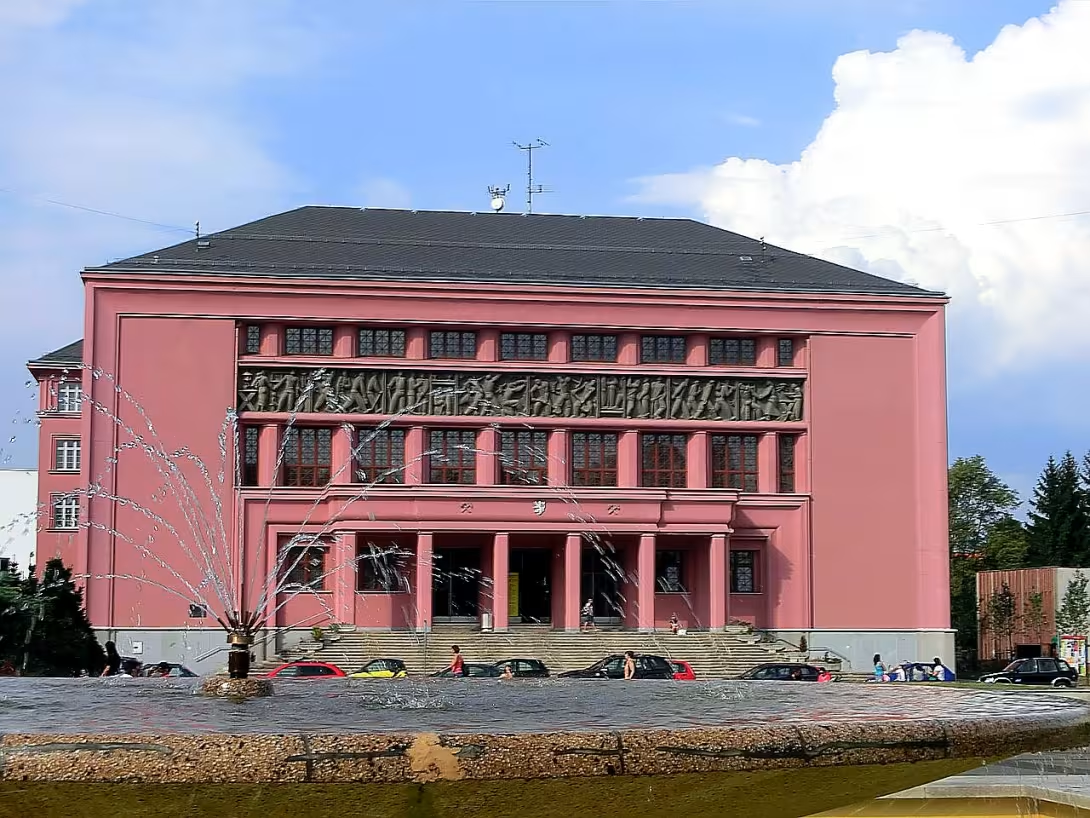
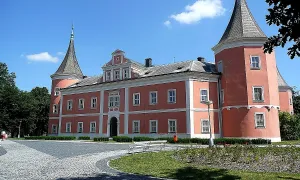
Městský dům kultury Sokolov stands in the heart of Sokolov at ulice 5. května, serving as a multifunctional cultural and social hub since its completion in 1925. Originally built as a miners' association house, it reflects early 20th-century architectural styles influenced by the Buštěhradská railway's expansion. Today, this building is protected as a cultural monument and houses an information center.
The origins of Městský dům kultury Sokolov date back to post-World War I Czechoslovakia, when efforts were made to establish national identity. Constructing public buildings like this one aimed to promote social cohesion and reduce regional nationalism among the German-speaking population in areas such as Falknovsko (now Sokolsko). In 1922, the Ministry of Public Works decided to build a miners' association house in Sokolov. Architect Rudolf Wels's project was selected after an intensive selection process and public tender announced in June 1923.
Architecturally, Městský dům kultury Sokolov showcases early 20th-century design with manual labor for foundational work and machinery for concrete pouring. Its main hall accommodates large gatherings, reflecting its intended use as a community center. The structure includes two underground and four above-ground floors, forming a U-shape. Profiled frames and recessed shutters around windows enhance the façade's aesthetic appeal.
Throughout its history, Městský dům kultury Sokolov has evolved in function while maintaining its role as a community hub. Initially serving as a miners' association house, it later became an important center for social, political, and cultural activities. In 1994, the building was renamed to reflect broader municipal functions, and since 2004, it has housed the Sokolov information center.
The site of Městský dům kultury Sokolov holds historical interest as it once served as a community garden before being acquired by the state for construction. Despite rumors suggesting miners' wages funded its construction, no evidence supports this claim, indicating such stories are likely unfounded myths from later decades.
Today, Městský dům kultury Sokolov remains an accessible and significant site within Sokolov. Its status as a cultural monument underscores its historical importance and architectural value. Visitors can explore the building for its rich history and role in fostering community life over the decades.
Městský dům kultury Sokolov stands as a testament to early 20th-century urban development and social cohesion efforts, offering visitors an opportunity to delve into Sokolov's cultural heritage. Its preservation ensures future generations can appreciate its historical significance and architectural beauty.
Then and now
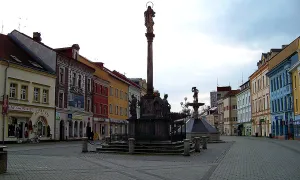
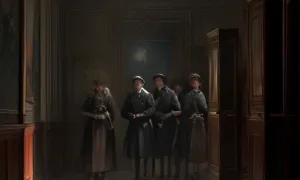
Drag the slider to compare how the landmark may have looked when it was built with the view today.
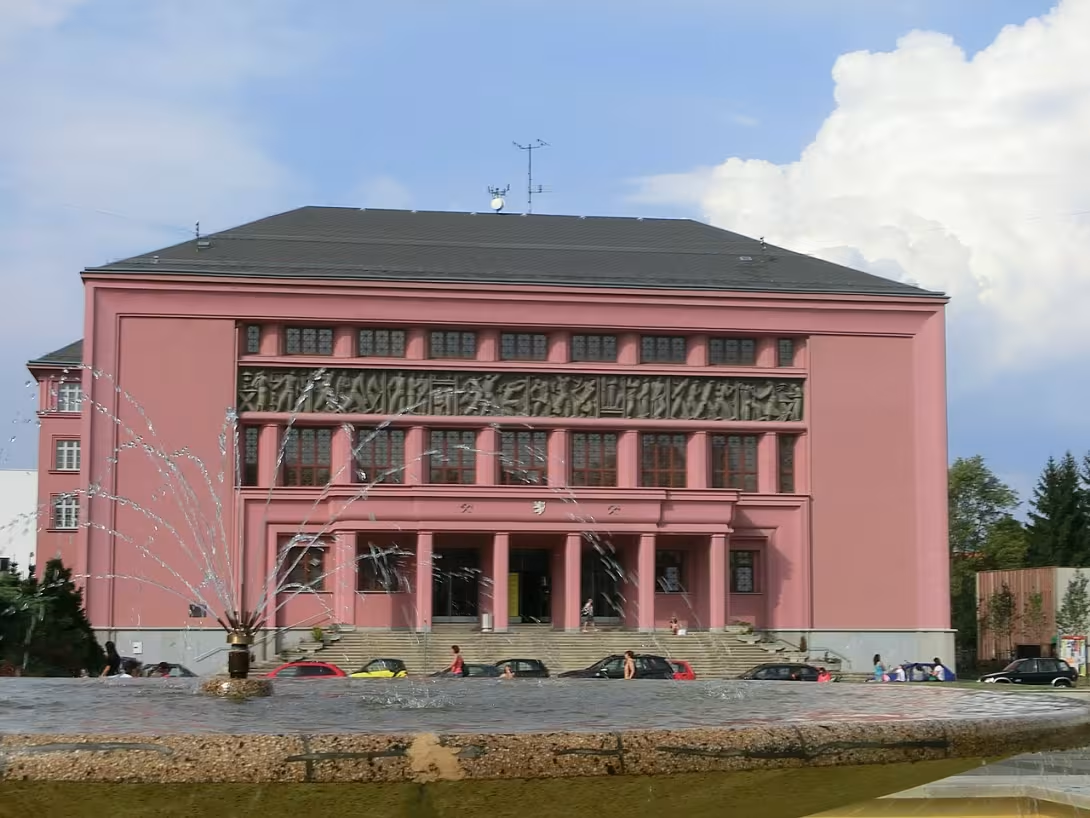
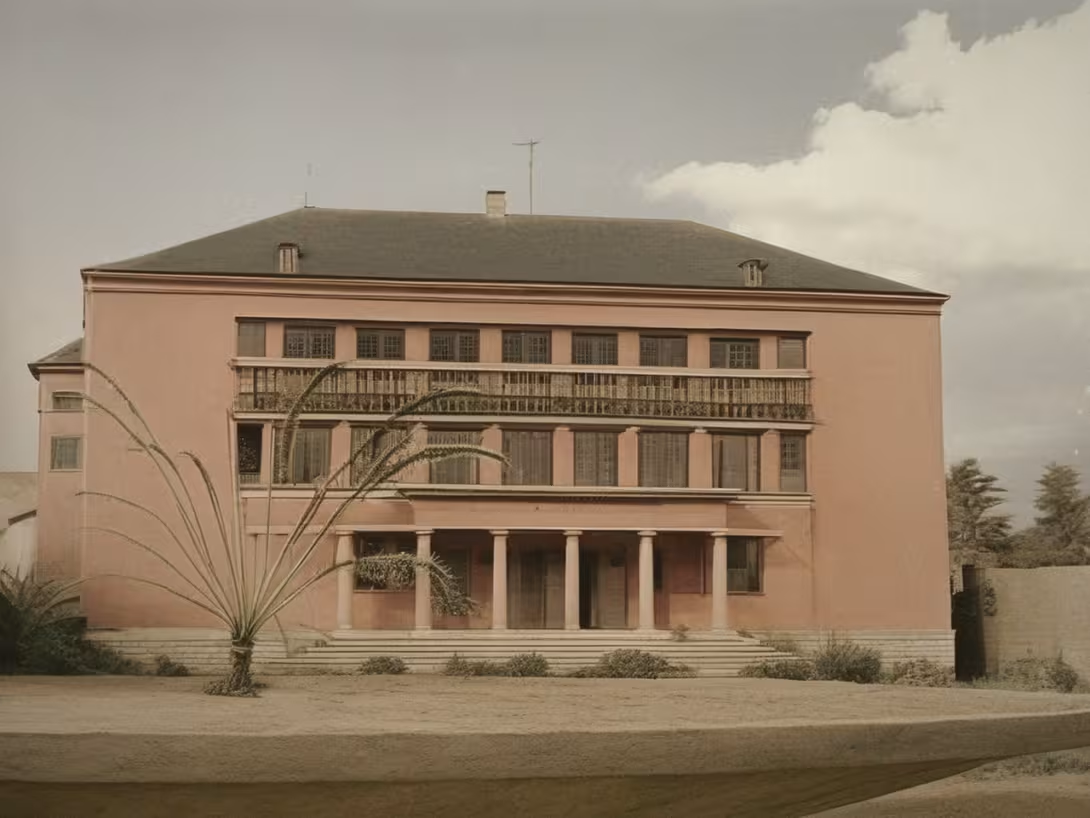
The historical appearance on the left is an AI-generated visualisation and serves as inspiration only.
Historical milestones
- 1922
- Decision to build the miners' association house in Sokolov.
- 1923
- Public tender for construction work announced.
- 1925
- Official opening of the building on October 4th.
Architectural development
The construction of Městský dům kultury Sokolov was completed without significant delays or accidents, employing manual labor for foundational work and machinery for concrete pouring. The building features a main hall with dimensions that accommodate large gatherings, reflecting its intended use as a community center.
Historical events
1922: Decision made to build the miners' association house in Sokolov, with Rudolf Wels's project selected.
1925: Official opening of the building on October 4th.
Points of interest
- The construction of Městský dům kultury Sokolov was part of a broader effort to foster national identity in post-World War I Czechoslovakia by promoting social cohesion and reducing regional nationalism, particularly among the German-speaking population.
- Despite local legends suggesting that miners' wages funded its construction, there is no evidence supporting this claim, making it an intriguing myth likely developed in later decades.
- Before becoming a cultural hub, the site served as a community garden, highlighting its transformation from a green space into a significant architectural landmark over time.
- The building's design process involved both manual labor for foundational work and machinery for concrete pouring, reflecting early 20th-century construction techniques that combined traditional and modern methods.
- Architect Rudolf Wels's project was chosen through an intensive selection process and public tender in June 1923, emphasizing the competitive and transparent nature of architectural commissions during that era.
Guide
This guide is narrated by a synthetic voice generated by artificial intelligence.
Show guide text
This text was created by artificial intelligence and has not been editorially reviewed. It may contain inaccuracies.
Welcome to the Městský dům kultury Sokolov, a remarkable cultural landmark nestled in the heart of Sokolov at ulice 5. května. As you stand here, take a moment to absorb its presence—a multifunctional building that has served as a vibrant hub for cultural and social gatherings since its completion in 1925. Notice how it seamlessly blends into the urban landscape, reflecting both historical significance and modern-day utility.
Let's delve into its origins. The idea of constructing this miners' association house was born out of necessity post-World War I, during a time when fostering national identity was crucial for the newly formed Czechoslovakia. In 1922, a decision was made to build this structure in Sokolov. By 1923, a public tender for construction work was announced, and by October 4th, 1925, the building officially opened its doors.
The architectural design of Městský dům kultury Sokolov is attributed to Rudolf Wels, whose vision encapsulates early 20th-century styles. As you look around, take in the details that speak volumes about this era—notice how the structure reflects urban development trends influenced by the expansion of the Buštěhradská railway. The building's design subtly conveys a sense of purpose and community spirit.
While specific historical figures associated with its creation remain largely unknown, the stories tied to this place are rich with cultural significance. This building was more than just a physical structure; it played an essential role in promoting social cohesion and reducing regional nationalism, particularly among the German-speaking population at that time.
Now, let's touch on something intriguing—a local legend suggests mysteries surrounding its past. While these tales add a layer of mystique, they also invite us to explore beyond what meets the eye, encouraging curiosity about the lives and stories intertwined with this place.
As you continue your exploration, remember that Městský dům kultury Sokolov is not just an architectural marvel but a living testament to the cultural evolution of Sokolov. We invite you to delve deeper into its history, discover its multifaceted roles over the years, and perhaps uncover stories yet untold.
Thank you for joining us on this journey through time and architecture. May your visit inspire further exploration and appreciation of Sokolov's rich heritage.
Tips for visitors
The best time to visit the Městský dům kultury Sokolov is during late spring or early autumn when the weather is pleasant, allowing you to comfortably explore both indoor and outdoor spaces. These seasons offer a balance of mild temperatures and vibrant natural surroundings, enhancing your cultural experience in Sokolov. Additionally, visiting outside peak tourist seasons can result in fewer crowds, providing a more intimate experience with the exhibits and events hosted at this multifunctional building.
When planning your visit, it's recommended to bring comfortable walking shoes as exploring both the interior of the Městský dům kultury Sokolov and its surroundings can involve a fair amount of walking. A camera is also advisable if you wish to capture photographs of the architectural details or any events taking place during your visit. Additionally, carrying a light jacket might be useful as indoor temperatures can vary.
Photography enthusiasts will find several spots around the Městský dům kultury Sokolov ideal for capturing its unique architecture and cultural vibrancy. The best lighting is typically in the late morning or early afternoon when natural light accentuates the building's features. Inside, well-lit galleries provide excellent opportunities to photograph exhibits. For outdoor shots, consider visiting during golden hour—just after sunrise or before sunset—for a warm glow on the structure.
Nearby attractions within a 30-minute drive include historical sites and nature trails that offer a glimpse into Sokolov's rich cultural heritage and natural beauty. Exploring these areas can complement your visit to the Městský dům kultury Sokolov, providing a broader understanding of the region’s history and landscape.
For families with children, the Městský dům kultury Sokolov offers various activities that cater to younger audiences. Interactive exhibits or family-friendly events can be particularly engaging for kids. It's advisable to check the schedule in advance to plan your visit around these activities. Additionally, bringing snacks and a small backpack with essentials like water bottles can make the experience more comfortable for both children and parents.
Frequently asked questions
Can the monument be visited?
This is a residential or farm building, not a museum with opening hours. Please view it from public space and respect the owners' privacy. We have no information about access to the interior.
Where is the monument?
Location: 5. května 655, Sokolov, Karlovarský kraj. The map on this page shows the exact spot.
Why is the monument protected?
It is listed in the Central List of Cultural Monuments of the Czech Republic as a cultural monument (register no. 34583/4-555).
Businesses nearby
Do you run a restaurant, accommodation, shop, museum, rental, wellness or other visitor service near this monument? Show yourself directly to the people heading to it — this is how they will see you in the app and on the web:
Accommodation nearby
Trips and activities nearby
Guided tours, tickets and activities nearby from GetYourGuide
Affiliate link: if you buy from the partner, we may receive a commission. The price for you does not change.
Search tours and activities →Themed route
Tematická výletní trasa: Městský dům kultury Sokolov
1. Městský dům kultury Sokolov
- Typ: Kulturní centrum
- Proč stojí za návštěvu: Tento moderní komplex slouží jako kulturní srdce obce Sokolov, nabízející různorodé umělecké a kulturologické akce. Je to ideální místo pro poznání místního života a tradic.
2. Obecní nádraží Sokolov
- Typ: Historický objekt
- Proč stojí za návštěvu: Toto nádraží je klíčovou součástí místní dopravní infrastruktury a nabízí pohled na historii železničního spojení v regionu. Je to místo, kde lze pozorovat každodenní život obce z unikátní perspektivy.
3. Kostel svaté Anny
- Typ: Náboženský a historický objekt
- Proč stojí za návštěvu: Tento kostel je významnou památkou, která představuje architektonické i duchovní bohatství Sokolova. Jeho historie a umělecké prvky jsou fascinující pro každého návštěvníka.
4. Památník padlým v obecním hřbitově
- Typ: Památník
- Proč stojí za návštěvu: Tento památník je důležitou částí místní historie, uctívající památku těch, kteří zde žili a bojovali. Je to místo pro reflexi a poznání minulosti obce.
5. Základní škola Sokolov
- Typ: Vzdělávací instituce
- Proč stojí za návštěvu: Navštívte toto historické vzdělávací centrum, které hrálo klíčovou roli ve formování místní komunity. Je to připomínka důležitosti vzdělání a jeho vlivu na regionální rozvoj.
Tato trasa nabízí pohled na kulturní, historické a společenské aspekty Sokolova, což umožňuje hlubší porozumění místnímu duchu a tradicím.
Seasonal recommendations
Spring: Visiting the Sokolov City House of Culture during spring offers a refreshing experience as nature awakens around this historic site. The blooming flowers and budding trees create a picturesque backdrop, enhancing the charm of the architecture. This season often sees moderate crowds, making it an ideal time for those who prefer a quieter visit. To fully enjoy the outdoor areas, consider wearing comfortable layers that can be adjusted to accommodate the variable spring weather. Early mornings or late afternoons are typically less crowded, allowing visitors to explore at their own pace.
Summer: Summer is a vibrant season to explore Sokolov City House of Culture, with long daylight hours and warm temperatures ideal for both indoor and outdoor activities. The area around the cultural house often buzzes with life during this time, as local festivals and events take place in the main summer season. Visitors should plan their visit early in the day or later in the afternoon to avoid peak crowds. Light clothing is recommended, along with sun protection such as hats and sunscreen, to ensure a comfortable experience while enjoying the lively atmosphere.
Autumn: Autumn transforms Sokolov City House of Culture into a stunning display of warm hues, with golden leaves providing a beautiful natural setting. This season often sees fewer tourists compared to summer, offering a more serene environment for visitors. The cooler temperatures make it an excellent time for leisurely walks around the area, and layers are advisable as the weather can fluctuate between crisp and chilly days. Visiting in late afternoon or early evening can be particularly rewarding when the setting sun casts a golden glow over the historic architecture.
Winter: Winter at Sokolov City House of Culture is characterized by a serene, almost magical atmosphere, with snow-covered landscapes adding to its historical allure. The shorter daylight hours and potential for inclement weather mean that visiting in the morning can be advantageous, as it allows more time to explore before closing times. Visitors should dress warmly in layers, including hats, gloves, and insulated boots, to comfortably enjoy the site's winter charm. Despite the colder temperatures, this season offers a unique opportunity to experience the cultural house with fewer crowds and a peaceful ambiance.
Visualizations and artistic views


The visualisations are generated by artificial intelligence and serve as inspiration.
Photos from the area
Real photos taken near the monument


Zdroj a licence jsou uvedeny u každého snímku.
Tips from visitors
No tips yet. Be the first!
Log in and add your tip.
Sources and literature
Photos: Pavel Reichard / CC BY-SA 3.0 — Wikimedia Commons. The author and licence also appear when you hover over the image.
Faktickým podkladem tohoto textu byl článek na Wikipedii, jehož autory jsou přispěvatelé Wikipedie. Článek je dostupný pod licencí CC BY-SA 4.0.
Location on the map
Příběhy a pověsti
Legendy, pověsti a příběhy spjaté s touto památkou
Fotografie návštěvníků
Zatím žádné fotografie. Buďte první, kdo přidá fotografii z návštěvy!
Log in a přidejte svou fotografii nebo hodnoťte.
Za ověřenou návštěvu v aplikaci získáte víc bodů — poznáme podle GPS, že jste na místě.
Reviews and comments