



Michelská synagoga Synagogue
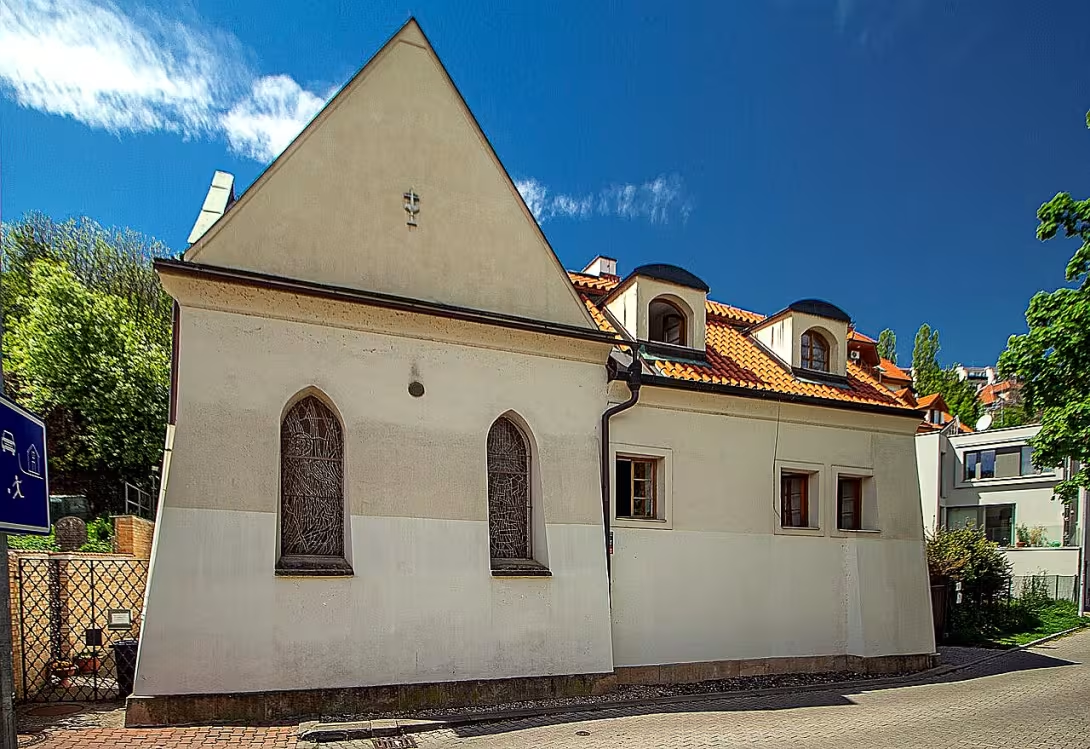
Michelská synagoga stands in the street U Michele Mill no. 124, near the bank of the Botič stream in Prague Michli. It is one of the most interesting and beautiful historical objects in this area. Among other things, its uniqueness is that it belongs to the few suburban synagogues who survived World War II.
The original construction on the site of today's synagogue was probably an economic construction, probably a wine house from the Gothic period - this is evidenced by the findings of the old masonry discovered during reconstruction in the twentieth century. The exact date of synagogue formation is unknown; it is assumed to have occurred around 1730 or later. It is clearly not until the nineteenth century that it exists. During the reconstruction in the second half of this century there was a romanticizing neo-gothic adjustment of the eastern facade and extension of the building. The building was divided into two parts: in the original southern part there was a prayer room with a gallery for women, in the newer northern part there was an apartment of a cantor and administrator of the synagogue. The synagogue served the needs of Jewish communities not only from Michle, but also from nearby Nusla, Vršovice and Podolí. However, the synagogue's capacity proved insufficient after Michle became part of Prague in 1922. The Jewish community began to prepare its reconstruction, but the outbreak of World War II stopped all plans and the Jewish community died during the war.
After the war, the object fell into the administration of the Jewish Museum. At the beginning of the 1950s, a depository was established here, where about 1200 Torah scrolls were held, which the Nazis drove to Prague from the destroyed and violently closed synagogue of Jewish communities throughout the Protectorate. In 1964, most of these scrolls were transferred to the Westminster Synagogue in London, from which they were lent as live comments of exterminated Jewish communities in Bohemia and Moravia to synagogues and communities around the world. After taking the Torah to the synagogue gradually decrepit. In 1975, in a rather dismal state, the College of Albert Schweitzer, the Church of the Czechoslovak Hussite, acquired it, which restored the building and used it to this day as a prayer house.
Today, the Jewish history of the synagogue is reminiscent of a few old tombstones in a small garden in front of the southern facade, which allegedly originate from the Jewish cemetery in Uhronev. Thanks to its history and return to the lively community, Michelská synagoga represents an extraordinary memory site for decades of Jewish presence in Michli.
Then and now
Drag the slider to compare how the landmark may have looked when it was built with the view today.
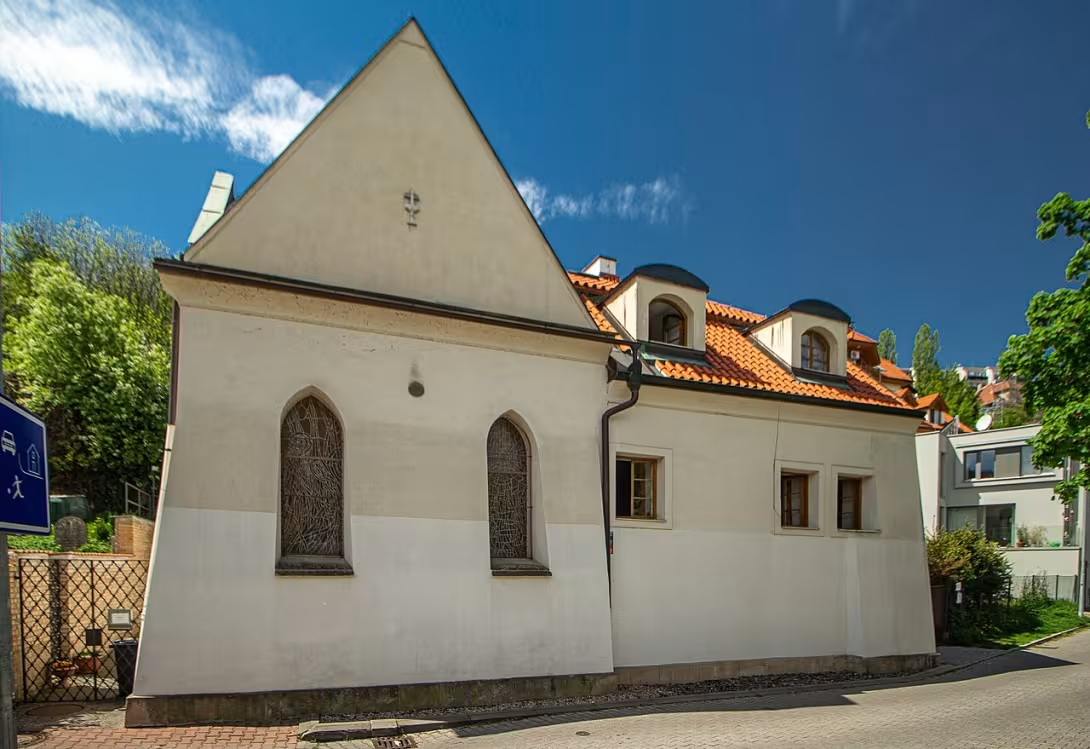

The historical appearance on the left is an AI-generated visualisation and serves as inspiration only.
Historical milestones
- 19th Century
- Proven existence of synagogue, extension of object and neo-gothic modification of eastern facade
- 1922
- Michelská synagoga became a part of Prague, capacity stopped enough
- 1945
- Take over the synagogue by Jewish Museum, use as depository of the Torah Scroll
- 1975
- Taking over the synagogue by Albert Schweitzer Church of Czechoslovak Hussite
Architectural development
The original construction could be based on the location of the economic building from the Gothic period. In the 18th century it underwent baroque reconstruction, in the second half of the 19th century it underwent a romanticizing neo-gothic reconstruction. In 1970 it was adapted to the prayer house in order to restore its original appearance. The building is built of stone and walled, with typical elements of Jewish sacral architecture.
Historical events
- 1922
- Michelská synagoga has become a part of Prague, capacity has ceased enough for local Jewish communities
- 1945
- The synagogue was transported by the Jewish Museum and served as depository of the Torah scrolls from the destroyed synagogue
- 1964
- Most of the Torah scrolls were transported to London, the synagogue began to decay
- 1975
- Alberto Schweitzer's congregation restored the Czechoslovak Hussite Object and started using it as a prayer house
Owners
19th century – Michele, Nusel, Vršovická and Podolská Jewish community; After 1945 – Jewish Museum (until 1964); Since 1975 – Alberto Schweitzer's Choir of the Czechoslovak Hussite Church.
Points of interest
The synagogue is one of the few suburban synagogues that survived World War II.
- Originally, there may have been a gothic wine house in its place, as evidenced by the findings of the old masonry from the reconstruction in the last century.
- In the nineteenth century it went through a reconstruction in which there was a prayer room with a gallery for women and an apartment for a teacher.
- The synagogue served not only the local Jewish community, but also the local communities, such as Nusle, Vršovice and Podolí.
- After the war, around 1200 Torah scrolls were preserved here, brought here from the entire Protectorate.
Guide
This guide is narrated by a synthetic voice generated by artificial intelligence.
Show guide text
This text was created by artificial intelligence and has not been editorially reviewed. It may contain inaccuracies.
The Michelská Synagogue is a former Jewish place of worship in Prague's Michle district. It stands on the bank of the Botiče stream, on U Michelského mlýna street. It ranks among the most interesting historical buildings in Michle and is one of only a few suburban synagogues that were not destroyed during the occupation. Today it serves as a place of worship for the Albert Schweitzer congregation of the Czechoslovak Hussite Church. The building is protected as a cultural monument.
Originally, a farm building, probably a small vineyard house, stood where the synagogue is located. It likely existed here already during the Gothic period. This is evidenced by old stonework that was discovered during renovations in the twentieth century.
When exactly the synagogue was built is unknown. It may have been around 1730, or possibly later. It is documented with certainty only in the nineteenth century. In the second half of that century, it underwent reconstruction. The building was expanded and its eastern façade was given a romanticizing neo-Gothic appearance. In the older, southern section was the prayer hall with a gallery for women. In the newer, northern section was the cantor's apartment and the synagogue caretaker's residence. The prayer hall served not only the Jews of Michle, but also communities from Nuslí, Vršovice, and Podolí.
When Michle became part of Prague in 1922, the synagogue no longer had sufficient capacity. The Jewish community therefore began preparing its renovation. However, before they could raise the necessary funds, the war broke out and the local Jewish community ceased to exist during it.
After the war, the building was given to the Jewish Museum. At the beginning of the nineteen fifties, it established a storage facility there. Approximately 1200 Torah scrolls were stored here, which the Nazis had brought to Prague from destroyed and forcibly closed synagogues of all Jewish communities in the protectorate. In 1964, most of the scrolls were transported to Westminster Synagogue in London. From there, they continue to be loaned to Jewish communities and synagogues throughout the world as reminders of the destroyed Jewish communities in Bohemia and Moravia.
The abandoned synagogue then fell into disrepair. In 1975, the congregation of the Czechoslovak Hussite Church acquired it in quite a deteriorated condition and restored it. Today, a few old tombstones in a small garden in front of the southern façade are the only reminders of the building's Jewish past. They reportedly come from a Jewish cemetery in Uhříněves.
Tips for visitors
The best time to visit the Michele Synagogue is in the spring or autumn period when the weather is mild and pleasant. This time of year offers ideal conditions for walking around the Botiče stream and enjoying the peace in the surroundings.
The nearest station is Praha -Libeň and here you can find the connection to Michle.
When visiting, remember shoes that are suitable for walking on concrete or brick floors. In addition, you could use sunglasses and sun protection ties.
Photography is great here, especially in the shade of old trees or in the sunshine in the early morning or late afternoon. Don't forget to take a camera with good optics to capture the details of the synagogue architecture.
In the vicinity there is a national monument Botič shoulder which is ideal for a short walk or picnic. It's a place with picturesque water areas and greenery.
Frequently asked questions
Can the monument be visited?
Religious buildings are usually open mainly during services; at other times a visit is normally arranged with the parish or the operator. We have not verified specific times.
Where is the monument?
Location: U michelského mlýna 124/27, Michle, Praha, Hlavní město Praha. The map on this page shows the exact spot.
Why is the monument protected?
It is listed in the Central List of Cultural Monuments of the Czech Republic as a cultural monument (register no. 40264/1-1340).
For kids
Hello, young adventurers! Do you hear the thin murmur of the leaves and the sounds of the Botico stream? It's like a magic signal that brings you to the old Michele Synagogue. There was once a place full of life stories, like a book with colored pictures.
Businesses nearby
Do you run a restaurant, accommodation, shop, museum, rental, wellness or other visitor service near this monument? Show yourself directly to the people heading to it — this is how they will see you in the app and on the web:
Events nearby

Zdroj akcí: otevřená data měst a obcí ČR (Národní katalog otevřených dat) a kalendář akcí Národního památkového ústavu.
Accommodation nearby
Trips and activities nearby
Guided tours, tickets and activities nearby from GetYourGuide
Affiliate link: if you buy from the partner, we may receive a commission. The price for you does not change.
Search tours and activities →Themed route
Thematic cruise route: The history and culture of the village Michle
1.Michelská synagoga - Type: Memorial, religious place - Why is it worth a visit: Michelská synagoga is one of the oldest preserved synagogue in Prague and represents an important historical element of the Jewish community. It is a place where you can explore rich architecture and learn more about the history of Jewish people in this part of Prague.
2. Jewish cemetery in Uhranives - Type: Historical monument, cemetery - Why is it worth visiting: This cemetery is one of the oldest Jewish burial grounds in the Czech Republic. About 3 km from the synagogue, it offers historical tombstones and quiet spaces to reflect. It is an ideal place to understand the importance of the Jewish funeral ritual and the memory of many generations.
3. Prague suburb Michle - Type: Architectural and historical trip - Why is it worth a visit: The village Michle offers typical Prague suburban architecture, where you can walk around historic houses and enjoy green spaces. This place allows you to feel the atmosphere of the past and to know the environment of the inhabitants of Michle at the end of the 19th century.
4. Brook Boot - Type: Natural element, holiday place - Why it is worth a visit: The brook Botič is an ideal place for a short relaxation and walk. Its peaceful watercourses and surrounding green areas offer an opportunity to relax after discovering historical monuments.
5. At Michele Mill - Type: Historic site, street - Why is it worth visiting: This area will lead you to one of the oldest mills in Prague. Walk down the street at the Michele Mill is suitable for those who want to discover historical infrastructure and enjoy the quiet surroundings.
This route offers a combination of history, architecture and nature in one of the most characteristic parts of Prague.
Seasonal recommendations
Spring: In the spring season Michelská synagoga will be born in a new gloss, when the surrounding nature is revived by flowers and trees are beginning to frown. Sunshine days give visitors a sense of renewal, while mild temperatures create ideal conditions for walking around the monument. It is advisable to visit the synagogue earlier in the afternoon to avoid possible rainfall occurring during this period. A good idea is to wear clothes on layers that allow you to adapt to rapid weather changes.
Summer: The Michelská synagoga summer offers the best conditions for visiting thanks to long sunny days. The atmosphere is full of vitality, while surrounding green spaces attract many tourists and locals into a quiet environment. Due to high temperatures and large number of visitors, it is recommended to visit the memory of the morning afternoon when the crowd calms down and temperatures are lighter. Don't forget the protective sunglasses and plenty of drinking water.
Autumn: In the autumn period Michelská synagoga is revived by a colour palette of leaves that varies from green to yellow, red and orange. This seasonal change creates a unique atmosphere of calm and a fascinating view of the historical memory. The temperatures are usually pleasant, which means that the visit is comfortable even without warm clothes. Visit her in an excellent afternoon when she can become colder and nature offers the best light for photography.
Winter: A winter visit to the Michele Synagogue is a special experience when the freezing air gives the space a calm and quiet atmosphere. The vibrant sun creates magical light effects on the walls of the monument, while the snow sheets can provide a romantic surroundings. It is important to prepare for cold temperatures and the possibility of rain or snow, therefore it is advisable to wear warm clothes and shoes with good elasticity. Visit her in the early afternoon when you have the best chance of sunny times and fewer visitors.
Visualizations and artistic views


The visualisations are generated by artificial intelligence and serve as inspiration.
Photos from the area
Real photos taken near the monument


Zdroj a licence jsou uvedeny u každého snímku.
Atmosphere of the place
This atmospheric visualisation of the place and period was generated by artificial intelligence. It is not real footage of the location.
Tips from visitors
No tips yet. Be the first!
Log in and add your tip.
Sources and literature
Photos: VitVit / CC BY-SA 4.0 — Wikimedia Commons. The author and licence also appear when you hover over the image.
Faktickým podkladem tohoto textu byl článek na Wikipedii, jehož autory jsou přispěvatelé Wikipedie. Článek je dostupný pod licencí CC BY-SA 4.0.
Location on the map


Příběhy a pověsti
Legendy, pověsti a příběhy spjaté s touto památkou
Fotografie návštěvníků
Zatím žádné fotografie. Buďte první, kdo přidá fotografii z návštěvy!
Log in a přidejte svou fotografii nebo hodnoťte.
Za ověřenou návštěvu v aplikaci získáte víc bodů — poznáme podle GPS, že jste na místě.
Reviews and comments