



Morový sloup v Lomnici Marian column
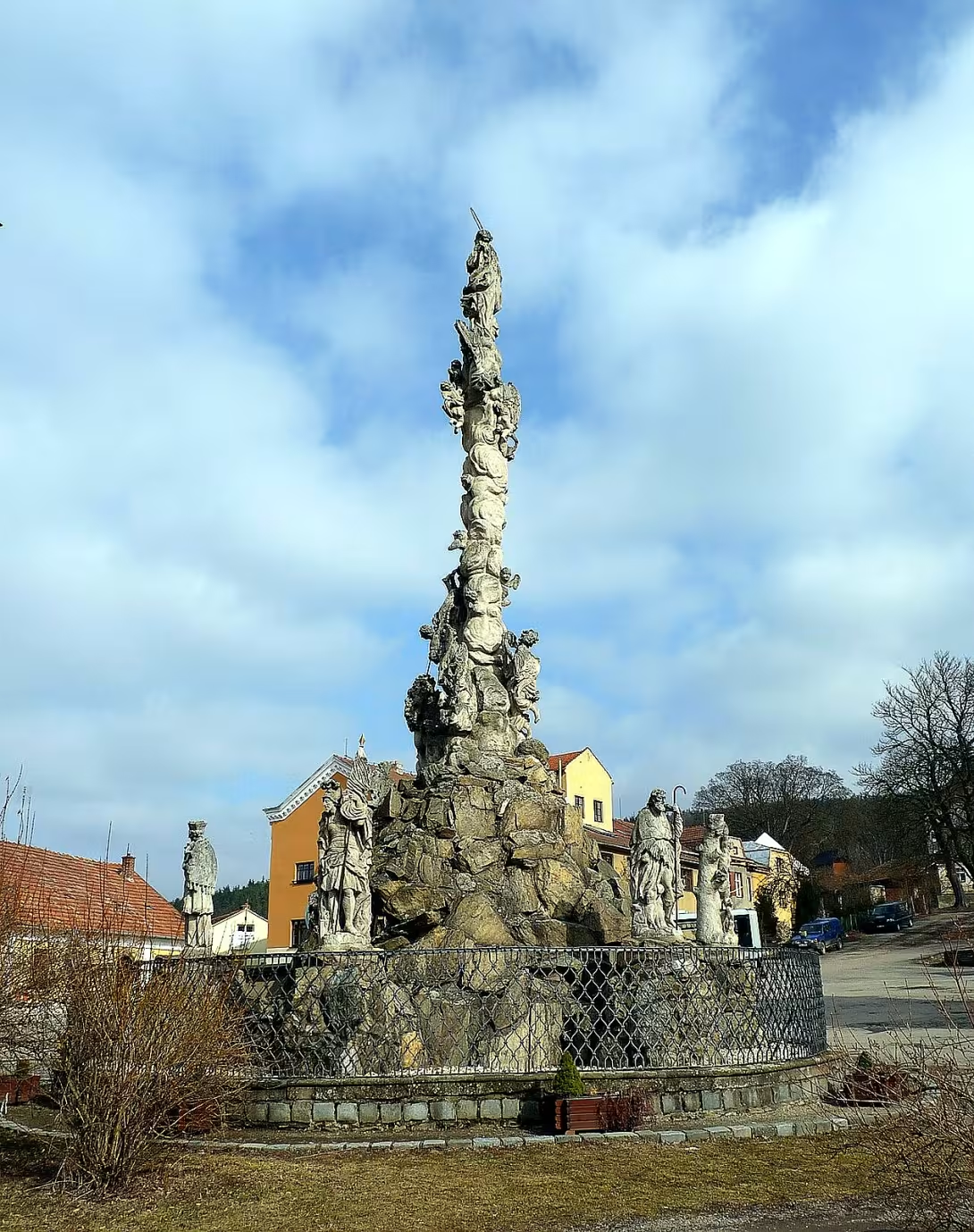
Morový sloup v Lomnici, situated in the middle of the square of this village, is a cultural monument and Baroque sculpture work that attracts attention with its historical value and architectural rendition. It was established in 1710 as part of a wider plan for the transformation of the Lomna Square, which was intended to create a representative prefix of the castle. The column is important not only by its Marian initiation, but also as a plague monument, which symbolizes the gratitude for averting the epidemic between 1679 and 1680.
In the 1960s, Count František Gabriel Serényi, who wanted to turn Lomnica into a magnificent mansion, developed plans to build a pillar. The concept of the square was to include a new church, parish, town hall and other buildings, but it was not fully realized. The column was erected in the place of the former medieval church of St. Vitus and St. John the Baptist, which was destroyed at that time.
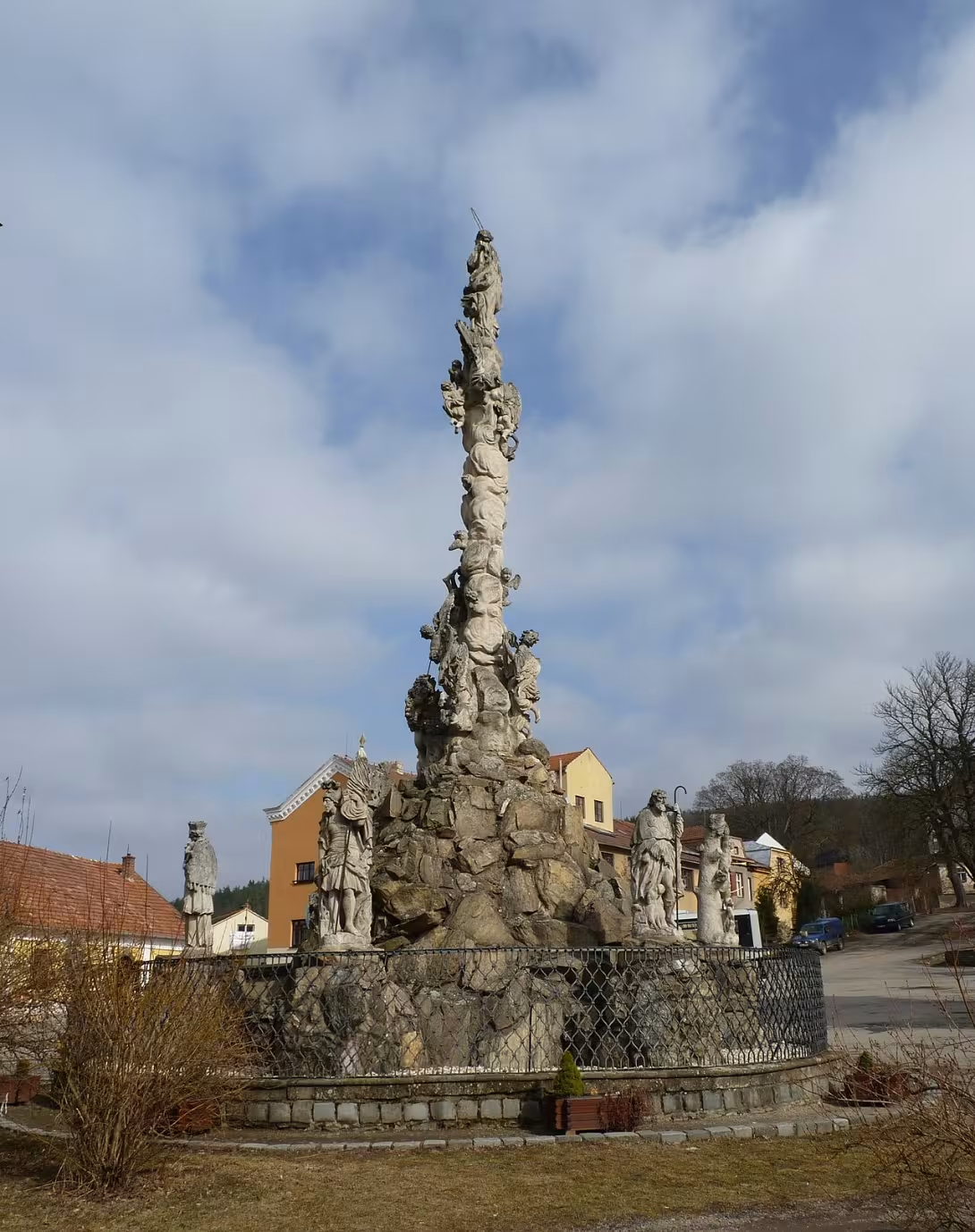
The architecture of the work is typical of the Baroque period. The lower part is a massive stone base resembling a natural rock from which a tree of knowledge grows. The upper part of the column passes into a cloud stick with angel heads and culminates with a statue of Immaculata, supplemented by twelve stars above the head. The statue of six saints - Saint Vitus, Antonín Paduan, Shebestian, Rocha, Florian and Jan Nepomucký - is standing around the main stone.
Serenyi, the family of the local authorities, took care of the construction of the column. The original plans were created by František Gabriel Serényi, but his son Antonín Amat, who erected the column in 1710, became the real realtor. The planned form of the square was completed with the exception of the hospital.
The interesting thing is its dual symbolism. In addition to the Marian motif, the monument was also conceived as a plague, reminiscent of a large epidemic that avoided the Lomenice estate between 1679 and 1680. In this way, gratitude for the protection against infection has been expressed.
Today stands the plague column in Lomnica as a witness to the rich history and artistic spirit of the Baroque. It represents not only a valuable landmark, but also a source of pride for local residents and arrivals. Its importance underlines the architectural value and historical events associated with it. The column offers tourists and historians an opportunity to explore the past of Lomnice and understand the importance of similar monuments in Central Europe.
Morový sloup v Lomnici is therefore not only an impressive work of art, but also a lively reminder of the historical events and personalities that shaped this area. His visit provides insight into the past and points out the importance of protection and gratitude in society.
Then and now
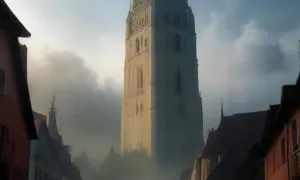
Drag the slider to compare how the landmark may have looked when it was built with the view today.
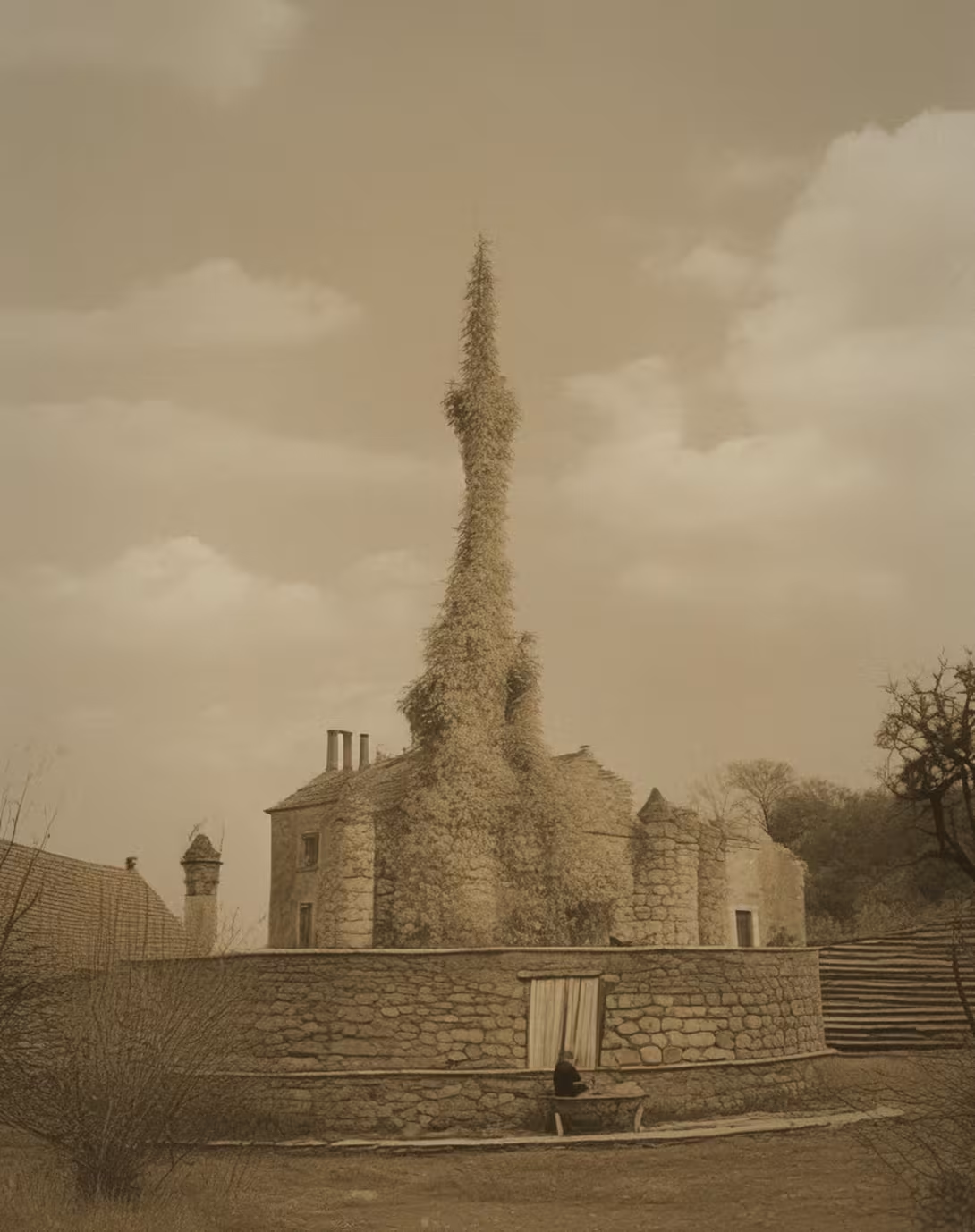
The historical appearance on the left is an AI-generated visualisation and serves as inspiration only.
Historical milestones
- around 1665
- Count František Gabriel Serényi designed plans to build a column and square.
- 1680
- The end of the plague epidemic, for which the pillar was built out of gratitude.
- 1710
- Completing and erecting the Baroque column by Count Antonín Amato Serenyi.
- 1958
- The entry of a pestilence column on the list of real cultural monuments.
Architectural development
Baroque sculpture work built on the site of a demolished medieval church. The bottom part of the column consists of a tree of knowledge that passes at the top into a cloud stick. The statues of six saints are placed around the main pillar on the sculptures of natural stones.
Historical events
Plans for construction in the 1960s for Count František Gabriel Serényi. The demolition of the old medieval church of St. Vitus and St. John the Baptist. The rise of the Baroque column in 1710 for Count Antonín Amato.
Owners
The manor of the Lomonic estate, the House of Serenyi.
Points of interest
The column was designed not only as a Marian, but also as a plague to commemorate the great plague epidemic between 1679 and 1680, even though the epidemic had avoided the local estate itself. This has expressed gratitude for the protection against this disease. It was built in places where a medieval church used to stand.
Guide
Show guide text
This text was created by artificial intelligence and has not been editorially reviewed. It may contain inaccuracies.
Welcome to Lomnica, where you are standing in front of one of the most significant monuments of this small village. Under your feet there is a square with its calm and historical depth, but in the centre of attention there is a pestilence column - a monumental sculpture work of the Baroque era. The column stands as a testament to past times, where history and art make one.
This significant pestilence was built around 1710 under the leadership of Count Antonín Amato Serenyi. It is a work of gratitude for the protection against the plague epidemic, which has hit many areas between 1679 and 1680. Even though Lomnice itself got out of this crisis, the pillar was built as a symbol of gratitude for saving people from this plague.
Let's take a closer look at the architecture of this important monument. The column is built as a massive stone structure that stands in the middle of the square and dominates the entire space with its size and artistic value. His base is solid and distinctive, which contributes to his impressive impression. The column bears a Marian statue, which was built as a symbol of protection and comfort for the locals.
Interestingly, this column was not only planned by Count Antonín Amato Serenyi. His father, František Gabriel Serényi, already around 1665, proposed plans for the construction of this monument and square, showing the long-standing efforts of the family to improve and decorate the Lomnice. This column thus becomes a link between generations and their contribution to the local community.
The interesting thing is that even though the plague has thrown out the Lomnik estate, it has been famously recorded in people's memory as an important historical moment. This column represents not only artistic value, but also deep emotional and social aspects of the past.
We will now invite you to explore other parts of Lomnice. You can move around the square, discover its details and think about the lives of people who once walked through this place. Let your imagination take to the past and find yourself in the midst of the history of this beautiful town.
Thank you for visiting the plague column in Lomnica. We hope that this guide has brought you a deeper understanding of its historical roots and artistic value. Let your next steps bring even more discoveries and insights into this fascinating place.
Tips for visitors
The best time for a tour of the pestilence occurs during the bright morning or in the evening during the golden hour. In these times, the low sun sculptures the fine stony details of Baroque statues from 1710 and does not create sharp shadows. From the point of view of photography it is worth bypassing the memory from all sides - from different angles of the square you can capture impressive composition of the column against the background of other historical manor buildings.
You can easily reach Lomnice by car and public transport, and it is best to find specific routes and times in normal traffic search engines. Since the monument is located on a paved area, you can use the usual comfortable walking shoes. Do not forget to take a camera or a telephone with a high-quality approach, or a small pocket telescope, so that you can take a closer look at the top parts and the upper statues of the saints.
A visit to the column is ideal to connect with a walk all over Lomnický Square, which represents a premeditated historical master concept. In the immediate vicinity you can see from the outside the town hall, the rectory and the building of the former master brewery. Only a short walk from the square is located the Lomnický castle, which will close the entire historical walk of this town appropriately.
The paved area is well-functioning and offers plenty of space. Children can be impressed by a playful search for individual figures of saints, coats of arms and decorative baroque elements on both the pedestal and the blade of the column, which will create an interesting cognitive activity from the tour.
Frequently asked questions
Can the monument be visited?
This is a structure in a public space that can usually be seen from outside free of charge. We have not verified that this particular one is freely accessible.
Where is the monument?
Location: Lomnice. The map on this page shows the exact spot.
Why is the monument protected?
It is listed in the Central List of Cultural Monuments of the Czech Republic as a cultural monument (register no. 1000140245).
Businesses nearby
Do you run a restaurant, accommodation, shop, museum, rental, wellness or other visitor service near this monument? Show yourself directly to the people heading to it — this is how they will see you in the app and on the web:
Events nearby
Zdroj akcí: otevřená data měst a obcí ČR (Národní katalog otevřených dat) a kalendář akcí Národního památkového ústavu.
Nearby
Lomnické náměstí s dalšími historickými budovami původní panské koncepce, jako je fara, radnice nebo panský pivovar, a nedaleký lomnický hrad.
Accommodation nearby
Trips and activities nearby
Guided tours, tickets and activities nearby from GetYourGuide
Affiliate link: if you buy from the partner, we may receive a commission. The price for you does not change.
Search tours and activities →Seasonal recommendations
Spring: In spring, Morový sloup v Lomnici is revived by a beautiful flower that brings life to the surrounding environment. The sun illuminates the memory of a long flash of light, giving statues and architecture a unique shine. The atmosphere is full of hope and renewal, when nature begins to bloom. For the visit it is recommended to dress in mild clothes with the possibility to add layers because the temperature can be medium and time conditions variable. It is best to visit the memory in early afternoons or evenings when nature is quieter and fewer people.
Summer: In the summer period, the Plague Column is appreciated for a bright, warm atmosphere. The sun illuminates the memory of a long flash of light, highlighting the detail and color of the statues. The temperature may be high, so it is advisable to take your protective sunglasses and hat with you. Visiting a memorial is recommended in the morning or evening to avoid heat at noon, which will also help avoid the most visiting hours.
Autumn: In the autumn season, the Plague Column is surrounded by a colorful palette of leafy trees that add landscape beauty. The sun illuminates the memory of a shorter flash of light, creating a softer and warmer feel. The temperature gradually decreases, so it is advisable to dress up for a mild cold with the possibility to add layers of clothing. The best time for a tour is in the early afternoon or evening when the atmosphere is calm and fewer people.
Winter: In winter, the Plague Column appears in a remarkable snow suit, which brings unique beauty. The sun illuminates the memory of a shorter and softer flash of light, giving sculpture and architecture a romantic look. The temperature is low, so it is necessary to dress for the cold with a warm shirt, scarf and protective gloves. The best time to visit is in the morning or evening when there are fewer people and the atmosphere is calm and relaxed.
Visualizations and artistic views


The visualisations are generated by artificial intelligence and serve as inspiration.
Photos from the area
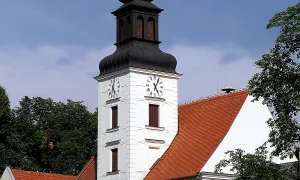
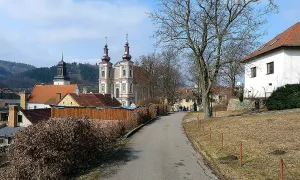
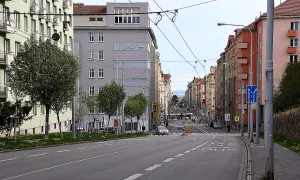
Real photos taken near the monument


Zdroj a licence jsou uvedeny u každého snímku.
Tips from visitors
No tips yet. Be the first!
Log in and add your tip.
Sources and literature
Photos: Michal Klajban / CC BY-SA 3.0 — Wikimedia Commons. The author and licence also appear when you hover over the image.
Faktickým podkladem tohoto textu byl článek na Wikipedii, jehož autory jsou přispěvatelé Wikipedie. Článek je dostupný pod licencí CC BY-SA 4.0.
Location on the map


Příběhy a pověsti
Legendy, pověsti a příběhy spjaté s touto památkou
Fotografie návštěvníků
Zatím žádné fotografie. Buďte první, kdo přidá fotografii z návštěvy!
Log in a přidejte svou fotografii nebo hodnoťte.
Za ověřenou návštěvu v aplikaci získáte víc bodů — poznáme podle GPS, že jste na místě.
Reviews and comments