



Oráčov Ruin
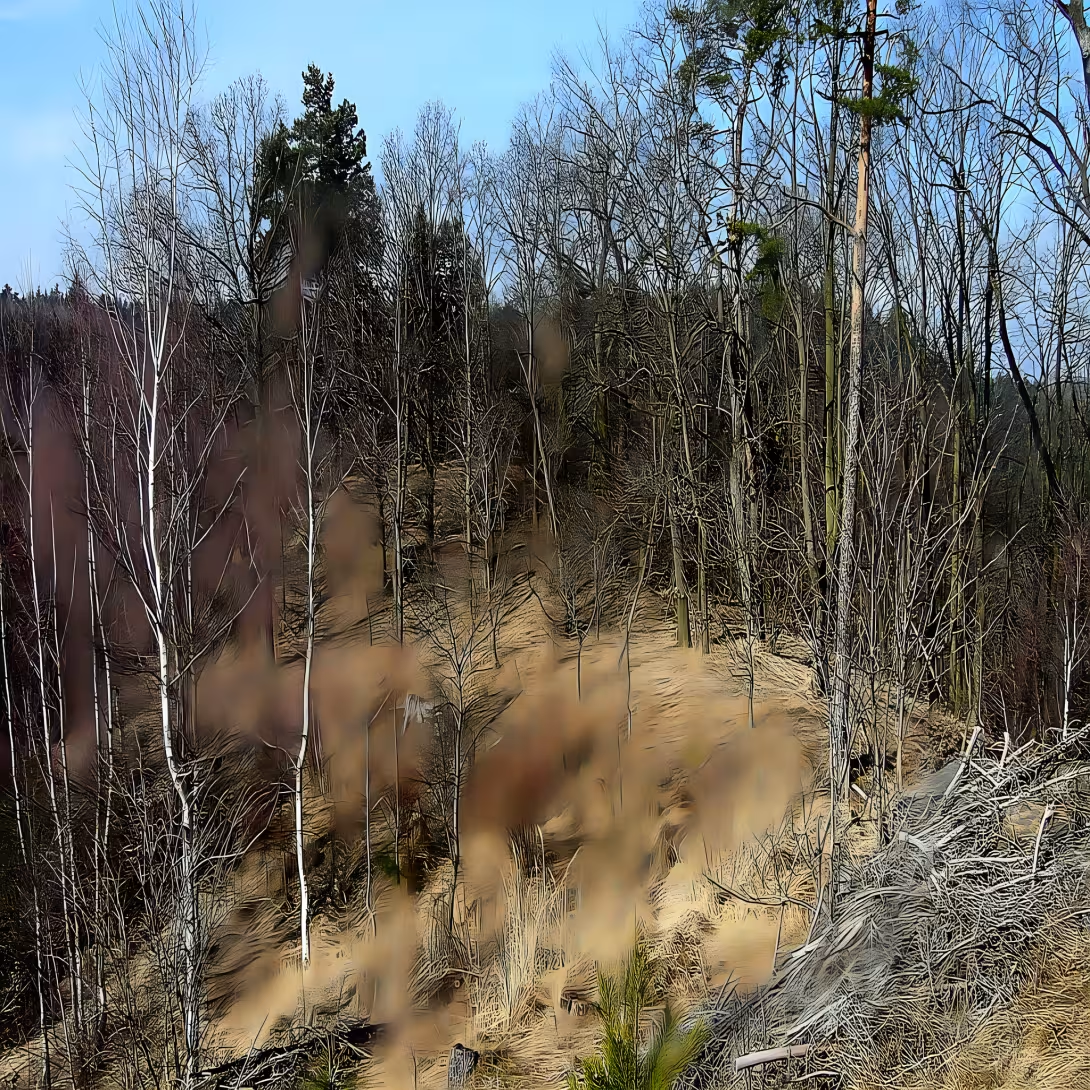
Oráčov is a captivating historical site near the village of Oráčov in the Rakovník District, Central Bohemian Region, Czech Republic. This vanished castle, established in the late 13th century and abandoned by the mid-14th century, exemplifies medieval fortification architecture. Recognized as a cultural monument since 1965, it is notable for its remnants of fortifications and a protected linden tree within one of its moats.
The origins of Oráčov date back to the late 13th century, during significant political and territorial changes in Bohemia, part of the Holy Roman Empire. Its construction coincided with the rise of Gothic architecture across Europe, reflecting broader cultural shifts. Odolena z Oráčova is the earliest known owner mentioned in records from 1295, indicating early significance within local nobility.
Architecturally, Oráčov featured a two-part layout typical of medieval fortifications. The elongated bailey was protected by a moat and rampart, while an inner ward was separated by another ditch with steep slopes for additional defense. These elements suggest that the castle's structures were primarily made of wood, common in such constructions during this era.
Ownership transitioned over time, becoming part of the Petrohrad estate before being noted as abandoned by 1483. This shift reflects broader historical patterns of land ownership and use within the region. The site’s abandonment in the first half of the 14th century marks a significant point in its history, leading to its current state as ruins.
Today, Oráčov offers visitors an intriguing glimpse into medieval life and architecture. Although not on major tourist routes, access involves a local road leading to Sosně followed by a forest path. The site's most striking feature is the protected linden tree within the second moat, alongside archaeological findings such as pottery shards and fragments of corroded iron sheeting.
Visiting Oráčov provides an opportunity to explore a piece of Czech history that has withstood the test of time. Its cultural significance and preserved remnants make it a worthwhile destination for those interested in medieval architecture and history. The site invites visitors to reflect on its historical context and appreciate its enduring legacy as part of the region's heritage.
Then and now
Drag the slider to compare how the landmark may have looked when it was built with the view today.
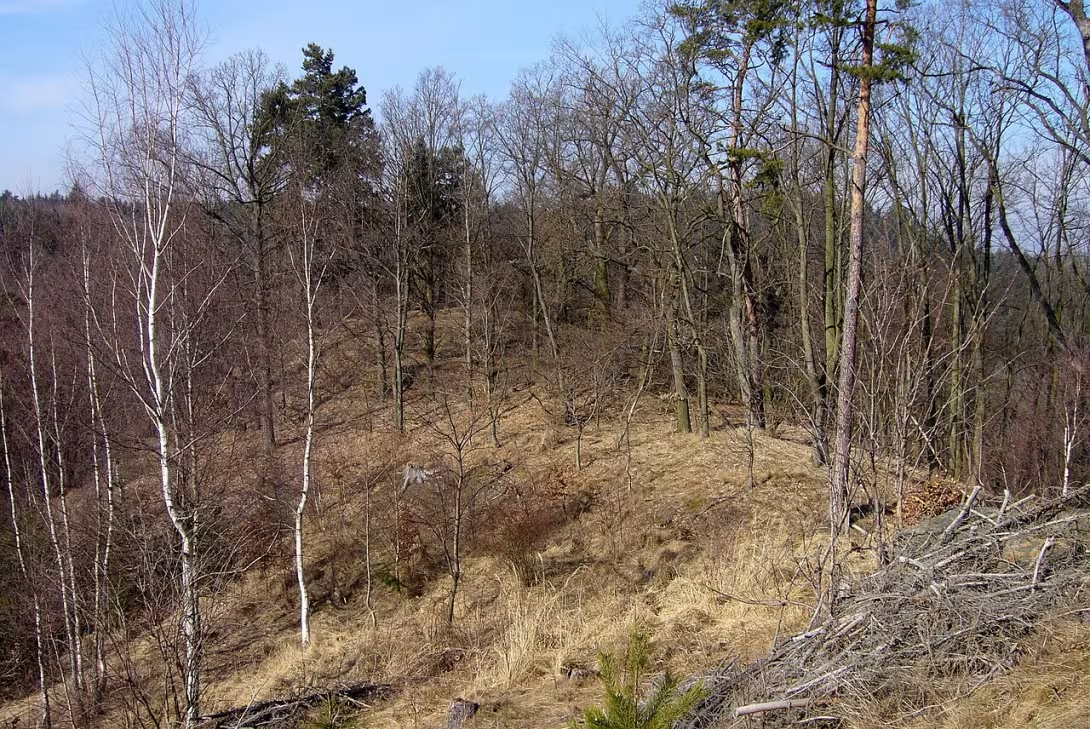

The historical appearance on the left is an AI-generated visualisation and serves as inspiration only.
Historical milestones
- 1295
- First written mention of Odolena z Oráčova, indicating early ownership.
Architectural development
The castle's fortifications and structures were likely made primarily of wood. It featured a two-part layout with an elongated bailey protected by a moat and rampart. The inner ward was separated from the bailey by another ditch, with steep slopes providing additional defense.
Historical events
Established in the second half of the 13th century.
Abandoned in the first half of the 14th century.
Mentioned in a document from 1295, referencing Odolena z Oráčova.
Owners
The earliest known owner mentioned in records is Odolena z Oráčova, referenced in 1295. The castle later became part of the Petrohrad estate and was noted as abandoned by 1483.
Points of interest
- Despite its abandonment by the mid-14th century, Oráčov's ruins remain a testament to medieval fortification techniques, with remnants of wooden structures that were typical for castles built during this era.
- The protected linden tree within one of Oráčov’s moats is not only a natural landmark but also symbolizes the site's enduring connection to nature and history, standing as a living witness to centuries past.
- Odolena z Oráčova, the earliest known owner mentioned in records from 1295, highlights the castle's importance within local nobility during its early years, reflecting the social hierarchy of medieval Bohemia.
- The transition of ownership to the Petrohrad estate before being noted as abandoned by 1483 illustrates broader historical patterns of land use and ownership changes, marking Oráčov’s evolution through different eras.
- Although not a major tourist destination, Oráčov offers an off-the-beaten-path experience for history enthusiasts, with archaeological findings like pottery shards providing tangible links to its medieval past.
Guide
This guide is narrated by a synthetic voice generated by artificial intelligence.
Show guide text
This text was created by artificial intelligence and has not been editorially reviewed. It may contain inaccuracies.
Oráčov is a vanished castle near the village of the same name in the Rakovnicko region. It stood approximately one kilometer and two hundred meters southwest of the village, on a promontory of Zámecký vrch above the Leština stream, at an elevation of five hundred meters. Since nineteen sixty-five, it has been protected as a cultural monument. Only inconspicuous terrain remains of its fortifications have been preserved. In the second ditch grows a large-leaved linden tree, which is protected as a notable tree.
The castle had a short life. According to archaeological findings, it was built in the second half of the thirteenth century and was abandoned already in the first half of the fourteenth century. There is only a single written mention relating to the castle from the year twelve ninety-five. It mentions Odolen z Oráčova and is at the same time the first written record of the village. Other members of the family from Oráčova are known from the Plzeňsko and Žluticko regions. The village later belonged to the Petrohradské estate. When the estate was being sold in fourteen eighty-three, the fortified house in Oráčov is listed as abandoned.
The castle is mainly documented by finds from surface collection. Archaeologists obtained a quantity of ceramic fragments here, a piece of sandstone, a turned bone buckle, and a piece of corroded iron sheet about four by four centimeters in size, possibly a fragment of armor. Most of the ceramic ware that can be dated comes from the last quarter of the thirteenth century. Only two fragments are significantly older. They could have been brought here from elsewhere, or they might indicate that the site was settled earlier.
The fortifications and buildings were apparently predominantly wooden. The castle consisted of two parts. The elongated outer ward measuring roughly twenty-six by fifty meters shows no traces of buildings. It was protected by a neck ditch with a rampart. Where a field of boulders spreads on the steeper slope, the ditch and rampart are absent. The terrain of the outer ward rises and the difference between its lowest and highest point reaches approximately sixteen meters.
On the western side, a second neck ditch with a ditch separated the outer ward from the castle core. The inner castle rises about six meters above the bottom of this ditch and two and a half meters above the outer ward. No further fortifications are apparent here. On the other sides, the castle was adequately protected by steep slopes. The only possible remains of building structures could be a rectangular depression measuring roughly two by four meters on the northeastern edge of the core.
Tips for visitors
The best time to visit the Oráčov ruins is during late spring or early autumn, when the weather is mild and pleasant for exploring outdoor sites. These seasons offer comfortable temperatures and fewer crowds, allowing you to enjoy the serene beauty of the surrounding forest landscape. Additionally, the lighting conditions are ideal for photography, with soft natural light enhancing the textures and details of the castle ruins.
Driving might offer more flexibility, especially if traveling with family or carrying equipment.
When planning your visit, it's recommended to bring comfortable walking shoes, as the path leading to the ruins involves navigating uneven terrain and possibly muddy paths depending on weather conditions. A hat, sunscreen, and water are also essential for protection against the sun during warmer months. For those interested in photography, a camera with a zoom lens can be beneficial to capture detailed shots of the ruins from various angles.
Photography enthusiasts will find several spots around Oráčov that offer unique perspectives of the castle's remains. The best light is typically found early in the morning or late afternoon when the sun casts long shadows, adding depth and texture to your images. Exploring different vantage points within the ruins can reveal interesting compositions, especially with the backdrop of the surrounding forest.
For families visiting Oráčov, it's a great opportunity for children to explore nature and learn about history in an engaging way. The site is not heavily commercialized, which means fewer distractions from the natural environment. Nearby attractions within 30 minutes include the village of Sosně, where you can enjoy local culture and cuisine. Exploring these nearby areas can provide a well-rounded day trip experience for families.
Frequently asked questions
Can the monument be visited?
This is a ruin. Such sites are often freely accessible, but some can only be visited with a guide or are closed for safety reasons. We have not verified the current situation – take care and respect any restrictions.
Where is the monument?
Location: Oráčov, Středočeský kraj. The map on this page shows the exact spot.
Why is the monument protected?
It is listed in the Central List of Cultural Monuments of the Czech Republic as a cultural monument (register no. 23890/2-2777).
Businesses nearby
Do you run a restaurant, accommodation, shop, museum, rental, wellness or other visitor service near this monument? Show yourself directly to the people heading to it — this is how they will see you in the app and on the web:
Nearby
The site is located near the village of Oráčov, with no major tourist routes nearby. The closest access point involves a local road leading to Sosně, followed by a forest path.
Accommodation nearby
Themed route
Thematic Exploration Trail: Oráčov Ruins and Surroundings
1. Oráčov Castle Ruins - Type: Historical Site - Why Visit: The remnants of the 13th-century Oráčov castle offer a fascinating glimpse into medieval fortifications in Central Bohemia. As you explore the ruins, imagine the historical events that unfolded within these walls and enjoy panoramic views over the surrounding landscape.
2. Oráčov Forest Path - Type: Nature Trail - Why Visit: This forest path provides an immersive experience of the local flora and fauna, leading visitors through serene woodland scenery. The trail is perfect for a peaceful walk or a nature photography session amidst the tranquility of the Czech countryside.
3. Sosně Local Road - Type: Scenic Route - Why Visit: Traveling along this road offers picturesque views and a chance to appreciate the rural beauty of Středočeský kraj. It serves as both an access point to Oráčov Castle and a delightful drive through charming landscapes dotted with traditional Czech architecture.
This thematic trail invites you on a journey through history, nature, and scenic vistas, all within the captivating surroundings of Oráčov.
Seasonal recommendations
Spring: The arrival of spring at Oráčov brings a refreshing atmosphere as nature awakens around the castle ruins. The landscape is adorned with vibrant wildflowers and budding trees, creating a picturesque backdrop that enhances the historical allure of the site. The soft, diffused light of early morning or late afternoon adds a magical quality to your visit, highlighting the intricate details of the ancient stones. During this season, it's advisable to dress in layers as temperatures can vary throughout the day. Early visits are recommended to avoid larger crowds and enjoy the serene beauty of spring.
Summer: Summer at Oráčov is characterized by long daylight hours and warm weather, making it an ideal time for exploring the ruins under clear skies. The lush greenery surrounding the site provides a stunning contrast to the ancient stones, while birdsong and rustling leaves create a tranquil ambiance. However, this season also attracts more visitors, so arriving early in the morning can help you avoid the midday crowds. Comfortable walking shoes and sun protection are essential due to the increased activity of insects and longer exposure to sunlight.
Autumn: Autumn at Oráčov offers a breathtaking display of fall foliage, with vibrant reds, oranges, and yellows transforming the landscape into a stunning tapestry that complements the historical ruins. The cooler temperatures make for comfortable exploration, and the softer light during the golden hours adds depth and warmth to photographs. This season is less crowded than summer, providing a more peaceful experience. Wearing sturdy footwear and bringing a jacket are practical tips, as weather conditions can change rapidly.
Winter: Winter transforms Oráčov into a serene and mystical site, with snow-covered ruins creating an ethereal atmosphere under the crisp winter sky. The quietness of this season allows for contemplative exploration, enhanced by the stark beauty of bare trees against the white landscape. Shorter daylight hours mean planning your visit during midday to maximize light, while ensuring you're dressed warmly in layers and have appropriate footwear for potentially icy paths. This is an ideal time for those seeking a more intimate experience with fewer visitors around.
Visualizations and artistic views


The visualisations are generated by artificial intelligence and serve as inspiration.
Photos from the area
Real photos taken near the monument

Zdroj a licence jsou uvedeny u každého snímku.
Tips from visitors
No tips yet. Be the first!
Log in and add your tip.
Sources and literature
Photos: Petr Kinšt / CC BY-SA 3.0, rozlišení zvýšeno umělou inteligencí — Wikimedia Commons. The author and licence also appear when you hover over the image.
Faktickým podkladem tohoto textu byl článek na Wikipedii, jehož autory jsou přispěvatelé Wikipedie. Článek je dostupný pod licencí CC BY-SA 4.0.
Location on the map





Příběhy a pověsti
Legendy, pověsti a příběhy spjaté s touto památkou
Fotografie návštěvníků
Zatím žádné fotografie. Buďte první, kdo přidá fotografii z návštěvy!
Log in a přidejte svou fotografii nebo hodnoťte.
Za ověřenou návštěvu v aplikaci získáte víc bodů — poznáme podle GPS, že jste na místě.
Reviews and comments