






Ottova vila Villa
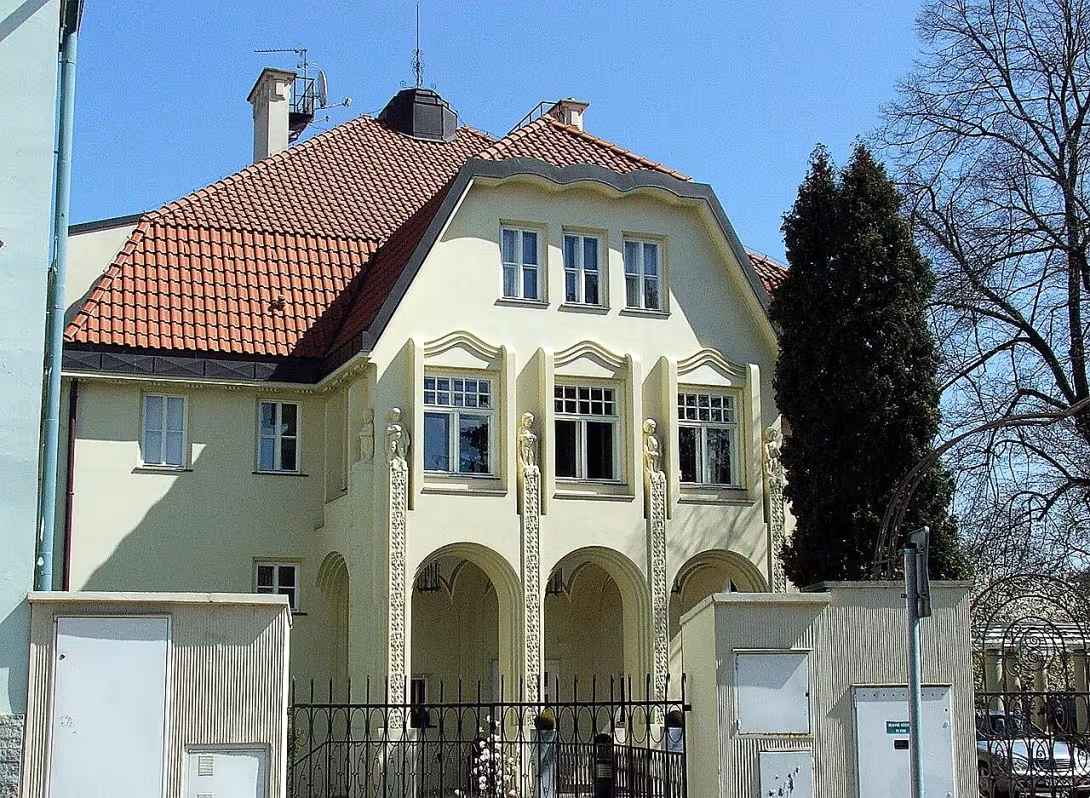
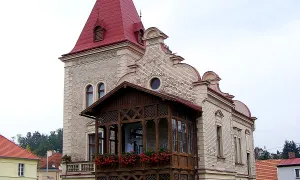
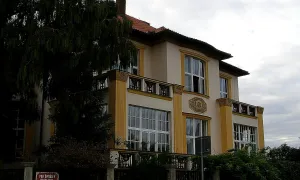
Ottova vila in Zbraslavi is a three-storey Art Nouveau building with a mansard roof, built by publisher Jan Otto between 1909 and 1911. It served as a summer residence surrounded by an extensive garden area and is today a protected monument building in the property of Prague-Zbraslav.
The Villa was designed by architect Otakar Novotný for Jan Otta, owner of the Czech publishing house. The Otta family searched for Zbraslav as a place of summer rest since 1873 when she lived in Prague in Wenceslas Square, Jungmann Street and later in Charles Square. Jan Otto visited Zbraslav daily with his family in his carriage, usually staying there until evening. The construction began in 1909 at the age of 68.
The building was built on a long garden area that stretches up to the navigational path along the Vltava. The west entrance to the villa is hidden behind the arched meadow. The south facade has a terrace with air pergola, connected to the second terrace near the east facade. The east side, referred to as the garden area, has a wide entrance with a staircase leading into the garden, where once stood a tree line. The whole object is decorated with a number of decorative, figural and ornamental elements.
In the interior of the ground floor, the central space consists of a pillar hall from which the stairs lead to the above-ground floor. The ground floor contains a women's room connected to the men's room in the west and the dining room windows are headed for the garden. The kitchen is located in the basement, bedroom and other living rooms located on the first floor and attic.
After John's Otto's death in 1916 his family used the villa until 1920 when they sold it. In 1935 the Czechoslovak state acquired a building, but during World War II it was confiscated for the Grand German Empire. Since the 1950s, it served as a building of railway teaching to the Ministry of Transport and Czech Railways. During the period of socialism, the villa burned down and gradually decayed.
Memorial protection was declared on March 7, 1991. In 1995, it was taken over by the Borenstein husband and wife from Belgium, who reconstructed it in its original form. The reconstruction was completed by a private investor in 2002, although the villa was flooded at the same time by floods reaching the ground floor ceiling. Today, the villa is the property of Prague-Zbraslav.
Ottova vila is an important example of Art Nouveau architecture from the beginning of the twentieth century and reminds of the time of one of the most important Czech publishers. Its visit offers a view of the style of summer residences in the vicinity of Prague.
Historical milestones
- 1909
- construction of the villa
- 1911
- completion of building the villa
- 1991
- the object was protected by a monument
- 2002
- completion of reconstruction by private investor
Architectural development
The villa was built in 1909-1911 in Art Nouveau style with emphasis on figural and ornamental details. During the socialist period, the building burned down and decayed. In the years 1995- 2002 a complex reconstruction took place in the original form.
Historical events
1991: declaration of conservation, 2002: heating the villa during the flood.
Owners
Jan Otto (1909-1916), Jan Otta family (until 1920), Czechoslovak state (since 1935), Grand German Empire (during World War II), Ministry of Transport and Czech Railways (since the 1950s), married to Borenstein (since 1995), Prague-Zbraslav (currently).
Points of interest
- Ottova vila is a three-storey Art Nouveau building with a mansard roof built between 1909 and 1911. - The Villa was designed by architect Otakar Novotný for Jan Otta, owner of the Czech publishing house. - After John's Otto's death in 1916, his family used the villa until 1920 when they sold it. In the period of socialism, the villa burned down and gradually decayed. - Memorial protection was declared March 7, 1991.
Guide
Show guide text
This text was created by artificial intelligence and has not been editorially reviewed. It may contain inaccuracies.
Welcome, you're standing in front of a majestic villa you can imagine as a silent witness to the turn of the 1920s. In front of you is a three-storey Art Nouveau building with a distinctive Mansard roof, whose silhouette is complemented by fine terraces that extend towards a vast garden. The first look at the facade reveals a rich game of decorative detail that captures the spirit of the time when the villa was born. Feel the atmosphere that prevails here - a calm but vibrant history that hides behind every stone.
Let's move on to the very beginning. This impressive building was built by an important Czech publisher, Jan Otto, who, from 1909 to 1911, was looking for a place for a summer residence where he could rest from busy urban life. The project was entrusted to the architect Otakar Novotný, who at that time was among the leading representatives of Art Nouveau architecture. The foundation of the villa thus combines the personal vision of the entrepreneur with the artistic feeling of the architect, and the result is a harmonious combination of functionality and aesthetic elegance.
Now pay attention to the architecture itself. First, you look at the massive body of a building whose three floors are separated by significant horizontal belts. The Mansard roof, typical of Art Nouveau style, gives the building lightness while allowing use of the attic as a living space. On the facade are spread decorative motifs that decorate the windows and the entrance portal, and arches above the main inputs underscore the majesties of the whole. Terraces that come from individual floors are fluently connected to the surrounding garden and thus create a smooth transition between the inner and outer space. The entrance hall, which dominates the ground floor, can be recognized by the high columns and the storey structure that evokes the feeling of openness and airiness. Each of these elements was carefully thought out to underline not only aesthetics, but also the practical use of the villa as a summer sanctuary.
Key stories and personalities associated with this place add another dimension to the villa. Jan Otto, founder of one of the largest Czech publishing houses, found inspiration and relaxation here. After his death in 1916 the villa remained in the care of the family until 1920 when it was sold. In the following decades, it passed through various fates, only in 1991 it gained the status of a monument protected by the law. In 2002, the reconstruction, financed by a private investor, was completed, thus ensuring a preserved form of the building for future generations.
The interesting thing that can impress a visitor is that this villa represents a unique example of Art Nouveau architecture in Zbraslavi, where rich decoration meets practical arrangement of space. Its Mansard roof and terraces, which extend towards the garden, create a kind of dialogue between the construction and nature, which was considered innovative at the time. In addition, the fact that the villa survived the turbulent period of the 20th century, including changes in political regimes, and yet retained its original character, gives the place an almost mystical touch. Think about how many conversations, books, and ideas could have arisen here under these arched husks that you can observe today.
Now that you've collected your first impressions and know the historical context, come and look at the details that may have escaped you so far. Note the fine ornaments under the windows that resemble leaves and flowers, typical of Art Nouveau style. Note also the symmetry that manifests itself in the arrangement of windows and columns and how this balance underlines the feeling of order and harmony. Each element, whether it be a small cut in stone or a curvature peeling, has been designed with respect to aesthetics and function, thus creating a uniform whole that is worth more detailed examination.
In conclusion, I invite you to further discover this extraordinary building. Walk around the garden, listen to a murmur of leaves and imagine what life was like in this villa when the sun hit the terraces and a family reunion took place here. Get carried away by the atmosphere that connects the past to the present, and be inspired by how architecture can be the bearer of stories after over a hundred years. Thank you for joining this audio guide, and I wish you a pleasant rest of the tour, during which you can continue to discover hidden details and be enchanted by what this historic villa offers. Say goodbye to this place and feel like you've become part of its long and rich story.
Tips for visitors
The best time to visit is the late spring and summer months. During this period, the villa was the most bright in the surrounding green, which corresponds to its original purpose of summer residence.
Transport to Zbraslavi may be a car and a public liaison. We recommend to verify specific connections and parking possibilities in the surrounding area in the current timetables or internet search engines.
We recommend taking comfortable shoes for a walk around the premises and the camera. For the best pictures, focus on the Art Nouveau details of the facade and the Mansard roof, ideally in the morning or late afternoon light.
In the vicinity of the monument you can visit the River Vltava and the Race of Peace bridge. It's an ideal ending to the road in nature.
We recommend families with children to focus on the attractions of the life of publisher Jan Otto and to look together for architectural details on the three-storey construction.
Businesses nearby
Do you run a restaurant, accommodation, shop, museum, rental, wellness or other visitor service near this monument? Show yourself directly to the people heading to it — this is how they will see you in the app and on the web:
Events nearby

Zdroj akcí: otevřená data měst a obcí ČR (Národní katalog otevřených dat) a kalendář akcí Národního památkového ústavu.
Nearby
Vila se nachází v blízkosti řeky Vltavy a mostu Závodu míru v obci Zbraslav.
Accommodation nearby
Trips and activities nearby
Guided tours, tickets and activities nearby from GetYourGuide
Affiliate link: if you buy from the partner, we may receive a commission. The price for you does not change.
Search tours and activities →Themed route
Thematic cruise route: Ottova vila and surroundings
1.Ottova vila (villa) The main objective of our route is Ottova vila, a historic construction site built for Prussian General Karl Ferdinand of Otto. The villa is located in the picturesque environment of the village Zbraslav and offers visitors an overview of the architecture of the 19th century. It is an ideal place for those interested in history and architecture.
2. River Vltava (natural formation) After visiting the villa we will look at the river Vltava, which running around Zbraslavi adds peace and beauty to the place. It's a great place to relax or look at the water landscape for a while. The river is part of many legends and historical events, which makes it interesting even from a cultural point of view.
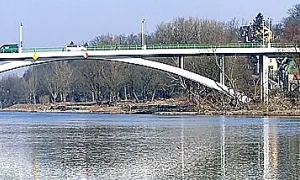
3. Bridge Peace Race (bridge) The following goal is the Peace Race Bridge, which connects the municipalities of Zbraslav and the Blue Mountains across the River Vltava. The bridge was built in 1973 and its name refers to historical events related to the peace agreement between Czechoslovakia and Germany. It is not only a functional building, but also a monument to an important moment in Czech history.
4. Park near Otto's villa (park) After walking through the bridge, we will return to Otto's villa and explore its park, which is beautifully planted between water and trees. The park offers quiet pavements and places to relax, making it ideal for relaxing after visiting the villa itself.
5. Municipality of Zbraslav (urban district) To conclude the route we will look at the local parts of the village Zbraslav, which offer wonderful views and opportunities for photography. Zbraslav is known for its historical architecture and quiet environment, which makes it an ideal place for exploring the region around Prague.
This route offers a combination of history, nature and culture in one picturesque section of the Czech Republic.
Seasonal recommendations
Spring: During the spring season, Ottova vila in Zbraslavi will turn into a flowering refuge where flowering shrubs and trees will turn into living shades. Sunny days and mild temperatures provide ideal conditions for walking around beautiful gardens. Visitors can enjoy a quieter visit as the crowd frequency has not increased. It is recommended to come in the early afternoon when the sun illuminates the architecture of the villa and garden in the most beautiful colors.
Summer: Summer is full of life on Otto's villa. Long, sunny days offer opportunities to explore gardens and their beauty in full glory. However, it is recommended to visit the memory early in the morning or later in the evening to avoid the heat and crowds that may be present in the main summer season. Remember light clothes and sun protection.
Autumn: In autumn Ottova vila becomes melancholic beauty when tree leaves turn their colors into golden and red shades. The sunny days are even warmer and more pleasant for walks, while calm air gives the atmosphere a mild nostalgia. Visitors can expect less crowd frequency than in the summer, and the autumn visit is ideal for enjoying the beauty of nature without excessive temperatures.
Winter: The winter season at Otto's Villa offers a calm atmosphere where the gardens look pale and cold but still charming. Sunny days are short and warm clothes are essential for the comfort of visiting, especially in the early hours of morning or late afternoon. Although the opening time may be shorter and winter may hinder the outdoor trip, the visit is an opportunity for the use of quiet space and historical architecture without excessive crowds.
Visualizations and artistic views

The visualisations are generated by artificial intelligence and serve as inspiration.
Photos from the area
Real photos taken near the monument

Zdroj a licence jsou uvedeny u každého snímku.
Tips from visitors
No tips yet. Be the first!
Log in and add your tip.
Sources and literature
Photos: Hynek Moravec / CC BY 3.0 — Wikimedia Commons. The author and licence also appear when you hover over the image.
Faktickým podkladem tohoto textu byl článek na Wikipedii, jehož autory jsou přispěvatelé Wikipedie. Článek je dostupný pod licencí CC BY-SA 4.0.
Location on the map
Příběhy a pověsti
Legendy, pověsti a příběhy spjaté s touto památkou
Fotografie návštěvníků
Zatím žádné fotografie. Buďte první, kdo přidá fotografii z návštěvy!
Log in a přidejte svou fotografii nebo hodnoťte.
Za ověřenou návštěvu v aplikaci získáte víc bodů — poznáme podle GPS, že jste na místě.
Reviews and comments