






Pomník císaře Josefa II. Monument
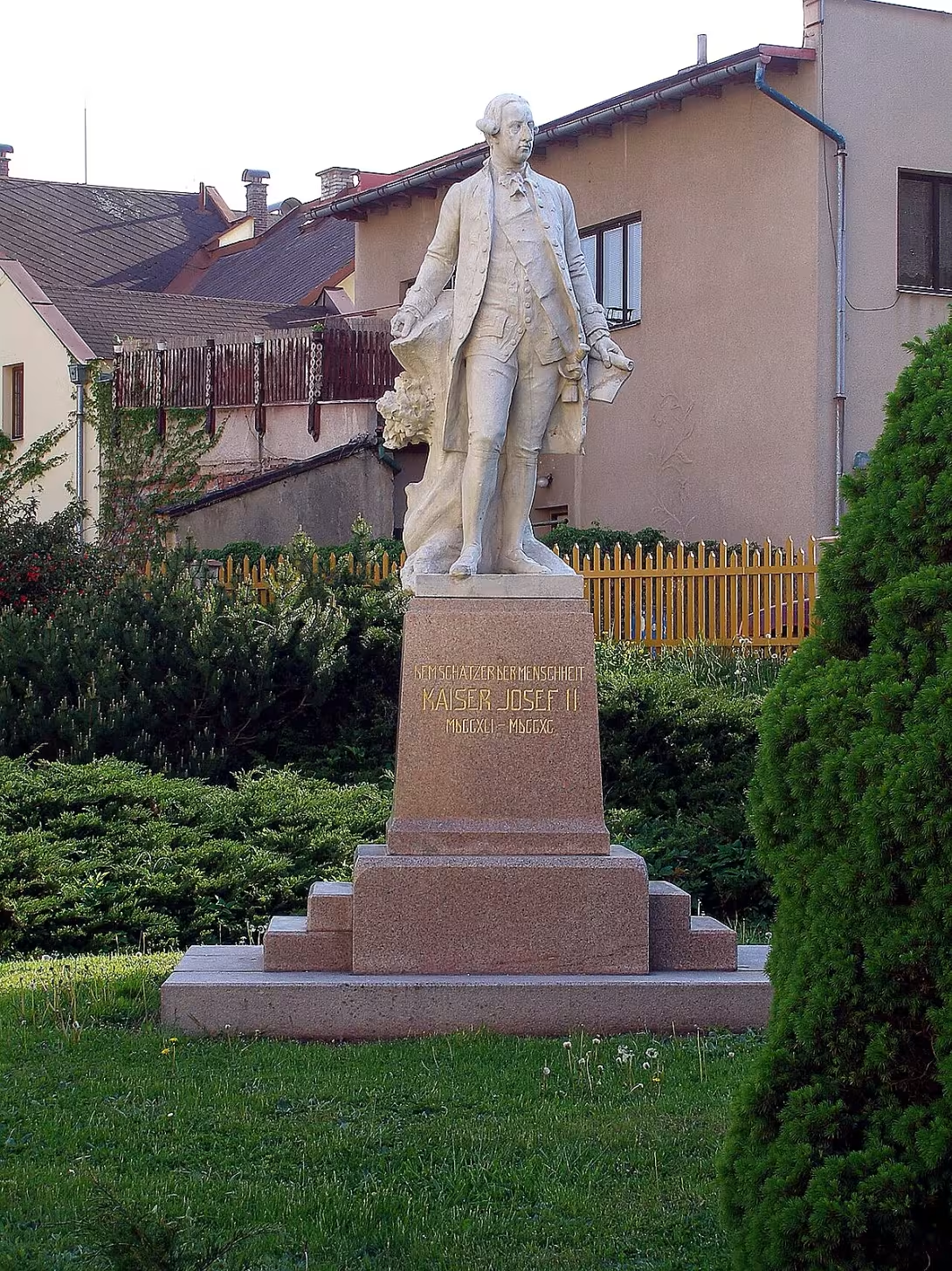
Pomník císaře Josefa II. in Hostinném in Trutnov district in Králové Hradec county is a Art Nouveau sculpture from 1906. It stands in the park outside the Gymnasium building and has been a protected monument since 2000. This object resembles the sovereign's reforms during the period of enlightened absolutism and his historic visit to the city. It represents one of the few Art Nouveau monuments in Hostinném and a unique example of the work which, unlike many others, survived after 1918.
The foundation of the monument dates back to 1906 and its discovery took place on 24 June of the same year. The main impetus for his creation was the honor of Emperor Josef II for his reform during the period of enlightened absolutism and also a reminder of his earlier visits to Hostinné. The monarch visited the city in 1766 during a military inspection trip, in 1771 during a large famine in the foothills of the Giant Mountains and in 1778 in connection with the war on Bavarian heritage between Austria and Prussia. The work was allegedly initiated by the local notary Franz Josef Auer when the Czech countries were located within the Austrian-Hungarian monarchy in the period of late history and the upcoming secession. In the Sudeten municipalities there were usually monuments resembling monarchs and events from earlier times. Back then, Europe was headed for the First World War and the monarchy faced growing national tensions. The author of the sculpture is the Viennese academic sculptor Georg Leisek whose signature "LEJSEK" is located on a plinth.
The statue of the emperor itself is made of Karar marble and is slightly larger than life. The sovereign stands on it in contrast with a slightly stepped right foot. With its right hand, it rests on a tree in the background and holds its left hand vertically along the body with a curved leaf. He's dressed in an unbuttoned coat, underneath which he wears a vest with a sash, tight pants under his knees, stockings and shoes. His head is flat with a wig pulled back by a ribbon. The base of a slightly conical shape and side steps come from a light red polished granite imported from Bavaria, Italy. They carry gold-plated inscriptions on the front and back of the plinth.
The dramatic fates of the monument began to be written after the creation of Czechoslovakia, when it represented the symbol of the extinct Habsburg monarchy. In 1921 they first covered it with wooden formwork and then removed it. Unlike many other similar monuments, however, it was not destroyed. He was transferred to a nearby Fort where he was deposed in the park of the castle. After decades spent on this repository in 1999, it was returned to its original place before the Gymnasium in Hostinném.
Among the key moments in modern history are the year 2000, when the monument became a protected object, and the year 2017, during which the whole monument underwent a complete restoration. There is an information panel near the statue today that concerns this work.
The monument is currently freely accessible in the park in front of the Gymnasium building in the historical city Hostinné in Trutnov district in the foothills of the Giant Mountains. Visiting this place offers a view of the fine Art Nouveau sculpture work from Italian marble and granite. This, as a rarely preserved testimony of its time, resembles the fated fates of Sudeten monuments.
Historical milestones
- 1906
- The memorial was revealed as a tribute to Emperor Joseph II.
- 1921
- The statue was taken to the castle park in Fort.
- 1999
- The monument was returned to the original place before the high school in Hostinném.
- 2017
- The memorial went through a full restoration.
Architectural development
The statue of the emperor was carved out of Karar marble and depicts the monarch in contrast with a tree support in the background. The base of a slightly conical shape along with the side steps comes from a light red polished granite from the Italian Bavaria. There are gilded inscriptions and authorial signatures on the plinth.
Historical events
In 1906 the monument was festively revealed. In 1921 it was covered with formwork and then removed as a symbol of the extinct Habsburg monarchy. In 1999, the monument returned to its original site in Hostinném and the monument was restored in 2017.
Points of interest
- It is a Art Nouveau sculpture from 1906, which stands in the park in front of the gymnasium building and has been a protected monument since 2000. - The Emperor visited the city in 1766 on a military inspection trip, in 1771 at the time of famine and in 1778 because of the war on Bavarian heritage. - The author of the statue is the Viennese academic sculptor Georg Leisek and the work is made of Karar marble. - In 1921, the monument was covered with formwork and removed, but it was not destroyed and was transported to Forrt, where it returned to its original place in 1999. - The memorial was restored in 2017 and is now freely accessible in the park.
Guide
Show guide text
This text was created by artificial intelligence and has not been editorially reviewed. It may contain inaccuracies.
Welcome to Hostinném. Right now, when you listen to this voice, you're standing in a small, quiet park that serves as a green oasis right in front of a local gymnasium building. Feel the atmosphere of this place where history meets the daily life of the city. In front of your eyes is an important monument, which is not just an ordinary sculpture work, but is a living witness of ancient times and the honor of a monarch whose name was of great importance to this region. Look at him carefully and let yourself be carried away by the story that is told here through this marble.
Now let's think about why this monument was even materialized and why it's standing right here. This monument was revealed in a thousand nine hundred and six. But it wasn't a random act. The people at that time wanted to pay a profound tribute to the Emperor Joseph to the other. The reason was not just his power, but his reforms, above all. We lived in what historians call enlightened absolutism. This is important to understand because this term describes the way of government, when the sovereign held all political power in his hands, but at the same time tried to lead the state with reason, justice and modern ideas. Joseph the second was a ruler who tried to bring about progress, and this monument is an expression of gratitude for his efforts to improve life under his rule. At the same time, however, the monument serves as a reminder that this monarch was a person for Hostinné, who really was there and left a mark in the memory of the local people.
Now pay attention to the work of art itself, which is right in front of you. Notice how light breaks on its surface. The whole statue is made of beautiful Karar marble. This material is known for its purity, its white color and its ability to capture even the most delicate details of the sculptor's hole. The statue is slightly larger than life size, which means it's slightly larger than a real person. This detail gives her unmistakable nobility, dignity and a certain authority that matches the position of the emperor. The author of this work is Viennese sculptor Georg Leisek. His work is part of the period of Art Nouveau, which is a style that you will recognize by the fluidity of shapes and certain organic elegance that he radiates from the work. If you look at the pedestal and side steps, you will see how they form a solid and stable basis for this marble work. The whole composition acts harmoniously and balances the strength of marble with the fineness of sculpture processing.
But in order to fully understand why this monument is so important, we need to go back even further in time and look at the visits of the emperor himself, which this monument celebrates. Josef the second was not just a remote figure from the textbooks for Hostinné. He was a real guest of these streets. The first important visit took place in the year of a thousand seven hundred sixty-six. It was a military inspection route, where the emperor moved within his duties and controlled the troop's readiness. Later, in the year one thousand seven hundred seventy-one, the city met the sovereign in a much more difficult and sad time when there was a great famine in the regions. The visit at such a time was of profound importance to the locals. Finally, in the year one thousand seven hundred seventy-eight, there were shadows of political change associated with the war on Bavarian heritage. These three different moments, from military glory to human suffering to political tension, link the figure of the emperor to the history of this city and make it a character that actually left its presence.
But the history of this particular monument is also a story about its loss, expulsion and subsequent triumphant return. His journey has not always been easy. After its unveiling in the year one thousand nine hundred and six, the monument passed through stormy times. In the year one thousand nine hundred twenty-one, the sculpture was taken from this place to the park near the castle in the village of Foøt. For many decades he thus remained away from his original home and from the people for whom he was intended. Only in the year one thousand nine hundred ninety-nine he managed to return to his original place in front of the Gymnasium building in Hostinném. This return was a great moment for the city. Since 2000, this monument has been officially protected as a significant cultural heritage. So that she can shine so beautifully again and look as you see her right now, in the year two thousand and seventeen she went through total restoration and restoration. Every detail was carefully treated so that marble would regain its original shine and dignity.
Now that you've learned this whole story, from the time of enlightened reform to modern restoration, I suggest you stop for a moment in silence. Feel the connection between this marble piece and the surrounding environment. This monument stands here as a silent guardian of history, reminding people how the city and the world were. We hope that this view of Hostinné's past has struck you, and that you are interested in this short story. Continue to walk around the area now, see the gymnasium building and discover the other beauty of this place. Thank you for spending this moment with us. Goodbye.
Tips for visitors
The best time to visit the memorial of emperor Joseph II in Hostinném is in the morning when the park is quiet in front of the gymnasium and offers a pleasant atmosphere for a tour. The city of Hostinné is located in the foothills of the Giant Mountains, so we recommend to monitor the current weather forecast.
The location is easily accessible by car and public transport. For accurate and up-to-date connections to Hostinného in Králové Hradec Region, we recommend using local traffic search engines.
Take with you especially comfortable shoes for a walk through the historic city centre and the camera to document this monument from 1906, which reminds you of the reforms of enlightened absolutism.
The most suitable light is offered in the morning, when the sun ideally illuminates the statue of the sovereign standing in the park before the gymnasium. Try to take a general view of the monument with a historical building in the background.
In the vicinity of the monument there is a picturesque historical town Hostinné in Trutnov district, which offers a beautiful environment for walks in the foothills of the Giant Mountains. For families with children, this location is ideal for a peaceful walk connected with the discovery of local history and surrounding park.
Businesses nearby
Do you run a restaurant, accommodation, shop, museum, rental, wellness or other visitor service near this monument? Show yourself directly to the people heading to it — this is how they will see you in the app and on the web:
Nearby
Pomník se nachází v parčíku před budovou gymnázia v historickém městě Hostinné ležícím v okrese Trutnov v podhůří Krkonoš.
Accommodation nearby
Themed route
I propose a thematic cruise route in the picturesque foothills of the Giant Mountains, which will guide you through the historic city with interesting stops in the immediate vicinity of the main destination. 1.Pomník císaře Josefa II. Type: Historical monument Why it is worth a visit: This important monument is located in a pleasant park in front of the gymnasium building and reminds the monarch whose reforms have affected the history of the entire region. 2. Grammar school building Type: Historical construction Why it is worth a visit: It is located right next to the main destination in the park and forms with it a whole which illustrates the atmosphere of education in the historical city of Hostinné. 3. Parking in Hostinném Type: Public park Why is it behind the visit: This green space surrounds the monument of emperor Josef II and offers a quiet environment to relax and contemplate right in front of the school building in Trutnov district. 4. Historical City Hostinné Type: Historical residence Why is it behind the visit: This whole town, situated in the foothills of the Giant Mountains, provides a stunning setting for exploring monuments, among which the mentioned park with a monument and adjacent school building excels.
Seasonal recommendations
Spring: In the spring period Hostinné and the monument of emperor Josef II are oddly charming thanks to the flowering nature that revives the surroundings in various shades of green and white flowers. The sun illuminates the memory so that its details appear in its best form. In this season, it is advisable to visit the monument in the early afternoon when the crowds are less demanding and the sun rays illuminate the statue optimistically. It is recommended to wear clothes suitable for mild weather - short gloves, headscarf and warm coat for cooler morning or evening.
Summer: During the summer season Hostinné is full of tourists and the atmosphere is filled with life. The sun illuminates the monument of emperor Joseph II for a long time, which allows you to see its details in the best conditions. The best time to visit is in the morning, because at noon the monument can be crowded and the temperature is considerable. The important thing is to wear light clothes, sunglasses and enough drinking water. Don't forget to protect yourself from the sun so you can enjoy your visit without discomfort.
Autumn: In the autumn period, the colour shades of orange and yellow leaves become the landscape. This natural change gives a monument of emperor Joseph II in Hostinném a unique view, especially when the sun boils behind the mountains and illuminates the statue with long shadows. Visit the memory in the afternoon when the temperature is pleasant and crowd less challenging than in the main summer season. It is recommended to wear clothes suitable for colder weather - long coat, warm gloves and a sun hat.
Winter: During winter Hostinné is covered with snow, giving the surrounding landscape a romantic look. Pomník císaře Josefa II. is illuminated by a weaker light and can be seen in the shade of mountains or in sunny reflection on snow. The best time to visit is in the morning when the temperature is milder and the open times are longer. It is important to wear warm clothes - long coat, hat, gloves and heat boots. If you visit a monument in winter, it may be advisable to bring a camera to photograph unforgettable views of the statue in a snow environment.
Visualizations and artistic views

The visualisations are generated by artificial intelligence and serve as inspiration.
Photos from the area
Real photos taken near the monument


Zdroj a licence jsou uvedeny u každého snímku.
Tips from visitors
No tips yet. Be the first!
Log in and add your tip.
Sources and literature
Photos: Miloš Hlávka / Public domain — Wikimedia Commons. The author and licence also appear when you hover over the image.
Faktickým podkladem tohoto textu byl článek na Wikipedii, jehož autory jsou přispěvatelé Wikipedie. Článek je dostupný pod licencí CC BY-SA 4.0.
Location on the map
Příběhy a pověsti
Legendy, pověsti a příběhy spjaté s touto památkou
Fotografie návštěvníků
Zatím žádné fotografie. Buďte první, kdo přidá fotografii z návštěvy!
Log in a přidejte svou fotografii nebo hodnoťte.
Za ověřenou návštěvu v aplikaci získáte víc bodů — poznáme podle GPS, že jste na místě.
Reviews and comments