






Pomník padlých I. světové války War memorial
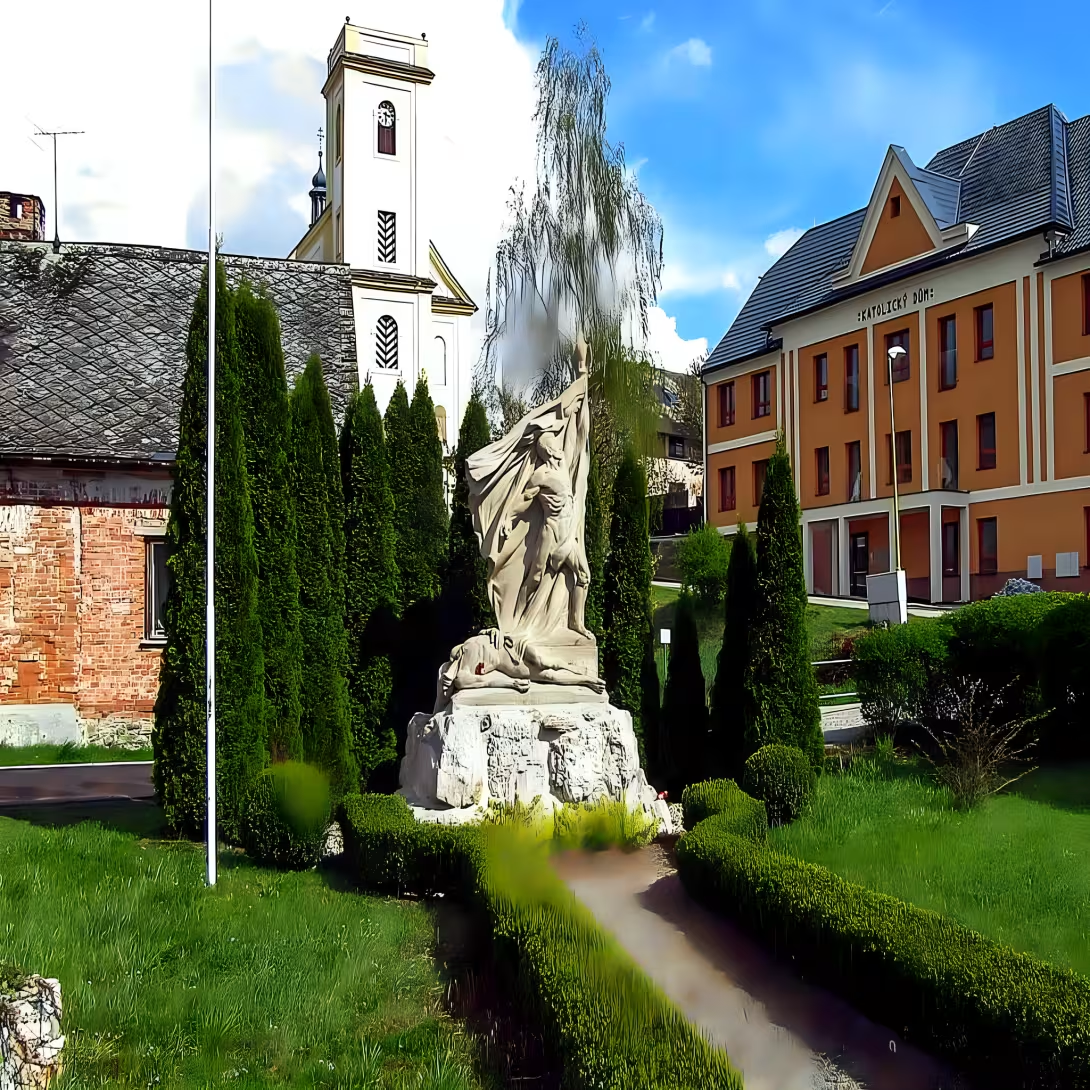
Pomník padlých I. světové války with a component of Victory, located on the village Dubicko in Šumperk district, is a cultural monument set in history as a reminder of the victims of the conflict. This monument, built by the sculptor Vojtěch Sucharda in 1921, stands on a plinth of limestone stones dated 1918-1918 and is now registered under the code CZE- 7113- 07105. Its architectural structure rests on the sculpture of two male acts of height reaching 3,35 metres.
Created after the First World War, the monument belongs to a number of similar monuments spread over the former Austrian-Hungarian monarchy. These monuments symbolize places of worship and memories of war victims, which is particularly evident in Dubick. Its creation was inspired by the need to preserve the memory of the fallen legionaries, among whom were Nedral Jan and Pulkrt Čeněk, whose names are carved on a plinth.
An architectural monument is characterized by a sandstone sculpture of two male acts. The standing figure holds an advanced battalion on whose mast a falcon sits at a height of four meters - a symbol of Victory. At the feet of this figure lies the second male act with bent legs, which represents the weight of the victims of war. Sokl made of limestone stones underlines the endurance of the monument and its connection to the local landscape.
Sculptor Vojtěch Sucharda, author of this work from 1921, placed his signature on the back of the plinth. The monument not only worships the fallen, but also testifies to the artistic skill of its creator.
An interesting monument is carved inscriptions with names of fallen legionnaires and a general reference to war victims. These inscriptions are reminiscent of individual fates integrated into a wider historical context, making the memory of a more personal and emotionally charged place.
Today, a monument in Dubick stands as a permanent symbol of the worship of the victims of the First World War. Its accessibility and location on the baits make it easy to visit. For historically curious tourists it offers not only a view of the past, but also an understanding of local heritage and memory of the victims of war.
The monument of the fallen in the First World War in Dubick is more than just a statue; It's a place that reminds us of the importance of remembering and worshipping those who fought for freedom. Visiting this monument offers not only historical insight, but also the possibility of thinking about the value of peace and unity in our society.
Historical milestones
- 1921
- Completion of the sculpture Victory
Architectural development
The sculpture is made of sandstone and stands on a plinth of limestone stones. The date 1918-1918 is carved on the plint. The total height of the sculptures is 3.35 meters.
Historical events
- 1921
- Creation of sculptures by sculptor Vojtěch Sucharda
Points of interest
- Pomník padlých I. světové války is located on the village Dubicko and is a cultural monument. - Built by sculptor Vojtěch Suchard in 1921, the monument has a sandstone sculpture of two male acts. - Sokl made of limestone stones has dates 1918-1918 and names of fallen legionaries Nedral Jan and Pulkrt Čeněk. - The memorial is part of a series of monuments spread over the former Austrian-Hungarian monarchy, symbolizing the worship of the victims of war. - Vojtěch Sucharda placed his signature on the back of the volcano.
Guide
Show guide text
This text was created by artificial intelligence and has not been editorially reviewed. It may contain inaccuracies.
Welcome to this historical monument, which stands in the heart of the village Dubicko and is a witness of many history. You stand before the monument of the fallen First World War, where memories of heroism and courage are projected. In the park you can see the sandstone sculpture Victory, which greets you with its carved figures.
Let's look at its origin. The memorial was completed in 1921 by sculptor Vojtěm Sucharda, who gave him the form of art and monuments. This monument is dedicated to those who fell during the First World War, and remains in the heart of the community as a symbol of courage and bravery.
Look up at the sandstone sculpture. You see the figure of a standing man with an advanced battalion whose mast sits a falcon - a symbol of freedom and courage. At the feet of this figure lies the second male act with bent legs, which resembles the tragedy of war and lost generation. Notice the limestone plinth below them, on which are carved dates 1918- 1918 and names of fallen legionaries Nedral Jan and Pulkrt Čeněk.
These persons are key figures associated with this monument. Legionaries who set out to fight for freedom and independence remain in the memory of the people of Dubick today. Their stories are part of this place and the monument.
The interesting thing is that this monument is not only a monument at local level, but it is also registered in the central record of war graves. This highlights its historical and cultural importance not only for the municipality of Dubicko but also for the wider public.
Now that you've explored this monument, we invite you to immerse yourselves in other historical mysteries and beauty of this place. Whether you are visiting the village or visiting other sights, every step here is full of stories. We hope you enjoyed this guide and many new findings will be taken with you. By the time you meet us again, we will face another historical heritage. Goodbye from Dubick!
Tips for visitors
The best time to visit the monument of the fallen First World War in Dubick is during spring or autumn when the weather is pleasant and the place is not crowded with tourists. These periods also offer beautiful colors on tree leaves and sunlight suitable for photography.
Parking is possible near the park where the monument is located. For those travelling by public transport, it is appropriate to verify the current connection by means of a search engine or local schedule. The location is available both by car and public transport.
When visiting, bring a suitable suit according to weather and shoes for walking on irregular surfaces. Fill your equipment with water, sunglasses and UV protection.
The best place for photography is in front of the memorial with the village background. Preferably photographed in the morning or evening, when the light is soft and shady. Remember that some places can be protected, so respect the relevant signs.
In the vicinity of the monument you can visit the Park in the village Dubicko. This place offers beautiful views and is suitable for relaxation or a short walk. For families with children it may be interesting to explore the surrounding natural environment.
Businesses nearby
Do you run a restaurant, accommodation, shop, museum, rental, wellness or other visitor service near this monument? Show yourself directly to the people heading to it — this is how they will see you in the app and on the web:
Events nearby
Zdroj akcí: otevřená data měst a obcí ČR (Národní katalog otevřených dat) a kalendář akcí Národního památkového ústavu.
Nearby
Parčík v obci Dubicko.
Accommodation nearby
Themed route
Thematic trip route from Dubick
1. Pomník padlých I. světové války - landmark, history This monument is our main destination and serves as a reminder of the victims of the First World War. It's a place to meditate and worship the heroics of those who fought here.
2. Parking - natural area The park is one of the interesting places around Dubick. This area offers beautiful views and is ideal for relaxing nature. It's a place where you can enjoy the peace and relief of urban life.
3. Dubicko - villages, history After visiting Parčík, return to the village Dubicko itself. Explore her historic streets and architecture of houses that testify to the rich past of this place. It is an opportunity to see local culture and traditions.
4. Ambient forests - nature The best way to close your visit is to walk around the woods. These areas offer beautiful views and the opportunity to enjoy the natural environment. It's an ideal place for a picnic or just for a moment of rest.
This route will allow you to know the history and nature of the Dubicka area and provide a view of local culture and traditions.
Seasonal recommendations
In spring, the monument will surround the awakening nature and the fresh green that gives the place a breath of hope. Soft spring light is ideal for observing details of stone working. We recommend to dress in multiple layers because the weather is usually unstable, and visit the place in the morning when the air is the cleanest.
The summer season brings sharp sun and deep shadows that highlight the shapes of the monument. The surrounding area is in full bloom and the atmosphere is warm. Due to the higher attendance in the high season it is best to arrive early in the morning, choose light clothes and not forget enough fluids.
The autumn will turn the space into a melancholy place with golden leaves and morning fog that underscore the respectful character of the monument. The walks are pleasant in the afternoon when the sun paints the landscape in warm tones. Practical are waterproof shoes and lighter jacket against the wind.
In winter, silence and white snow create a severe contrast with the material of the monument, which strengthens the sense of peace and contemplation. Due to the short days, it is advisable to schedule a visit in the morning. Very warm clothes and caution when walking on perhaps slippery surfaces are essential.
Visualizations and artistic views

The visualisations are generated by artificial intelligence and serve as inspiration.
Photos from the area
Real photos taken near the monument

Zdroj a licence jsou uvedeny u každého snímku.
Tips from visitors
No tips yet. Be the first!
Log in and add your tip.
Sources and literature
Photos: Pavlína Koncošová / CC0, rozlišení zvýšeno umělou inteligencí — Wikimedia Commons. The author and licence also appear when you hover over the image.
Faktickým podkladem tohoto textu byl článek na Wikipedii, jehož autory jsou přispěvatelé Wikipedie. Článek je dostupný pod licencí CC BY-SA 4.0.
Location on the map
Příběhy a pověsti
Legendy, pověsti a příběhy spjaté s touto památkou
Fotografie návštěvníků
Zatím žádné fotografie. Buďte první, kdo přidá fotografii z návštěvy!
Log in a přidejte svou fotografii nebo hodnoťte.
Za ověřenou návštěvu v aplikaci získáte víc bodů — poznáme podle GPS, že jste na místě.
Reviews and comments