



Pravoslavný kříž v Dlouhé Loučce Monument
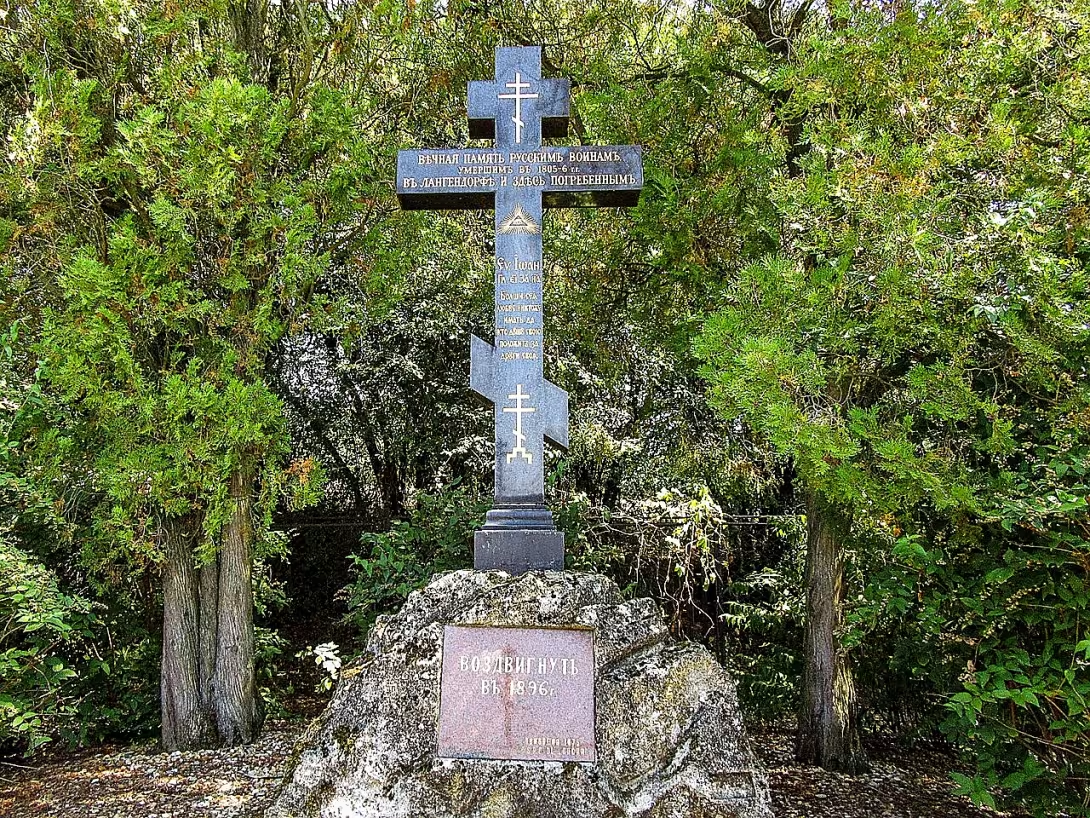
Pravoslavný kříž v Dlouhé Loučce in Olomouc is a historical monument from 1896. He's dedicated to Russian soldiers who died in a local Lazaret after the Battle of Slavkov. The object is protected as a cultural monument of the Czech Republic and reminds of the tragic consequences of the Napoleon wars in this area.
The foundation of the memorial is related to the end of the 19th century, when in Austria-Hungary there were associations of military retired workers. These organizations, one of which was founded in 1886 as the Central Committee of Military Researchers for Bohemia and Moravia, were intended to maintain a military spirit, support widows and raise members in loyalty to the monarchy. Within this stream, the victims of the Napoleon Wars in Langendorf, today's Long Louček, were honored.
The monument is made up of a 200-foot black marble cross on a pedestal from a pedestal approximately one meter high. The cross is performed in an Orthodox tradition with three transverse arms, with the lower one tilted to the oblique position. On the upper arm there is an old cyrillic inscription, which dedicated the memory to Russian soldiers who died in Langendorf in 1805-1806 and buried here. The vertical shoulder carries a quote from St. Ivan about sacrificing life for another. The front side of the plate shows a roving 1896. The entire object is located in a tie in the slope below the Crová in a park of 8 x 8 meters, which is equipped with treads and so far with metal fencing.
The historical context of the monument dates back to the Napoleonic famous campaign, where Russian, Austrian and French troops passed through Moravia. The castle buildings were mainly used for field hospitals in order to reduce the disability of the population. The Baroque castle in Long Louček from 1709 was rebuilt twice to the military hospital: for the first time in 1805-1806 after the Battle of Slavkov and for the second time in 1809 after the battles of Wagram and Znojmo. The capacity of the Lazaret was estimated at 600 soldiers at the same time.
The operation of the hospital was unpopular for local residents due to the spread of infectious diseases, especially typhoid diseases. The dead were carried out mainly in the evening; The soldiers were covered in lime and buried in clay in mass graves. It is believed that several hundred Russian soldiers are buried in the area of the hill below Crovou. The abolition of the Lazarets was followed by lengthy financial compensation for property damage and criticism of the undignified treatment of the dead.
The ceremonial discovery of the monument in November 1896 accompanied the banners in Russian, Austrian and German colours. They put the wreaths plukovník Voronin and hrabě Rosenberg at the cross. In later years, the monument was mentioned in the Olomouc circuit from 1955. In 1975 extensive maintenance work was carried out with the help of the local ČSPO. In recent decades, the municipal office and the clubs of Revived History have taken care of the memory.
Pravoslavný kříž v Dlouhé Loučce is an important witness to European history and a reminder of the human suffering associated with major conflicts. Visiting this quiet place under the hill of Crová offers the possibility of contemplating the fate of soldiers from far-off regions.
Then and now
Drag the slider to compare how the landmark may have looked when it was built with the view today.
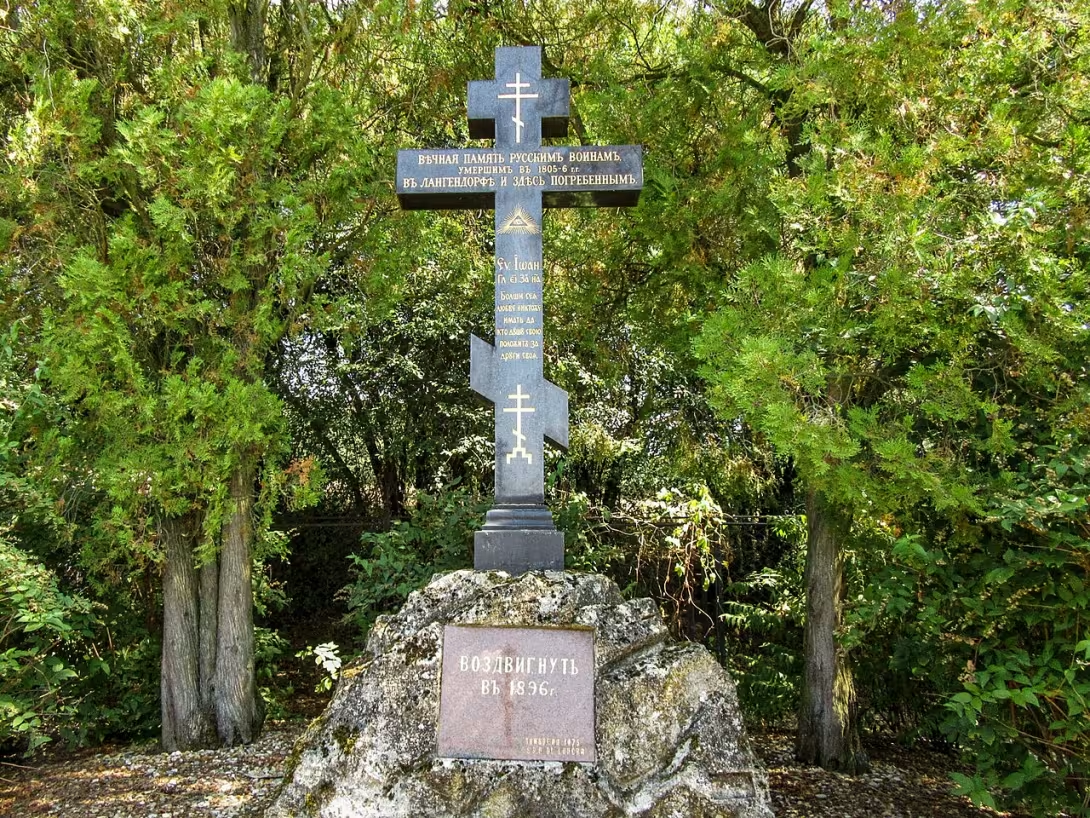
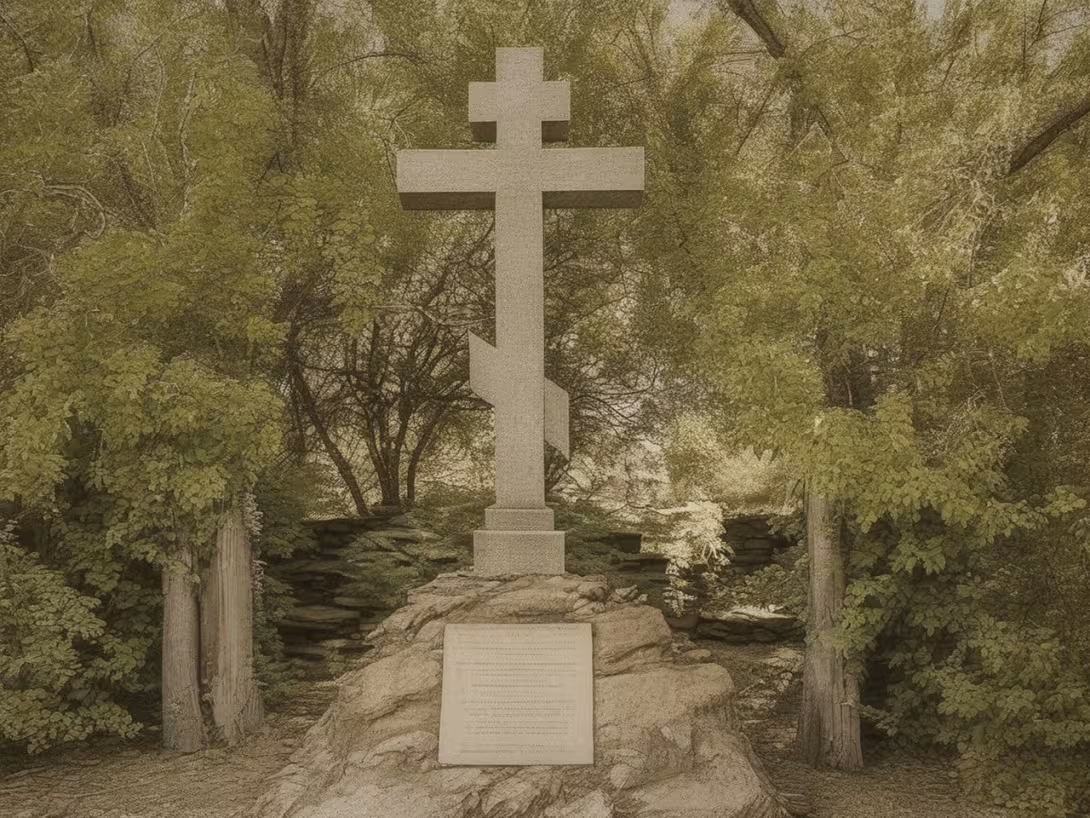
The historical appearance on the left is an AI-generated visualisation and serves as inspiration only.
Historical milestones
- 1805
- Establishing a military hospital for wounded after the Battle of Slavkov
- 1809
- Second use of the castle as a Lazaret after battles at Wagram and Znojmo
- 1896
- The ceremonial revelation of a marble cross dedicated to Russian soldiers
- 1975
- Extensive repairs and maintenance work on the monument
Architectural development
The monument consists of a 200-foot black marble cross with a typical lower arm tilted to the oblique position. The whole object stands on a pedestal from an opposite approximately one meter high. The cross is located in a park with an area of 8 x 8 meters, which is equipped with trays.
Historical events
1805-1806: Establishment of a field hospital in the castle in Long Louček for treating Russian soldiers after the battle at Slavkov. 1896: The ceremonial revelation of the monument to Russian soldiers.
Points of interest
The 1896 memorial is dedicated to soldiers who died in the local Lazaret after the Battle of Slavkov. - The black marble cross measures 2.2 meters and stands on a pedestal from an opposite about one metre high. - The cross has three transverse arms, the bottom is oblique. The castle in Long Louček served as a military hospital with a capacity estimated at 600 soldiers. It is believed that several hundred soldiers are buried in the hill area below Crovou.
Guide
Show guide text
This text was created by artificial intelligence and has not been editorially reviewed. It may contain inaccuracies.
Welcome to the long meadow. Please stop for a moment and take a deep breath into the surrounding air. You are standing in a quiet tie, in a slight slope under a hill called Crooked, where you are welcomed by an extraordinary and deeply moving monument. In front of you is a high cross of black marble that contrasts sharply with its dark color and noble appearance with the surrounding greenery. It is a place of calm and reflection that brings us back more than two milliliters to a time when this landscape witnessed the dramatic events of European history.
When you look at this monument, you might wonder why it's here in this natural environment. The answer leads us to the beginning of the nineteenth century, namely the years of a thousand eight hundred and five and a thousand eight hundred and six. At that time, one of the largest and bloodiest battles in history took place near Slavkov. The fighting was so devastating that the wounded soldiers on both sides needed immediate care. That is why a military hospital for the wounded was set up in Long Louček, which was located in a local castle.
Imagine the chaos back then, hundreds of suffering men brought from the battlefield looking for relief from their wounds. Many of them, especially soldiers from the Russian regiments, have unfortunately ended their lives here. This cross that you see before you is not just a stone object, but a profound expression of gratitude and remembrance of those who died here far from their homes. Although the Battle of Slavkov was long ago, the memory of her remained alive. Later, in the year one thousand eight hundred and nine, the castle served as a hospital again, this time after the battles at Wagram and Znojmo.
Now, please pay full attention to the very form of the monument. Look down at the base first. The cross does not stand directly in the ground, but is placed on a robust cluster of opposites, which is a local limestone stone. This base measures approximately one metre and gives the whole part stability and strength. The marble cross itself rises above it, reaching a height of two and two tenths of a metre. Its black color symbolizes sadness and the memory of the deceased.
Notice now the very important detail in the construction of the cross. If you look closely, you will see that the cross has not only two shoulders, but three transverse shoulders. This is a typical sign of the tradition of Eastern Christianity. You're probably most interested in the lower arm, which is not horizontal, but slightly oblique. This element is characteristic of Orthodox faith and gives the monument its unique identity. Also look at the inscriptions bearing the cross. They are carried out in an Orthodox tradition and remind us of the tragic consequences of the Napoleon wars that have hit this corner of our country.
When we think about the people who were involved in this place, we remember names that left a mark in the period records. These included plukovník Voronin or hrabě Rosenberg. These men were part of a complex network of military and social leadership at the time. Imagine Colonel Voronin thinking about his fallen comrades in the silence of this slope. It was thanks to the efforts of the people who wanted to remember these sacrifices that in the year one thousand eight hundred ninety-six this marble cross was festively revealed. It was almost a hundred years after the battles themselves, which shows how strong it is to maintain memory of the dead after many generations.
An interesting aspect of this place is how it was treated over time. A monument is not a static thing that just stands there. In the year one thousand nine hundred seventy-five there were extensive repairs and maintenance work. This is proof that even in modern times we perceive the value of this place. Today the cross is protected as a cultural monument of the Czech Republic, which means that the state recognises its historical and artistic importance.
Try to remain silent for a while and feel the atmosphere of this draw. It's fascinating how nature connects with history here. The black marble, the opal pedestal and the quiet trees around it form a space where time stopped. It's a place that makes us think about the futility of war conflicts and the cost of human life. This cross stands as a silent witness to the suffering of the soldiers who fought for their lives in the local Lazaret, while the environment was probably the same silent atmosphere as you feel right now.
Remember, this monument is just one of the many pieces of the history of the long meadows. The whole municipal area and surrounding landscape are interwoven with stories from the time of the Napoleon Wars. The castle itself, which once served as a hospital, is another layer of this story that you can explore in the future.
Thank you for spending time with us at this Orthodox Cross. We hope you're interested in his story and that you've felt respect for the people he's dedicated to. We now invite you to another walk and discover the beauty and mystery of this region. Let the curiosity guide you and the details that tell you stories from the past. We wish you a pleasant rest of the day and a peaceful continuation of your discovery. Goodbye.
Tips for visitors
The best time to visit is spring or autumn, when the colors in the draw are the most distinctive and the atmosphere of the black marble monument is the most valiant. Transport to the village is possible by car as well as by public connections, check the specific path in the maps.
Put comfortable shoes in the tie suitable for nature so that you can walk on the terrain better. Since the monument is placed in green, we recommend insect repellent.
For the best photos, choose the morning or late afternoon light that excels beautifully on the dark surface of marble. The most interesting angles of images are obtained from a low perspective when the cross rises above the surrounding vegetation.
Near the monument you can visit the Baroque castle from 1709 or go for a walk on the hill Křivá. Both places are within walking distance and complement the historical context of the area.
You can tell the children a story about the soldiers from the pharmacy post a great battle, which helps to understand the history of the place.
Frequently asked questions
Can the monument be visited?
This is a structure in a public space that can usually be seen from outside free of charge. We have not verified that this particular one is freely accessible.
Where is the monument?
Location: Dlouhá Loučka. The map on this page shows the exact spot.
Why is the monument protected?
It is listed in the Central List of Cultural Monuments of the Czech Republic as a cultural monument (register no. 1000130367).
Businesses nearby
Do you run a restaurant, accommodation, shop, museum, rental, wellness or other visitor service near this monument? Show yourself directly to the people heading to it — this is how they will see you in the app and on the web:
Events nearby
Zdroj akcí: otevřená data měst a obcí ČR (Národní katalog otevřených dat) a kalendář akcí Národního památkového ústavu.
Nearby
V blízkosti se nachází barokní zámek v Dlouhé Loučce z roku 1709 a kopec Křivá.
Accommodation nearby
Trips and activities nearby
Guided tours, tickets and activities nearby from GetYourGuide
Affiliate link: if you buy from the partner, we may receive a commission. The price for you does not change.
Search tours and activities →Themed route
Here is the design of the thematic route:
1. Baroque castle in Long Louček (building) - The walk begins with this building from 1709, which represents an important architectural element of the village. 2.Pravoslavný kříž v Dlouhé Loučce (memorial) - The main destination of the journey where visitors can see this unique religious symbol. 3. The Crooked Hill (Curve) - The final part of the route leads to this elevated point, which offers an overview over the surrounding landscape.
Seasonal recommendations
In spring the surroundings of the monument awaken to life and the young green creates a fresh frame for this religious symbol. Light is soft and pleasant in this period, which is ideal for observing the details of the cross. We recommend shoes suitable for wet grass and visit in the morning when the air is the cleanest.
In the summer months, the clear sun dominates the space and the full bloom of the surrounding nature. The atmosphere is warm and calm, while sharp light creates strong shadows. It is advisable to choose light clothes and a sun hat. The best time for a visit is early morning or late evening to avoid the biggest of your encounters.
Autumn brings golden colors and melancholy mood to the landscape, which matches the nature of the monument. The lighting is golden and milder, which gives the place depth. It is practical to take with you a light jacket or a wind coat and head out behind the cross at a time when the trees are in the most colorful condition.
In the winter, the cross in Long Louček works strictly and high, especially when the landscape is covered with white snow. The atmosphere is quiet and stopped, which underlines the spiritual importance of the place. It is necessary to wear warm winter clothes and non-slippery shoes. An ideal visit in Advent time is when short days and early twilight create a special mood.
Visualizations and artistic views


The visualisations are generated by artificial intelligence and serve as inspiration.
Tips from visitors
No tips yet. Be the first!
Log in and add your tip.
Sources and literature
Photos: Jirkaracak / CC BY-SA 4.0 — Wikimedia Commons. The author and licence also appear when you hover over the image.
Faktickým podkladem tohoto textu byl článek na Wikipedii, jehož autory jsou přispěvatelé Wikipedie. Článek je dostupný pod licencí CC BY-SA 4.0.
Location on the map
More monuments – Dlouhá Loučka
Show all in the municipality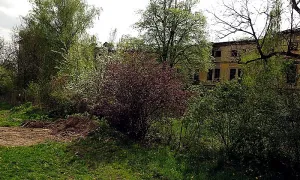
Příběhy a pověsti
Legendy, pověsti a příběhy spjaté s touto památkou
Fotografie návštěvníků
Zatím žádné fotografie. Buďte první, kdo přidá fotografii z návštěvy!
Log in a přidejte svou fotografii nebo hodnoťte.
Za ověřenou návštěvu v aplikaci získáte víc bodů — poznáme podle GPS, že jste na místě.
Reviews and comments