






Pražského povstání Other
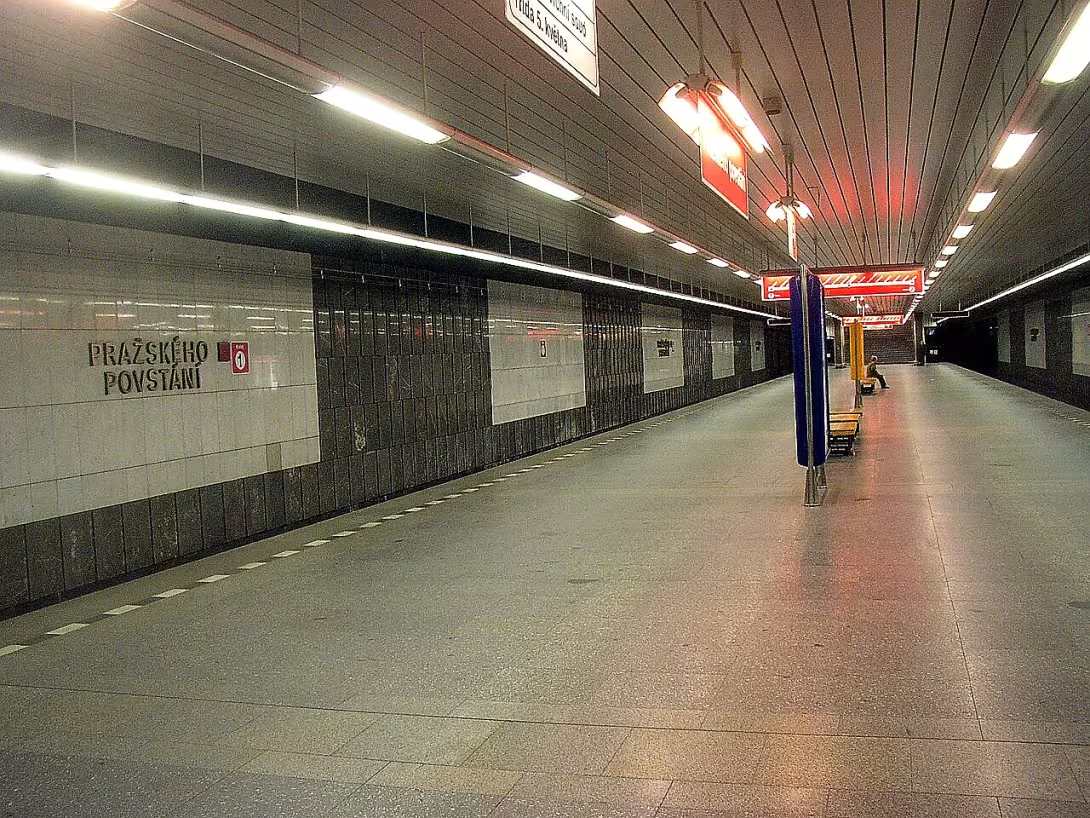
The station Pražského povstání is a deep one-storey metro stop on line C in Prague 4. It was opened on 9 May 1974 and represents an important transport hub for the areas of Pankrác and Podoli. Its importance lies in the architectural design and in the historical context, which expresses its name.
The establishment of the station was part of the development of the first section of the C line. The construction began in 1969 and was completed in 1974. The project was part of a wider plan for the development of Prague Metro, which was intended to improve the transport infrastructure of the capital of Czechoslovakia during the period of socialism. The variants of May 5 or Hero Square were considered when selecting a name, reflecting the political climate at the time.
Architecturally, it is a reinforced concrete monolithic structure at a depth of eight meters. The construction took place in an open pit and was covered with prefabricated beams. Due to underground water, the project required thorough insulation, which represented a considerable technical challenge. The interior is decorated with dark grey and white marble slabs, which provide an elegant atmosphere.
The operation and maintenance were provided by the Prague transport company. Since 1974, the building serves as a key access point for residents and visitors, thus improving the connectivity of various parts of Prague.
The depth of the structure and structure supported by large columns with rectangular plan is interesting. These elements ensure not only structural stability but also carry a collector of engineering networks located above the station. It is equipped with one exit on a fixed staircase to a small underground vestibule from which roads lead to the street Na Pankrac.
Today the station Pražského povstání is a key hub for Podoli, Pankrác and Krže. The bus lines 134 and 193 and the tram lines 18 and 19 are provided. It is accessible throughout the day and offers comfortable connections with other parts of the city.
The station Pražského povstání is worth visiting for its architecture as well as as as part of the history of Prague transport. Its design and location reflect the planning philosophy of the socialist era and remain an important element of urban infrastructure today.
Historical milestones
- 1969
- Start of construction of the station within the development of the first section of line C
- 1974
- Completion of station construction
- 9 May 1974
- Official opening of the public transport station
Architectural development
The construction took place between 1969 and 1974 using the iron-concrete monolithic structure and ceiling prefabricates. Due to the presence of groundwater, the construction required thorough insulation. The interior is decorated with marble plates in grey and white.
Historical events
1969: Start of construction of the station. 1974: Opening the station to the public on May 9.
Points of interest
- The station was opened on May 9, 1974. - Its depth is eight meters and the structure is monolithic reinforced concrete. - The variants of May 5 and Heroes Square were considered when selecting a name. Because of the underground water, the project required thorough isolation, which was a technical challenge. - Large columns with rectangular plan bear not only stability but also the collector of engineering networks above the station.
Guide
Show guide text
This text was created by artificial intelligence and has not been editorially reviewed. It may contain inaccuracies.
Welcome to the place where the heart of modern transport is beating beneath the city's surface. You are standing just before the entrance to the station Pražského povstání, which is one of the key points of Prague Metro. If you look around you now, you probably perceive the dynamics of this place. It's a knot where thousands of people collide, where the city's rhythm changes at any moment, and a vast network of tunnels spreads beneath your feet. You can feel the specific atmosphere of the underground world, which is linked to the movement, expectations and constant flow of people moving towards their goals. This station is not just an ordinary stop point, it is an important transport hub that connects areas of Pankrác and Podolí and allows thousands of inhabitants to move smoothly around metropolitan conurbation.
Now let's go back in time together and understand how this place came to be. To understand the importance of the station Pražského povstání, we need to look at the era when Prague was preparing for a major transport revolution. The whole story of this location began in 1969. At that time Prague was in the process of intensive development and building the first line of metro line C was one of the state's greatest technical ambitions. The construction of this particular station took place between 1969 and 1974. It wasn't just a tunnel-building project, it was a complex operation to change the way people perceive distance and time within their city. The whole process lasted several years and required a huge amount of effort, planning and technical precision to finally join the system in 1974.
Now pay attention to what you see and what surrounds you as you prepare to descend deeper underground. This station is specific to its construction. Unlike many other underground spaces that are deep in the ground, this station was built within a large open pit. This means that its formation was accompanied by massive interventions to the surface of the earth. Now, if you look around you, notice the power of this building. The whole structure is monolithic and made of reinforced concrete. This material choice was not random; Iron concrete provides the necessary stability and resistance required by the underground environment. The station is located at a depth of eight meters below the surface, which is relatively close to the ground, but still creates a sense of separation from the rumbling street above you. Note above all the large columns with rectangular cross-sections that hold this whole massive structure. Their presence gives space a sense of stability and unwavering. The whole area is very robust and straightforward, which is typical of the engineering work at the time where functionality and strength played the main role.
Although the names of the particular architects who designed this space often disappear in the anonymity of large state projects in historical records, we need to realise that thousands of working hands are behind every meter of this concrete. Although we do not know the names of individual masters or engineers, their work here is evident in every detail of this monolithic building. It is the work of collective effort to serve the entire people. This station was built as part of a wider Prague development plan, where architecture had to comply with the technical need for effective transport. It is this symbiosis between engineering art and the practical need of the city that has created the space that you use so naturally today.
Looking at the history of this station, however, there is an interesting question concerning its name. Maybe you ever wondered why the station is called that. The name was not chosen immediately. Different options were taken into account, reflecting the political and social situation at the time. One of the options discussed was the name of May 5, while another party advocated the name Heroes Square. In the end, however, the name Pražského povstání has settled, which still brings back certain historical memories in people. Another fascinating aspect of the construction is the technical struggle with nature. Building in this location was not easy due to the presence of groundwater. Engineers had to face constant water pressure from the surrounding subsoil, which required extremely thorough and precise insulation of the entire structure. Without this technical challenge, which they had to successfully resolve, the station would not have been able to function safely at that depth. It was a real battle between a man and a element that took place deep beneath your feet.
The official beginning of the new era for this part of the city came on 9 May 1974, when the station was ceremonially opened for public transport. Since then, for more than half a century, it has served as a relentless and reliable pillar of Prague transport. Every day, thousands of life stories flow through it, every day people from different parts of the city meet here.
Now that you know the secret of this concrete structure and know how much technical performance it must have been, I suggest you continue your journey. Come down to the station, see its space, look at those massive columns and try to imagine the workers who fought water and concrete here in the 1970s to allow you this comfortable journey today. I wish you a pleasant metro ride and another interesting discovery of the hidden corners of our city. Goodbye.
Tips for visitors
The best time to visit is during the day when you can observe the daily rhythm of the city. You can easily reach the location by public transport; check current connections and transfers best in the traffic search engine.
We recommend to wear comfortable shoes to move on concrete surfaces. If you are interested in photography, the best light to capture monolithic architecture can be found in times when lighting is the most balanced in the station space.
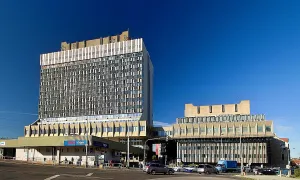
In the vicinity you can explore the Heroes Square, the Centrotex Building or take a walk through the Pankrác and Podolí districts. All these locations are easily accessible by foot from the site.
It is advisable for families with children to bring their own refreshments, because there are no sales points in the station construction itself. To make it easier to move around you can use the spacious pavement in Na Pankrac Street.
Businesses nearby
Do you run a restaurant, accommodation, shop, museum, rental, wellness or other visitor service near this monument? Show yourself directly to the people heading to it — this is how they will see you in the app and on the web:
Events nearby

Zdroj akcí: otevřená data měst a obcí ČR (Národní katalog otevřených dat) a kalendář akcí Národního památkového ústavu.
Nearby
Heroes Square, Na Pankrac Street, Centrotex Building and Pankrac and Podoli District.
Accommodation nearby
Trips and activities nearby
Guided tours, tickets and activities nearby from GetYourGuide
Affiliate link: if you buy from the partner, we may receive a commission. The price for you does not change.
Search tours and activities →Themed route
1. Heroes Square (Square): The starting point of the road, which serves as an entrance to the Pankrác district. 2. Centrotex building (building): A significant building element in the surrounding area which forms a characteristic form of the area. 3. Na Pankráci (street): Interconnection between modern development and historical points of the route. 4. Pražského povstání (Other) (Reminder): The main goal reserved to commemorate heroism during the uprising. 5. Podolí (district): Final stop in the adjacent part where a thematic walk can be completed.
Seasonal recommendations
Spring: In the spring season, the Prague uprising is transformed into a breathtaking flower paradise, with green vegetation and diverse flowers reviving the surrounding countryside. The sunny days bring a warm atmosphere that is ideal for long walks in historic places. Visitors should dress in clothes suitable for mild temperatures and prepare for possible rain that are common in the holidays of the first May. The best time to visit is in the morning or late afternoon, when the crowds remain medium and you can enjoy a quiet tour.
Summer: In summer, the Prague uprising is turned into a attraction for tourists, with traffic at the top. The sun illuminates historic buildings and increases temperature, which can lead to nausea during the midday solar strike. Visitors should come early in the morning or late in the afternoon to avoid heat and crowds. It is important to take with you a protective umbrella and plenty of drinking while light clothes help keep the body temperature within reasonable limits.
Autumn: Autumn brings a beautiful color and a quieter atmosphere to the Prague Uprising. November days may be sunny, but also cold, which creates ideal conditions for the photograph of historical monuments in the living colours of lambs. Visitors should be prepared for sudden weather change and wear warmer clothes, especially from January to February, when the colder days start. The best time for a walk is in the morning or late afternoon.
Winter: Winter visit Pražského povstání offers a unique view of historical memory, illuminated by ice lights and shining sun. The temperatures are usually low, which may be a challenge for long walks, but brings a calm atmosphere without large crowds. Visitors should dress in warm clothes with protection against moisture and frost. The opening hours of the sights are often shorter, so it is advisable to come early in the morning or make a reservation for construction.
Visualizations and artistic views

The visualisations are generated by artificial intelligence and serve as inspiration.
Photos from the area
Real photos taken near the monument

Zdroj a licence jsou uvedeny u každého snímku.
Tips from visitors
No tips yet. Be the first!
Log in and add your tip.
Sources and literature
Fotografie: User:Miaow Miaow / Public domain — Wikimedia Commons. The author and licence also appear when you hover over the image.
Faktickým podkladem tohoto textu byl článek na Wikipedii, jehož autory jsou přispěvatelé Wikipedie. Článek je dostupný pod licencí CC BY-SA 4.0.
Location on the map

Příběhy a pověsti
Legendy, pověsti a příběhy spjaté s touto památkou

Fotografie návštěvníků
Zatím žádné fotografie. Buďte první, kdo přidá fotografii z návštěvy!
Přihlaste se a přidejte svou fotografii nebo hodnoťte.
Za ověřenou návštěvu v aplikaci získáte víc bodů — poznáme podle GPS, že jste na místě.
Reviews and comments