






Rodinný dům Karla Pragera Villa
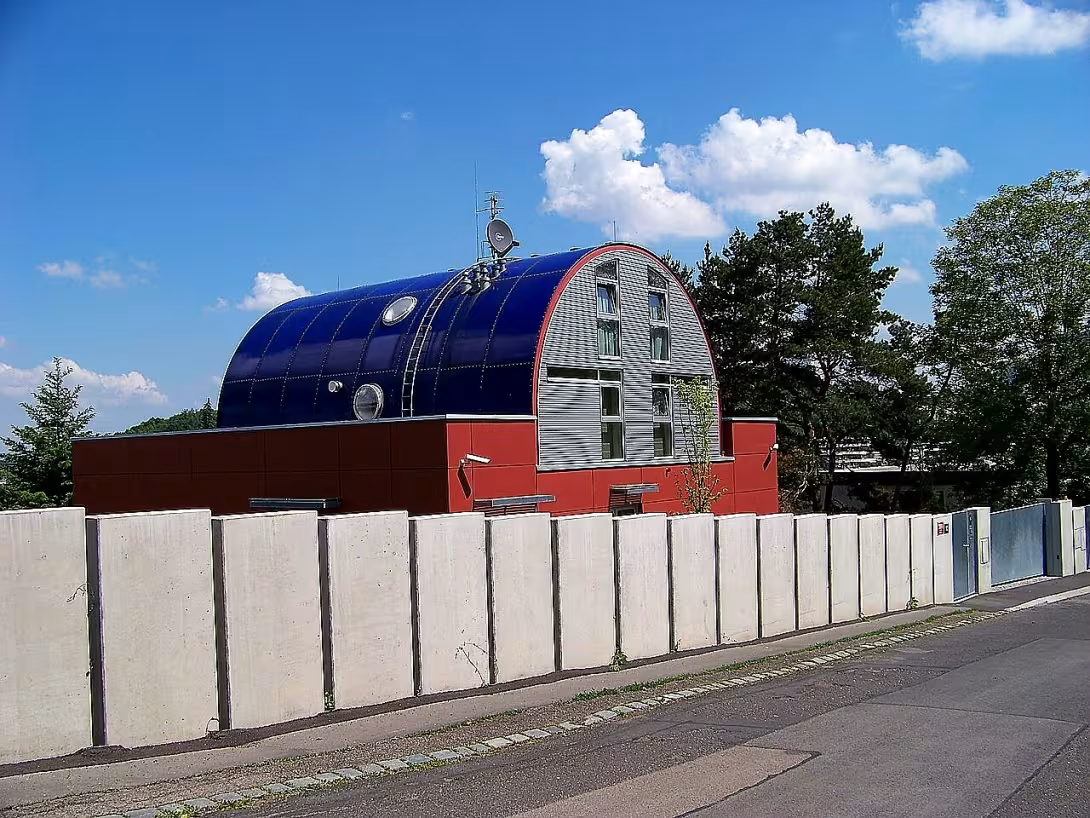
The family villa of architects Karl Prager and Jan Louda in Prague Braník is a unique monument that combines modernist design with innovative building solutions. It was established as a two-generation apartment building in 1968. Later, it acquired a unique superstructure that increased its architectural value. The building serves not only the Prager family, but is also an interesting destination for lovers of modern architecture.
In 1968, Karel Prager built its own cube-shaped villa at the top of the northwest slope of Dobeška. This project reflected his visionary approach, placing emphasis on functionality and aesthetics of simple forms. Ten years later, in 1978, his son-in-law, Jan Louda, built a superstructure in the form of a semi-split metal cylinder. This structure, inspired by the Senate Tower, added two more living floors to the house and deepened its uniqueness.
The architecture of the villa defines geometric shaping and modernist materials. The original construction was decorated with ceramic tiles, which underlined its aesthetics. The side walls formed smooth surfaces of the windows without internal subdivision, thus providing the space with minimalist cleanliness. The lower floor is connected directly to the terrain and the upper floor leads up the external stairs. The garden floor serves as a common living area that allows the family to live in harmony with nature.
The owner changed in 2007. Architects Karel Prager and Jan Louda have left behind not only a significant work of construction, but also inspiration for future generations of creators. The building witnessed changes in the private and professional life of the family.
The metal cylinder is a key element that immediately attracts attention. The construction not only expands the living space by additional floors, but also increases the meaning of the entire building. The original block part and the cylindrical part together form a harmonious unit reflecting the innovative ideas of the authors.
Today the villa serves as a monument to architectural creativity and family values. Unique design and history make it an attractive destination for lovers of modern architecture and its development. The object is proof that innovation and traditions can exist in harmony.
This monument resembles the value of creative spirit and family ties. It is important to keep a memory of the authors of this work and appreciate their contribution to modern construction. The house of Karl Prager and Jan Louda is not only a home but also an inspiration for future generations. It's a place worth visiting because of its unique history and architectural value.
Historical milestones
- 1968
- The position of the original villa in the form of a cube.
- 1978
- Adding a metal cylinder-shaped superstructure.
- 2007
- The change of the owner of the villa.
Architectural development
The original building was built as a cube with ceramic tiles and a flat roof. In 1978, a metal vault resembling the Senate Tower was added above the building, which added two more floors.
Historical events
The original cube part of the house was built in 1968. In 1978 the metal superstructure was completed. In 2007 the owner changed.
Owners
The owner changed in 2007.
Points of interest
- The family villa of architects Karl Prager and Jan Louda in Brno, Prague, is a unique monument connecting modernist design with innovative building solutions. - In 1968 Karel Prager built its own cube-shaped villa with a flat roof reflecting its visionary approach to functionality and aesthetics of simple forms. - Ten years later, in 1978, Jan Louda built a superstructure in the form of a semi-metal war inspired by the Senate Tower, which deepened the uniqueness of the house. - The metal cylinder is a key element that attracts attention and increases the meaning of the whole object, forming a harmonious unit with the original cube part. - Today the villa serves as a monument to architectural creativity and family values, attracting lovers of modern architecture thanks to its unique history and architectural value.
Guide
Show guide text
This text was created by artificial intelligence and has not been editorially reviewed. It may contain inaccuracies.
Welcome to this unique place in Prague Braník, where the family villa of architects Karl Prager and Jan Louda is located. You are standing in front of a construction that is an expression of visionary and innovation, and its geometric lines distinguish it from the surrounding buildings.
Let's go into history. In 1968 Karel Prager built his own cube-shaped villa with a flat roof, which was his approach to functionality and aesthetics. This architectural experiment reflected the modernist thinking of the time. Seven years later, in 1978, a unique superstructure appeared in the shape of a halved metal cylinder, which gave the building a new architectural character and a connection of two generations of creative forces.
Look up at the cylinder-shaped superstructure. It is not only a visual accent, but also a symbol of innovation and experimentation with the forms that both architects devoted their lives to. The villa is built from materials that were modern for the time being, which contributes to its unique atmosphere.
Karel Prager and Jan Louda were not just architects; were personalities who influenced Czech architecture. Their cooperation in this house is an example of their ability to combine functional design with aesthetic art. The villa was not only their workplace, but also their family home, where generations met and shared their inspiration.
The interesting thing about this place is its ability to combine modernist architecture with the personal stories of its creators. Their lives and professional achievements are reflected in every element of this building.
Now that you've looked at these elements, the invitation is to dive deeper into history and architecture. Explore the surrounding green area and notice in a relaxed way how the villa interacts with the natural environment.
Thank you for your attention to this architectural work. We hope you've had fun and gained new knowledge of this fascinating monument. Be welcome to further surveys and opportunities to discover Prague's history and architecture.
Tips for visitors
The best time to visit Karl Prager's villa is during the summer season when the temperature is pleasant and you can enjoy beautiful sun days. This time of year is ideal for walking through the garden and looking at architectural details of the building when the light is best.
Parking around the villa can be limited, therefore we recommend the use of public transport. The location can be reached by bus or tram; check the specific connection and current information in the online route search. This ensures comfortable access without the need to find a parking space.
When visiting, take with you suitable clothes, especially in winter months when temperatures can be cold. Fill your inventory with a beverage and refreshment belt as there may be no access to booths or restaurants nearby.
Photography is very nice thanks to the unique design of the building and panoramic views of the surrounding landscape. The best light for photos can be found in the morning or evening, when the sun is lower and illuminates the building in a special way.
There are several interesting places to walk around the villa. You can visit the northwest slope of Dobeška where you can enjoy natural beauty and peace. For families with children it is advisable to consider visiting a park nearby that offers space for games and relaxation.
Businesses nearby
Do you run a restaurant, accommodation, shop, museum, rental, wellness or other visitor service near this monument? Show yourself directly to the people heading to it — this is how they will see you in the app and on the web:
Events nearby

Zdroj akcí: otevřená data měst a obcí ČR (Národní katalog otevřených dat) a kalendář akcí Národního památkového ústavu.
Nearby
Severozápadní svah Dobešky v pražské čtvrti Braník.
Accommodation nearby
Trips and activities nearby
Guided tours, tickets and activities nearby from GetYourGuide
Affiliate link: if you buy from the partner, we may receive a commission. The price for you does not change.
Search tours and activities →Themed route
Thematic cruise route: Rodinný dům Karla Pragera (villa) and surroundings
1.Rodinný dům Karla Pragera (villa)
Type: Historical residence
Why is it worth a visit: This villa is an architectural pearl that represents the classical style and history of the Prager family. It is an ideal place for those interested in Prague history and architecture.
2. Park under Dobeška
Type: City Park
Why is worth a visit: The park offers beautiful walks overlooking Prague and is an ideal place to relax. Its natural environment provides peace and opportunity to enjoy outdoor leisure.
3. Station Braník
Type: Historical railway station
Why is it worth a visit: This railway station is an important part of local transport history and offers an interesting view of architecture from the beginning of the 20th century. It is also a starting point for further walks or trips to the centre of Prague.
4. Mansion Braník
Type: Historical settlement
Why is it worth a visit: The settlement is an example of modern planning of urban areas and offers a view of the environment from the beginning of the 20th century. It is an interesting place for those interested in urban planning and the history of urban development.
5. St. Vojtěv Church
Type: Church
Why is worth a visit: This church is an important religious and cultural memory with beautiful interior. It offers a quiet place to meditate and an overview of the surrounding countryside.
This route offers a combination of historical, architectural and natural experiences in one of the northwest slopes of Dobeška.
Seasonal recommendations
In the spring the garden around the house wakes up to life and the colors are fresh and bright. The light is delicate in this period, which beautifully highlights the shapes of modern architecture. I recommend arriving early in the morning when the air is the cleanest. Dress with layers because the morning cold can still be felt on a sunny day.
In the summer months architecture is most visible due to strong sun, which creates sharp shadows on the facade. The dense green vegetation gives a whole rich look. Since this is the main season, I recommend you visit in the early hours to avoid the greatest heat and crowds. Remember light clothes and sun protection.
Autumn brings golden and brown shades to the surroundings, which perfectly complement the appearance of the building. The atmosphere is quieter and the foggy morning gives the place a special calm. The best time for a tour is in the afternoon when the sun shines low and colors leaves. Prepare a warmer coat and comfortable shoes, because the damp roads can be slippery.
Zimą works in contrast with bare trees and grey sky. The light is weak, but it creates a very cozy mood in the interior. The opening time is shorter in this period, so check in advance. Visit the monument around noon when the lights are most. The necessity is very warm clothes and shoes suitable for freezing.
Visualizations and artistic views

The visualisations are generated by artificial intelligence and serve as inspiration.
Photos from the area
Real photos taken near the monument


Zdroj a licence jsou uvedeny u každého snímku.
Tips from visitors
No tips yet. Be the first!
Log in and add your tip.
Sources and literature
Photos: ŠJů (cs:ŠJů) / CC BY-SA 3.0 — Wikimedia Commons. The author and licence also appear when you hover over the image.
Faktickým podkladem tohoto textu byl článek na Wikipedii, jehož autory jsou přispěvatelé Wikipedie. Článek je dostupný pod licencí CC BY-SA 4.0.
Location on the map
Příběhy a pověsti
Legendy, pověsti a příběhy spjaté s touto památkou

Fotografie návštěvníků
Zatím žádné fotografie. Buďte první, kdo přidá fotografii z návštěvy!
Log in a přidejte svou fotografii nebo hodnoťte.
Za ověřenou návštěvu v aplikaci získáte víc bodů — poznáme podle GPS, že jste na místě.
Reviews and comments