



Radnice (Staré Město) Town hall
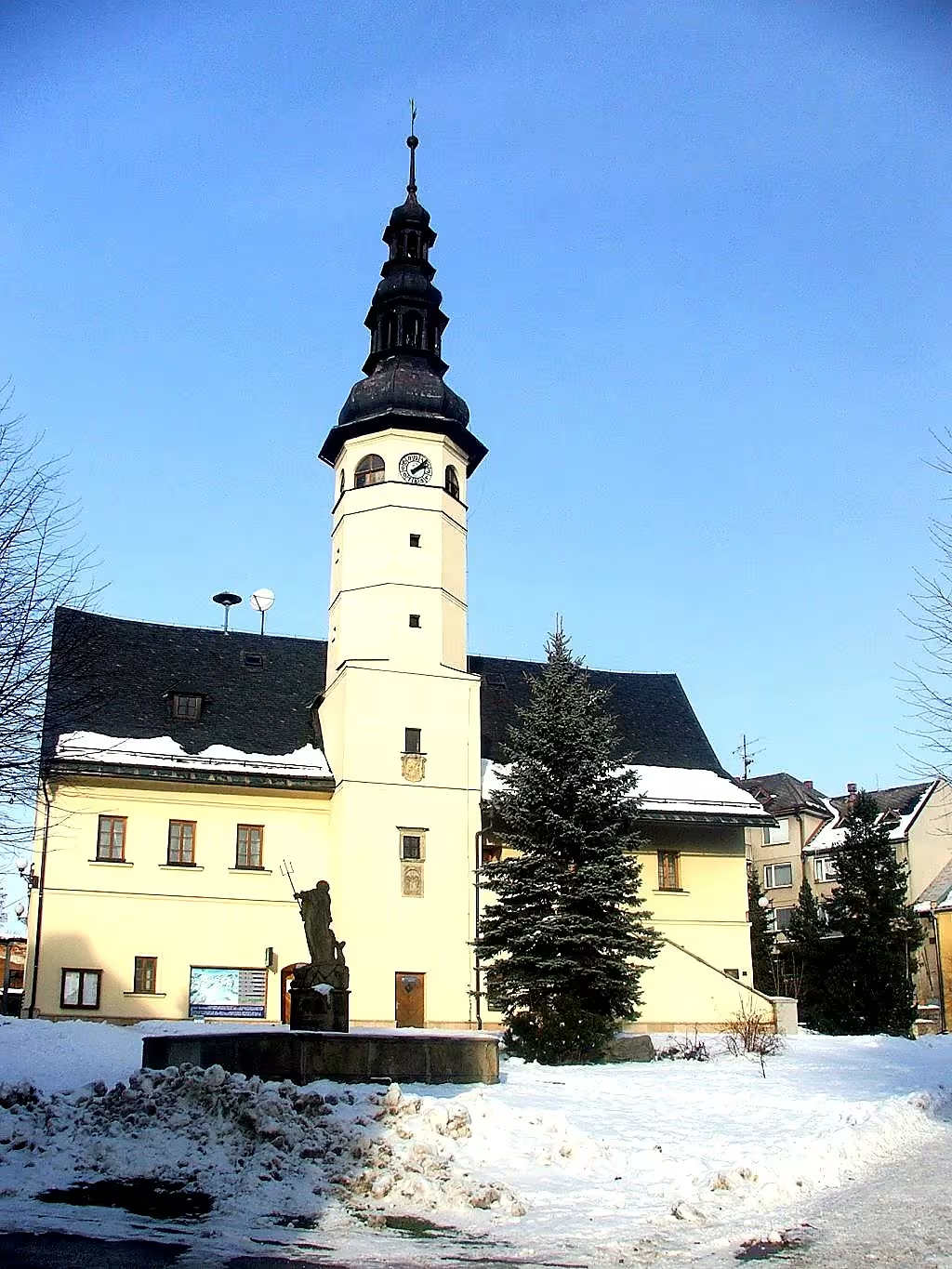
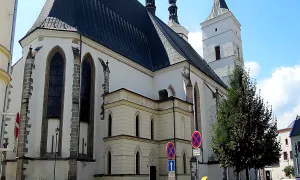
The Radnice in Staré Město, Šumperk, stands as a testament to the architectural evolution from late Renaissance to modern reconstruction. Constructed between 1618 and 1619 by architects Adam Hank z Losin and Anton Thoma, this building has undergone significant transformations. Its major renovation in 1895 gave it its current form. As a cultural monument since May 3, 1958, the Radnice is notable for its prominent position dominating the town square with an impressive tower that houses clocks on its octagonal upper section.
The origins of the Radnice are rooted in the early 17th century when Bohemia was amidst significant political and religious upheaval during the Thirty Years' War. Commissioned by Eliška Petřvaldská, the foundation stone was laid in 1618, marking the beginning of its construction under her directive. Jan Petřvaldský, a member of the same family, owned the building at that time. The Radnice's early history reflects the transitional period from Renaissance to Baroque influences across Europe.
Architecturally, the Radnice initially embodied late Renaissance style, characterized by elements such as sgrafito, which unfortunately were lost in fires over the years. The first significant fire occurred in 1725, leading to the loss of its original Renaissance sgrafito. A subsequent reconstruction in 1895 transformed it into its present form, featuring a prominent tower with an octagonal upper section that houses clocks. This renovation also introduced a viewing platform accessible during the 2014 restoration, adding to its architectural appeal.
Ownership and administration details beyond the initial construction are sparse; however, the building's historical significance is underscored by the well-preserved heraldry of the Petřvaldský family on its southern facade, featuring a peacock emblem. This emblem serves as a testament to the family's influence during the Radnice's early history.
Throughout its existence, the Radnice has witnessed key events that shaped its structure and significance. The fires in 1725 and the reconstruction in 1895 were pivotal moments that altered its architectural integrity. Despite these challenges, the building remains a dominant feature of Staré Město's town square, with its tower offering panoramic views from the viewing platform.
Today, the Radnice is not only a cultural monument but also an accessible site for visitors interested in exploring its rich history and architecture. The viewing platform provides a unique vantage point over the town, making it a worthwhile destination for those keen to experience a blend of historical significance and architectural beauty. Its enduring presence as a landmark invites exploration and appreciation from all who visit Staré Město.
Then and now
Drag the slider to compare how the landmark may have looked when it was built with the view today.
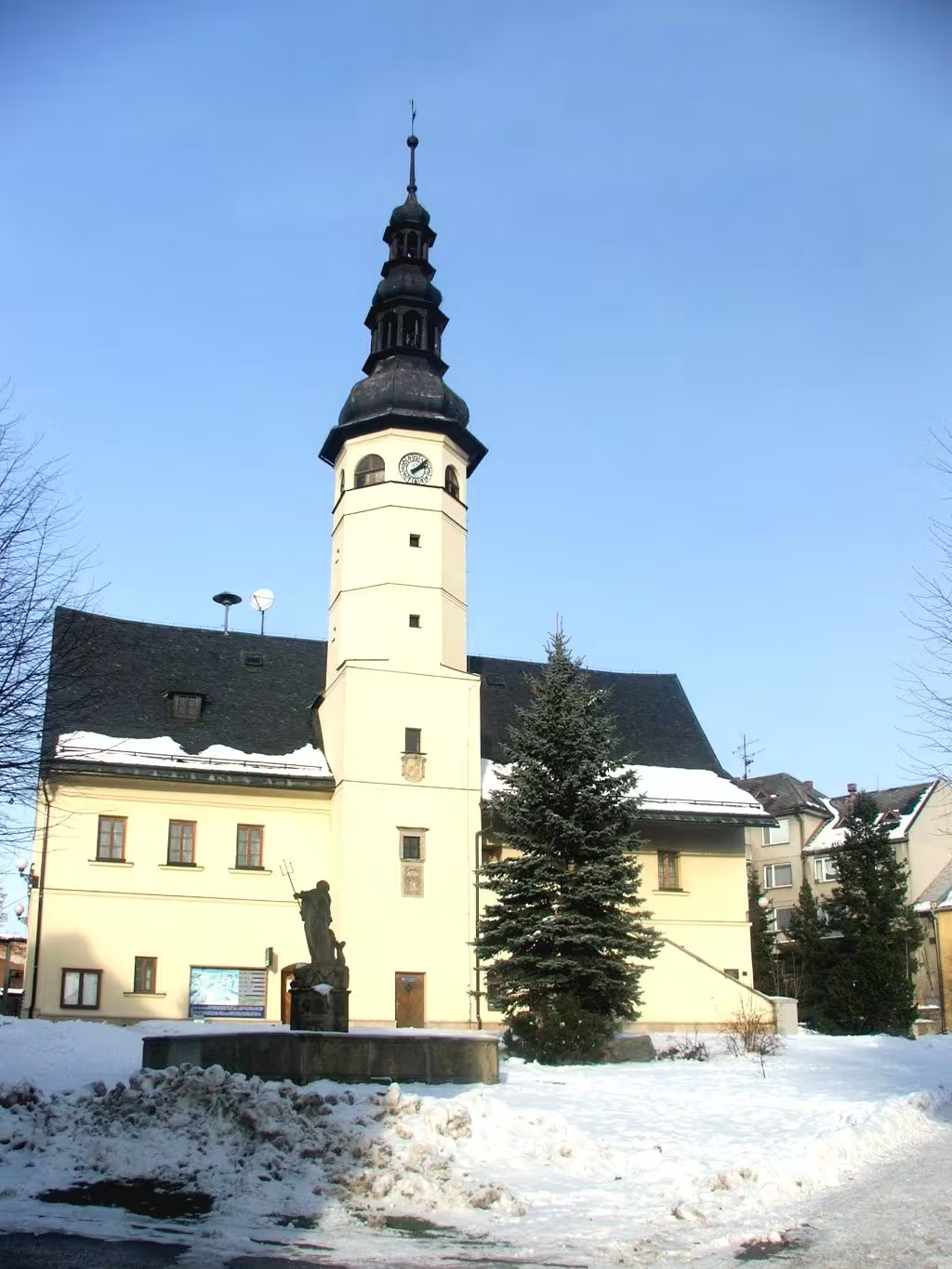
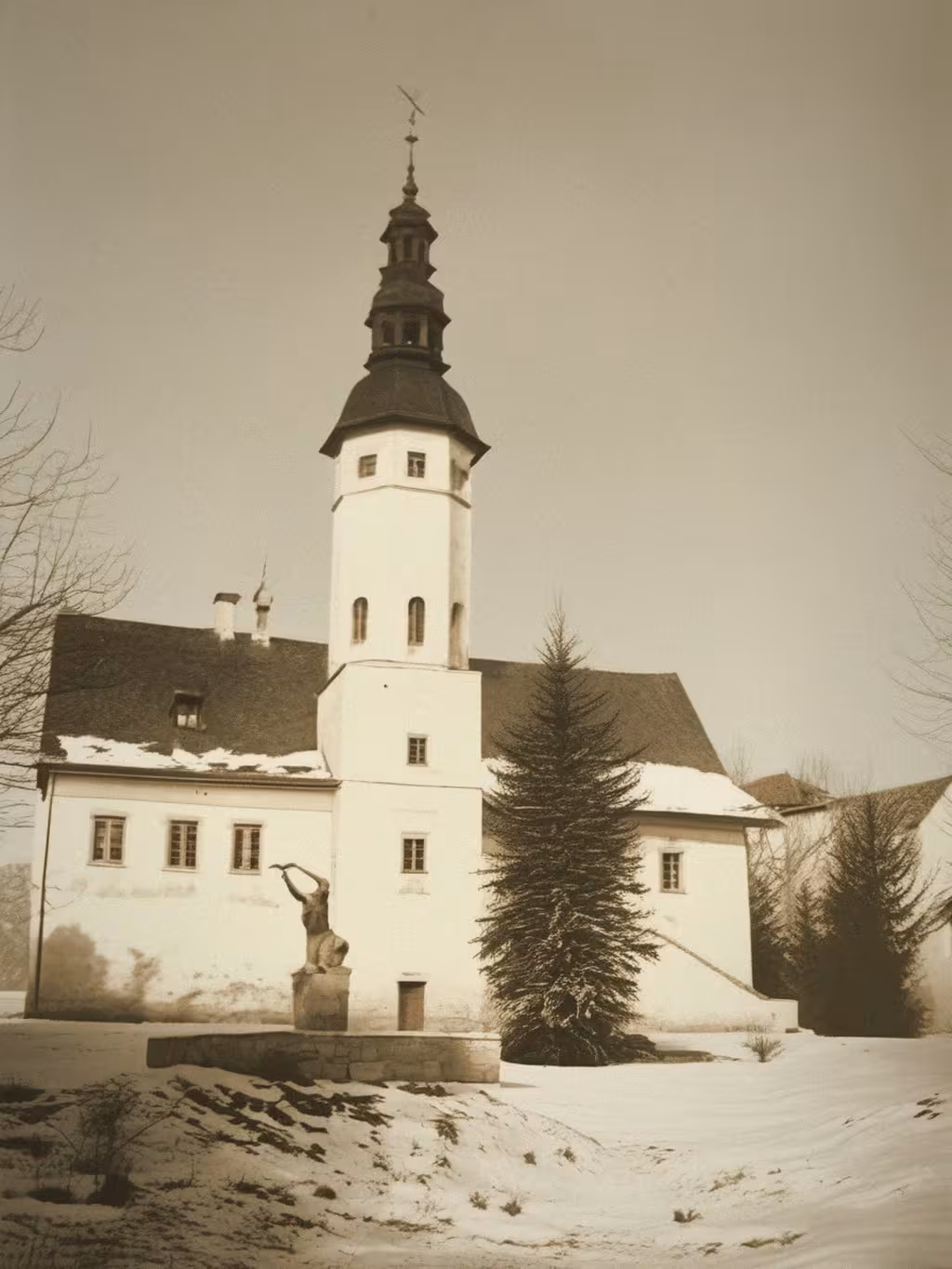
The historical appearance on the left is an AI-generated visualisation and serves as inspiration only.
Historical milestones
- 1618
- Založení základní kamene Radnice.
- 1619
- Dokončení výstavby Radnice.
- 1725
- Požár vedl ke ztrátě původního sgrafito.
- 1895
- Významná rekonstrukce dala Radnici současnou podobu.
- 1958
- Radnice byla prohlášena za kulturní památku.
Architectural development
Originally built as a late Renaissance structure, the Radnice underwent major changes after fires in 1725 and 1895. The latter led to its transformation into the present form with a prominent tower featuring clocks on an octagonal upper section.
Historical events
Construction began in 1618 under the commission of Eliška Petřvaldská.
The building was severely damaged by fire in 1725, leading to the loss of its original Renaissance sgrafito.
A significant reconstruction occurred in 1895, giving it its current appearance.
Owners
The Radnice was originally commissioned by Eliška Petřvaldská, with Jan Petřvaldský as its owner at the time of construction. Ownership details post-1895 are not specified.
Guide
This guide is narrated by a synthetic voice generated by artificial intelligence.
Show guide text
This text was created by artificial intelligence and has not been editorially reviewed. It may contain inaccuracies.
The Town Hall in Staré Město in Šumperk district is a late Renaissance building from 1618 to 1619. It was built by Adam Hanke of Losin and Antonio Thoma. It acquired its present appearance through reconstruction in 1895 and has been a cultural monument since May 3rd, 1958.
The foundation stone was laid in 1618 on the orders of Eliška Petřvaldská. This is also commemorated by a well-preserved coat of arms of the Petřvaldský family with a peacock on the south façade. The manor belonged to Jan Petřvaldský at that time.
The Town Hall has caught fire twice during its history. In the first fire in 1725, the original Renaissance sgraffito was lost. After the second fire, the building was reconstructed in 1895 into the form it has today.
The Town Hall is the focal point of the square. The main building is massive and an external staircase leads to it on the first floor. A six-storey tower rises from a projection in the façade, standing 35 metres high. There are 104 steps leading up. The lower part of the tower is square and access to the first and second floors is by a staircase directly from the building.
Above the Petřvaldský coat of arms is also placed the town sign. It depicts a miner with a hammer in his outstretched hand, standing against an upright bear.
On the third floor, the tower transitions into an octagonal shape and contains a clock. On the highest storey, four arcades with full arches alternate with four clock faces. During the reconstruction of the tower in 2014, the tower gallery was made accessible as a viewing platform. The tower is crowned with a double onion-shaped dome with lanterns and a spire.
Frequently asked questions
Can the monument be visited?
The building is in use (offices, a school, shops and the like). The interior is generally accessible only during operating hours and tours are not usually offered; we have not verified the details. You can see the exterior from the street.
Where is the monument?
Location: Staré Město, Olomoucký kraj. The map on this page shows the exact spot.
Why is the monument protected?
It is listed in the Central List of Cultural Monuments of the Czech Republic as a cultural monument (register no. 1000152388).
Businesses nearby
Do you run a restaurant, accommodation, shop, museum, rental, wellness or other visitor service near this monument? Show yourself directly to the people heading to it — this is how they will see you in the app and on the web:
Accommodation nearby
Themed route
Tematická výletní trasa: Staré Město a Radnice
1. Radnice (Staré Město) - Typ: Historická památka, administrativní budova - Proč stojí za návštěvu: Sloužící jako centrum městské správy od 14. století, Radnice je ikonickým příkladem gotické architektury s významnými historickými událostmi a krásnými freskami. Je to nejen administrativní centrum, ale také kulturní sídlo, které nabízí návštěvníkům pohled na bohatou historii města.
2. Staroměstské náměstí - Typ: Náměstí - Proč stojí za návštěvu: Toto centrální náměstí je známé svým historickým významem a krásnou architekturou. Je domovem Staroměstského orloje, symbolu města, a obklopeno malovanými barokními domy s bohatou historií. Náměstí bylo svědkem důležitých událostí v české historii a nabízí návštěvníkům pohled na život ve Starém Městě.
3. Kostel Týnské - Typ: Katedrála - Proč stojí za návštěvu: Nacházející se poblíž Radnice, je to jedna z nejstarších a nejvýznamnějších gotických katedrál v Evropě. Kostel Týnské je známý svou architekturou, historií a uměleckými díly, jako jsou sochy a fresky. Je to klíčová náboženská a kulturní památka ve Starém Městě.
4. Kostel svatého Mikuláše - Typ: Katedrála - Proč stojí za návštěvu: Tato gotická katedrála je nejvyšší stavbou v Praze a nabízí jedinečný pohled na město z jejího vysokého věže. Je známá svou historií, architekturou a bohatstvím uměleckých děl uvnitř. Kostel je nejen náboženským centrem, ale také klíčovou kulturní památkou ve Starém Městě.
5. Kostel svatého Jakuba - Typ: Katedrála - Proč stojí za návštěvu: Tato gotická katedrála je známá svým jedinečným architektonickým designem a historií. Je to důležitá náboženská památka, která nabízí pohled na bohatou minulost města a jeho architektonické vývoje. Kostel svatého Jakuba je také známý svými uměleckými díly a historickým významem ve Starém Městě.
Tato trasa nabízí návštěvníkům pohled na bohatou historii, architekturu a kulturu Starého Města, s důrazem na klíčové památky v jeho centrálním oblasti.
Seasonal recommendations
Spring: Visiting the Old Town Hall during spring offers a picturesque experience as nature awakens around this historic landmark. The blooming flowers and budding trees create a vibrant atmosphere, enhancing the architectural beauty of the Radnice with their soft colors and fresh scents. Springtime often brings milder temperatures, making it an ideal time for outdoor exploration without the extremes of summer heat or winter chill. Visitors should consider wearing layers to accommodate fluctuating weather conditions. While crowds may be lighter compared to peak tourist seasons, arriving early in the day can ensure a more leisurely visit and better photo opportunities with fewer people.
Summer: Summer is a popular season to explore the Old Town Hall due to its warm weather and extended daylight hours. The vibrant atmosphere of summer brings life to the surrounding streets, making it perfect for those who enjoy bustling city environments. However, this also means larger crowds, especially during peak tourist times in July and August. To avoid long lines and ensure a comfortable experience, visitors are advised to arrive early in the morning or later in the afternoon when temperatures are cooler. Light, breathable clothing is recommended, along with sunscreen and hats for protection against the sun.
Autumn: Autumn offers a unique charm at the Old Town Hall, as the changing leaves create a stunning backdrop of reds, oranges, and yellows. The crisp air and milder weather make it an inviting time to stroll through the historic streets of Staré Město. This season is less crowded than summer, providing a more relaxed atmosphere for visitors to appreciate the architecture without the hustle and bustle. Layered clothing is advisable due to cooler temperatures, especially in the evenings. The golden hour light during late afternoons can provide exceptional photo opportunities.
Winter: Winter transforms the Old Town Hall into a magical setting with its festive decorations and twinkling lights that illuminate the historic facade against a backdrop of snow-covered cobblestones. This season often brings shorter daylight hours and colder temperatures, so visitors should dress warmly in coats, hats, gloves, and scarves to stay comfortable while exploring. While some attractions may have reduced opening times during winter months, arriving early can help maximize your visit. Despite the chill, the enchanting atmosphere makes it a special time to experience the historic charm of Staré Město.
Visualizations and artistic views


The visualisations are generated by artificial intelligence and serve as inspiration.
Photos from the area
Real photos taken near the monument


Zdroj a licence jsou uvedeny u každého snímku.
Tips from visitors
No tips yet. Be the first!
Log in and add your tip.
Sources and literature
Photos: Grzegorz Wysocki / CC BY 3.0 — Wikimedia Commons. The author and licence also appear when you hover over the image.
Faktickým podkladem tohoto textu byl článek na Wikipedii, jehož autory jsou přispěvatelé Wikipedie. Článek je dostupný pod licencí CC BY-SA 4.0.
Location on the map
Příběhy a pověsti
Legendy, pověsti a příběhy spjaté s touto památkou

Fotografie návštěvníků
Zatím žádné fotografie. Buďte první, kdo přidá fotografii z návštěvy!
Log in a přidejte svou fotografii nebo hodnoťte.
Za ověřenou návštěvu v aplikaci získáte víc bodů — poznáme podle GPS, že jste na místě.
Reviews and comments