



Říčany Ruin
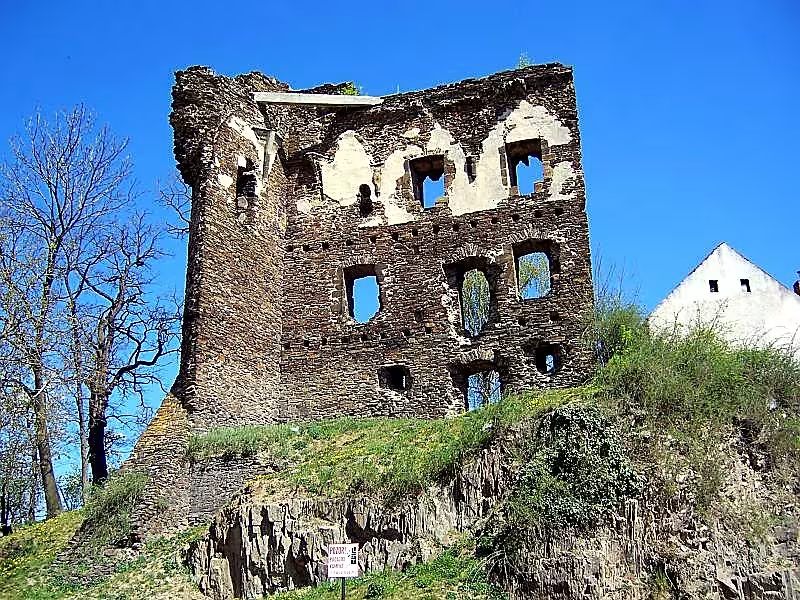
Říčany Castle is a notable historical monument located in Říčany, within the Prague-East District of the Central Bohemian Region in the Czech Republic. This castle ruin stands as one of the oldest stone castles in the country, constructed during the second half of the 13th century. It exemplifies significant noble architecture from that era and is recognized for its historical importance in medieval Bohemia.
The origins of Říčany Castle date back to a period when King Přemysl Otakar II ruled Bohemia, marked by architectural and cultural development. Initially built as a comfortable noble residence, it featured advanced masonry details likely crafted by royal workshops. The castle included a large hall with cross-ribbed vaulting, reflecting the era's feudal dynamics and noble aspirations.
Throughout its history, Říčany Castle saw several owners who played crucial roles in its development and eventual decline. The first documented mention of the castle dates to 1289. Ondřej ze Všechrom is believed to have been one of its early builders around the 1260s. Ownership later passed to Oldřich z Říčan after 1300, followed by Jimram z Průhonic and Diviš z Průhonic. The castle eventually became property of Prague citizens before being abandoned by the Trčkové family in 1516.
A key event in the castle's history occurred during the Hussite Wars when Jan Žižka's forces captured it after a brief siege in the early 15th century. This period also saw an intriguing incident where garrison women attempted to smuggle valuables out under multiple layers of clothing, highlighting the strategic importance and resourcefulness associated with the castle.
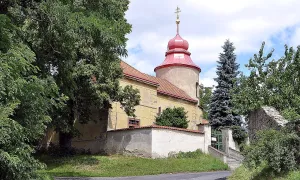
Today, visitors can freely access the ruins of Říčany Castle, which include remnants such as a well, parts of a square keep, and walls of a palace. The site offers a glimpse into its medieval past, set against modern urban development in Říčany. Its strategic location on a small hill surrounded by two ponds adds to its historical allure.
Říčany Castle is worth visiting for those interested in exploring one of Bohemia's oldest stone castles and understanding its role in the region's medieval history. The ruins provide insight into noble life during the 13th century and the architectural advancements of that time, making it a valuable site for both historical enthusiasts and casual visitors alike.
Then and now
Drag the slider to compare how the landmark may have looked when it was built with the view today.
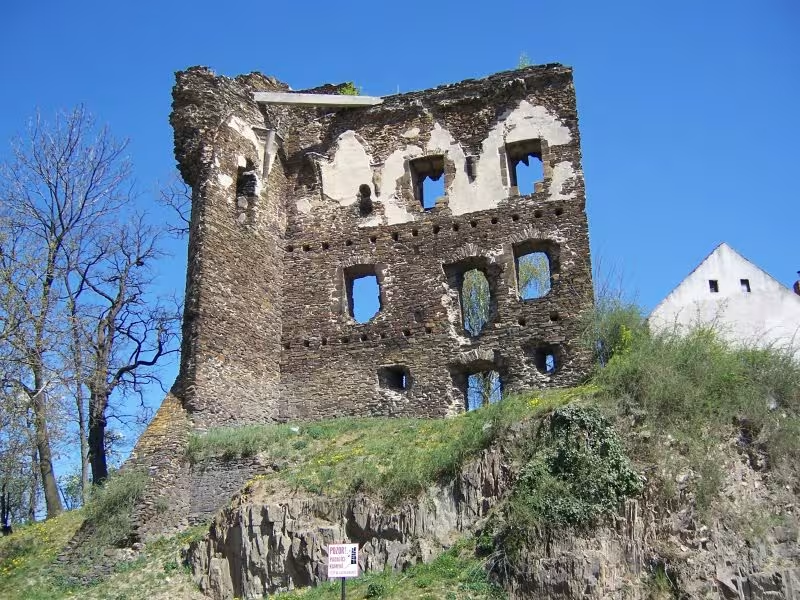
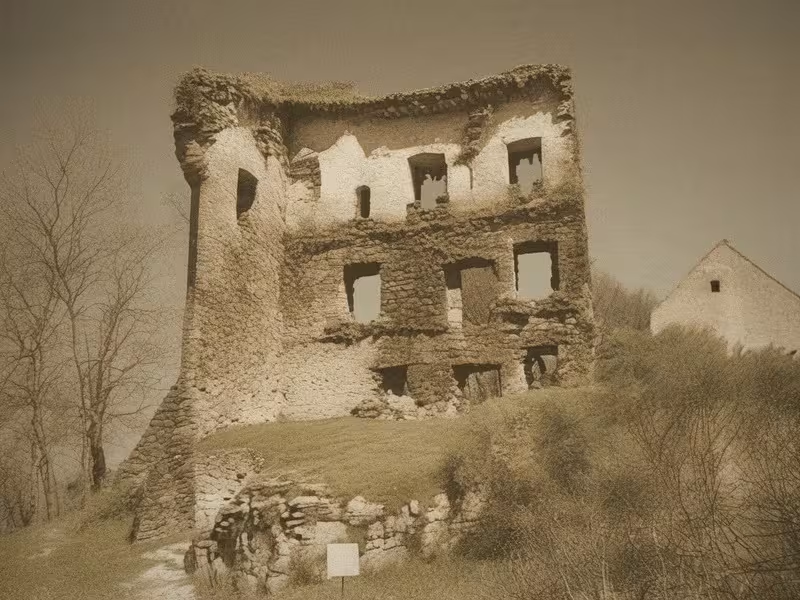
The historical appearance on the left is an AI-generated visualisation and serves as inspiration only.
Historical milestones
- 1270
- Založení hradu Říčany během vlády Přemysla Otakara II.
- 1289
- První písemná zmínka o hradu Říčany.
- kolem 1300
- Hrad přešel v majetek Oldřicha z Říčan.
- raná 15. století
- Jan Žižka zajal hrad během husitských válek.
- 1516
- Hrad opuštěn rodem Trčkové.
Architectural development
Říčany was initially built as a noble residence with a large vaulted hall. It featured advanced masonry details likely crafted by royal workshops. Over time, the castle fell into disrepair and was eventually abandoned in the late 15th century.
Historical events
1289: First documented mention of Říčany Castle.
Early 15th century: Siege during the Hussite Wars, where Jan Žižka's forces captured it after a brief siege.
Owners
Ondřej ze Všechrom (circa 1260s), Oldřich z Říčan (after 1300), Jimram z Průhonic, Diviš z Průhonic. The castle later became property of the Prague citizens and was eventually abandoned by the Trčkové family in 1516.
Points of interest
- One lesser-known fact about Říčany Castle is that it was initially constructed as a comfortable noble residence with advanced masonry details likely crafted by royal workshops. This indicates the high level of craftsmanship and resources invested in its construction during King Přemysl Otakar II's reign.
- An intriguing legend associated with Říčany Castle involves garrison women who, during the Hussite Wars, attempted to smuggle valuables out under multiple layers of clothing. This anecdote highlights both the strategic importance of the castle and the resourcefulness of its inhabitants during times of conflict.
- A curious historical detail is that after serving as a noble residence and witnessing several ownership changes, Říčany Castle eventually became property of Prague citizens before being abandoned by the Trčkové family in 1516. This transition reflects broader socio-political shifts in medieval Bohemia.
- Visitors today can explore remnants such as a well, parts of a square keep, and walls of a palace at Říčany Castle ruins. The strategic location on a small hill surrounded by two ponds adds to its historical allure, offering insights into the castle's past significance.
- Despite being one of Bohemia’s oldest stone castles, Říčany Castle was captured relatively quickly during the Hussite Wars by Jan Žižka's forces after a brief siege in the early 15th century. This event underscores its vulnerability despite its architectural advancements and strategic position.
Guide
This guide is narrated by a synthetic voice generated by artificial intelligence.
Show guide text
This text was created by artificial intelligence and has not been editorially reviewed. It may contain inaccuracies.
The ruins of Říčany Castle are located in the town of the same name in the Praha-východ district. The castle was built in the second half of the thirteenth century on a small hill at an elevation of 340 meters. Since 1966, it has been protected as a cultural monument.
Together with Vízmburk Castle, it belonged to the pinnacles of noble castle architecture of its time. Only a very significant builder could afford a reduced version of a royal castle with surrounding buildings back then. His capabilities are also evidenced by the demanding stone-cutting details, which were probably made by the royal building workshop.
The castle was built shortly after 1260 by Ondřej ze Všechrom, the highest chamberlain of King Přemysl Otakar the Second. After completing his residence, he became the founder of the family of the lords from Říčany. The castle is first mentioned in 1289. From the beginning, it was built as a comfortable noble residence with a large vaulted hall in the palace. After Ondřej, his descendants lived there. After 1300 it was the highest land judge Oldřich z Říčany and after him his son. He then transferred the castle and surrounding area to Jimram z Průhonic, a relative from another branch of the family.
Many years later, another descendant, Diviš z Průhonic, also called z Říčany, was among the opponents of the Hussites. The castle was therefore besieged by the Prague army. The defenders surrendered only after several days, when the Taborites led by Jan Žižka advanced toward the castle. The Praguers accepted the capitulation and promised the garrison a free departure. However, both sides broke the agreement. Several Taborites entered the castle and began looting. The women from the garrison, in turn, tried to leave wearing multiple layers of clothing, under which they hid valuables. The women from the Taborite association did not feel bound by the agreement and took everything from them. The Praguers ultimately led away 54 captives, including the owner and his family. Jan Žižka also had nine Catholic priests burned at the castle.
The castle then remained in the possession of the Praguers and its importance declined. In the eighties of the fifteenth century, it was acquired by the Trčkové z Lípy, who had it abandoned after 1516. By 1544 it was already listed as desolate.
The castle stood on a promontory that was originally protected by two ponds. It was separated from the town by ditches, later filled in. The forecourt and part of the core were swallowed up by urban development. A well, the corner of a residential tower, and two walls of the palace on the western side have been preserved. The ground floor and first floor of the palace had flat ceilings, on the second floor there was a hall vaulted with three fields of cross vault and heated by a fireplace. The rooms on the floors were lit by clustered windows with seats and were connected to the surrounding buildings by a gallery at the level of the first floor.
Tips for visitors
The best time to visit the Říčany castle ruin is during late spring or early autumn, when the weather is mild and pleasant for exploring outdoor sites. These seasons offer comfortable temperatures and typically less crowded conditions, allowing you to fully appreciate the historical ambiance of the site. Additionally, the surrounding natural landscape, including ponds, can be especially beautiful in these months.
It's advisable to check current routes and schedules in advance using a travel planner or local transit website.
When visiting Říčany castle ruin, consider bringing comfortable walking shoes as there are uneven surfaces and steps throughout the site. A hat and sunscreen can be useful if you're planning your visit during sunny days. Additionally, carrying a water bottle is recommended to stay hydrated while exploring.
For photography enthusiasts, some of the best spots include the remnants of the castle walls and towers where you can capture panoramic views of the surrounding landscape. Early morning or late afternoon light often provides ideal conditions for capturing dramatic shadows and highlights on the ruins.
Nearby attractions within a 30-minute drive from Říčany include the natural ponds in the vicinity, which offer scenic spots perfect for picnics or leisurely walks. These ponds are not only beautiful but also provide insight into historical defense mechanisms used during medieval times.
Frequently asked questions
Can the monument be visited?
This is a ruin. Such sites are often freely accessible, but some can only be visited with a guide or are closed for safety reasons. We have not verified the current situation – take care and respect any restrictions.
Where is the monument?
Location: Říčany, Středočeský kraj. The map on this page shows the exact spot.
Why is the monument protected?
It is listed in the Central List of Cultural Monuments of the Czech Republic as a cultural monument (register no. 15215/2-2157).
Businesses nearby
Do you run a restaurant, accommodation, shop, museum, rental, wellness or other visitor service near this monument? Show yourself directly to the people heading to it — this is how they will see you in the app and on the web:
Events nearby
Zdroj akcí: otevřená data měst a obcí ČR (Národní katalog otevřených dat) a kalendář akcí Národního památkového ústavu.
Nearby
Říčany is situated near modern urban development but retains historical significance with remnants of its medieval past. The surrounding landscape includes natural features like ponds that once provided defense.
Accommodation nearby
Trips and activities nearby
Guided tours, tickets and activities nearby from GetYourGuide
Affiliate link: if you buy from the partner, we may receive a commission. The price for you does not change.
Search tours and activities →Themed route
Thematic Walking Tour: Říčany Castle Ruins and Surroundings
1. Říčany Castle Ruins - Type: Historical Site - Why Visit: Explore the remnants of a medieval fortress that once served as a strategic stronghold in the region. The ruins offer a glimpse into the past with their well-preserved defensive structures, providing insight into the architectural and military history of Říčany.
2. Historical Ponds - Type: Natural Feature - Why Visit: Discover the historical ponds that once played a crucial role in the defense system of the castle. These water features not only add to the scenic beauty but also tell stories of how natural landscapes were ingeniously used for protection and sustenance during medieval times.
3. Local Urban Development - Type: Modern Contrast - Why Visit: Walk through the nearby modern urban areas that contrast with the historical backdrop of Říčany. This juxtaposition highlights the evolution of the region from its medieval past to present-day development, offering a unique perspective on how history and modernity coexist in this area.
This tour provides an engaging journey through time, starting at the castle ruins and moving through natural defenses to observe contemporary urban life, all within the historical context of Říčany.
Seasonal recommendations
Spring: Visiting Říčany Castle ruins during spring offers a unique experience as nature begins to awaken around the historic site. The surrounding landscape bursts into life with vibrant wildflowers and fresh greenery, creating an enchanting backdrop that enhances the mystical atmosphere of the ancient stones. Early mornings or late afternoons are ideal for exploring when the light is softer, casting dramatic shadows across the ruins. Visitors should dress in layers to accommodate fluctuating temperatures and bring comfortable walking shoes for navigating uneven terrain. Although spring can see a moderate increase in visitors as people enjoy outdoor activities, arriving early helps avoid crowds and allows for a more peaceful exploration.
Summer: The summer months at Říčany Castle are perfect for those seeking an immersive experience under the clear blue skies. Long daylight hours provide ample time to explore the ruins thoroughly, while the warm weather is ideal for picnicking in nearby meadows. However, this season also attracts a significant number of tourists, so it's advisable to arrive early in the morning or later in the afternoon to avoid the peak crowds. Sunscreen and hats are essential due to strong sunlight, and staying hydrated is crucial during your visit. Despite the potential for larger groups, the summer atmosphere brings a lively energy that complements the historical intrigue of the site.
Autumn: Autumn transforms Říčany Castle ruins into a picturesque scene with its rich tapestry of reds, oranges, and yellows. The cooler temperatures make it an ideal time to explore without the discomfort of summer heat, while the changing leaves provide a stunning natural contrast to the ancient stones. This season often sees fewer visitors than in the summer, offering a quieter experience. It's advisable to wear warm layers as evenings can become quite chilly, and bring a jacket for comfort during your visit. The gentle autumn light adds an ethereal quality to the ruins, making it a magical time to appreciate their beauty.
Winter: Winter at Říčany Castle offers a serene and almost mystical experience, with snow-covered landscapes adding a touch of fairy-tale charm to the historic site. The shorter days mean that visits should be planned during daylight hours, as early mornings or late afternoons can become quite cold. While winter may deter some visitors due to harsh weather conditions, those who venture out are rewarded with a peaceful atmosphere and fewer crowds. Warm clothing is essential, including thermal layers, gloves, and a hat, along with sturdy boots for navigating potentially icy paths. The stark beauty of the ruins against the snowy backdrop creates a unique and memorable experience.
Visualizations and artistic views


The visualisations are generated by artificial intelligence and serve as inspiration.
Photos from the area
Real photos taken near the monument


Zdroj a licence jsou uvedeny u každého snímku.
Tips from visitors
No tips yet. Be the first!
Log in and add your tip.
Sources and literature
Photos: Mirekk / Attribution — Wikimedia Commons. The author and licence also appear when you hover over the image.
Faktickým podkladem tohoto textu byl článek na Wikipedii, jehož autory jsou přispěvatelé Wikipedie. Článek je dostupný pod licencí CC BY-SA 4.0.
Location on the map




Příběhy a pověsti
Legendy, pověsti a příběhy spjaté s touto památkou
Fotografie návštěvníků
Zatím žádné fotografie. Buďte první, kdo přidá fotografii z návštěvy!
Log in a přidejte svou fotografii nebo hodnoťte.
Za ověřenou návštěvu v aplikaci získáte víc bodů — poznáme podle GPS, že jste na místě.
Reviews and comments